Sign up to get Today’s Best Articles in your inbox
Join 350,000+ subscribers and keep yourself informed with a selection of
The Week’s most interesting, enlightening and entertaining stories - plus daily puzzles.
You are now subscribed
Your newsletter sign-up was successful
Want to add more newsletters?
An account already exists for this email address, please log in.
Pentagon wants colleges to examine their ties to foreign institutions
The Defense Department has ordered 30 universities to audit themselves
The Trump administration has found another way to put pressure on American universities. This time it’s using the Defense Department.
The Pentagon has ordered a slew of universities to audit their relationships with foreign academic organizations, mostly in China. While some of these universities are pushing back against allegations of wrongdoing, the Pentagon is holding steady.
What is the Pentagon asking for?
The Defense Department is asking for 30 universities to “initiate immediate and comprehensive reviews of their academic, financial and research collaborations with foreign entities of concern,” according to an order released by the agency. The universities have been given until Aug. 31 to “complete a comprehensive audit of all identified foreign collaborations, assess the exposure of sensitive or export-controlled research and implement strict mitigation plans, including the termination of problematic partnerships.”
The Week
Escape your echo chamber. Get the facts behind the news, plus analysis from multiple perspectives.
Join more than 350,000 subscribers and keep yourself informed with a selection of The Week’s most interesting, enlightening and entertaining stories - plus daily puzzles.
Join more than 350,000 subscribers and keep yourself informed with a selection of The Week’s most interesting, enlightening and entertaining stories - plus daily puzzles.
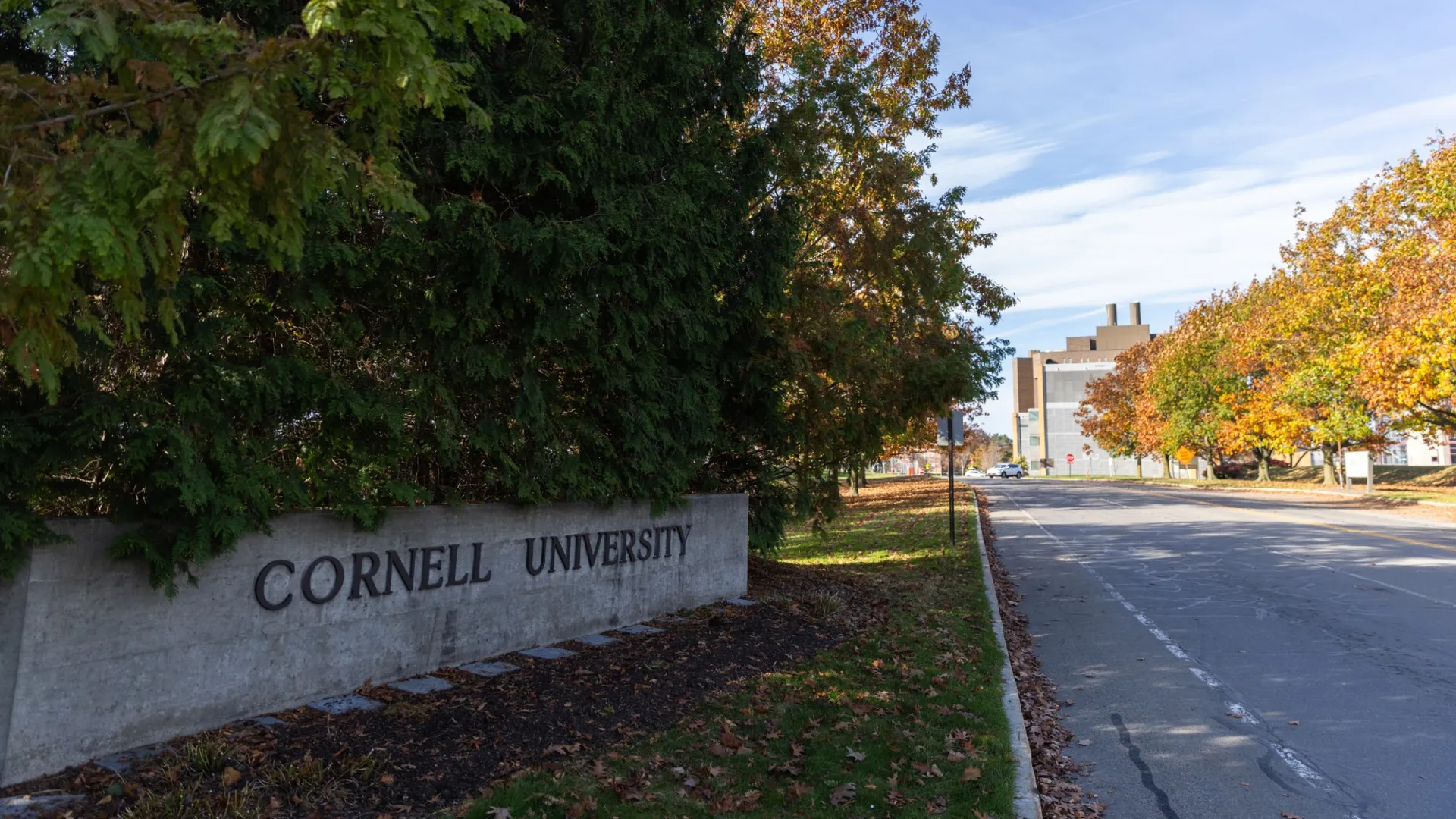
The Defense Department did not identify which universities it was targeting, but The Guardian later published a full list of the 30 schools. Some of the most prominent include Ivy League institutions Cornell University and Harvard University, as well as prestigious schools like Georgetown University, Johns Hopkins University and New York University. Numerous state schools, including the University of Illinois Urbana-Champaign, the University of Minnesota and three branches of the University of California system are also listed.
If these universities do not complete these audits, they may not “maintain eligibility for future federal research funding,” said the Pentagon. The order is largely targeted at university research relationships with Chinese institutions and is the “latest effort to clamp down on alleged Chinese influence in the U.S., including in higher education,” said Time. The Trump administration has “argued that China exploits U.S.-funded research to obtain sensitive technology and intellectual property.”
The list of foreign institutions reportedly tied to U.S. universities was released by the Pentagon in July. The majority of these institutions, 88 out of 130, are in “mainland China, while the remaining institutions are in Russia and Iran,” said Time. While some of these Chinese facilities “have more explicit ties to the military, others are prominent civilian institutions with extensive international research partnerships.” Institutional links to the government are common in China given that “Chinese Communist Party structures are embedded throughout the country’s universities.”
What have the various responses been?
While some are supportive of the efforts to weed out Chinese influence among American universities, others fear that the allegations are unfounded. “We don’t appreciate the implication that we are not good partners on research security, given that we helped create this list and given that we’ve always partnered with the federal government when there have been national security concerns,” Sarah Spreitzer, the vice president at the American Council on Education, said to The Associated Press.
Sign up to get Today’s Best Articles in your inbox
A free daily email with the day’s biggest news and analysis – and the best features from TheWeek.com
China is also pushing back against the Pentagon’s assertions. Beijing opposes the “overstretching of the concept of national security and the politicization or instrumentalization of normal scientific, educational and academic exchanges,” a spokesperson for the Chinese Embassy in Washington, D.C., said in a statement.
Republicans leading the audit charge are standing firm. “Research partnerships and collaboration with Chinese entities linked to the Chinese Communist Party and the Chinese army present undeniable national security risks,” Rep. John Moolenaar (R-Mich.), the chairman of the House Select Committee on China, said in a statement.
Justin Klawans has worked as a staff writer at The Week since 2022. He began his career covering local news before joining Newsweek as a breaking news reporter, where he wrote about politics, national and global affairs, business, crime, sports, film, television and other news. Justin has also freelanced for outlets including Collider and United Press International.