Sign up to get Today’s Best Articles in your inbox
Join 350,000+ subscribers and keep yourself informed with a selection of
The Week’s most interesting, enlightening and entertaining stories - plus daily puzzles.
You are now subscribed
Your newsletter sign-up was successful
Want to add more newsletters?
An account already exists for this email address, please log in.
American universities are losing ground to their foreign counterparts
While Harvard is still near the top, other colleges have slipped
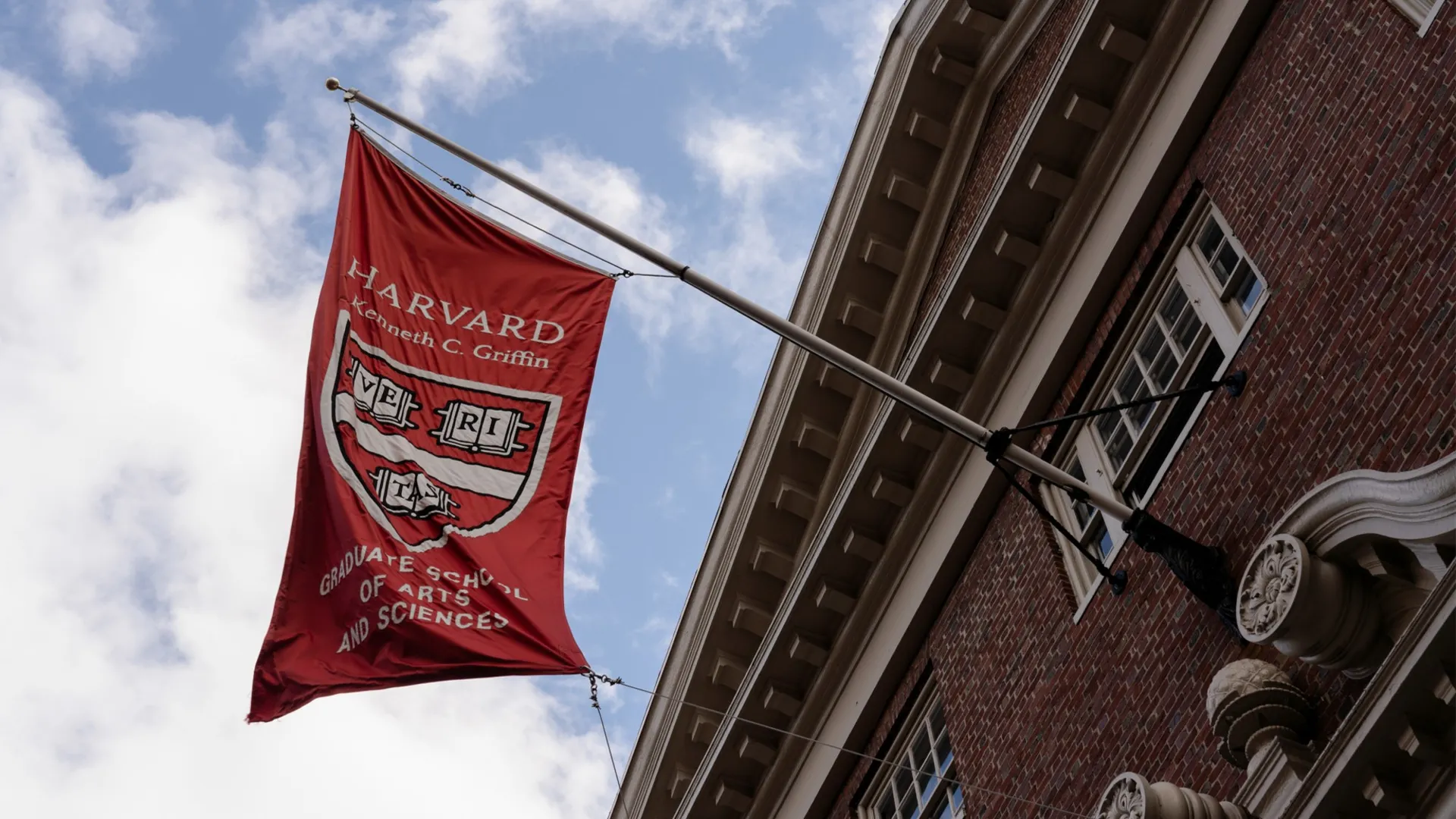
American higher learning is considered among the best in the world, but recent rankings show the top of the food chain may be changing. While U.S. universities still dominate most lists, foreign institutions have been slowly superseding them. And with the Trump administration’s continued attacks on higher education, the trend may be here to stay.
Which universities are considered the best?
Six major rankings use a variety of factors to calculate the best universities. The Leiden Rankings at Leiden University, U.S. News Best Global University Rankings and the University Ranking by Academic Performance all focus on the “number of research publications, citations to those studies, and other measures of scholarly quality,” said Forbes. The other three, Quacquarelli Symonds’ QS World University Rankings, Times Higher Education Rankings and the Center for World University Rankings, measure the “success and employment records of graduates, the perceived quality of the faculty, the relative presence of international students, and general institutional reputation.”
In the “initial iteration of each system, an American university was ranked first in the world,” said Forbes, with Harvard University and the Massachusetts Institute of Technology taking the various rankings’ top spots. But in the “most recent rankings, we see different outcomes. In four of the systems, the number of top-10 spots occupied by U.S. universities declined.” Notably, Chinese schools have been replacing many American institutions on these lists.
The Week
Escape your echo chamber. Get the facts behind the news, plus analysis from multiple perspectives.
Join more than 350,000 subscribers and keep yourself informed with a selection of The Week’s most interesting, enlightening and entertaining stories - plus daily puzzles.
Join more than 350,000 subscribers and keep yourself informed with a selection of The Week’s most interesting, enlightening and entertaining stories - plus daily puzzles.
The most recent Leiden list ranks China’s Zhejiang University first and Harvard third, with “12 of the following 13” based in China, said The Daily Beast. In the most recent edition of the Times Higher Education list, more than 60 U.S. schools fell in the rankings, including “well-known institutions suffering significant downgrades, such as an eight- and 17-place drop for Duke University and Emory University, respectively.” The Times Higher Education list also named the U.K.’s Oxford University the world’s best college for the tenth year in a row.
Why are foreign schools gaining steam?
It is largely due to a global reordering, which comes as the Trump administration has been “slashing research funding to American schools that depend heavily on the federal government to pay for scientific endeavors,” said The New York Times. President Donald Trump’s policies “did not start the American universities’ relative decline, which began years ago, but they could accelerate it.”
The disparity between people who can afford college may also be a factor. The data shows that “access for talented students from families outside the traditional ‘elite’ is much more restricted than it ought to be,” said Time, and “students from wealthy backgrounds are heavily overrepresented: More than 15% come from families in the top 1% of the U.S. national income distribution,” which translates to over $600,000 per year.
U.S. institutions also strive to attract foreign students, but are facing challenges from “travel bans and an anti-immigration crackdown that has swept up international students and academics,” said the Times. All of these combined issues could be leading to a decline in U.S. education supremacy. There is a “big shift coming, a bit of a new world order in global dominance of higher education,” said Phil Baty, the chief global affairs officer for Times Higher Education, to the Times. “It’s not as if U.S. schools are getting demonstrably worse, it’s just the global competition: Other nations are making more rapid progress.”
Sign up to get Today’s Best Articles in your inbox
A free daily email with the day’s biggest news and analysis – and the best features from TheWeek.com
Justin Klawans has worked as a staff writer at The Week since 2022. He began his career covering local news before joining Newsweek as a breaking news reporter, where he wrote about politics, national and global affairs, business, crime, sports, film, television and other news. Justin has also freelanced for outlets including Collider and United Press International.