Sign up to get Today’s Best Articles in your inbox
Join 350,000+ subscribers and keep yourself informed with a selection of
The Week’s most interesting, enlightening and entertaining stories - plus daily puzzles.
You are now subscribed
Your newsletter sign-up was successful
Want to add more newsletters?
An account already exists for this email address, please log in.
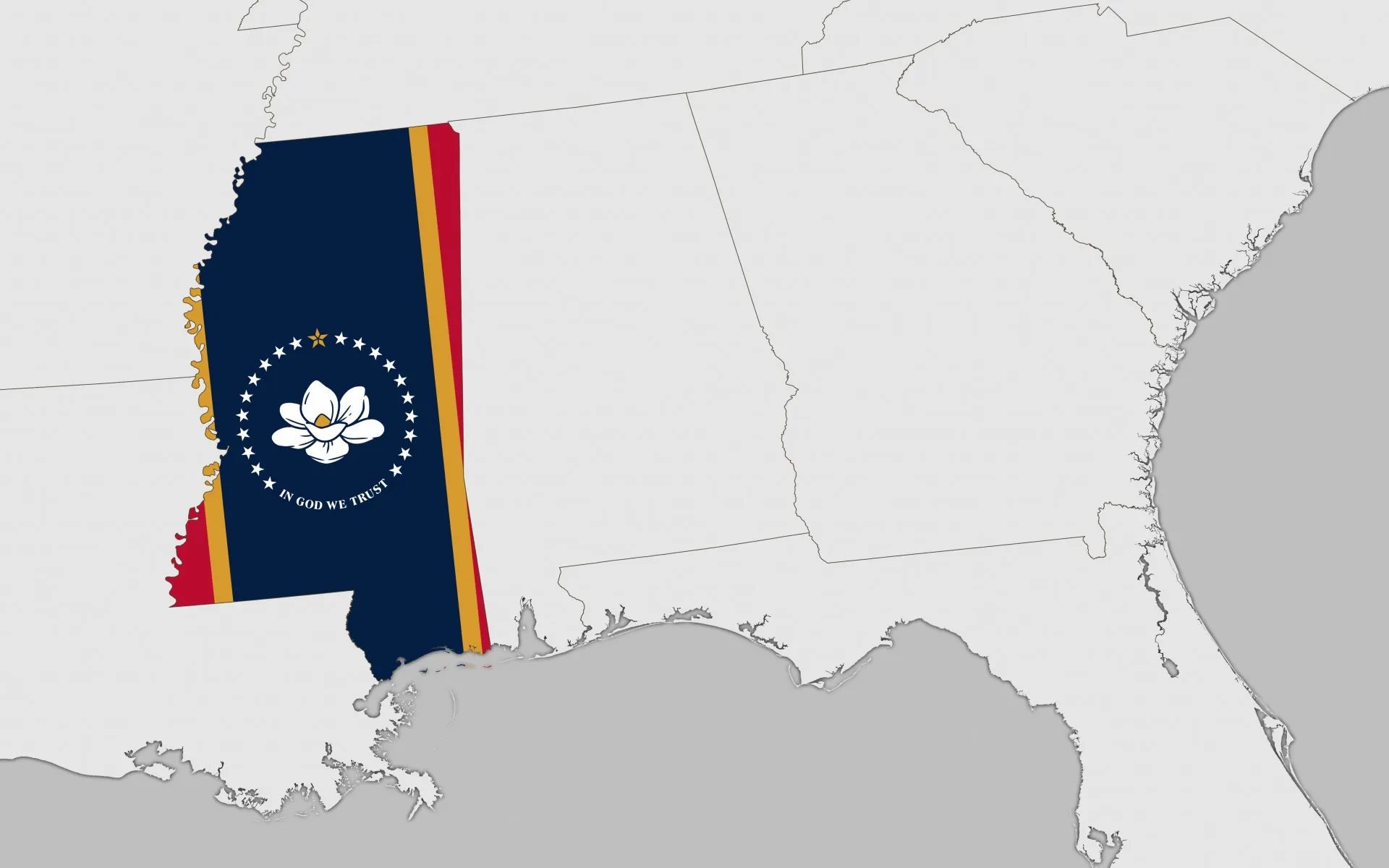
How Mississippi moved from the bottom to the top in education
Mississippi’s upward progress has made it the center of conversation in the education world over the past few years, as people consider how one of the poorest states could manage such significant jumps in statistics. While some are in awe of what the state has accomplished, others question whether the “Mississippi miracle” was achieved with the right kinds of strategies.
Climbing the ranks
Mississippi has risen from 49th in the country on national tests in 2013 to a top 10 state for fourth-grade reading levels, “even as test scores have fallen almost everywhere else,” said The New York Times. Adjusted for poverty and other demographic factors, Mississippi ranks first in fourth-grade reading and math and is at or near the top in eighth-grade reading and math, according to the Urban Institute.
In terms of the states that are “helping kids coming from difficult circumstances learn as much as they can,” Mississippi is doing “much better than many other states, said Michael Petrilli, the president of the Thomas B. Fordham Institute, to the Times. This is “including wealthier states in affluent progressive areas.”
The Week
Escape your echo chamber. Get the facts behind the news, plus analysis from multiple perspectives.
Join more than 350,000 subscribers and keep yourself informed with a selection of The Week’s most interesting, enlightening and entertaining stories - plus daily puzzles.
Join more than 350,000 subscribers and keep yourself informed with a selection of The Week’s most interesting, enlightening and entertaining stories - plus daily puzzles.
The state’s fourth graders “exceeded the national reading average” for the first time in 2024, said the International Business Times. The state’s overall education ranking rose to 16th nationally by 2025, its “highest ever.” Mississippi’s low-income fourth graders “now perform better than those in every other state, surpassing Michigan by 17 points.”
How it happened
The turnaround in educational achievement has many wondering how Mississippi, with its “low education spending and high child poverty,” managed such a change, said the Times. It did not rely on common proposals such as “reducing class sizes or dramatically boosting per-student funding.” Instead, the state made sweeping policy changes, including “changing the way reading is taught,” relying on an approach known as the science of reading. It is also “embracing contentious school accountability policies other states have backed away from.”
The science of reading was a “key piece of what we did,” said Rachel Canter, the longtime leader of education reform group Mississippi First who now works at the Progressive Policy Institute, said to the Times. But people are “missing the forest for the trees if they are only looking at that.”
In addition to adjusting reading instruction, Mississippi “raised academic standards and started giving each school a letter grade, A to F,” said the Times. The state takes an “unusually strong role in telling schools what to do.” The Department of Education also deploys literacy and mathematics coaches in low-performing elementary schools to assist educators. State officials vet and approve the curriculum used by the majority of districts, which is “unusual in a country that prizes local control of schools.”
Sign up to get Today’s Best Articles in your inbox
A free daily email with the day’s biggest news and analysis – and the best features from TheWeek.com
Perhaps the most controversial policy is holding back third graders who cannot read proficiently. The state was able to enact changes, in part, because it has “weak teachers’ unions,” which have “traditionally resisted accountability linked to standardized testing.”
Next steps
Mississippi is intensifying its efforts, with the education department planning to request $9 million from state lawmakers this year to “expand literacy coaching beyond the early elementary grades,” the Times said. Other states have “gone in the opposite direction” by “backing off accountability and lowering proficiency standards, sometimes in the name of equity.” Still, a handful of states, including Louisiana and Alabama, are “seeing promising results using a similar set of strategies as Mississippi.”
To fail to improve education is to “lastingly abandon a significant fraction of our children to a lifelong struggle,” said The Argument Substack. “And blue states have been failing.” They have been spending heavily on schools but have been unwilling to “muster the political will and effort necessary to hold those schools accountable for results and adopt teaching practices that actually work.”
Theara Coleman has worked as a staff writer at The Week since September 2022. She frequently writes about technology, education, literature and general news. She was previously a contributing writer and assistant editor at Honeysuckle Magazine, where she covered racial politics and cannabis industry news.