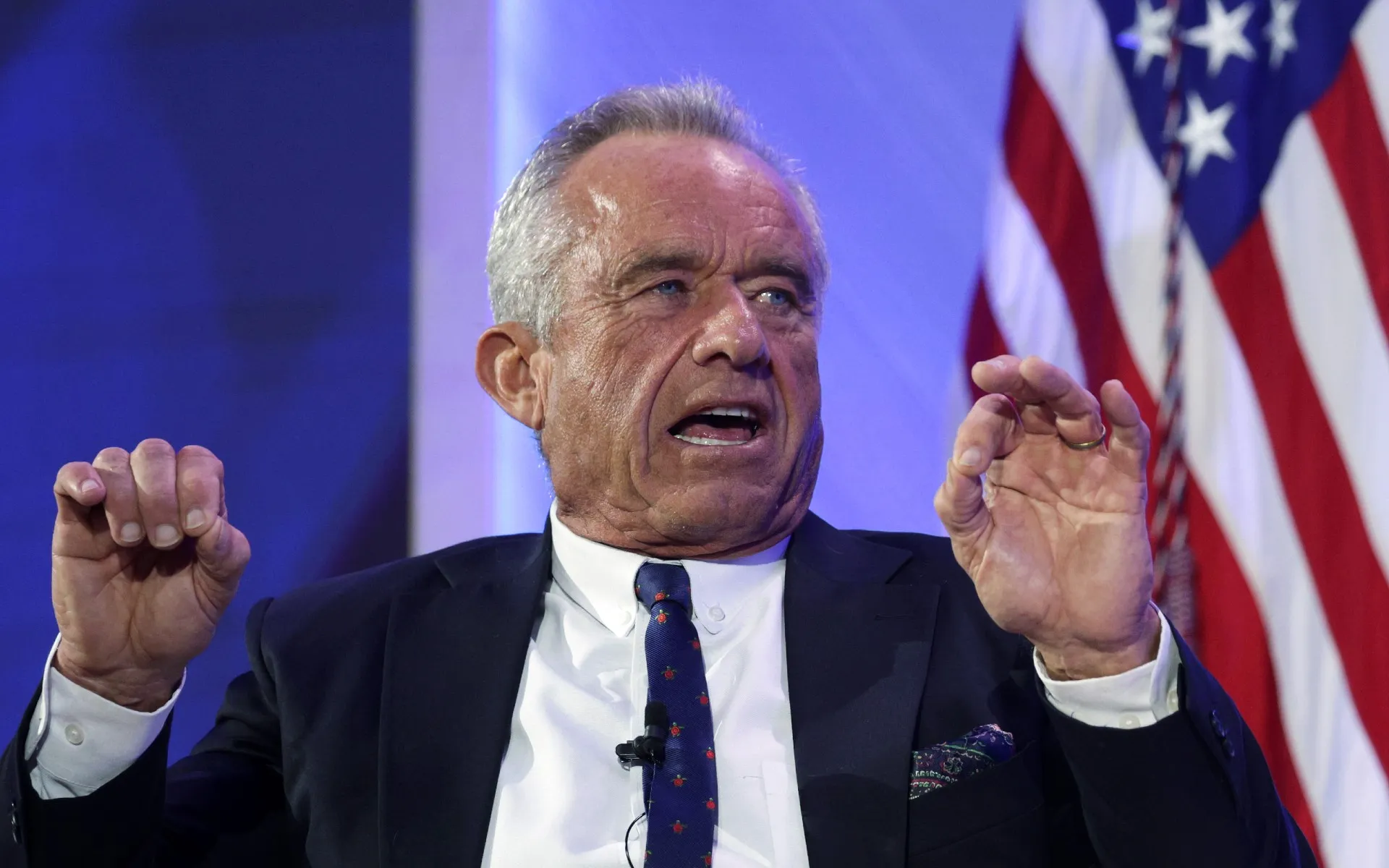
In line with his claim that there could be a link between vaccines (and other medications) and autism, Secretary of Health and Human Services Robert F. Kennedy Jr. has turned his attention to a class of drugs he believes could be linked to acts of mass violence. He intends to study antidepressant medications, including selective serotonin reuptake inhibitors (SSRIs).
Why is Kennedy scrutinizing antidepressants?
In November, Kennedy said that he would direct the Centers for Disease Control and Prevention to study the “long-taboo question of whether SSRIs and other psychoactive drugs contribute to mass violence,” in a post on X. It was not the first time he insinuated a connection between antidepressants and violence. In late August, following a mass shooting at a school in Minnesota that led to the death of two students and dozens of injuries, Kennedy evoked this purported link. He promised to launch studies on the “potential contribution of some of the SSRI drugs, and some of the other psychiatric drugs that might be contributing to violence,” he said on Fox News. He also made similar claims during a conference announcing his “Make America Healthy Again” report on children, saying the National Institutes of Health would oversee the planned research.
Health officials have “long monitored the side effects of such drugs, which millions of people use,” said Politifact. While new research could supply fresh findings, “existing data points don’t reflect that SSRIs cause mass violence.”
The Week
Escape your echo chamber. Get the facts behind the news, plus analysis from multiple perspectives.
SUBSCRIBE & SAVE
Sign up for The Week's Free Newsletters
Join more than 350,000 subscribers and keep yourself informed with a selection of The Week’s most interesting, enlightening and entertaining stories - plus daily puzzles.
Join more than 350,000 subscribers and keep yourself informed with a selection of The Week’s most interesting, enlightening and entertaining stories - plus daily puzzles.
Latest Videos FromThe Week US
The idea that psychiatric medications can “set off mass shooters certainly isn’t new,” said Gizmodo. While Kennedy has claimed “scientists are afraid to study the topic,” several studies have “tried to look for a possible association between the use of these drugs and mass violence.” While none of the existing data support a causative link between the drugs and violence, suicidal ideation does appear to be a “substantial mental health factor.”
That could explain why some research has found a potential link between antidepressant use and violence in general, said Ragy Girgis, a professor of clinical psychiatry at Columbia University’s Vagelos College of Physicians and Surgeons, to Gizmodo. They find a close relationship because “people who are suicidal or violent also have much worse depression.” People with worse depression are “more likely to be treated with antidepressant medications,” Girgis said. “But it’s not causative.”
What do experts think of RFK Jr.’s claims?
SSRIs are “generally safe and effective medications,” and there is “no overwhelming evidence that these drugs alone would cause patients who are taking them to commit acts of violence,” said Gregory Scott Brown, the chair of the American Psychiatric Association’s Council on Communications, to Gizmodo. The California State Association of Psychiatrists issued a rebuttal of RFK Jr.’s attempt to link SSRIs to mass shootings after he made remarks in September. “This is simply not true,” the CSAP said in a statement. What’s most worrying is that “such statements can scare people away from getting the care they need and deserve.”
Sensationalism may lead people to try to blame SSRIs for mass shootings, Girgis said to Gizmodo. Reports of shooters taking psychiatric medication “tend to make the event more of a headline and more attention-grabbing.” That’s “one reason there’s this attention bias to it.”
Equating SSRI users with violence risks unnecessarily stigmatizing mental health conditions, said Keith Humphreys, a professor of psychiatry and behavioral sciences at Stanford University, to Axios. There are “depressed people, people with schizophrenia, anxious people in every other country,” but they cannot “get guns as easily as you can get them here,” he said. It’s a “distraction from the real issue.”