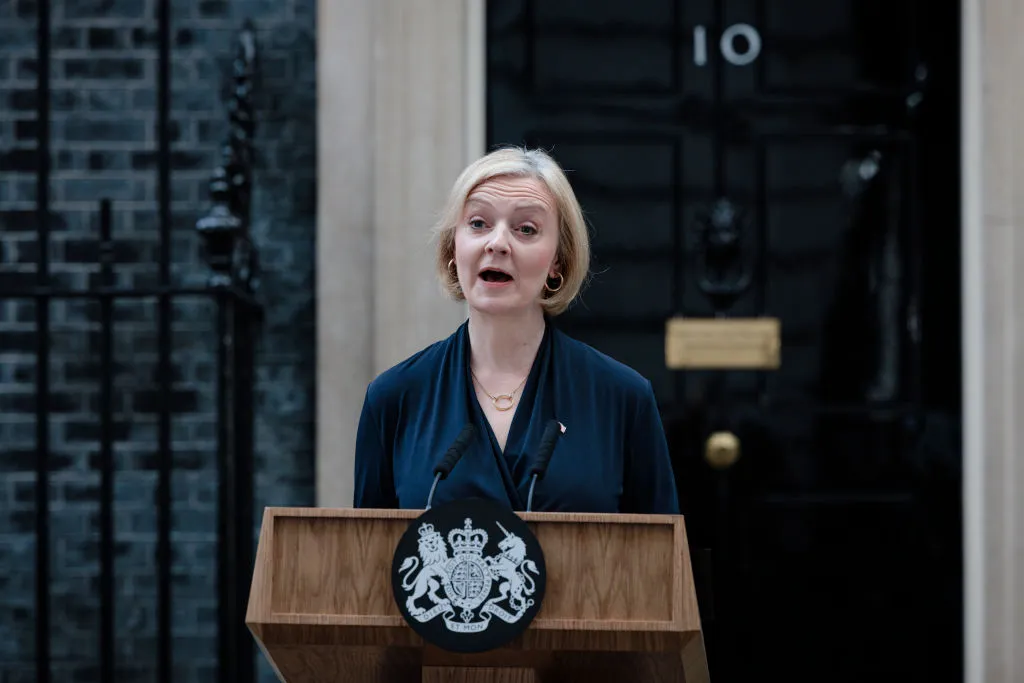
Liz Truss announced her intention to resign as the United Kingdom's prime minister on Thursday, only six weeks into her tumultuous term. Her departure makes her the shortest-serving U.K. prime minister in history, CNN reports.
In a statement outside Downing Street, Truss said she would be stepping aside so that her replacement could be chosen within the next week, following mounting pressure from her own Conservative Party's legislators. They said they lost faith in her leadership capabilities, per CNN.
During her brief statement, Truss said, "I cannot deliver the mandate on which I was elected," per The New York Times. She said she had informed King Charles III of her resignation and would remain in her position until a leadership election chose her successor.
The Week
Escape your echo chamber. Get the facts behind the news, plus analysis from multiple perspectives.
SUBSCRIBE & SAVE
Sign up for The Week's Free Newsletters
Join more than 350,000 subscribers and keep yourself informed with a selection of The Week’s most interesting, enlightening and entertaining stories - plus daily puzzles.
Join more than 350,000 subscribers and keep yourself informed with a selection of The Week’s most interesting, enlightening and entertaining stories - plus daily puzzles.
Latest Videos FromThe Week US
Truss' tenure as prime minister has been marked with controversy and economic uncertainty as she struggled to gain control after former Prime Minister Boris Johnson's departure over the summer. Her announcement signals more trouble for the ruling Conservative Party, which has struggled to regain public confidence since Johnson stepped down, per CNN.
Truss' efficacy as a leader was called into question after her former Treasury secretary Kwasi Kwarteng released a mini-budget featuring proposals for steep tax cuts that threw the British economy into chaos. The value of the British pound plummeted to a record low against the U.S. dollar, and Truss subsequently fired Kwarteng. The government worked to reverse her tax proposals, but the damage was already done as Truss's approval rating fell dramatically, the Times reports.