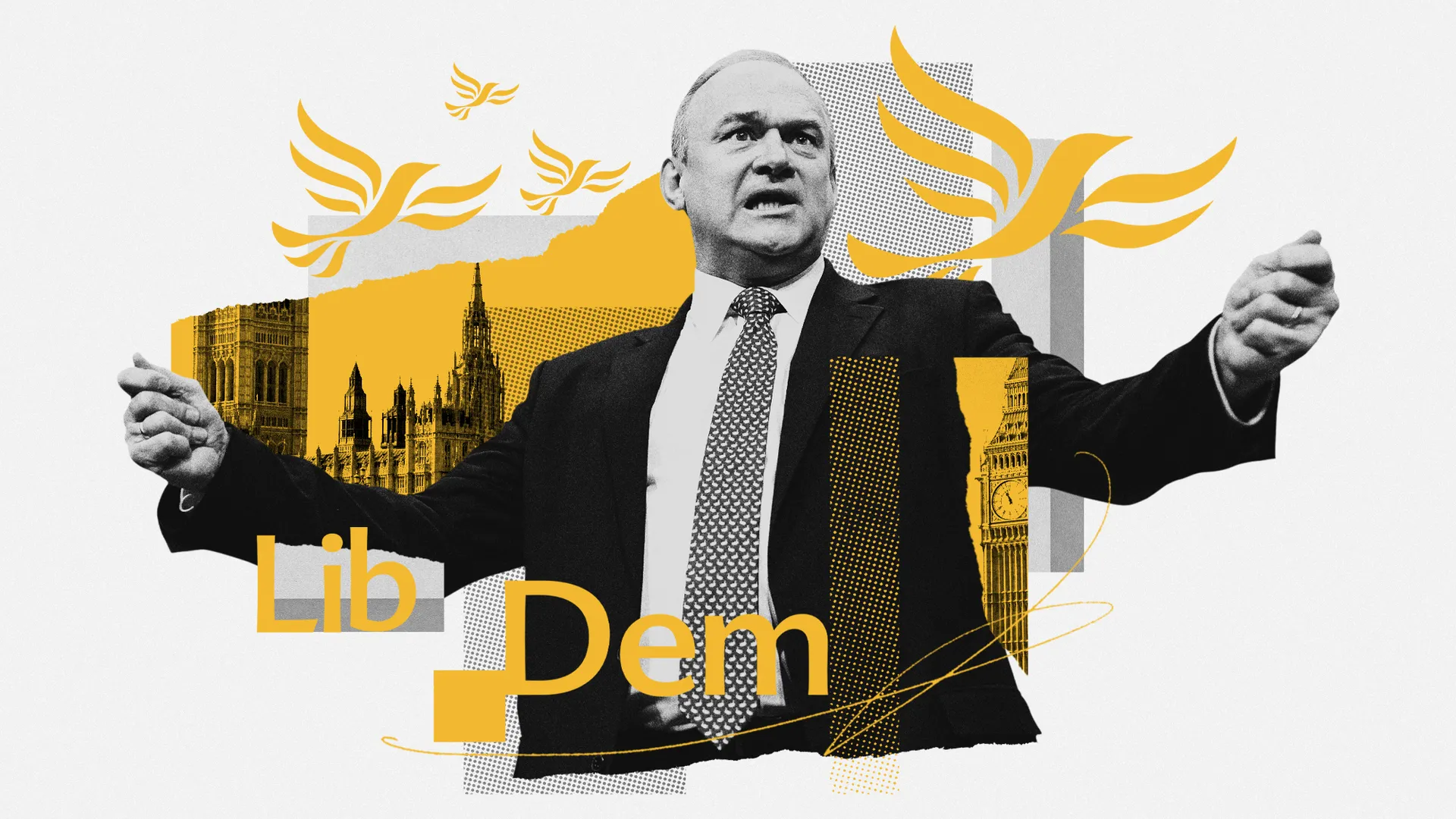
"How do you excite people about moderate positions?"
“In the clamour of politics in 2025” that is the “quandary” facing the Liberal Democrats, said Laura Kuenssberg on the BBC.
Leader Ed Davey’s answer up to now has been to try to cut through with a series of attention-grabbing stunts. These have proved surprisingly successful electorally, winning his party 72 seats at the last general election, a record number.
The Week
Escape your echo chamber. Get the facts behind the news, plus analysis from multiple perspectives.
SUBSCRIBE & SAVE
Sign up for The Week's Free Newsletters
Join more than 350,000 subscribers and keep yourself informed with a selection of The Week’s most interesting, enlightening and entertaining stories - plus daily puzzles.
Join more than 350,000 subscribers and keep yourself informed with a selection of The Week’s most interesting, enlightening and entertaining stories - plus daily puzzles.
Latest Videos FromThe Week US
That is all well and good, said Charlotte Henry in The Spectator, but “at a time at which there is a horrendous, and horrendously unpopular, Labour government”, as well as a Conservative Party “in seemingly terminal decline”, the Lib Dems “should be offering more”.
Those hoping this weekend’s party conference would usher in a new, more serious Lib Dems were quickly disappointed after Davey entered the Bournemouth venue at the head of a marching band. It was undoubtedly “eye-catching”, said The Independent’s editorial, but ultimately another “vacuous video-opportunity”.
“This is the perfect time for the Lib Dems to take it to the next level, presenting themselves as a serious alternative to the rise of Reform,” said UnHerd. Unfortunately, the decision “to march into conference at the head of the world’s most embarrassing parade – while his party had a deeply stupid row over trans issues” showed that “these are not serious people”.
The public, it seems, is also growing weary of the endless stunts. Polling conducted by More in Common and presented to members gathered in Bournemouth showed more than 60% of voters think Davey’s campaign antics make the party look less serious. This also extends to nearly half of Lib Dem supporters. Perhaps more worrying is that many voters are still unsure what the party stands for.
Despite the criticism, Davey remains in a “strong position, with a largely happy party behind him”, said Kuenssberg. He will, however, “need to think through how to sell a set of moderate ideas to a voting public that appears to be eager for more drastic solutions”.
It is true they “need a harder edge to their policies, but they should focus on issues on which they could influence a government in a hung parliament, which ought to be the only point of people voting for them”, said The Independent. Social care and sewage “should not be the limit of Lib Dem ambition” when they could offer a “more forward policy on integration with the EU, a more compassionate approach to immigration and a more genuinely liberal attitude to the cause of equal rights”.
What next?
With two-thirds of constituencies where the Lib Dems are behind by less than 10,000 votes held by the Conservatives “winning over disillusioned Tories is the focus”, said The Telegraph.
This explains Davey’s decision to “lay out his pitch” in The Telegraph before the conference. In the article he denounced the “divisive politics being peddled by the likes of Kemi Badenoch and Nigel Farage” and promised to “provide a home to the millions of former Conservative voters repulsed by the extremes of both the right and left”.
The Lib Dems hope this strategy could result in them gaining more than 100 MPs at the next general election, according to The New Statesman, making them a serious force if, as the current polls suggest, no party emerges with an overall majority.
This still requires “hefty qualification”, especially given that “we are still a long way from knowing how willing people are to vote tactically around Reform”.
Tory woes, however, mean that “the Lib Dems need only stand still for the next three years to profit from the decline and fall of Britain’s oldest party”.