At CNBC debate, Donald Trump denounces super PACs, rivals who rely on them

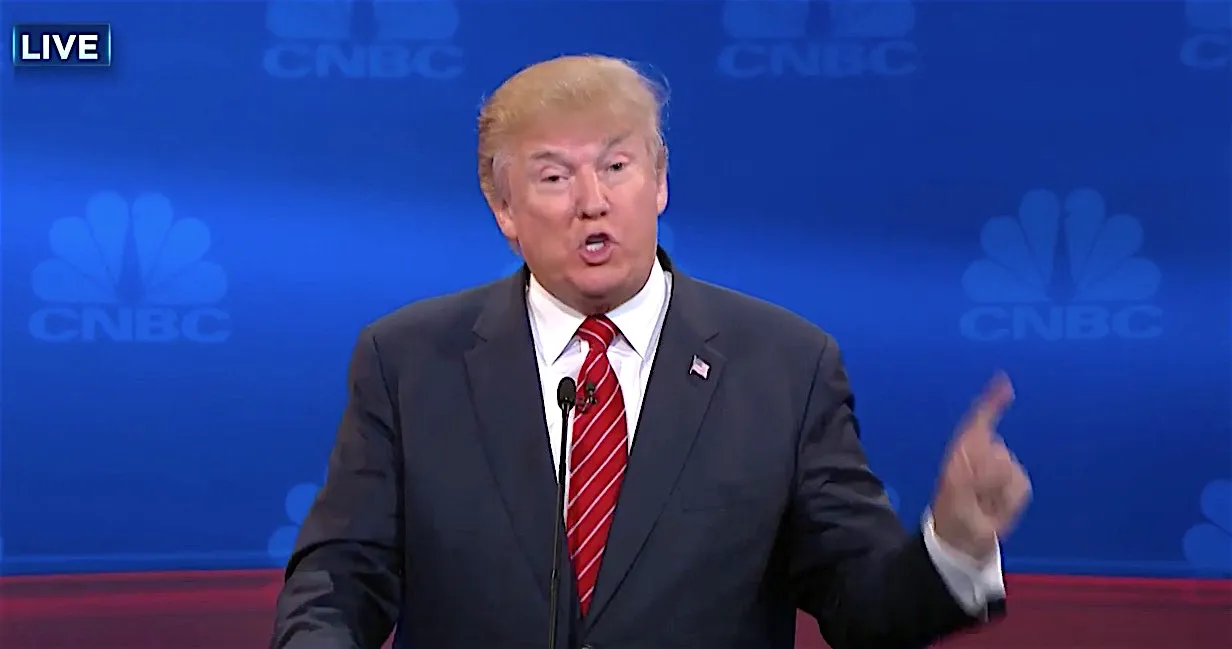
A lot of Republicans at Wednesday night's debate lobbed criticism at Sen. Bernie Sanders (I-Vt.), the self-described democratic socialist running for the Democratic presidential nomination. But it turns out that Donald Trump and Sanders have something in common: Neither has a super PAC supporting them. (Trump is largely self-financing, while Sanders is taking in mostly small donations.) And like all the Democrats, Trump is opposed to super PACs.
"Super PACs are a disaster, they're a scam, they cause dishonesty, and you'd better get rid of them," Trump said on Wednesday. "Because they are causing a lot of bad decisions to be made by some very good people. And I'm not blaming these people," he said, pointing at his rivals on the stage, adding to laughter, "but, I guess I could." He repeated that super PACs cause good people to make bad decisions, then said that if "anything comes out of this whole thing, with some of these nasty and ridiculous questions, I will tell you: You'd better get rid of these super PACs, because they're causing a big problem in this country," citing how they favor lobbyists and "special interests." Watch below. Peter Weber
The Week
Escape your echo chamber. Get the facts behind the news, plus analysis from multiple perspectives.

Sign up for The Week's Free Newsletters
Join more than 350,000 subscribers and keep yourself informed with a selection of The Week’s most interesting, enlightening and entertaining stories - plus daily puzzles.
Join more than 350,000 subscribers and keep yourself informed with a selection of The Week’s most interesting, enlightening and entertaining stories - plus daily puzzles.


