SpaceX has its first paying moon passenger. No, it probably isn't Elon Musk.
A free daily email with the biggest news stories of the day – and the best features from TheWeek.com
You are now subscribed
Your newsletter sign-up was successful
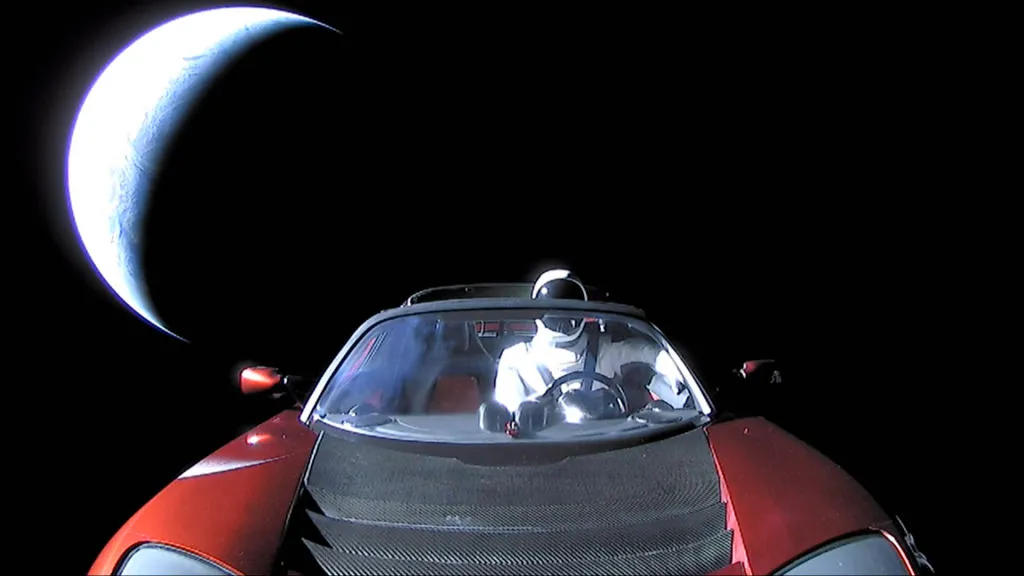
In February 2017, Elon Musk announced that his SpaceX rockets would take two unidentified space tourists on a trip around the moon by the end of 2018. That timeline was pushed back to 2019 earlier this year, but on Thursday night, SpaceX dropped a surprise announcement.
Who is this mystery passenger? Probably not Musk, who dropped a clue — a Japanese flag emoji — on Twitter when asked about the space tourist. The original plan had been to send the two space tourists around the moon on a Dragon spacecraft powered by a Falcon Heavy rocket, which SpaceX successfully launched in May. The BFR, which Musk has described as the biggest rocket ever made, is still in the development stage.
If Musk does end up being one of the passengers on his around-the-moon vacation, he wouldn't be the only billionaire space tourism entrepreneur to ride on his own spacecraft. "Before the end of the year I hope to be sitting in a Virgin Galactic spaceship, going to space," Virgin chief Richard Branson told Bloomberg TV in May.
Article continues belowThe Week
Escape your echo chamber. Get the facts behind the news, plus analysis from multiple perspectives.
Sign up for The Week's Free Newsletters
From our morning news briefing to a weekly Good News Newsletter, get the best of The Week delivered directly to your inbox.
A free daily email with the biggest news stories of the day – and the best features from TheWeek.com
Peter has worked as a news and culture writer and editor at The Week since the site's launch in 2008. He covers politics, world affairs, religion and cultural currents. His journalism career began as a copy editor at a financial newswire and has included editorial positions at The New York Times Magazine, Facts on File, and Oregon State University.