The Week The Week
flag of US
US
flag of UK
UK
https://cdn.mos.cms.futurecdn.net/skoGBi9qKFoUtnNWkovjJQ.jpg

SUBSCRIBE

Try 6 Free Issues

Sign in
  • View Profile
  • Sign out
  • The Explainer
  • Talking Points
  • The Week Recommends
  • Podcasts
  • Newsletters
  • From the Magazine
  • The Week Junior
  • More
    • Politics
    • World News
    • Business
    • Health
    • Science
    • Food & Drink
    • Travel
    • Culture
    • History
    • Personal Finance
    • Puzzles
    • Photos
    • The Blend
    • All Categories
  • Newsletter sign up Newsletter
  • The Week Evening Review
    China’s export surge, MI5’s mole in the IRA, and a Peace Prize winner in disguise

     
    TODAY’S BIG QUESTION

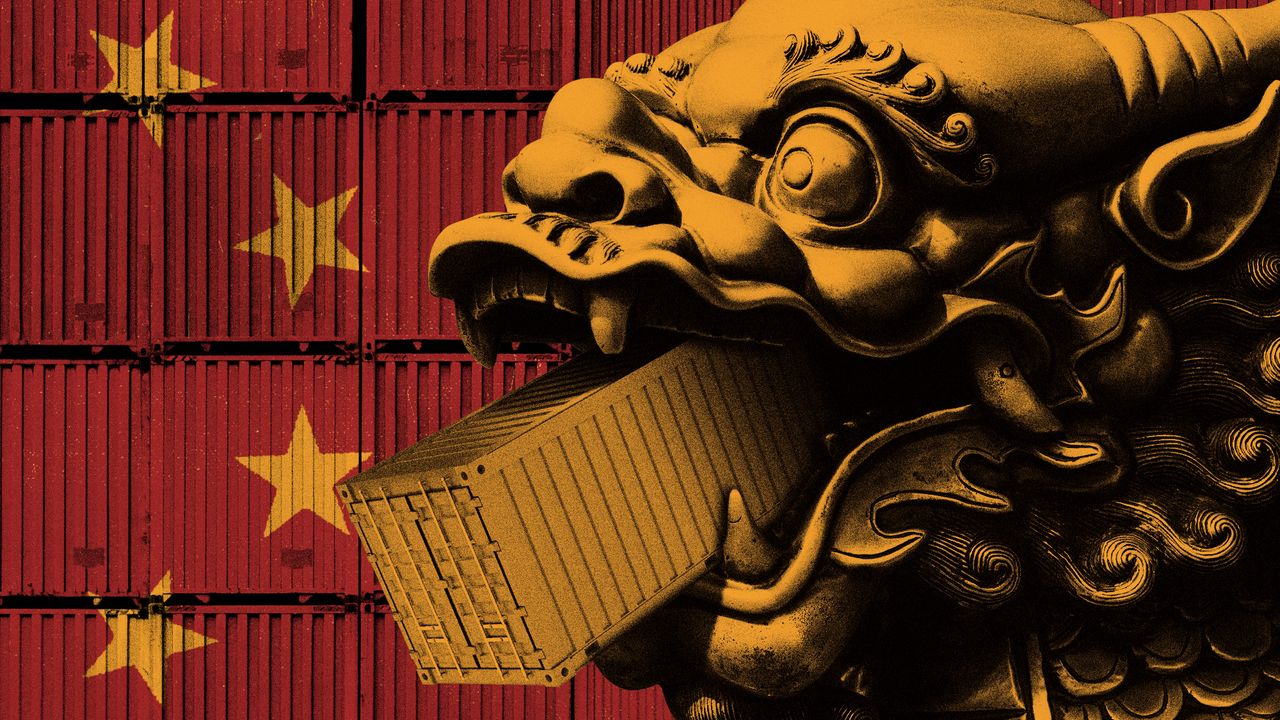
    Will China’s trade surplus change the world economy?

    Donald Trump’s tariffs have failed to slow China’s export economy, as the rival nation’s trade surplus for 2025 surges past a record-breaking $1 trillion.

    China’s exports to the US were down by nearly a third year-on-year in November, but have accelerated significantly to Africa, Southeast Asia and Latin America, fuelling concerns about “growing imbalances” in the global economy, said The Wall Street Journal. This trillion-dollar milestone puts China’s “dominance” of world trade “into even starker relief” and has “raised alarms around the world, especially in Europe”.

    What did the commentators say?
    Europe is being “squeezed between an ultra-competitive China and a protectionist America”, said Politico. Emmanuel Macron thinks “Beijing should ride to its rescue with long overdue foreign investment”. This is a moment of “life or death for European industry”, the French president told Les Echos financial newspaper. He has threatened Trump-style tariffs on imports but would prefer a “quid pro quo” agreement.

    China’s gigantic trade surplus reveals the difficulty that Trump and others will face in “trying to rebalance global trade”, said Amy Hawkins in The Guardian. But it also demonstrates how much Beijing’s economic might is “still overwhelmingly reliant on foreign markets”. And despite concerns that China is flooding “parts of the world – especially Southeast Asia and Europe – with cheap goods that threaten local industry”, many of those goods may “ultimately end up in the US” after travelling through third countries to avoid Trump’s tariffs.

    What next?
    Whether the current trade truce between the US and China can hold is a key issue for the global economy. We could be looking at a “second China shock”, said Alexandra Stevenson in The New York Times. The first came two decades ago when American and European companies outsourced manufacturing to China while closing factories at home. The second now looms as China redirects more of its exports to developing countries that have “less control over how it unfolds”. There could be “profound” social consequences, including unemployment and unrest, in countries such as Indonesia, Thailand and Malaysia. “They’re going to need to brace for impact.”


    THE EXPLAINER

    ‘Stakeknife’: MI5’s man inside the IRA

    The government is under growing pressure to name an MI5 spy who operated at the heart of the IRA for decades, as a damning new report details the findings of a nine-year, £47.5 million investigation into his alleged crimes.

    Despite the efforts of MI5 to protect his identity, the agent, codenamed “Stakeknife”, is widely accepted to be West Belfast man Freddie Scappaticci (pictured above), after he was unmasked by the media in 2003. But the British authorities have refused to confirm his identity, citing the “neither confirm nor deny” policy for spies.

    What did it find?
    The 160-page Kenova Final Report revealed evidence of Stakeknife’s involvement in “serious and unjustifiable criminality, including kidnap, interrogation and murder”. He has been implicated in 14 murders and 15 abductions while working in a notorious IRA unit known as the “nutting squad” that, ironically, was responsible for flushing out spies within its ranks.

    An interim report last year found that Stakeknife’s actions probably “resulted in more lives being lost than saved”. The newly released full report says the British security services protected him after overvaluing him as an asset.

    What did MI5 know?
    The security service has previously said its involvement with Stakeknife was “peripheral”. But the report states that MI5 was “closely involved in his handling” and “had automatic sight of all Stakeknife intelligence and therefore was aware of his involvement in serious criminality”.

    Stakeknife submitted 3,517 intelligence reports during his time under cover. He was paid hundreds of thousands of pounds for his services and had a dedicated phone line to contact his handlers. Senior Army figures treated him as the “crown jewel” of British intelligence, and he had a reputation as “the goose that laid the golden eggs”, the report said.

    Will he be officially identified?
    Iain Livingstone, head of Operation Kenova, has backed calls for Stakeknife to be named. The government has said it is waiting on the conclusion of an ongoing case in the Supreme Court that has implications for the “neither confirm nor deny” policy. “The government’s first duty is, of course, to protect national security and identifying agents risks jeopardising this,” said Northern Ireland Secretary Hilary Benn.


    QUOTE OF THE DAY

    “The law must acknowledge that people can change, and that past mistakes should not define your future.”

    Labour MP Fred Thomas backs a proposal being considered by the government to wipe childhood criminal records. “Too many people are shut out from jobs and opportunities” due to offences committed in their youth, the former Royal Marine said on X.


    Poll watch

    Americans are feeling the pinch. More than a quarter (27%) have skipped a medical check-up in the past two years because of the cost, while nearly half (46%) can’t afford a holiday involving air travel, according to a Politico poll of 2,098 US adults. A majority (55%) blame Donald Trump for soaring food prices.


    TALKING POINT

    Nnela Kalu’s historic Turner Prize win

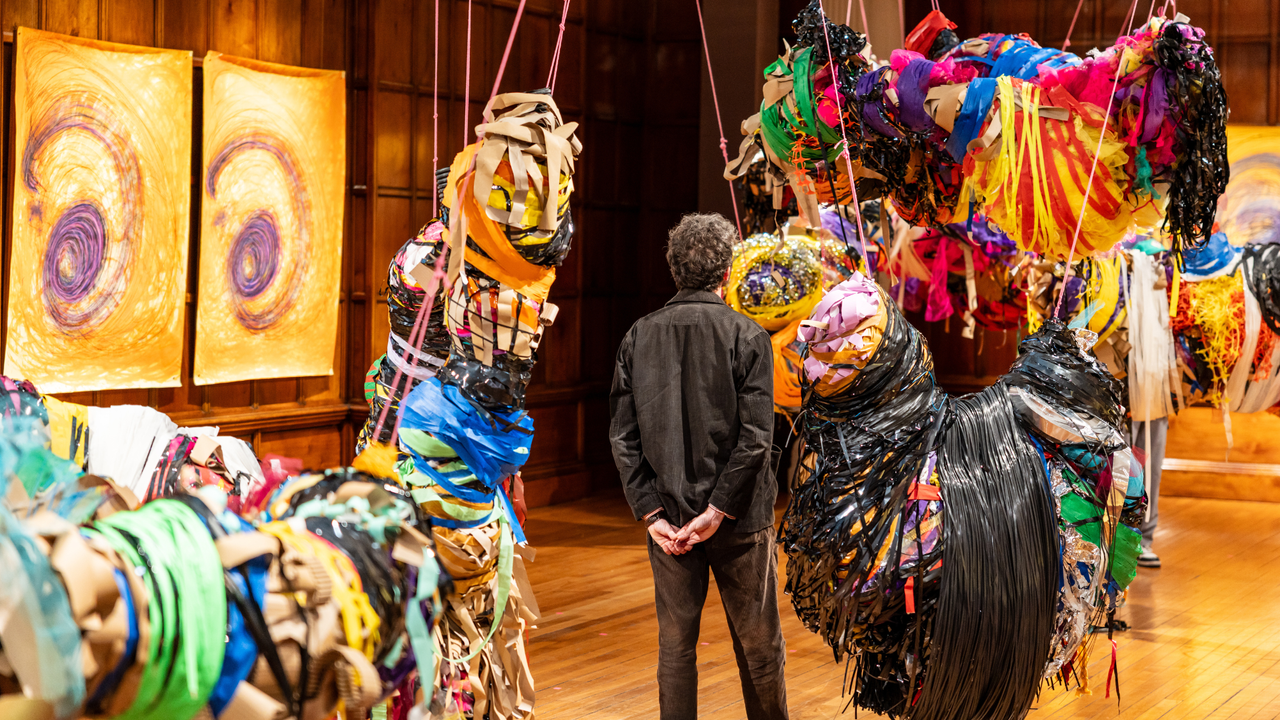
    Critics are weighing in with their verdicts after one of the world’s most prestigious – and hotly debated – art prizes was awarded to a 59-year-old Glaswegian artist with autism and learning disabilities. Honoured by the 2025 Turner Prize for what the judges called her “bold and compelling” work, Nnena Kalu is the “first learning-disabled artist to be nominated” for the prize, “let alone win it”, said Mark Hudson in The Independent.

    Kalu’s large, hanging, cocoon-like sculptures, made from old VHS tape, rope and fabric, and her bright, swirling “vortex” drawings” in pen and pastel, beat the work of three other shortlisted artists. Her win “breaks down walls” between “neurotypical and neurodiverse artists”, said Tate Britain director Alex Farquharson, chair of this year’s jury.

    ‘Seismic’ victory
    “Kalu’s forms come at you with their almost alien unknowable presence,” said Adrian Searle in The Guardian. You become entangled in the work’s “roaring, spilling, snaggling details” and can’t help but wonder about your “own boundaries, the body’s beginnings and its endings”. Her own verbal communication is limited, so her work “has to speak for itself” – and it has quite a bit to say.

    “Much has been made, and rightly so,” of Kalu’s win, but her victory is “seismic” beyond reasons of equality and diversity, said The Independent’s Hudson. Her work places an emphasis “on the visual, tactile and experiential in art – values that have lost primacy in recent years”. 

    ‘Maddening’ decision
    Kalu’s “triumph will be hailed as a watershed moment for Britain’s disabled community”, but the judges’ “decision is also maddening”, said Alastair Sooke in The Telegraph. The shortlisted Mohammed Sami, who “makes vast, haunting contemporary history paintings, like half-remembered nightmares”, will “feel that he’s been cheated”.

    Her “lumpy sculpture, fashioned from brightly coloured gaffer tape and discarded bubble wrap”, is “up there with the worst art” ever nominated for the Turner Prize, Waldemar Januszczak, art critic at The Sunday Times, said on his website in October.

    Maybe “it wouldn’t be the Turner Prize without a soupçon – or rather a bucketful – of provocation”, said The Telegraph’s Sooke. But “did the jury really consider her the strongest artist” on the shortlist? Jury chair Farquharson said the decision “wasn’t about wanting, first and foremost, to give the prize to Nnena as a neurodiverse artist”. It was “a real belief in the quality and uniqueness of her practice, which is inseparable from who she is”.


    Good day 🍝

    … for Italian cooking, which has been awarded special cultural heritage status by Unesco. Individual foods including pizza have previously been listed, but this time the country’s entire cuisine was honoured, along with its “artisanal food preparation techniques” and the practice of connecting with family and community.


    Bad day 🖥️

    … for Calibri, as the sans-serif typeface is banned from US State Department documents. Secretary of State Marco Rubio has reversed a “wasteful” Biden-era directive to swap Times New Roman font for Calibri, which is considered more accessible for readers with disabilities such as dyslexia. 


    picture of the day

    Out of hiding

    Venezuelan opposition leader María Corina Machado greets supporters in Oslo after she was awarded the Nobel Peace Prize. The democracy activist arrived in the Norwegian capital a few hours too late to accept the prize in person, after ⁠donning a disguise to defy a ⁠decade-long travel ban imposed by her home country.

    Lise Åserud / NTB / Alamy


    Puzzles

    Daily crossword

    Test your general knowledge with The Week’s daily crossword, part of our puzzles section, which also includes sudoku and codewords

    Play here


    THE WeEK RECOMMENDS

    Oh yes they are! The best Christmas pantos

    Dive into festive cheer, from now into the new year, with traditional favourites and modern twists-on-a-tale.

    Mama Goose, Theatre Royal Stratford East, London
    You may be familiar with the sight of “Elon Musk as a pantomime villain”, but at the Theatre Royal Stratford East, you have the pleasure of seeing a “panto villain as Elon Musk”, said The Guardian. “Mama Goose” (pictured above) takes wacky to the next level, and is chock-a-block with “afrobeat-tinged music” and “satirical sideswipes”.

    Jack and the Beanstalk, Bristol Hippodrome
    “Live music, vibrant costumes, stunning sets and breathtaking special effects”: that sums up this fun take on the iconic panto show, said Radio Times. Will Young makes his panto debut as the magical Spirit of the Beans in this “unforgettable adventure”. Expect a lot of farce and silliness, with plenty of audience participation.

    Cinderella: A Fairytale, Royal Lyceum Theatre, Edinburgh
    Sally Cookson’s “celebrated adaptation” is guaranteed to “delight the whole family”, said Edinburgh News. Her modern take on the panto classic (still with the resplendent Queen’s Ball!) combines music and puppetry, promising a festive production that “adds a magical flutter of wings to happily ever after”.

    Robin Hood, Manchester Opera House
    This Northern panto is steeped in tradition, with “all the bells and whistles” of a festive performance, said The Telegraph. Local hero and stand-up star Jason Manford joins the production for the fourth year in a row, this time starring as Robin Hood. Strap in for a rollicking ride, full of laughter, slapstick and “surely the odd local Oasis gag”.


    Statistic of the day

    79.1 years: The average number of years that a boy born in the UK between 2022 and 2024 can expect to live. Life expectancy for females has returned to pre-pandemic levels, at an average of 83 years, but the average for males is still slightly lower than before Covid struck.


    instant opinion

    Today’s best commentary

    Wes Streeting’s ‘Overdiagnosis’ Crusade Isn’t Going to Help Anyone
    Micha Frazer-Carroll on Novara Media
    My chest tightened at news of the health secretary’s “review into supposed mental health ‘overdiagnosis’”, writes Micha Frazer-Carroll. With welfare reforms in the offing, this is “clearly intended to push sick and suffering people back into work”. A “culture war” is being waged to “distract from concrete political and economic” issues. We must change “a society that disables so many, then punishes them for their distress”. That should be the focus, so “let’s not allow Labour to misdiagnose the problem”.

    Young hipsters are adopting Churchill’s favourite prop – this is why
    Francesca Peacock in The Telegraph
    The cigar, that “smoking accessory of gentlemen of old”, is “making an unlikely come-back”, writes Francesca Peacock. “Gen-Z nicotine addicts” are reaching “for something unexpected” now that “vapes and cigarettes have become ‘uncool’”. Old stuff coming back into fashion “is a pattern that repeats itself across history” – think of the return of vinyl following “CDs, MP3s and streaming services”. Perhaps after “AI-robots” overtake “us all in a few years”, “being merely human will become achingly cool”.

    Snobbery is the best weapon against screen time
    Lara Prendergast in The Spectator
    I rejoiced when the Princess of Wales revealed that “she has a strict ‘no phones at the table’ rule”, writes Lara Prendergast. Then Prince William “let slip” that 12-year-old Prince George “isn’t allowed a smartphone”. Hopefully, the now royal-warranted “anti-smartphone movement” will “exert its influence”. I think “social stigma is potentially the most powerful weapon we have”: “if Prince George isn’t getting an iPhone for Christmas, plenty of other children certainly won’t be either”.


    word of the day

    Littlers

    “Darts players are getting younger and younger,” Professional Darts Corporation president Barry Hearn told BBC Radio 4 this morning, as the World Darts Championship kicks off. Defending champion Luke Littler, now 18, has ushered in a “new era of young players”, with children as young as 10 achieving previously “unthinkable” scores. Littler is favourite to win at Alexandra Palace this time, but competition is coming from these “littler Littlers”.


    Evening Review was written and edited by Hollie Clemence, Jamie Timson, Joel Mathis, Abby Wilson, Chas Newkey-Burden, Will Barker, David Edwards, Adrienne Wyper, Helen Brown and Kari Wilkin, with illustrations from Stephen Kelly.

    Image credits, from top: illustration by Stephen Kelly / Getty Images; PA Images / Alamy; Andrew Benge / Contributor / Getty Images; Lise Åserud / NTB / Alamy; Mark Senior

    Morning Report and Evening Review were named Newsletter of the Year at the Publisher Newsletter Awards 2025
     

    Recent editions

    • Morning Report

      US seizes tanker near Venezuela

    • Evening Review

      Normalising the Taliban

    • Morning Report

      Australia’s sweeping social media ban begins

    VIEW ALL
    TheWeek
    • About Us
    • Contact Future's experts
    • Terms and Conditions
    • Privacy Policy
    • Cookie Policy
    • Advertise With Us
    • FAQ
    Add as a preferred source on Google

    The Week UK is part of Future plc, an international media group and leading digital publisher. Visit our corporate site.

    © Future Publishing Limited Quay House, The Ambury, Bath BA1 1UA. All rights reserved. England and Wales company registration number 2008885.