The Week The Week
flag of US
US
flag of UK
UK
https://cdn.mos.cms.futurecdn.net/skoGBi9qKFoUtnNWkovjJQ.jpg

SUBSCRIBE

Try 6 Free Issues

Sign in
  • View Profile
  • Sign out
  • The Explainer
  • Talking Points
  • The Week Recommends
  • Podcasts
  • Newsletters
  • From the Magazine
  • The Week Junior
  • More
    • Politics
    • World News
    • Business
    • Health
    • Science
    • Food & Drink
    • Travel
    • Culture
    • History
    • Personal Finance
    • Puzzles
    • Photos
    • The Blend
    • All Categories
  • Newsletter sign up Newsletter
  • The Week Evening Review
    Loan for Ukraine, the intifada, and the non-fiction nosedive

     
    today’s Big Question

    Who is paying for Europe’s €90bn Ukraine loan?

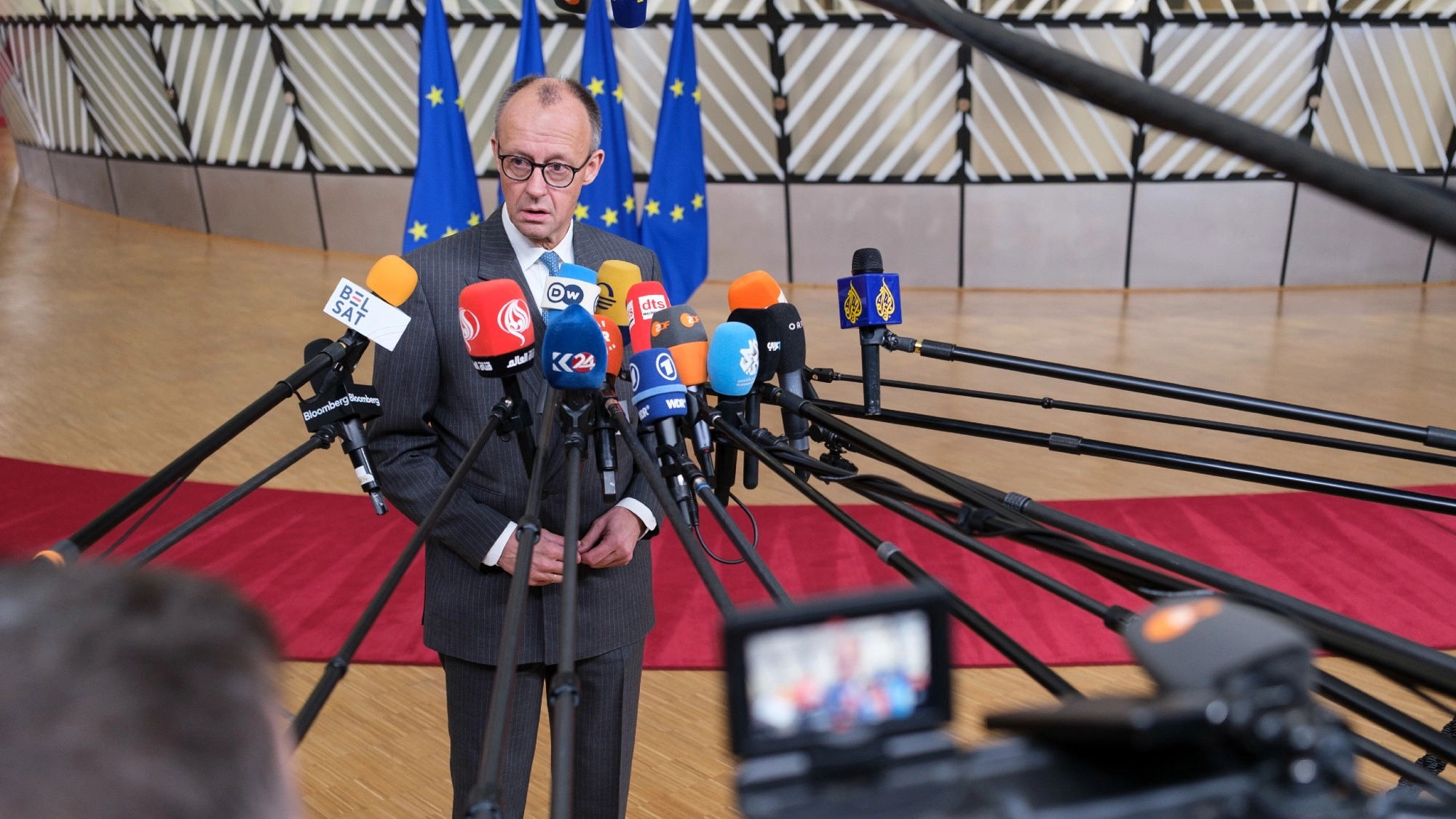
    EU leaders have chosen to raise €90 billion in joint debt to fund the Ukrainian war effort for the next two years. An earlier proposal, pushed by Germany’s Friedrich Merz (pictured, above), for a “reparations loan” secured against frozen Russian assets had fallen apart.

    Hungary, Czechia and Slovakia will not participate in the joint debt scheme, however, meaning an “EU of 27 member states turned into a gang of 24” at the summit in Brussels last night, said Politico.

    What did the commentators say?
    A “failure to find the cash” at all would have been “terrible” proof of “weakness” when Europe “desperately needed to show resolve”, said the Financial Times. But the bloc “blinked” when it came to the trickier step of using seized Russian assets to do so.

    With the majority of frozen Russian funds held by Belgium-based financial services firm Euroclear, Belgian PM Bart De Wever “played hardball”, said Euronews. His demands for unlimited protection for Belgium from any legal complications arising from the use of the assets made the proposal “unpalatable for the rest” of the EU countries.

    The joint debt arrangement means there is no guarantee that the funds will ever be paid back. The loan would be “interest-free” and the idea is that Kyiv would pay it back with “reparations cash from Moscow”. However, it is “by no means guaranteed that Russia will ever pay reparations for its invasion”, so the loan is probably “going to become a grant”.

    “Arguably, it didn’t need to be so messy,” said Politico. Ukraine’s European allies “have the resources to beat Putin if they really want to”. What’s concerning “for Ukraine’s allies” is the dwindling public enthusiasm for the war effort in Europe’s biggest economies. By deciding on the €90 billion loan deal, “Europe’s leaders opted for the easiest answer this week. And even that was almost too hard.”

    What next?
    EU leaders emphasised that the frozen funds “will remain immobilised, and the union reserves its right to make use of them to repay the loan”, said the Financial Times. But, in the meantime, it seems more likely that “successive EU budgets will absorb the cost”.


    tHE eXPLAINER

    What is the global intifada?

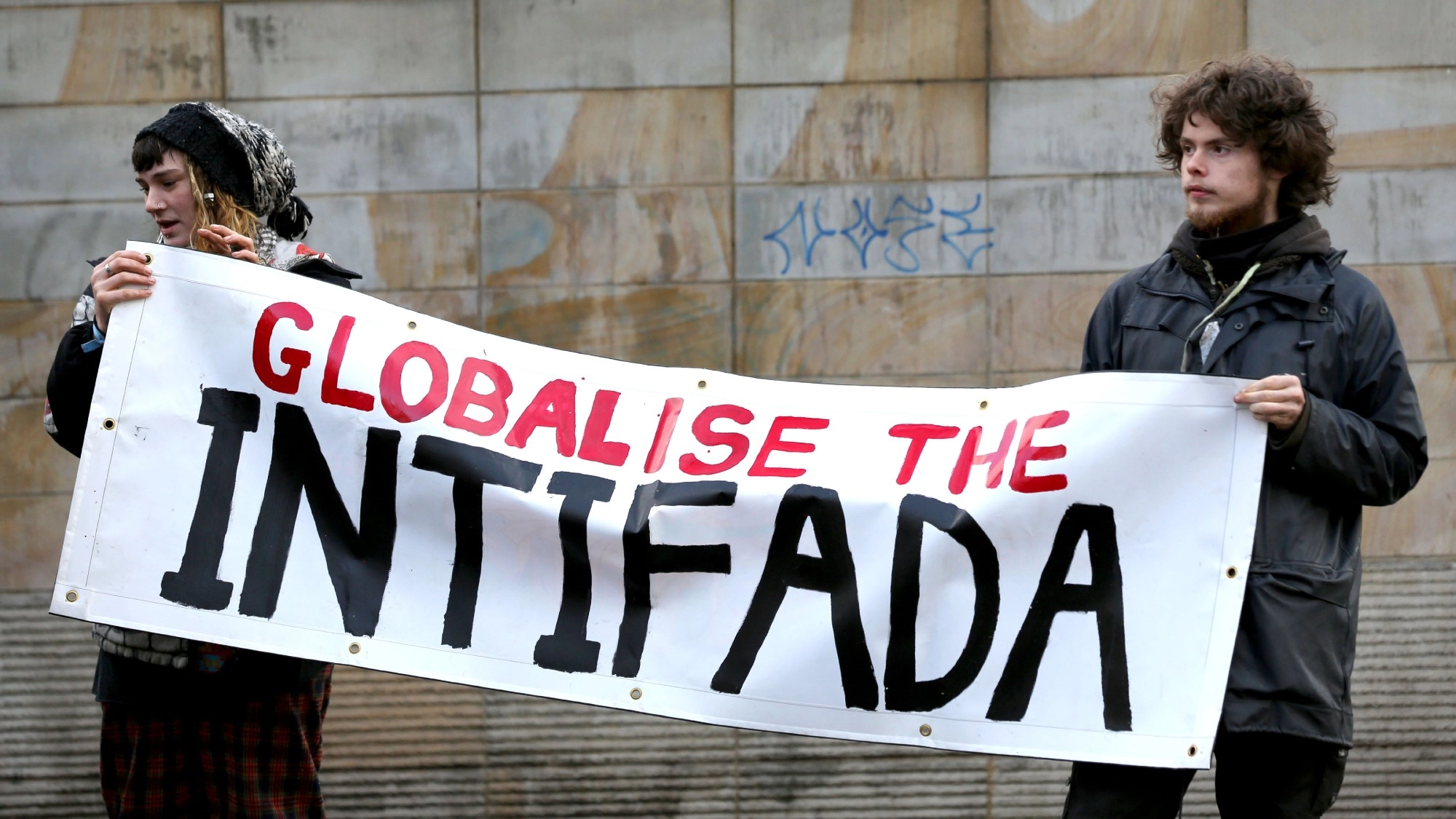
    Police forces in London and Manchester have said they will take a “more assertive” approach to protesters who call for global intifada, following antisemitic attacks in Australia and the UK. Officers arrested two people this week for racially aggravated public order offences after they allegedly chanted “slogans involving calls for intifada” at a pro-Palestinian protest in London.

    What does intifada mean?
    Intifada is an Arabic word derived from the verb “to shake off”. It’s used figuratively to describe an uprising or rebellion and, most commonly now, to describe the “two major uprisings” against the Israeli presence in the West Bank and the Gaza Strip in 1987-1993 and 2000-2005, said the Institute for Middle East Understanding.

    Both those periods saw Palestinians participate in peaceful protests and acts of civil disobedience, but there were also violent clashes with Israeli security forces and deadly terrorist attacks within Israel. More than 1,000 Israelis and about 5,000 Palestinians died in such incidents between the start of the first intifada and the 2005 Sharm El Sheikh summit that brought an end to the second.

    How did ‘globalise the intifada’ become a rallying cry?
    The slogan has long been used to rally international support for Palestinian resistance against Israeli military occupation. First popularised at solidarity demonstrations around the world during the second intifada, it has become a common cry at pro-Palestine demonstrations since Israel launched its military operations in Gaza following the 7 October attacks.

    Why can it be considered antisemitic?
    As the “most prominent expressions” of intifada have involved “violence”, said the American Jewish Committee, “globalising the intifada” is often understood to mean “encouraging violence” against Israelis and Jews, even if the “intent of the person saying this phrase may be different”.

    The BBC recently had to correct a website article that described intifada as “largely unarmed and popular”. It was amended to say that the word was regarded by some as a “call for violence against Jewish people”.

    But Palestine Solidarity Campaign director Ben Jamal said that intifada was about “uprising against injustice”. And the “implication” that language used to “support the liberation of the Palestinian people” is “only open to interpretation” by pro-Israel groups is “deeply problematic”.


    Poll watch

    One in three (33%) Britons are turning to AI chatbots, such as ChatGPT, for “emotional purposes”. And one in 25 (4%) of us are doing so every day, according to a survey of 2,028 people by the UK AI Security Institute, a government-backed research unit.


    Statistic of the day

    A$2.5 million: The amount on a cheque presented to Ahmed al-Ahmed, who disarmed a gunman during the Bondi Beach terror attack. The Syrian-born father, who is still recovering in hospital from multiple gunshot wounds, learned that 43,000 people around the world had donated to a fundraising website.


    In the Spotlight

    What’s causing the non-fiction slump?

    Before the pandemic, non-fiction seemed “unstoppable”, said The Guardian. Readers devoured books to help make sense of political and social issues, from Brexit to the #MeToo movement.

    But now, it’s a different story. Sales of non-fiction books tumbled by 8.4% between last summer and this – nearly double the dip in fiction paperback sales. Fourteen out of 18 non-fiction subcategories contracted, according to a report by NielsenIQ. While there have been some “notable exceptions”, said The Guardian, non-fiction authors are “feeling the pinch”.

    Plunging sales
    It was a “not-so-pretty summer for non-fiction”, said The Bookseller. The “biggest drop” came in the food and drink category, where sales plummeted 25%. While biographies and autobiographies enjoyed an overall 2% sales boost, there was a “large disparity” year-on-year between the highest-selling titles. In 2024, Rory Stewart’s “Politics on the Edge” sold 108,227 copies, while this year’s bestseller, Chloe Dalton’s “Raising Hare”, sold just 56,349.

    Volume sales climbed in the religion and humour category by 15.6%, and in trivia and puzzles by 12.6% – “though both come from a small base”.
    G.T. Karber’s “Murdle” was the only non-fiction book to sell more than half a million copies over the past two years but this year’s sales plunged by 38.5%.

    ‘Refuge, rather than clarity’
    Readers are turning instead to crime novels, science fiction and romantasy, spurred by the thriving BookTok community, the NielsenIQ report showed. “Escapism” is the word that crops up repeatedly, said The Guardian. “The world is exhausting, so readers are seeking refuge, rather than clarity. Some are disillusioned; the voracious reading of the past decade didn’t transform the world as many hoped.”

    At the same time, non-fiction is competing with a “glut of free – and often excellent – information” elsewhere, from online videos to podcasts. Audiobook sales are booming, with non-fiction purchases almost doubling in the last five years.

    And while overall non-fiction print sales are down, there has been a “surge” in pop psychology self-help books, like this year’s runaway bestseller, “The Let Them Theory”, by Mel Robbins. As the world becomes more turbulent, it seems readers are turning to “personal betterment”.


    Good day 🤬

    … for foul mouths, as swearing could make you successful. Dropping expletives lowers inhibitions and raises confidence, allowing you to “go for it a little more”, said the Keele University psychologist who’s published a study of swearing’s benefits. It’s probably best done “in a quiet room”, though.


    Bad day 🖥️

    ... for national security, after it emerged today that the Foreign Office was hacked in October. A report in The Sun claims a Chinese hacking group was behind the cyberbreach, which could include tens of thousands of visa details, but trade minister Chris Bryant said the perpetrators’ identities were “not clear”.


    picture of the day

    Joy to the world

    Members of the Karen community, Myanmar’s third largest ethnic group, perform a traditional dance to celebrate their New Year today. The date of each Karen New Year is decided according to the lunar calendar and the end of the rice harvest.

    Sai Aung Main / AFP / Getty Images


    PUZZLES AND QUIZZES

    Quiz of The Week

    Have you been paying attention to The Week’s news? Try our weekly quiz, part of our puzzles section, which also includes sudoku and crosswords 

    Play here


    THE WEEK RECOMMENDS

    Properties of the week: grand houses in the sun

    Mexico: Villa Escondida, Huatulco
    A spectacular, fully furnished property on La Bocana beach overlooking the Pacific Ocean. 4 suites, kitchen, 3 receps, terraces, rooftop bar, beach bar, staff quarters, swimming pool, garden, parking. $2.195 million; Christie’s

    Costa Rica: Casa de Estrellas, Pacific Heights
    A fabulous finca with ocean views, in a lush setting. 4 beds, 4 baths, kitchen, 3 receps, swimming pool, garden. $1.349 million; Christie’s

    Morocco: Road to Fez, Marrakech
    A delightful villa set in about 1.2 acres in a prestigious complex close to Hivernage. 6 beds, 6 baths, kitchen, 4 receps, terraces, hammam, massage room, gym, swimming pool, pool house, garden, parking. €1.45 million; Knight Frank

    South Africa: Villa Bizweni, Somerset West
    This impressive 25-hectare estate in the Cape Winelands enjoys breathtaking views and offers sustainable off-grid living. 4 beds, 4 baths, kitchen, 2 receps, swimming pool, self-contained guest cottage, garden, parking. Approx. £1.702 million; Savills

    Malta: Siggiewi
    Characterful property in a sought-after village that combines Maltese craftsmanship with the comforts of contemporary living. 5 beds, 4 baths, courtyard garden, swimming pool, games room, parking. $2.039 million; Christie’s
    See more


    QUOTE OF THE DAY

    “I want my kids to know that you can make mistakes, and you can really screw up. But you don’t have to be threatened to be killed for them.”

    Kristin Cabot reflects on the moment a kiss cam at a Coldplay concert caught her dancing with her married boss. The viral video of the pair abruptly pulling apart, which led both to resign from tech company Astronomer, sparked a wave of harassment and doxxing, she told The New York Times.


    instant opinion

    Today’s best commentary

    Mr President, are you calling me deranged?
    Hugo Rifkind in The Times
    “Trump derangement syndrome”, the allegedly “irrational” urge to criticise Donald Trump, seems to affect “lots of people”, writes Hugo Rifkind. There are those “still dying” in Thailand, Gaza, Cambodia and the Congo, even though the president “has told them quite clearly” he’s ended the wars there. “There’s Canada and Greenland, both still too deranged to hand themselves over” to America. And don’t forget Ukraine, “still persisting in its barking mad failure” to admit defeat to Vladimir Putin.

    Calling teen boys toxic will backfire – there are bigger targets to hit
    Victoria Young in The Independent
    “As the mother of a teenage boy”, I think government plans to send boys on anti-misogyny courses sound “reductive and problematic”, writes Victoria Young. Yes, there are “issues around toxic masculinity in schools”, but we’re “scratching the wrong itch”. Instead of “blaming boys, we should be lifting ‘The Wizard of Oz’ curtain” on the “social media giants” whose “algorithm-driven toxicity” targets “impressionable minds”. Only by “properly” regulating the “business of hate creation” will the “dial begin to shift”.

    Against the Guinness cult
    Jimmy Nicholls in The Critic
    “Ireland’s most famous export is having a viral moment,” writes Jimmy Nicholls. Gen Z are “gulping the stuff down”. But, for my money, “Guinness is mid – a bland stout”. Sure, its “texture is creamy, the taste pleasant”, but “if the best thing on draught is the black stuff, you are in a bad pub”. This fetishisation of Guinness is a “bizarre flex” but at least “some of us still drink beer for the taste more than the memes”.


    word of the day

    31/ATLAS

    The name of the comet that’s blasted into our solar system – only the third interstellar object to do so. Today, this stray lump of dust and ice passed within 170 million miles of Earth (roughly twice the distance to the Sun). That’s the closest it will get on its journey back out to the Milky Way.


     Evening Review was written and edited by Harriet Marsden, Rebecca Messina, Chas Newkey-Burden, Will Barker, Irenie Forshaw, David Edwards, Adrienne Wyper, Helen Brown, and Kari Wilkin.

    Image credits, from top: Thierry Monasse / Getty Images; Martin Pope / SOPA Images / LightRocket / Getty Images; skynesher / Getty Images; Sai Aung Main / AFP / Getty Images; Savills; Jason Waller, Christie’s; Christie’s; Knight Frank

    Morning Report and Evening Review were named Newsletter of the Year at the Publisher Newsletter Awards 2025
     

    Recent editions

    • Morning Report

      ‘Lolita’ quote scrawled on foot in new Epstein release

    • Evening Review

      Why is it so hard to book a driving test?

    • Morning Report

      Starmer tells Abramovich to release Chelsea sale funds

    VIEW ALL
    TheWeek
    • About Us
    • Contact Future's experts
    • Terms and Conditions
    • Privacy Policy
    • Cookie Policy
    • Advertise With Us
    • FAQ
    Add as a preferred source on Google

    The Week UK is part of Future plc, an international media group and leading digital publisher. Visit our corporate site.

    © Future Publishing Limited Quay House, The Ambury, Bath BA1 1UA. All rights reserved. England and Wales company registration number 2008885.