The Week The Week
flag of US
US
flag of UK
UK
https://cdn.mos.cms.futurecdn.net/skoGBi9qKFoUtnNWkovjJQ.jpg

SUBSCRIBE

Try 6 Free Issues

Sign in
  • View Profile
  • Sign out
  • The Explainer
  • Talking Points
  • The Week Recommends
  • Podcasts
  • Newsletters
  • From the Magazine
  • The Week Junior
  • More
    • Politics
    • World News
    • Business
    • Health
    • Science
    • Food & Drink
    • Travel
    • Culture
    • History
    • Personal Finance
    • Puzzles
    • Photos
    • The Blend
    • All Categories
  • Newsletter sign up Newsletter
  • The Week Evening Review
    The Maccabi Tel Aviv inqury, British high streets, and Israel’s E1 zone

     
    TODAY’S BIG QUESTION

    Who is to blame for Maccabi Tel Aviv fan-ban blunder?

    The home secretary says she has lost confidence in Craig Guildford, the chief constable of West Midlands Police, after an initial inquiry into the force’s handling of a ban on Israeli football fans from a match in Birmingham last year.

    His Majesty’s Inspectorate of Constabulary found that the police “overstated the threat” posed by Maccabi Tel Aviv fans ahead of their fixture against Aston Villa in November, she told the Commons. They were also “understating the risk that was posed to the Israeli fans if they travelled to the area”.

    The Birmingham Safety Advisory Group (which the police are part of and gave evidence to) provoked widespread accusations of antisemitism – including from Keir Starmer – when it barred the Maccabi fans. 

    What did the commentators say?
    Earlier today, Guildford admitted that the police’s evidence to the advisory group referenced a Maccabi match against West Ham that never took place, apparently due to an officer using the AI tool Microsoft Copilot. This is “hugely embarrassing” for Guildford, said the BBC’s Daniel Sandford. But that is not his “biggest problem”: his force is accused of “mishandling intelligence” and then “doubling down” on the decision.

    Each revelation “proves more damning” than the last, said The Wall Street Journal. They “confirm what many suspected” last October: the force was “more afraid of local Islamists” than it was of Israeli fans. They claimed Dutch police had shared intelligence showing that Maccabi fans instigated violence after a 2024 match in Amsterdam but “that defence fell apart when Dutch officials denied saying any such thing”.

    “Something is rotten” in the West Midlands Police, said The Telegraph. A “secret dossier” proves the police “covered up threats against Israeli players” by “Asian youths looking for a fight” when, in fact, the Maccabi team were “constantly in danger of mob violence”. Guildford’s position “now looks unsustainable”.

    What next?
    Guildford appears to be “digging in” and will refuse to quit, according to The Times. Only Simon Foster, the West Midlands police and crime commissioner, has the power to sack him – and Foster has claimed there’s been bias against Guildford. The safety advisory group also warrants scrutiny, said the paper. It includes several councillors who have “publicly opposed Israel’s participation in sports”. More broadly, the situation “gives an illuminating and depressing insight into how power is wielded in Britain today”.


    IN THE SPOTLIGHT

    The high-street battleground

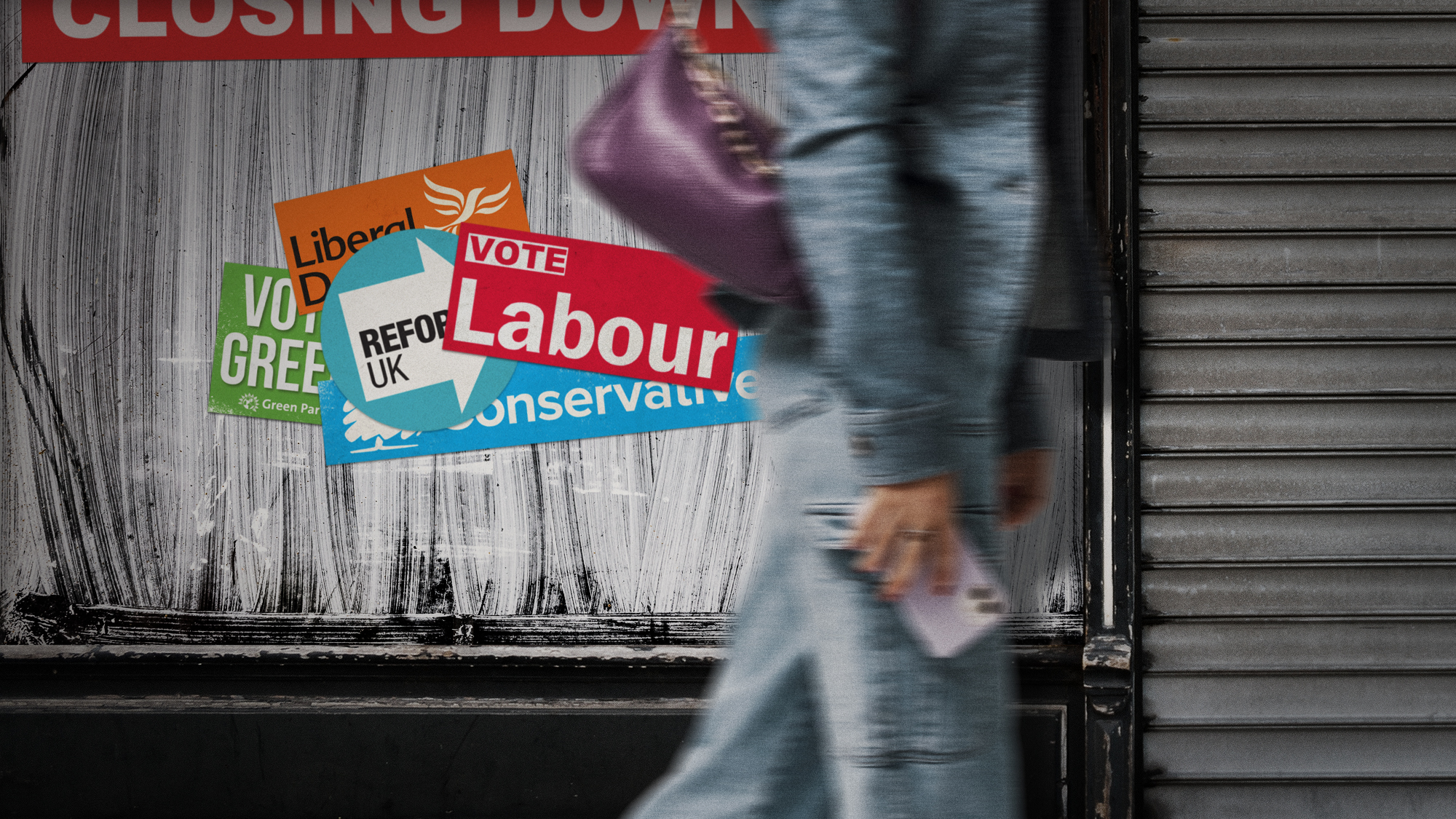
    The “decrepitude” of many British high streets is leaving residents “angry”, said The Sunday Times. They either see lines of “shuttered” premises or “garish kebab shops”, as small retailers struggle with the rise in online shopping, business rates and out-of-town retail parks. 

    The decline of the high street is voters’ second-biggest concern, polling suggests. But “to the evident frustration of many MPs and local councillors”, the issue “has not been anywhere near the top of the agenda” for either the Labour or the Conservative leadership. Their “relative silence” is worrying for local councillors who have “Reform snapping at their heels”. 

    ‘Torrent of closures’
    Retailers have been “feeling the squeeze” since the pandemic and, last year, 57 went bust, resulting in the loss of more than 3,380 shops, according to the Centre for Retail Research. “Shoppers were stunned by a torrent of high-street closures and collapses,” that included “iconic outlets” such as Claire’s, Poundland and WH Smith, said The Sun.

    Labour’s increase to employers’ National Insurance contributions, which takes effect in April, is predicted to increase costs for retailers by £2.3 billion. “It is highly likely that we will see retail job losses eclipse the height of the pandemic in 2020,” said Joshua Bamfield, the Centre’s director.

    ‘Another opportunity’ for Reform
    It is “mind-boggling” that, before its recent U-turn, the government was set on putting up business rates by 76% for the average pub, compared with 4% for large supermarkets, said John Harris in The Guardian. And after years of cuts, local councils “can barely meet their most basic responsibilities, let alone lead the reinvention of the places they run”.

    “Woven into the fate of town and city centres is something that a lot of progressives avert their eyes from,” said Harris. “As many high streets have become dead zones, organised criminals have moved in.” This has “presented yet another opportunity” to Reform UK. The party has already promised to declare a “high-street emergency” and shut down illicit shops. The country’s high streets are “such a visible sign” of decline, said Luke Akehurst, Labour MP for North Durham. “Either we have to have visible progress on this or seats like mine will fall to Reform.”


    QUOTE OF THE DAY

    “My mindset was on freedom. So I was not going to move that day. I told them that history had me glued to the seat.”

    Claudette Colvin describes the moment she refused to give up her seat to a white person on a segregated bus in Alabama in 1955. The activist, whose arrest helped spark the modern civil rights movement, died yesterday at the age of 86.


    Poll watch

    Plaid Cymru is now looking set to be the largest party in the upcoming Welsh Senedd election, overtaking Reform UK. A poll of 1,220 people, by YouGov for ITV Cymru Wales, found that 37% backed Rhun ap Iorwerth’s party, up from 30% in September last year. Reform’s support dropped from 29% to 23%, while the Green Party was polling in third place at 13% for the first time.


    THE EXPLAINER

    Israel’s E1 zone

    A hugely controversial Israeli settlement project, with a bypass road that closes off the occupied West Bank to Palestinians, has cleared planning hurdles and is out for tender.

    Thousands of homes are to be built in the E1 area east of Jerusalem, in a move that will effectively divide the West Bank. And, in doing so, it will “bury the idea of a Palestinian state”, said Israeli finance minister Bezalel Smotrich.

    What is E1?
    First proposed in the 1990s but, until now, frozen by pressure from the US, E1 covers the tract of desert between East Jerusalem and the large Israeli settlement of Ma’aleh Adumim. “It would be the last link in a chain of building projects that will slice the West Bank in half, and sever it” from East Jerusalem, which “Palestinians hope one day will be the capital of their independent state”, said The Telegraph.

    The public tender proposes 3,401 housing units and a dual-use bypass road that is “designed as a sealed transit corridor for Palestinian vehicles”, said The Guardian. This provides Israel “with a pretext to bar Palestinians from existing roads in the planned settlement area”. Israeli politicians have named the planned bypass “sovereignty road”; its opponents call it “apartheid road”.

    Is it legal?
    The Palestinian authorities, and much of the international community, have repeatedly called all Israeli settlements illegal, but this has not stopped their rapid expansion in the West Bank since Israel seized control of the territory in 1967.

    E1 falls outside the Green Line, which distinguishes Israel from Palestine in the eyes of the international community. This means that, although Israel has military and civil control of the area, granted by the Oslo Accords in the 1990s, it is not sovereign Israeli territory.

    Despite the International Court of Justice repeatedly ruling that Israel’s settlements should be withdrawn, “there is no sign of that happening”, said Reuters. And “by linking up with other Israel-controlled areas”, the E1 settlement “would go still further”.

    That is the “real concern right now”, said The Independent when a number of countries, including the UK, formally recognised the Palestinian state last year. “Without concrete action”, recognising statehood is ultimately “pointless, as there won’t be anything left to be a state”.


    Good day 🎾

    … for amateurs, after a tennis coach from Sydney beat men’s world No.2 Jannik Sinner on the way to winning AU$1 million in the Australian Open’s Million Dollar One Point Slam. Jordan Smith saw off Joanna Garland, women’s world No.117, in the sell-out final at Melbourne’s Rod Laver Arena.


    Bad day 🍽️

    … for Ynyshir, the first restaurant in Wales to be awarded two Michelin stars, after food-safety officers gave it a one-star hygiene rating. Food handling was “generally satisfactory”, they said, but the “layout, ventilation, hand-washing facilities and pest control” needed “major improvement”. A Ynyshir spokesperson said they had now “addressed these points in full”.


    picture of the day

    Blowing off steam

    Macaques soak in an open-air hot spring at Hokkaido’s Hakodate Tropical Botanical Garden. Japan’s northernmost island has been hit by heavy snow and strong winds in recent days, causing chaos for its human residents and visitors.

    BJ Warnick / Newscom / Alamy Live News


    Puzzles

    Guess the number

    Try The Week’s new daily number challenge in our puzzles and quizzes section

    Play here


    THE WEEK RECOMMENDS

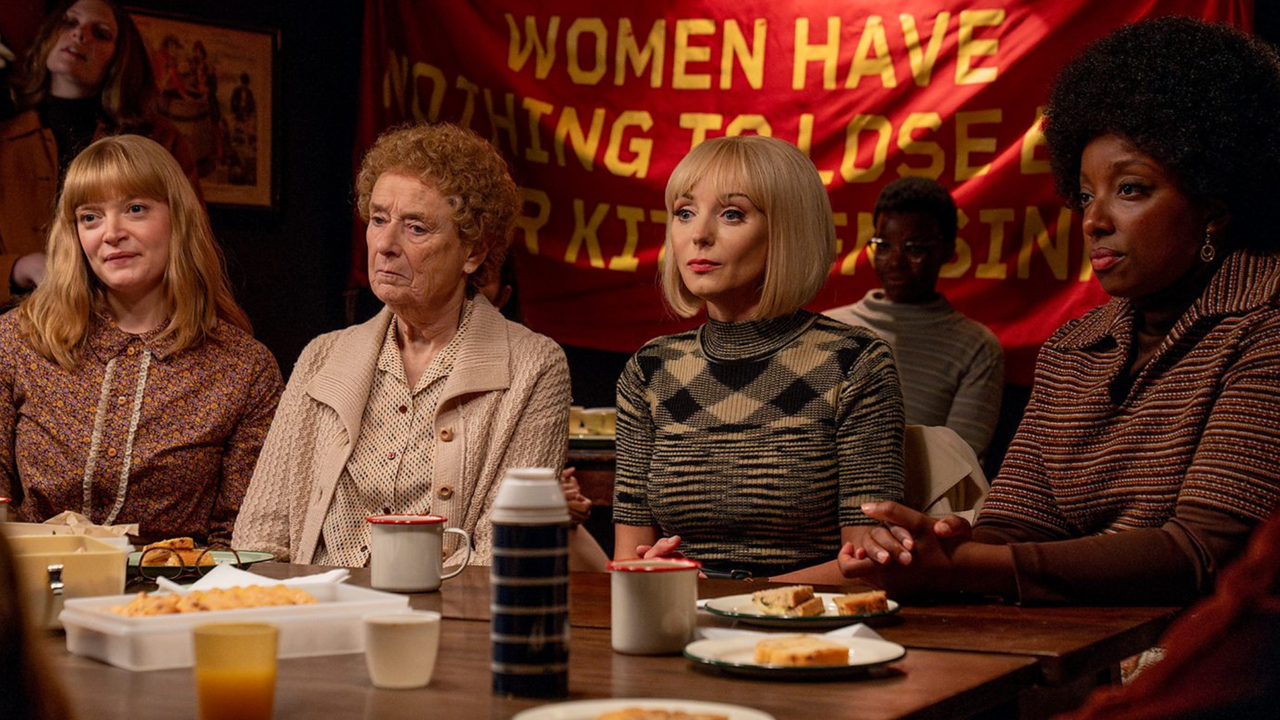
    Call the Midwife returns for ‘rousing’ 15th season

    “They grow up so fast, don’t they?” said Michael Hogan in The Telegraph. “Call the Midwife” is now 15 seasons old, and has become “a TV lynchpin”. Beneath its “cosy exterior”, the “East-End childbirth saga” remains “one of the most radical, rousing shows” on television. Expertly blending the “personal and political” in a kind of “historical soap opera”, it’s both “hard-hitting and heartfelt in equal measure”.

    In the latest series, we return to the Nonnatus House team in 1971, as the women’s liberation movement gathers pace in London’s Poplar. While the younger midwives are “enthusiastically” burning their bras and joining protests, the older generation “take some convincing”.

    What a “corker” the opening episode is, said Carol Midgley in The Times. It moves “seamlessly” from “dry wit to darkest misery and back again”, reminding us how “deceptively uncosy” the show can be. It “never sugar-coats” the serious stuff. 

    “Call the Midwife” should come with “some kind of emotional warning” that “side effects will include uncontrollable weeping”, said Janet A. Leigh on Digital Spy. After so many seasons, it’s a testament to the show that it still “holds the power to make us cry”.

    This 15th series is a “return to form” after the “middling” Christmas specials, said Hogan in The Telegraph. This is “superior comfort viewing” with an excellent female-led cast. Even now, “Call the Midwife” can “still delight and surprise”.


    Statistic of the day

    $15.47 billion: The global box-office earnings of all of Zoe Saldaña’s films, making her the highest-grossing actor of all time. After adding $1.2 billion to her total with “Avatar: Fire and Ash”, the Oscar winner has overtaken Scarlett Johansson, on $15.40 billion, according to industry data website The Numbers.


    instant opinion

    Today’s best commentary

    How should you talk to someone you disagree with?
    Anjana Ahuja in the Financial Times
    “Framing matters” when discussing “contentious issues”, writes Anjana Ahuja. Researchers have found that “declaring what you oppose, rather than what you support, is likely to play more positively” with “those who disagree with you”. That’s “welcome fresh thinking” for how to build “what currently seem like impossible bridges” across “ideological divides”. In our “polarised world”, where algorithms filter out “content that challenges us”, being “more willing to listen to the other side” could help us to “course-correct”.

    South East Water should be taken into public ownership
    Morning Star’s editorial board
    Some 30,000 households in Sussex and Kent have been without water for days, “and this comes after prolonged outages last year”, says the Morning Star. A water supply is a “basic human requirement” and “without it, society starts to crumble”. Yet all South East Water can provide to “the justifiably angry of Tunbridge Wells” is “excuses”. Ministers express concern, but what we need is “the privateers kicked out and water restored to public ownership”.

    The Government thinks Britain has a drink-driving problem. It doesn’t
    Viggo Terling in The Critic
    “Labour are adamant” that we’re suffering a “drink-driving crisis” that necessitates “stricter alcohol limits”, writes the Adam Smith Institute’s Viggo Terling. This “nanny-statism” will “land hardest on rural pubs” that are “heavily reliant on customers who drive”. But “Britain does not have a culture of reckless drink-driving”, and the government’s “campaign” relies on “anecdote and selected statistics”. It’s “time to push back” and “allow people the courtesy of a drink, and a bit of fun”.


    word of the day

    Burgernomics

    An unofficial gauge of purchasing power in different economies that uses a McDonald’s Big Mac as the price benchmark. “The cost of a burger is also, of course, a barometer of something more basic: the price of beef,” said The Telegraph. And this has “notably soared in Britain” as consumers turn back to red meat. Demand is outpacing supply, but the slow beef-production cycle means the market won’t grow “quickly, if at all”.


    Evening Review was written and edited by Hollie Clemence, Jamie Timson, Harriet Marsden, Chas Newkey-Burden, Irenie Forshaw, Adrienne Wyper, Helen Brown and Kari Wilkin, with illustrations from Stephen Kelly.

    Image credits, from top: Robin van Lonkhuijsen / ANP / AFP / Getty Images; illustration by Stephen Kelly / Getty Images; Amir Levy / Getty Images; BJ Warnick / Newscom / Alamy Live News; BBC / Neal Street Productions / Olly Courtney

    Morning Report and Evening Review were named Newsletter of the Year at the Publisher Newsletter Awards 2025
     

    Recent editions

    • Morning Report

      Iran deaths mount as Trump says ‘help is on its way’

    • Evening Review

      Tory defections: the risk for Farage

    • Morning Report

      Starmer vows ‘fast action’ to end Grok abuse

    VIEW ALL
    TheWeek
    • About Us
    • Contact Future's experts
    • Terms and Conditions
    • Privacy Policy
    • Cookie Policy
    • Advertise With Us
    • FAQ
    Add as a preferred source on Google

    The Week UK is part of Future plc, an international media group and leading digital publisher. Visit our corporate site.

    © Future Publishing Limited Quay House, The Ambury, Bath BA1 1UA. All rights reserved. England and Wales company registration number 2008885.