The Week The Week
flag of US
US
flag of UK
UK
https://cdn.mos.cms.futurecdn.net/flexiimages/jzblygzdxr1769609154.gif

SUBSCRIBE

Try 6 weeks free

Sign in
  • View Profile
  • Sign out
  • The Explainer
  • Talking Points
  • The Week Recommends
  • Podcasts
  • Newsletters
  • From the Magazine
  • The Week Junior
  • More
    • Politics
    • World News
    • Business
    • Health
    • Science
    • Food & Drink
    • Travel
    • Culture
    • History
    • Personal Finance
    • Puzzles
    • Photos
    • The Blend
    • All Categories
  • Newsletter sign up Newsletter
  • The Week Evening Review
    A centuries-old offence, EU enlargement, and an oral history of the Obama years

     
    THE EXPLAINER

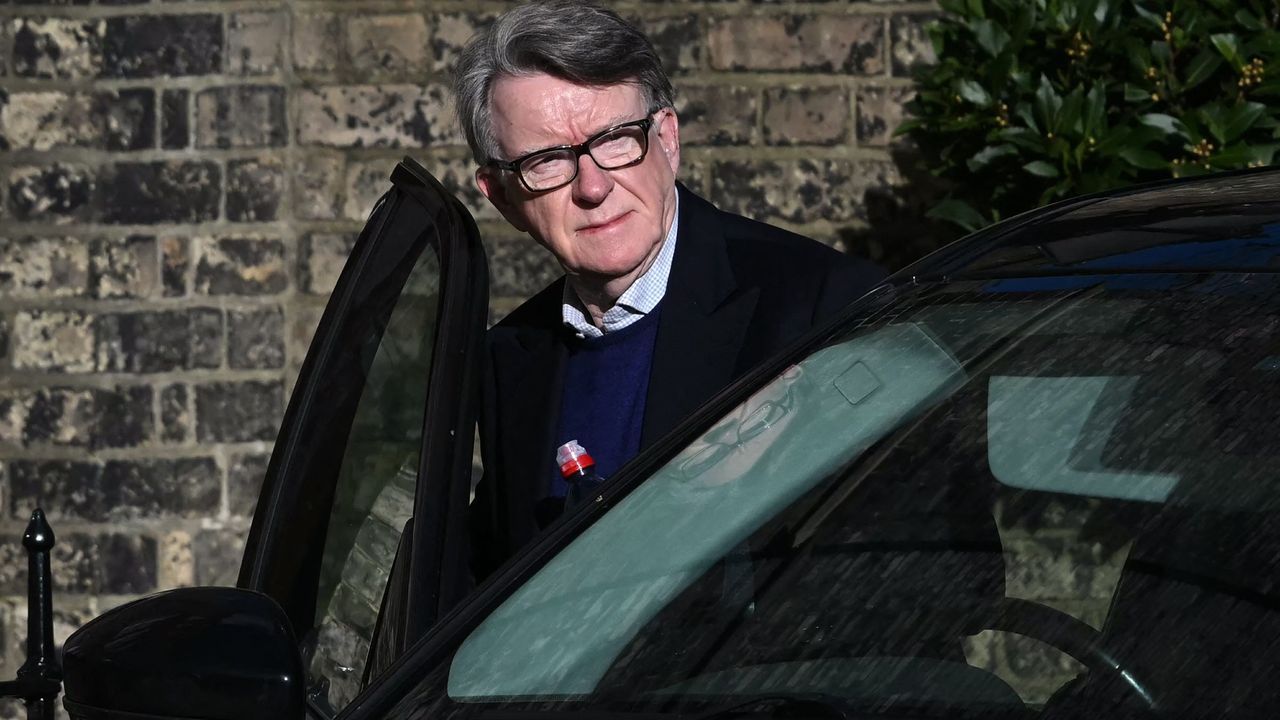
    Misconduct in public office: how the offence works

    The arrests of Peter Mandelson and Andrew Mountbatten-Windsor have shone a spotlight on the centuries-old offence of misconduct in public office. Neither man has yet been charged, and both deny wrongdoing, but should police investigations proceed to prosecution, this vague and complex offence could be challenging for lawyers to prove.

    What is it?
    Dating back to 1599, misconduct in public office is a common-law offence, which means it was established by judicial precedent, rather than a specific Act of Parliament. It had fallen into disuse but was revived in recent times for dealing with corrupt police officers whose misconduct falls outside the scope of other criminal categories.

    It has four main elements, all of which must be proved: the individual was acting as a public officer; they wilfully neglected to perform their duty or wilfully misconducted themselves; their conduct amounted to an abuse of the public’s trust; and it had no reasonable excuse or justification.

    The problem with these elements is their vagueness. What constitutes a public duty is not defined and “the meaning of public trust is fairly elastic”, said The New Statesman. “Few would say it’s a satisfactory area of law.”

    What could happen now?
    If any charges are brought against Mandelson and Mountbatten-Windsor, lawyers “will have to devote more time and effort to understanding the elements of the offence” and then ensure they can prove each one, said Robert Hazell, a professor of politics and government at University College London, on The Conversation.

    Both men are alleged to have shared confidential government information with Jeffrey Epstein. Under this law, “if sensitive government material was shared without proper authority, the question would be whether that amounted to a deliberate breach of official duty”, said Simarjot Singh Judge, a managing partner at Judge Law. “Prosecutors would need to establish intent, seriousness, and whether the conduct crossed the threshold into criminal wrongdoing.”

    Given the seriousness of this offence, convictions “typically result in an immediate custodial sentence”, said law firm K&L Gates in a briefing paper. Although the maximum sentence is life imprisonment, “sentences imposed to date have generally been lower”.


    TODAY’S BIG QUESTION

    Why would Iceland and Norway want to join the EU?

    In the face of geopolitical uncertainty and US hostility, “momentum for EU enlargement appears to be growing”, said Politico. Iceland and Norway, both founding members of Nato, have access to the EU’s single market via its European Economic Area, but are the only Nordic countries outside the bloc. Now, Reykjavík looks set to announce the date of its promised referendum on whether to restart frozen membership talks.

    What did the commentators say?
    Iceland applied to join the EU in 2009, at the peak of the country’s financial crisis. But after the economy stabilised and flourished, an incoming centre-right government froze membership talks in 2013. Shockwaves caused by Donald Trump’s recent threats to neighbouring Greenland are now pushing Iceland “closer to the EU”, said Xenia Heiberg on Euractiv. Icelanders are being forced to evaluate bloc membership “not as an economic choice” but as a “question of long-term defence and geopolitical alignment”.

    Iceland is the only Nato member without an army, relying on a defence agreement with the US for security. That, more than the economic benefits, is “warming public attitudes” about joining the bloc, said Politico. The sense of urgency increased last month when Trump’s nominee for ambassador to Iceland joked that the strategically important Arctic country would become America’s “52nd state”.

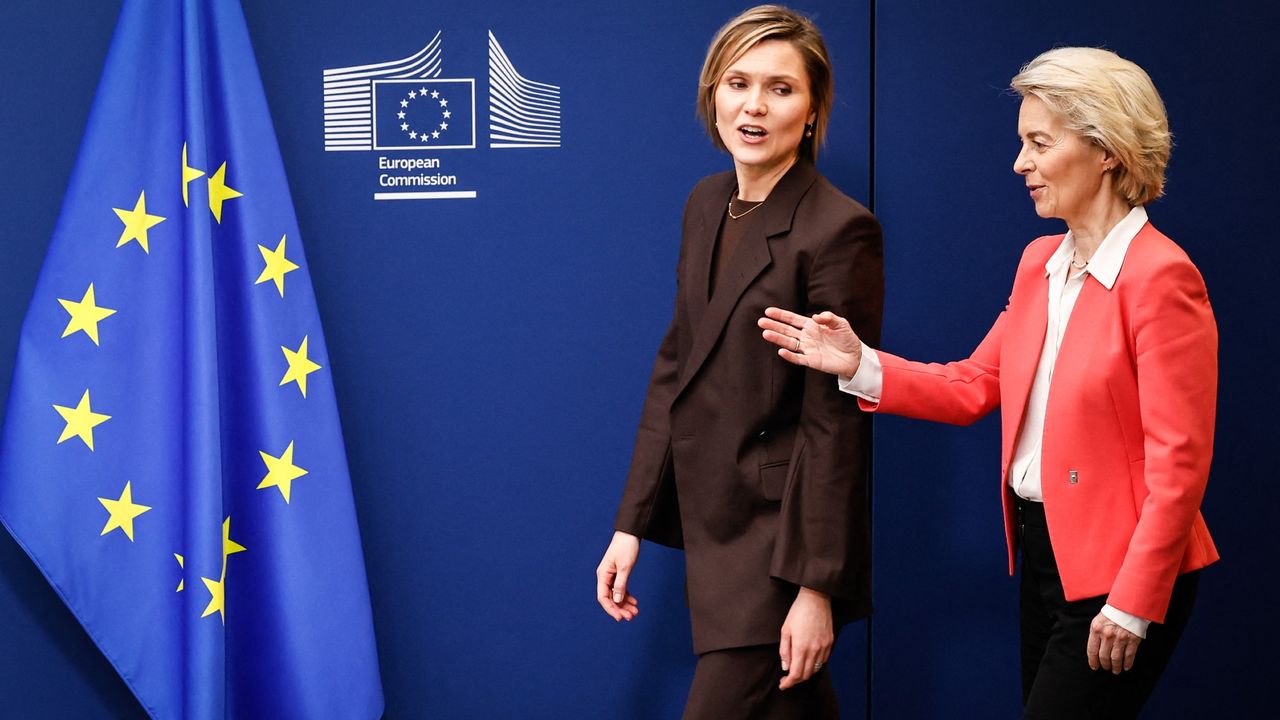
    A “flurry of visits” from EU politicians to Iceland, and vice versa, have taken place amid growing concerns. European Commission President Ursula von der Leyen recently hosted Iceland’s Prime Minister Kristrún Frostadóttir in Brussels (pictured above), and said their partnership “offers stability and predictability in a volatile world”.

    Norway, the “closest non-member country to the EU”, has voted no in two referendums on joining the bloc, said the Financial Times. But with Trump’s tariffs and the war in Ukraine, Norway is suffering as a result of its outside status, according to the country’s foreign minister. “We are acutely aware that the delta between EU membership and EEA membership is increasing,” Espen Barth Eide said last autumn.

    What next?
    Iceland’s path to EU membership “isn’t straightforward”, said Politico. Even if Icelanders vote yes in a referendum on restarting talks, there would need to be another on membership. That could be a “high bar to clear”. Norway’s leadership has, for now, ruled out another EU debate. But Oslo is watching Iceland’s referendum closely.


    QUOTE OF THE DAY

    “It will be a very, very boring Spring Statement showing the plan is working.”

    A minister sets expectations for Rachel Reeves’ next economic update. The unnamed politician told the Financial Times that the chancellor’s 3 March speech would contain “no gimmicks”, as she seeks to steady the ship before rolling out key policies in the autumn Budget.


    Poll watch

    The Green Party and Labour are neck and neck to win tomorrow’s Gorton and Denton by-election, according to a small Opinium survey. Each of the two parties was backed by 28% of the 401 voters polled, with Reform close behind on 27%.


    IN THE SPOTLIGHT

    Why Obama’s White House didn’t ‘see Trump coming’

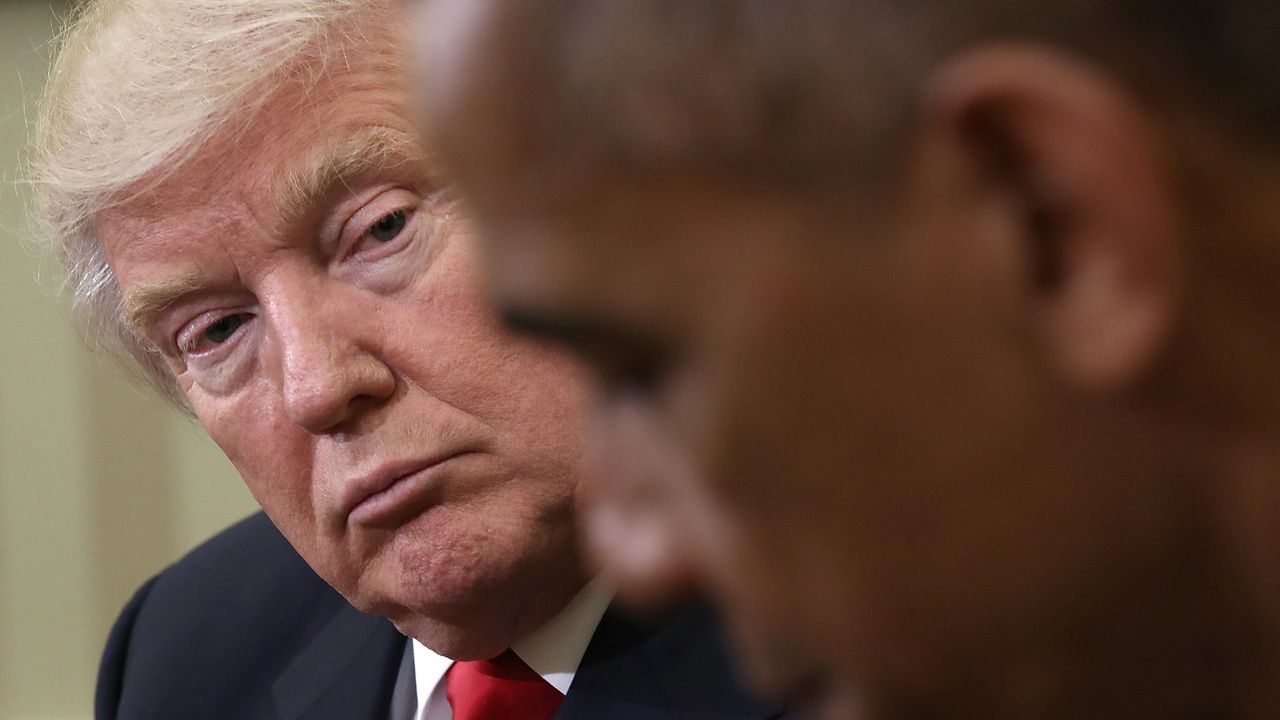
    When Barack Obama teased Donald Trump at the White House Correspondents Dinner in 2011, the man who helped write the withering speech enjoyed “seeing how angry” the then businessman became, said The Telegraph. Neither he nor Obama had any inkling that Trump would one day take over as president.

    The disclosure is part of a new oral history of the Obama years that shows that while the Democrat “took on recession, healthcare and Iraq”, what “he didn’t see coming was Trump”, said The New York Times.

    ‘Bewilderment’
    For eight years, Obama’s aides “marvelled” that “no amount of mockery, dismissal or scandal” could make Trump “go away”, said The Associated Press. Such “bewilderment” is “threaded through hundreds of interviews” with officials featured in this “far-reaching history of the Obama presidency”.

    Released for “the perusal of historians, researchers and the merely curious”, the testimonies don’t include interviews with the Obamas or Joe Biden, said The New York Times, but significant figures including Hillary Clinton, John Kerry and Oprah Winfrey do feature. 

    ‘Shifting mood’
    At the fateful 2011 dinner, speechwriter Jon Favreau’s decision to mock Trump “stemmed from aggravation” over the “continuing lies” about Obama’s birthplace, said The New York Times. But the administration “failed to spot the threat of Trump”, because they thought he was just a “con man” and a “clown”. They “missed the shifting mood of the country”.

    The “picture that emerges from the interviews” is of a “collapsing popular belief in a system that simply could not, seemingly for its own psychological reasons, grasp what was truly going on”, said The Telegraph. There was a “failure to come to terms with the realities of the moment”.

    Obama “started out, like so many”, viewing Trump as “little more than a comical, if malevolent, real-estate hawker”, said The New Yorker. But as well as failing to “anticipate Trump’s victory”, he “failed to comprehend the degree” to which the Republican would, “particularly in his second term, set out to demolish the principles and the institutions” that Obama held dear.


    Good day 🚿

    … for steamy getaways, after the glass-walled hideaway from “Heated Rivalry” was listed on Airbnb. Fans can stay at the timber-clad Barlochan Cottage on Ontario’s Lake Muskoka from CA$248.10 per night – a nod to the jersey numbers of hockey rivals-turned-lovers Shane Hollander and Ilya Rozanov, who flee there in the Canadian TV drama.


    Bad day 🐒

    … for sobriety, after tests on urine from wild African chimpanzees showed some ingest enough alcohol from fermented fruits to get a human banned from operating heavy machinery. According to a study in the journal Biology Letters, samples from chimps in Uganda exceeded 500 ng/ml of ethanol, a metabolic byproduct of alcohol – enough to fail sobriety tests in many safety-sensitive jobs.


    picture of the day

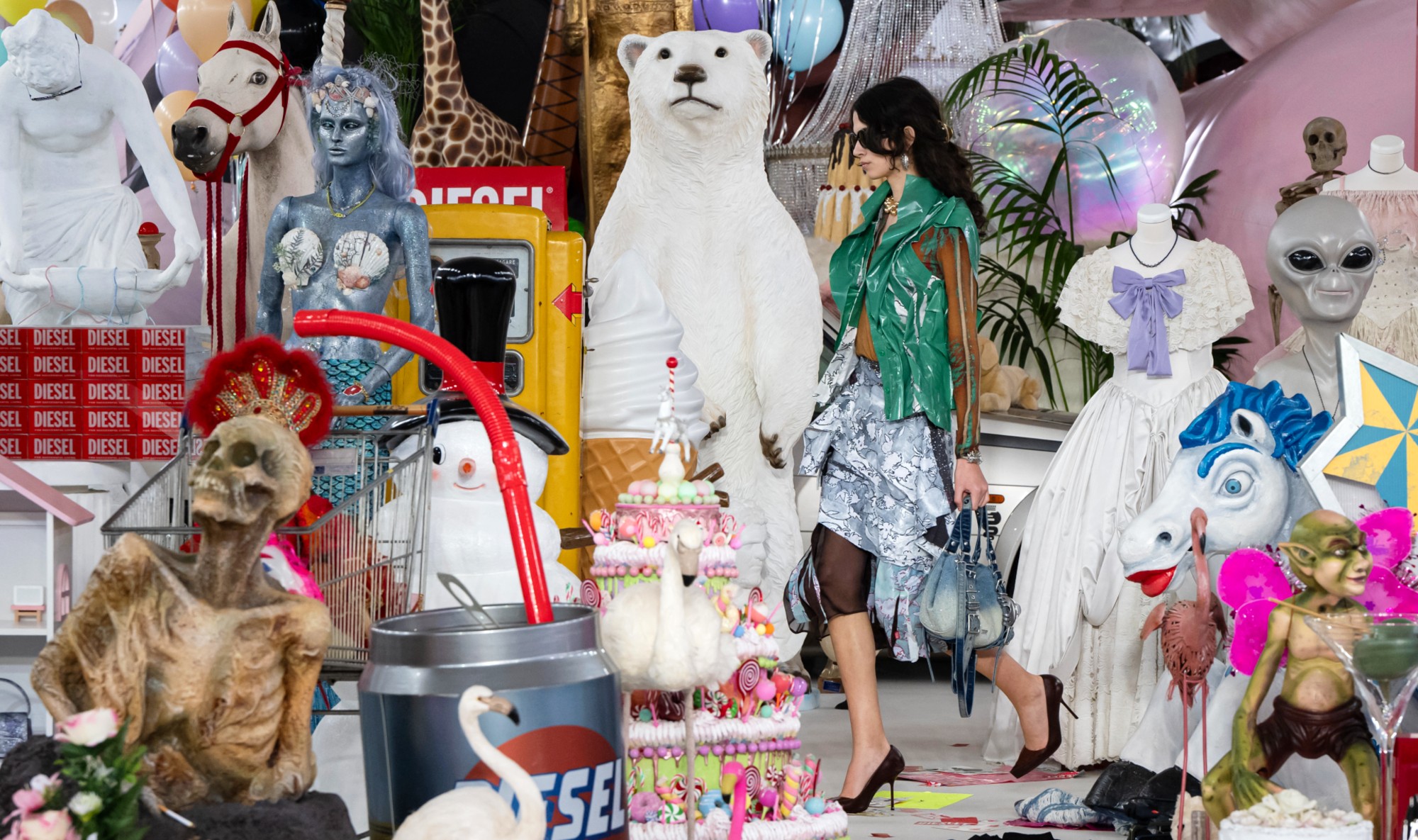
    Life of the party

    A model navigates a mishmash of memorabilia on a runway at Milan Fashion Week. Italian brand Diesel’s show featured 50,000 pieces of “party regalia”, from animal statues and balloons to sex toys and beer bottles.

    Miguel Medina / AFP / Getty Images


    Puzzles

    Guess the number

    Try The Week’s new daily number challenge in our puzzles and quizzes section

    Play here


    THE WEEK RECOMMENDS

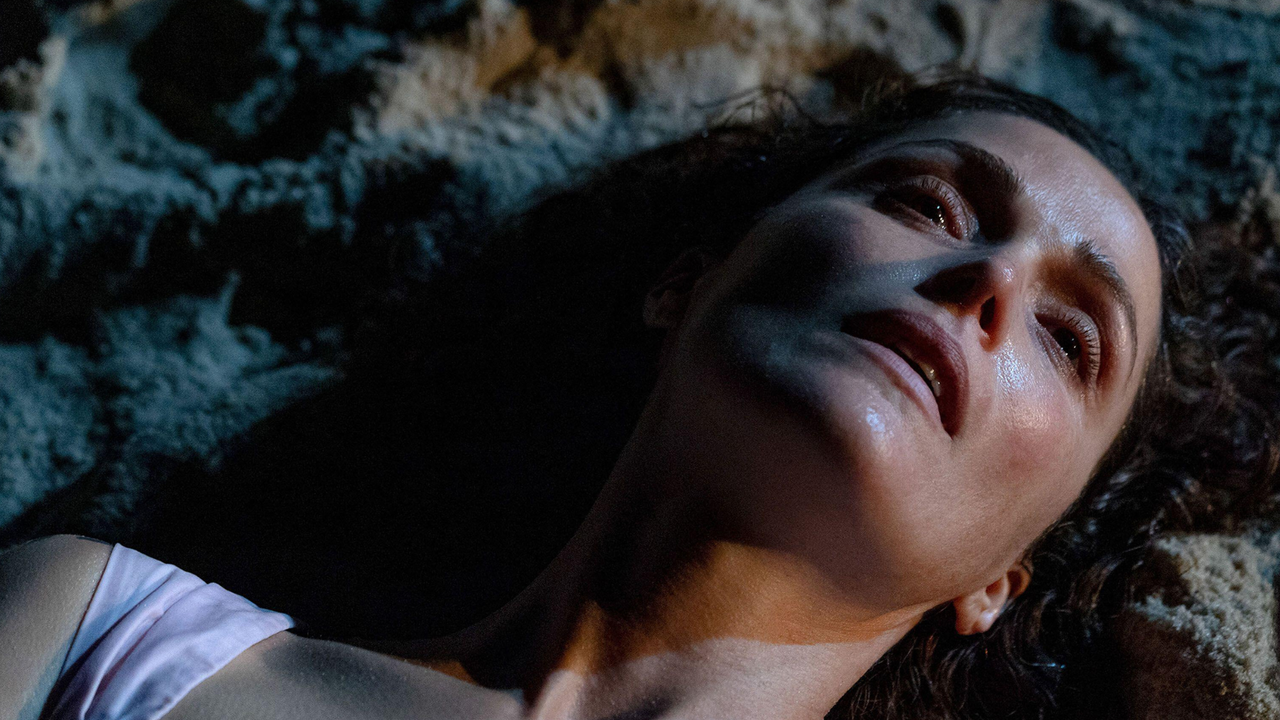
    If I Had Legs I’d Kick You: a ‘feverish’ dark comedy

    It’s little surprise Rose Byrne has been nominated for an Oscar for her turn as a “beleaguered mother” in “If I Had Legs I’d Kick You”, said Clarisse Loughrey in The Independent. “It’s less performance, more self-administered open heart surgery.”

    She stars as Linda, a psychotherapist with an absent husband whose infant daughter is suffering from an undisclosed chronic illness that requires a feeding tube and round-the-clock care. When a “great big watery hole” begins to appear in the ceiling of their home, Linda and her daughter are forced to move into a motel.

    The film quickly unfurls into a “psychological horror-comedy of postnatal depression and lonely parental stress”, said Peter Bradshaw in The Guardian. Byrne delivers a “barnstorming performance” as a “mother and therapist” who “must present at all times as keeping it together, but who in fact is losing it every day”.

    “If I Had Legs I’d Kick You” is part of a “burgeoning genre” of films that portray motherhood as a “sinister trap, a social prison and, very literally, a trigger for psychosis”, said Kevin Maher in The Times. Writer-director Mary Bronstein brings “passive-aggressive aplomb” to her cameo as the doctor treating Linda’s daughter, a “Nurse Ratched for the self-care generation”. And Byrne elicits “enormous empathy” for Linda while adding a comedic touch through her “lightning-fast double-takes” and “sharp monologues”.

    Packed with “close-ups and close calls”, Bronstein’s “feverish film will have you sweating”, said Chris Wasser in the Irish Independent. It’s a “hell of a ride” and Byrne is outstanding as a mother forced to cope with everything alone. “Exhilarating cinema.”


    Statistic of the day

    107 minutes: The length of Donald Trump’s State of the Union address last night, smashing the previous record of 88 minutes set by Bill Clinton in 2000. The record for the shortest is held by Richard Nixon, who delivered the annual presidential speech to the nation in just under 29 minutes in 1972. 


    instant opinion

    Today’s best commentary

    It’s better for a church to become a mosque than a shell
    Anoosh Chakelian in The New Statesman
    Reform, “a party preoccupied with the cultural influence of Islam”, says it will grant listed status to churches and “stop them” from being converted into mosques, writes Anoosh Chakelian. But “churches often close amid high maintenance costs”, and listing them will “make repair and renovation even more expensive and difficult”. Each closure means “one more crumbling shell in the town centre, like another shuttered shopfront”. It’s “a plague on House of Fraser, and the house of God”.

    Britain’s political class is corrupt – it’s time we faced the truth
    Yasmin Alibhai-Brown in The i Paper
    “Loyal citizens still believe that corruption” only “happens in banana republics and old Soviet countries”, writes Yasmin Alibhai-Brown. But Britain’s “masters have lulled its people and fooled the world”. I don’t believe Andrew Mountbatten-Windsor will “face proper justice” – “the state will find a way of seeing that off”. Think of the corrupt Covid contracts and the Post Office scandal, for which no one’s been “properly held to account”. We need “a new authority” to “reestablish integrity in public life”.

    The meaning of life is a bus journey away
    G.V. Chappell in The Spectator
    “Bus travel isn’t glamorous,” writes G.V. Chappell. “An Agatha Christie murder mystery set on the No. 47 wouldn’t have” much cachet. But it’s “practical”, “affordable” and “more environmentally friendly” than travelling by car. Some “people can be a bit sniffy” about “the ubiquitous coughing” of fellow passengers, the “shoulder-to-shoulder” intimacy and the lack of buffet car, but I’m not worried about “arriving in style”. Buses are “democratic”, “utilitarian” and a “lifeline to struggling communities”.


    word of the day

    Tip-toes

    Notions about the “earthshaking footsteps” of the Tyrannosaurus rex are being stomped on, said The New York Times. A new analysis of fossilised dinosaur tracks and skeleton anatomy – outlined in the Royal Society Open Science journal – suggests the massive predator actually “walked on tippy-toes” and ran like an “oversized bird”.


    Evening Review was written and edited by Hollie Clemence, Jamie Timson, Harriet Marsden, Chas Newkey-Burden, Irenie Forshaw, Adrienne Wyper, Helen Brown and Kari Wilkin.

    Image credits, from top: Justin Tallis / AFP / Getty Images; Simon Wohlfahrt / AFP / Getty Images; Win McNamee / Getty Images; Miguel Medina / AFP / Getty Images; Capital Pictures / Alamy

    Morning Report and Evening Review were named Newsletter of the Year at the Publisher Newsletter Awards 2025
     

    Recent editions

    • Morning Report

      Mandelson rejects ‘baseless’ claim that he was flight risk

    • Evening Review

      How long can Russia hold out?

    • Morning Report

      Police arrest Mandelson over alleged leaks to Epstein

    VIEW ALL
    TheWeek
    • About Us
    • Contact Future's experts
    • Terms and Conditions
    • Privacy Policy
    • Cookie Policy
    • Advertise With Us
    • FAQ
    Add as a preferred source on Google

    The Week UK is part of Future plc, an international media group and leading digital publisher. Visit our corporate site.

    © Future Publishing Limited Quay House, The Ambury, Bath BA1 1UA. All rights reserved. England and Wales company registration number 2008885.