The Week The Week
flag of US
US
flag of UK
UK
https://cdn.mos.cms.futurecdn.net/flexiimages/jzblygzdxr1769609154.gif

SUBSCRIBE

Try 6 weeks free

Sign in
  • View Profile
  • Sign out
  • The Explainer
  • Talking Points
  • The Week Recommends
  • Podcasts
  • Newsletters
  • From the Magazine
  • The Week Junior
  • More
    • Politics
    • World News
    • Business
    • Health
    • Science
    • Food & Drink
    • Travel
    • Culture
    • History
    • Personal Finance
    • Puzzles
    • Photos
    • The Blend
    • All Categories
  • Newsletter sign up Newsletter
  • The Week Evening Review
    The Iran war, a Bitcoin mystery, and political profanity

     
    TODAY’S BIG QUESTION

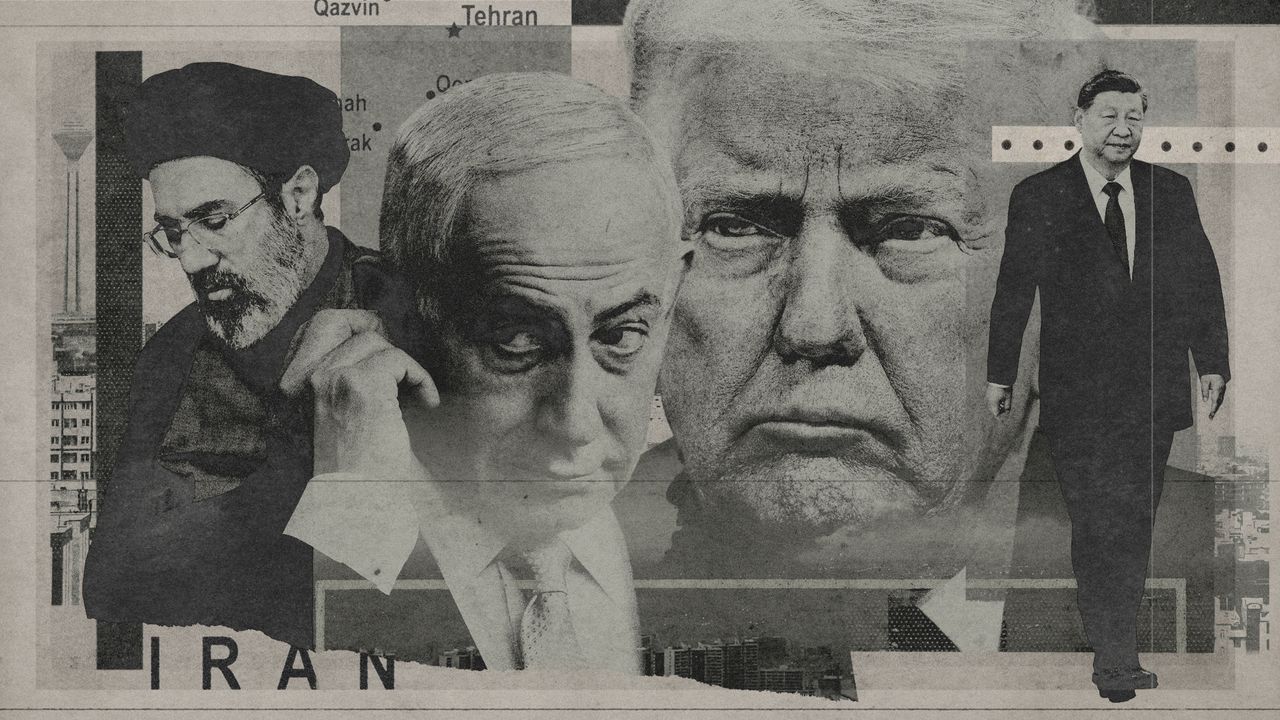
    Who are the winners and losers in the Iran conflict?

    Following five weeks of war, Donald Trump has claimed “total and complete victory” over Iran. Tehran begs to differ. Agreeing to the conditional two-week ceasefire, Iranian officials said their country had dealt a “crushing historic defeat” to the US and Israel. 

    What did the commentators say?
    It’s actually China that most “stands to gain” in the long term, said Deutsche Welle. America has “moved many military assets to the Middle East”, which “leaves fewer resources for the Indo‑Pacific, where Washington and Beijing compete for influence”. Beijing has also had the chance to present itself “as a responsible global actor”, with its power brokers widely credited with pushing Iran to agree to the ceasefire.

    Pakistan’s credentials have been burnished, too. The Islamabad Accord is the country’s “most consequential diplomatic moment in a decade”, said former UN peacekeeper Anil Raman on NDTV. Capitalising on its good relations with both the US and Iran, Islamabad will “press hard to consolidate” this “return to global relevance”.

    Benjamin Netanyahu “looks set to be the biggest loser” of the conflict, said The Guardian’s senior international correspondent Peter Beaumont. Pressuring Trump to agree to his decades-long goal of neutralising Iran has “turned out to be a bust” and the “political consensus” between Israel and the US is “visibly crumbling”.

    Trump has also emerged as a “strategic loser”, said the South China Morning Post. Washington failed to achieve regime change in Tehran, or to destroy the country’s enriched uranium stockpile, and Iran retained control of the Strait of Hormuz, the conflict’s “most strategic asset”. And the US has used up “sophisticated air-defence missiles” intercepting “far cheaper Iranian drones and projectiles”.

    What next?
    J.D. Vance is due to lead a US delegation in negotiations with Tehran in Pakistan on Friday. The White House said the ceasefire between the US and Iran has created an “opening for a diplomatic solution and long-term peace”. But the specifics of the terms to be discussed “remain murky”, said the BBC, “as is the current state of shipping traffic” through the Strait of Hormuz. Iranian forces have warned that ships will be “destroyed” if they try to sail through without permission.


    THE EXPLAINER

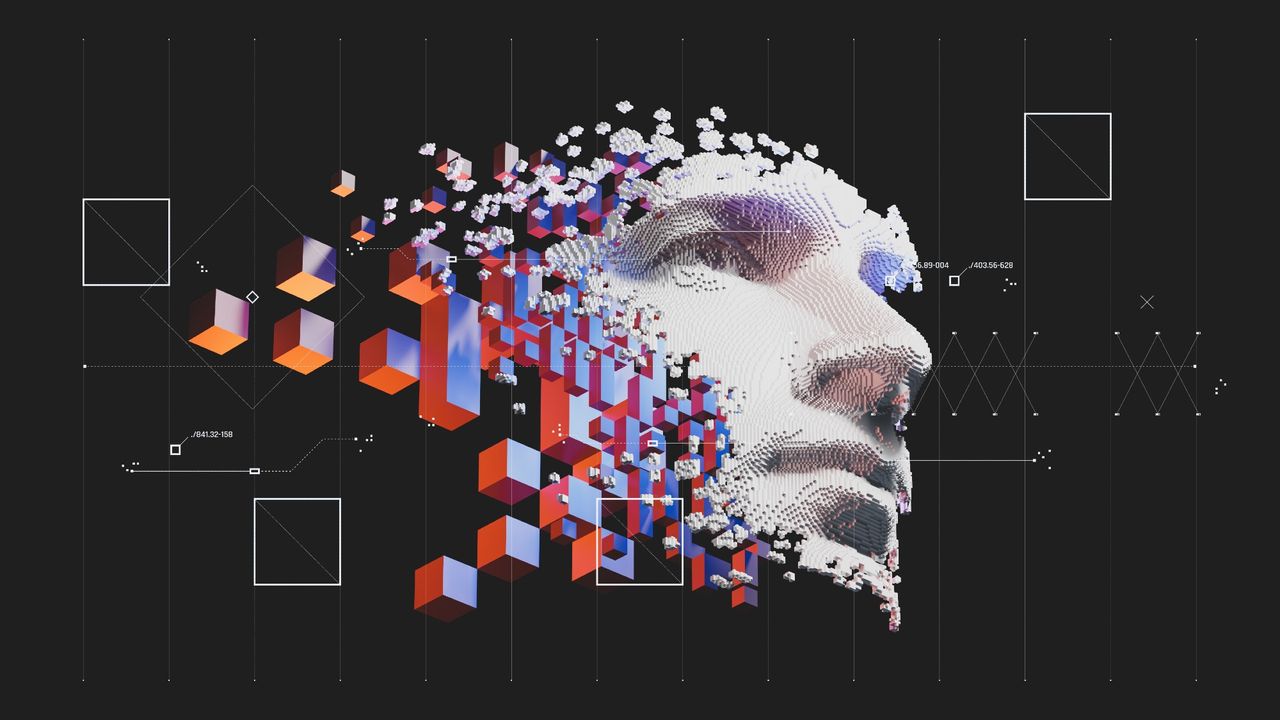
    Who is mystery Bitcoin founder Satoshi Nakamoto?

    A British computer scientist has denied reports that he is Satoshi Nakamoto, the pseudonymous creator of Bitcoin. An investigation by The New York Times used biographical details and writing style comparisons to make the case that Adam Back was the cryptocurrency’s enigmatic founder.

    Who is Adam Back?
    London-born Back, 55, “has long been seen as a potential candidate to be Nakamoto”, said The Times. “A pioneer of early digital asset research in the 1990s”, he “has a long-standing background in cryptography, the techniques used to secure and verify digital information”. This includes developing Hashcash, “a proof-of-work system that later influenced Bitcoin” and was referenced by Nakamoto in his Bitcoin “white paper”.

    Back dismissed The New York Times’ use of writing analyses to link him to Nakamoto as “a combination of coincidence and similar phrases from people with similar experience and interests”.

    Why is Nakamoto’s identity a secret?
    Nakamoto has only ever communicated under their pseudonym, and since 2011, has made no public statements, giving them a “cult-like status among crypto enthusiasts”, said The Times.

    This anonymity is very on-brand for Bitcoin. If the founder’s identity were known, they could become a leader or figurehead, contradicting the cryptocurrency’s core principle of decentralisation. There is a security element, too: Nakamoto is thought to own $78 billion worth of bitcoin, so remaining anonymous lessens the risk of extortion or kidnapping.

    Has anyone else been suggested?
    In 2014, Newsweek identified a Japanese-American systems engineer called Dorian Nakamoto as the creator of Bitcoin, a claim that has “largely been debunked”, said the BBC.

    The following year, Wired suggested Nakamoto could be a pseudonym for Craig Wright, an Australian computer scientist. Wright asserted that he was indeed Nakamoto, until a UK High Court judge ruled that he was not, and must not claim to be, the Bitcoin founder.

    In 2024, an HBO documentary alleged that Canadian crypto expert Peter Todd was the real Nakamoto, a suggestion that he described as “ludicrous”. It’s also possible that the mysterious founder is not one person, but rather a team of developers or cryptographers.


    QUOTE OF THE DAY

    “Long time no see.”

    K-pop star RM greets thousands of screaming fans at South Korea’s Goyang Stadium, as BTS return to the stage for their first concerts since 2022. The band will play more than 80 shows across 23 countries during their “Arirang” comeback tour.


    Poll watch

    The UK feels more divided today than during the Brexit referendum, according to 4,900 Brits surveyed for The Telegraph. The JL Partners poll found that more than three-quarters (76%) think the country is more fractured than a decade ago, with people aged 65 to 74 most likely to hold that view.


    IN THE SPOTLIGHT

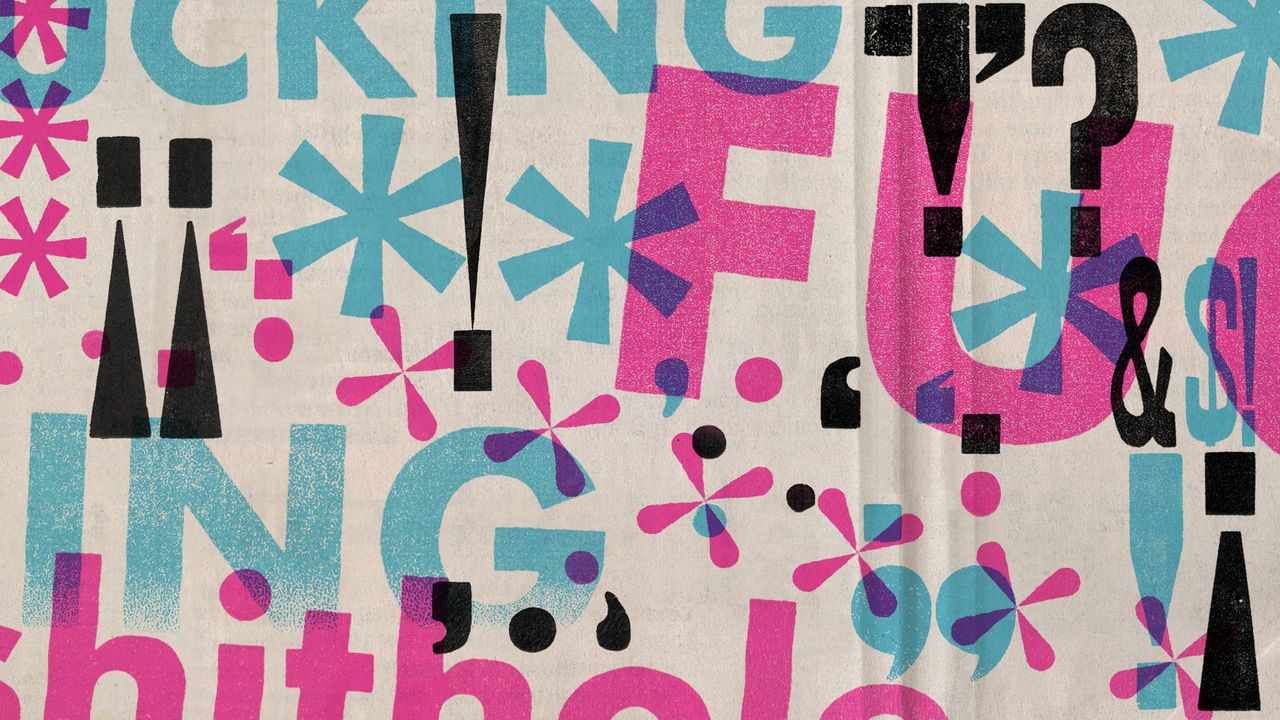
    The normalisation of political profanity

    Donald Trump’s political rivals denounced him as “dangerous and mentally unbalanced” and an “unhinged madman” after he directed a string of expletives at the Iranian regime. “Open the Fin’ Strait, you crazy bastards, or you’ll be living in Hell!” the US president said in an Easter Sunday message on Truth Social. But Trump is far from the only potty-mouthed politician, and trends suggest that swearing is shifting from taboo to mainstream on the political stage.

    ‘Profanity seal’
    Woodrow Wilson “broke the profanity seal” in 1919, when the then president recalled making a “conspicuous ass of himself”, said Joseph Phillips, a politics lecturer at Cardiff University. “Since then, presidents, their seconds-in-command, and presidential hopefuls have used profanity at least 692 times” – but 87% of those instances occurred in the last ten years.

    During a political rally in 2025, Trump “used profanity at least four times”, said Steven Sloan in The Independent. J.D. Vance has also sworn publicly, and former vice president Kamala Harris “earned a roar of approval from her audience” last October when she said that “these mother****” in the Trump administration “are crazy”. The “volley of vulgarities underscores an ever-coarsening political environment” on social media, where posts that “evoke the strongest emotions are rewarded with the most engagement”.

    ‘Anti-intellectualism’
    There is a “misguided belief” that “profanity is more ‘honest’ or ‘authentic’ than polite speech”, said Solomon D. Stevens in the Illinois Journal-Courier. There’s also “an anti-intellectualism at work”, as politicians who swear imply that those who don’t are “putting on airs”. Yet while some intellectuals can “certainly be pretentious”, “refraining from coarse language” is not in itself a sign of that.

    Politicians aren’t “bawling swear words because they can’t contain their outrage”, said Barton Swaim in The Wall Street Journal. They do it because, “like preteen boys trying to sound tough”, they believe “the odd public expletive enhances their authenticity” and gives them “an air of pugnacity apropos to the moment”. But they are mistaken. “Most Americans still prefer their leaders to talk like grown-ups.”


    Good day ✍️

    … for solving literary mysteries, as the best-selling author of “The Housemaid” reveals her true identity. Sara Cohen, a brain injury doctor from Massachusetts, told USA Today that she was stepping out from behind pen name Freida McFadden because “I’m tired of people debating if I’m a real person or if I’m three men”.


    Bad day 🐟

    … for gentlemen’s breakfasts, as the maker of the anchovy paste commonly known as Gentleman’s Relish announces that the 198-year-old condiment is toast. Officially called Patum Peperium, the pungent paste was a staple in Victorian households, but AB World Foods has ceased production because it is “no longer commercially viable”.


    PICTURE OF THE DAY

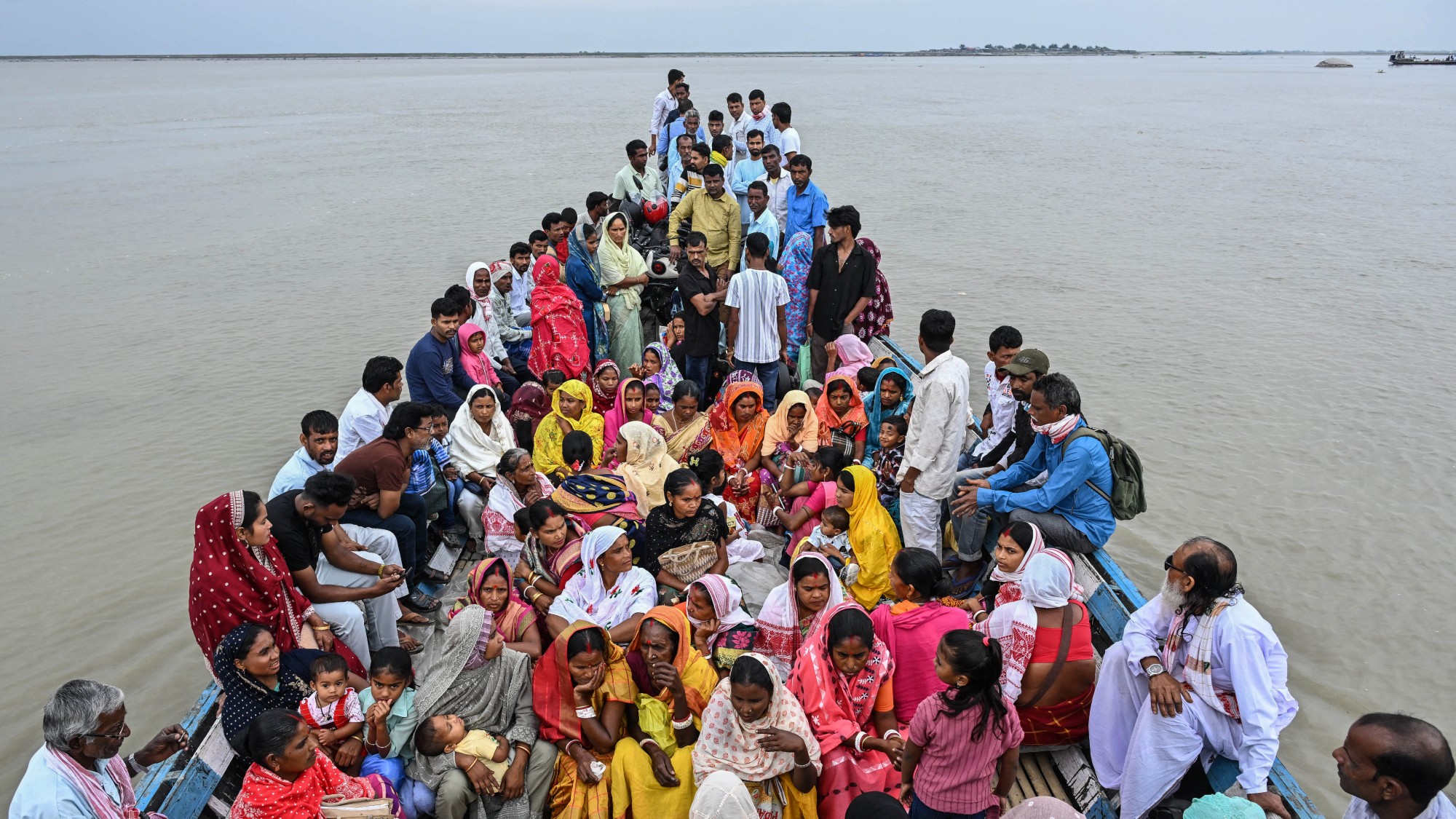
    Vote trip

    Indian voters cross the Brahmaputra River by boat in Assam to cast their ballots in state legislative elections. Two states and a union territory are going to the polls, in contests that will test the support for Narendra Modi’s ruling Bharatiya Janata Party.

    Biju Boro / AFP / Getty Images


    Puzzles

    Guess the number

    Try The Week’s daily number challenge in our puzzles and quizzes section

    Play here


    THE WEEK RECOMMENDS

    UK music festivals you can still book

    Glastonbury may be in its fallow year but there are loads of other UK music festivals to get excited about in 2026. From Leicestershire to Suffolk, and London to the Isle of Wight, here are some of the best with tickets still available.

    LIDO, east London
    It’s only in its second year but LIDO has already “cemented itself as one of the new favourites for true music lovers”, said Becky Burgum in The i Paper. Taking place in Victoria Park, it has a maximum daily capacity of 35,000, making it feel more “intimate” than other London festivals. CMAT, Maribou State and Bombay Bicycle Club headline.

    Download, Leicestershire
    “Last year, Leicestershire police asked punters to remove their smartwatches” at Download because all the commotion was making them send out “automatic 999 calls”, said Ed Cunningham in Time Out. This year, expect more “heaviosity”, with the likes of Limp Bizkit, Guns N’ Roses and Linkin Park on the bill. 

    Latitude, Suffolk
    Staged a “stone’s throw from the Suffolk coast”, in the sweeping Henham Park estate, Latitude is celebrating its 20th anniversary, said The Times. Headliners this year include The Last Dinner Party, Teddy Swims, Lewis Capaldi, The Flaming Lips and Self Esteem.

    Isle of Wight Festival
    The line-up of headliners here “offers the perfect arc for a festival weekend”, said Michael Cragg in The Guardian. On Friday, enjoy “emotive, sing-along bops with Lewis Capaldi”. The following day, Calvin Harris will boost energy levels with “frenetic, star-studded bangers”, and Sunday’s “dark-hued comedown” is “perfectly soundtracked by enduring goth titans The Cure”. 


    Statistic of the day

    46%: The proportion of 999 patients who do not require emergency care, according to NHS England data. Around two million people taken to A&E by ambulance in 2025-26 were subsequently discharged without major treatment. Health Secretary Wes Streeting said the stats suggested a “mismatch of NHS services with patients’ needs”.


    instant opinion

    Today’s best commentary

    The right-wing plot to ruin Britain (again) is being exposed
    Yasmin Alibhai-Brown in The i Paper
    The “elite business class” wants the UK to “become more like the hideously Darwinian USA”, writes Yasmin Alibhai-Brown, and “they have their perfect champions in our hard-right and right-wing parties”. We see the “nightmare effects” of the right’s “ideological obsession” with deregulation “everywhere around us” – from “dangerous cladding” and polluted waterways to hedge funds asset-stripping care homes. Further deregulation would “turn the country into a heartless, lawless bushland”, where “we, the little people, will be unsafe, unheard and unseen”.

    Did America lose yet another war?
    Harlan Ullman on Al Jazeera 
    It seems America is again failing “to achieve successful outcomes” in war, writes Harlan Ullman of the Atlantic Council think tank. With Iran, Donald Trump has repeated the “hubris” and “flawed strategic judgement” shown by past US presidents in Vietnam, Afghanistan and Iraq. “Now, reality has taken hold” as “Iran’s strategy of winning by not losing” bites. Trump “has trapped himself with no good options”: attacking Iran “will prove to be the most catastrophic” presidential decision he’s made.

    Sarah Ferguson just made a desperate move to escape Andrew – no chance it’ll work
    Adam Toms in the Daily Express
    There are “whispers” that Sarah Ferguson has distanced herself from her ex-husband and isn’t “in the best of states”, writes Adam Toms. Apparently, she’s “sofa-surfing” and her hair has “grey roots”. This “hiding away” could “never make a difference to the amount of media coverage” she’ll face if more stories come out about her and Jeffrey Epstein. She must “issue a full, unreserved apology” and tell officials what she knows, or she looks “like a coward”.


    word of the day

    Avoid

    The Marine Conservation Society’s verdict on cod. The environmental charity has downgraded the status of all UK-fished cod to “Avoid”, the lowest sustainability rating, in its Good Fish Guide and is warning that stocks have become dangerously depleted. Consumers seeking a white fish fix are encouraged to switch to more abundant options, such as European hake.


    Evening Review was written and edited by Rebecca Messina, Jamie Timson, Chas Newkey-Burden, Will Barker, Irenie Forshaw, David Edwards, Helen Brown and Kari Wilkin, with illustrations from Stephen P. Kelly.

    Image credits, from top: illustration by Stephen P. Kelly / Getty Images / AP Photo; Maksim Tkachenko / iStock / Getty Images; illustration by Julia Wytrazek / Getty Images; Biju Boro / AFP / Getty Images; Mark Holloway / Redferns / Getty Images

    Morning Report and Evening Review were named Newsletter of the Year at the Publisher Newsletter Awards 2025
     

    Recent editions

    • Morning Report

      Iran closes Strait amid Israeli strikes on Lebanon

    • Evening Review

      The cost of a ceasefire

    • Morning Report

      Trump pauses Iran strikes at eleventh hour

    VIEW ALL
    TheWeek
    • About Us
    • Contact Future's experts
    • Terms and Conditions
    • Privacy Policy
    • Cookie Policy
    • Advertise With Us
    • FAQ
    Add as a preferred source on Google Add as a preferred source on Google

    The Week UK is part of Future plc, an international media group and leading digital publisher. Visit our corporate site.

    © Future Publishing Limited Quay House, The Ambury, Bath BA1 1UA. All rights reserved. England and Wales company registration number 2008885.