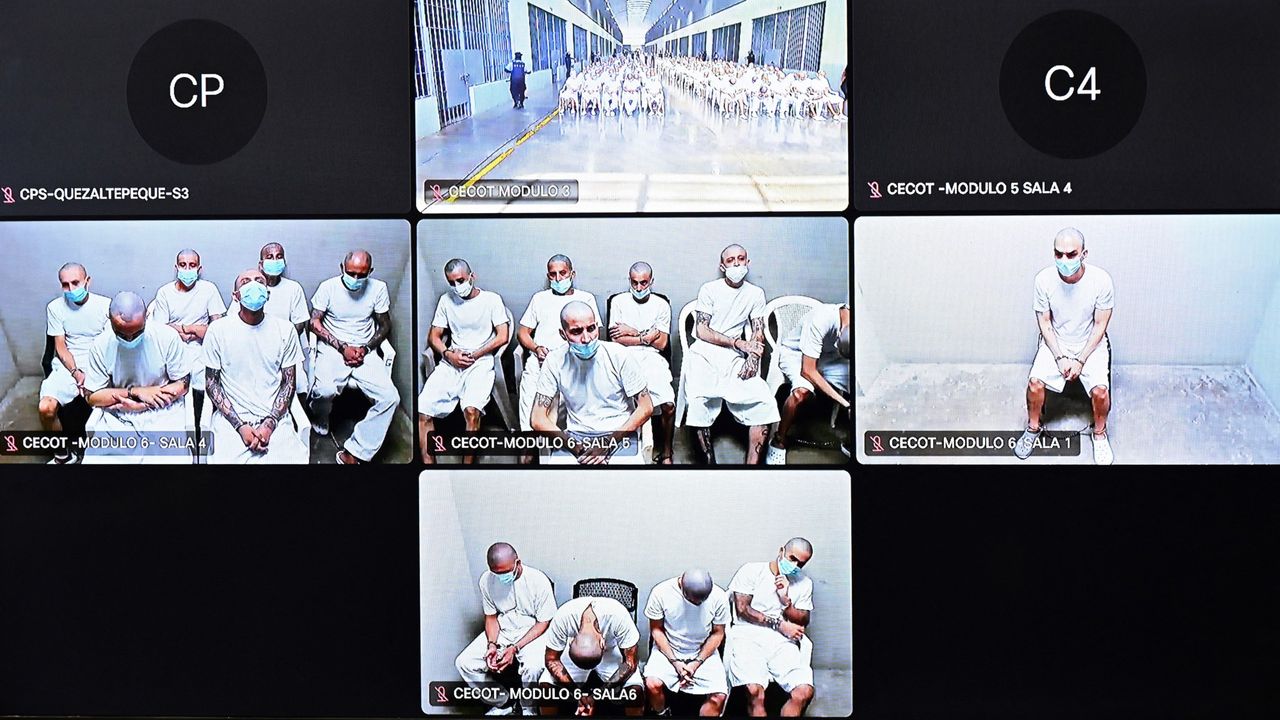
Prosecutors in El Salvador have opened a mass trial of 486 alleged members of the infamous MS-13 gang. They collectively face charges of 47,000 crimes, ranging from homicide to extortion and arms trafficking.
Mass trials are a feature of President Nayib Bukele’s “iron-fist approach” to fighting organised crime, said The Associated Press. But UN experts say they “undermine the exercise of the right to defence and the presumption of innocence of detainees”.
What is MS-13?
MS-13 was formed in the 1980s “on the street corners of Los Angeles” by Salvadoran immigrants who had fled civil war, said Sky News. It only spread to Central America as members were deported from the US.
At one stage, MS-13, and its rival gang, Barrio 18, controlled up to 80% of Salvadoran territory through “extortion, drug dealing, contract killings and arms trafficking”, said The Times. Bukele’s government estimates that, “over three decades”, the gangs have killed around 200,000 people, including many listed as disappeared.
What has the reaction to the crackdown been?
Mixed. President Bukele’s stance on criminal gangs has caused murder rates to plummet and “made him the most popular elected head of state in the world”, said The Times, but it has also “drawn sharp criticism from human rights organisations”. Human Rights Watch estimates that nearly 2% of the El Salvador’s entire population are incarcerated – one of “the highest rates” globally. More than 500 people have died in state custody since Bukele’s election, and there have been reports of torture, said Agence France-Presse.
What will happen next?
The vast majority of defendants are being held at the Terrorism Confinement Center (“Cecot”) in Tecoluca, and will watch the trial proceedings on a screen. Cecot, a maximum-security prison built by Bukele in 2023, has “become a symbol of his controversial security policies”, said AP. There are 73 defendants who remain at large and will be tried in absentia.
Given the limited evidence specific to individuals, mass trials risk the conviction of innocent people. Many of the defendants have been held in custody for years, and now face blanket rulings from unknown judges.
|