The Week The Week
flag of US
US
flag of UK
UK
https://cdn.mos.cms.futurecdn.net/flexiimages/jzblygzdxr1769609154.gif

SUBSCRIBE

Try 6 weeks free

Sign in
  • View Profile
  • Sign out
  • The Explainer
  • Talking Points
  • The Week Recommends
  • Podcasts
  • Newsletters
  • From the Magazine
  • The Week Junior
  • More
    • Politics
    • World News
    • Business
    • Health
    • Science
    • Food & Drink
    • Travel
    • Culture
    • History
    • Personal Finance
    • Puzzles
    • Photos
    • The Blend
    • All Categories
  • Newsletter sign up Newsletter
  • The Week Evening Review
    The latest Mandelson twist, who’s who in AI, and Bulgaria’s new leader

     
    TODAY’S BIG QUESTION

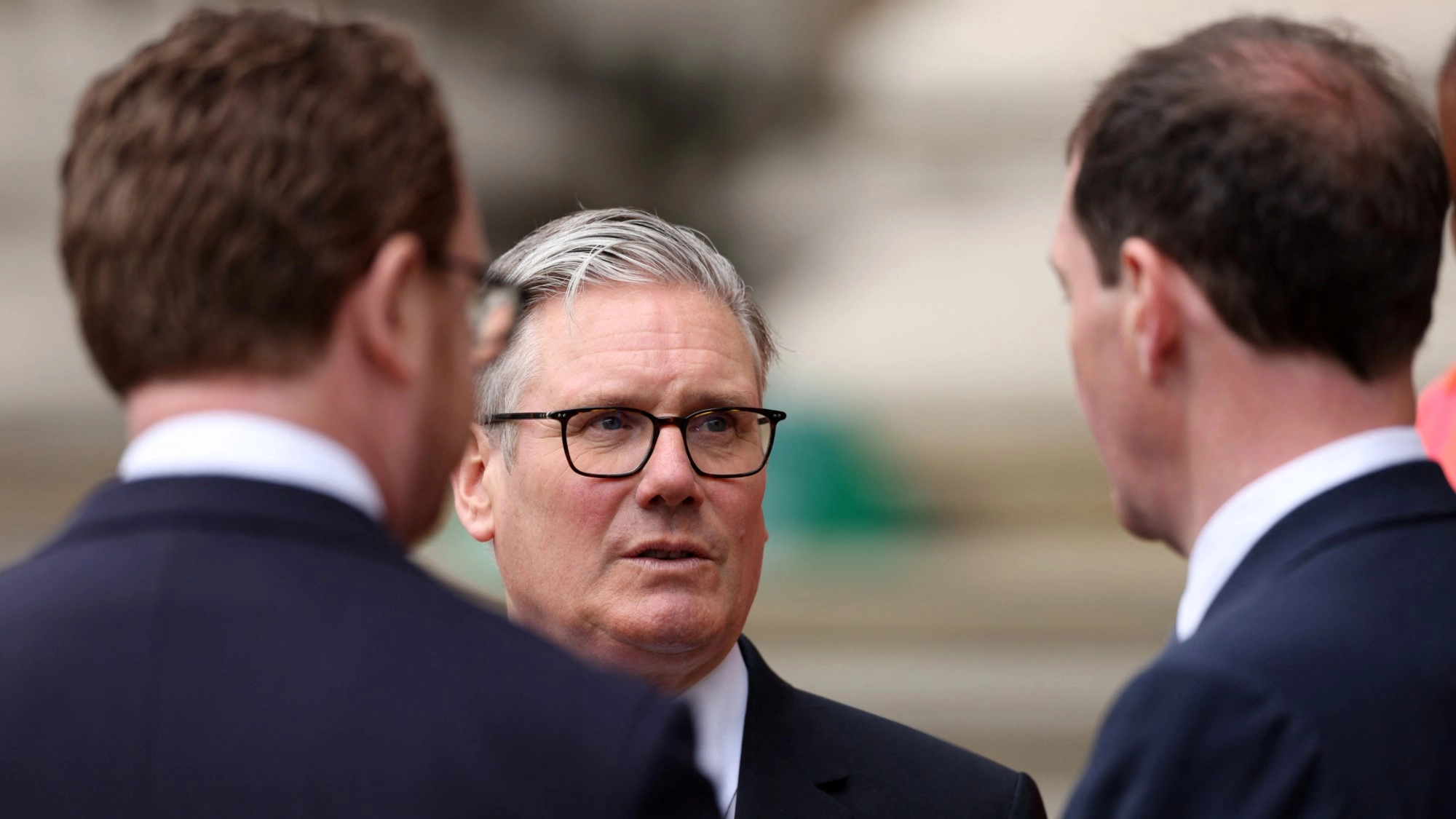
    What does the Mandelson row mean for Starmer?

    Keir Starmer’s political future is again hanging in the balance over his decision to appoint Peter Mandelson as UK ambassador to Washington, despite the peer’s well-known links to China and friendship with Jeffrey Epstein.

    The prime minister accused the Foreign Office of concealing from Downing Street that the UK Security Vetting organisation recommended Mandelson be denied full security clearance. But after being sacked as the department’s permanent secretary last week, Olly Robbins today told a parliamentary hearing that there was an “atmosphere of pressure” and “very strong expectation” from No. 10 that Mandelson should be “in post” as quickly as possible.

    What did the commentators say?
    For a prime minister to tell the Commons that he has not lied to MPs because “he didn’t know what was going on in his own government” is far from ideal, said The Independent. Starmer’s defence is that “nobody told me”, even when he asked. “So much for absolute prime ministerial power.” He will “most likely survive at least until the May elections and beyond”, but “his troubles and the weaknesses of the government remain”.

    The latest twist is “not enough to oust Starmer”, said Tim Shipman in The Spectator, “but it has undermined the faith of MPs in the PM” and “removed the gloss he had accumulated” by staying out of the Iran war. This latest row “makes it marginally more likely that he will be removed after May’s local elections”. He remains a “semi-detached, bizarrely incurious leader who seems barely engaged” with his government’s activities.

    Starmer’s dismissal of multiple advisers has also “added to the sense that a scapegoat can always be plucked from officialdom”, said Politico. That could have a “chilling effect”, with civil servants becoming “more defensive and suspicious”. Michael Heseltine famously compared the civil service to a Rolls-Royce, but as plenty of PMs have discovered, it is “capable of growling, not just purring”.

    What next?
    A “huge potential curveball” to follow in the coming weeks is the planned release of thousands of emails and WhatsApp messages between Mandelson and government figures, said Politico. “Not even Starmer can be sure how the story will evolve from there.”


    THE EXPLAINER

    Who’s who in the world of AI

    Jeff Bezos is “close” to securing a £7.4 billion fundraising deal from investors for his AI lab, codenamed Project Prometheus, according to the Financial Times. The massive cash injection would propel the Amazon founder into the ranks of the AI titans heading firms with multibillion-dollar valuations. Here are some of the industry elite figures.

    Sam Altman
    Launched in November 2022, OpenAI’s ChatGPT has “redefined the standards of artificial intelligence”, said Forbes. As the company nears a possible value of more than £740 billion, “one of the biggest so-called risk factors” is “Altman himself”, said Bloomberg. He was fired as CEO by the board in November 2023, only to be reinstated days later.

    Dario Amodei
    Amodei clearly “wants to position himself as one of the good guys in the AI debate”, said the FT. He founded Anthropic – the creators of Claude – in 2021 alongside six other former OpenAI employees, including his sister Daniela, who became the company’s president. Anthropic recently raised £22.2 billion in a funding round that valued it at £281.3 billion.

    Jensen Huang
    Although the head of Nvidia may not be driving the AI revolution directly, the world’s most valuable company is acting as the “hardware backbone” of the movement, said Business Insider. Huang’s “chip empire” is effectively “powering the generative AI boom”. He founded the company in 1993 and has served as CEO since its inception.

    Alex Karp
    Fewer people will have heard of the co-founder of Palantir but, to some, he is the “scariest CEO in the world”, said The Guardian. The company recently released a 22-point “manifesto” summarising a recent book by Karp in which he extols the need for “hard power” and argues the inevitability of “AI weapons”. Palantir has multibillion-dollar contracts with the US army and Ice, as well as partnerships with the Israeli military and the UK’s Ministry of Defence.

    Elon Musk
    The founder of xAI and Grok has high hopes of an automated future and believes AI will put “immortality within human reach”, said Forbes. But his Grok chatbot has faced backlash over generating deepfakes, and he is also locked in a legal feud with Altman, with whom he cofounded OpenAI. Musk accuses Altman of deceiving him into donating £28 million to launch OpenAI with the promise that it would remain a non-profit.


    QUOTE OF THE DAY

    “This is indeed the biggest crisis ​in history.”

    International Energy Agency chief Fatih Birol warns that the Iran and Ukraine wars are hitting supplies of not only oil and gas but also products including fertilisers and petrochemicals, “pushing inflation worldwide”. Countries are facing a “debt spiral”, he told France Inter radio.


    Poll watch

    Donald Trump’s approval rating has hit a new second-term low of 37% in NBC News Decision Desk polling. Of 32,433 voters quizzed, 63% said they disapproved of their president’s general job performance, and 67% disapproved of his handling of the Iran war.


    IN THE SPOTLIGHT

    Bulgaria: the new thorn in the EU’s side?

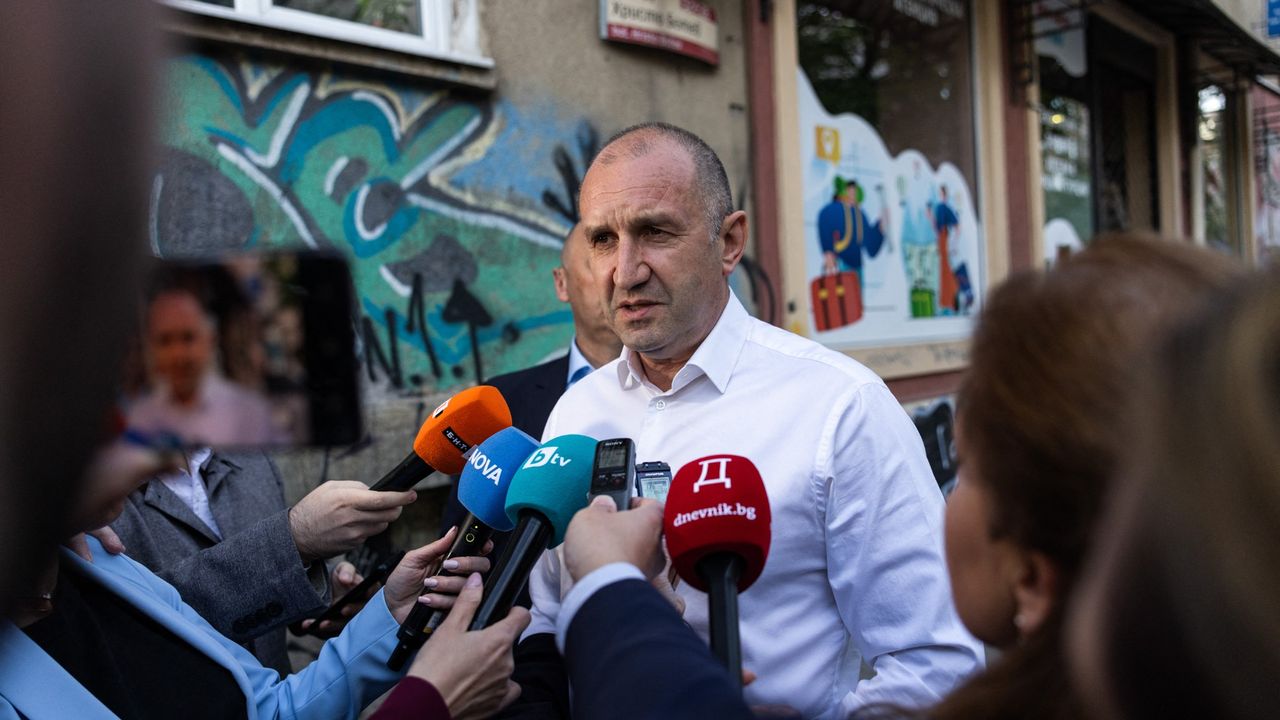
    Former fighter pilot Rumen Radev led his party into Bulgaria’s parliamentary election promising to take on the “corrupt officials, conspirators and extremists” who he accused of running the country into the ground. Voters responded on Sunday by handing his newly formed Progressive Bulgaria coalition the “single biggest vote haul in a ‌generation”, which “paves the way for greater political stability after eight elections in five years”, said Reuters.

    Corruption crusader
    Radev (pictured above) rose through the ranks of the Bulgarian air force to become a major general and finally head of the service. A relative latecomer to politics, he was elected to the largely ceremonial role of president in 2016 and held the position until this January, when he resigned after massive anti-corruption protests brought down the government. He then formed Progressive Bulgaria to run in the election, which he won with just under 45% of the vote, giving Bulgaria its first parliamentary majority in nearly 30 years.

    The “main factors” driving Radev’s victory were “deep frustration over years of futile anti-corruption efforts, concern over rising prices” and a “potent mix of pro-Russian sentiment”, said Atanas Rusev, from the Center for the Study of Democracy in Sofia. “Radev played astutely on all these anxieties.”

    ‘Symbolically valuable’
    A Radev-led government is “bad news for Ukraine and would represent a significant win for Russia”, said Jan Surotchak at the Atlantic Council think tank. In the short term, his victory will “likely mean an end to Bulgarian ammunition supplies to Ukraine, forcing Nato to seek other sources”. The US-backed northern corridor for energy supplies to Eastern Europe could also “lose out in favour of Turk Stream, the last major energy pipeline bringing Russian gas to Europe”.

    Radev’s winning message has been a “cocktail of anti-corruption pledges, Euroscepticism and pledges to rebuild ties with Moscow, spooking some EU and Nato diplomats”, said the Financial Times. But “while his outreach to Russia may be symbolically valuable to the Kremlin, it is likely to be far less consequential in practice” than the recent election defeat of Hungary’s Viktor Orbán, who “routinely vetoed EU decisions in order to benefit Moscow”.


    Good day 👑

    … for royalists, as final plans for a national memorial to Queen Elizabeth II are unveiled on what would have been her 100th birthday. The tribute in St James’s Park will feature a bronze statue of the monarch in her youth by sculptor Martin Jennings, as well as a series of gardens and a glass bridge inspired by her wedding tiara.


    Bad day 🐛

    … for Whitstable’s bushes, which are swarming with toxic caterpillars. Local residents in the coastal area of Tankerton have been warned not to touch the brown-tailed moth caterpillars or their nests, as the insects’ tiny, barbed hairs can cause severe skin irritation and other allergic reactions.


    PICTURE OF THE DAY

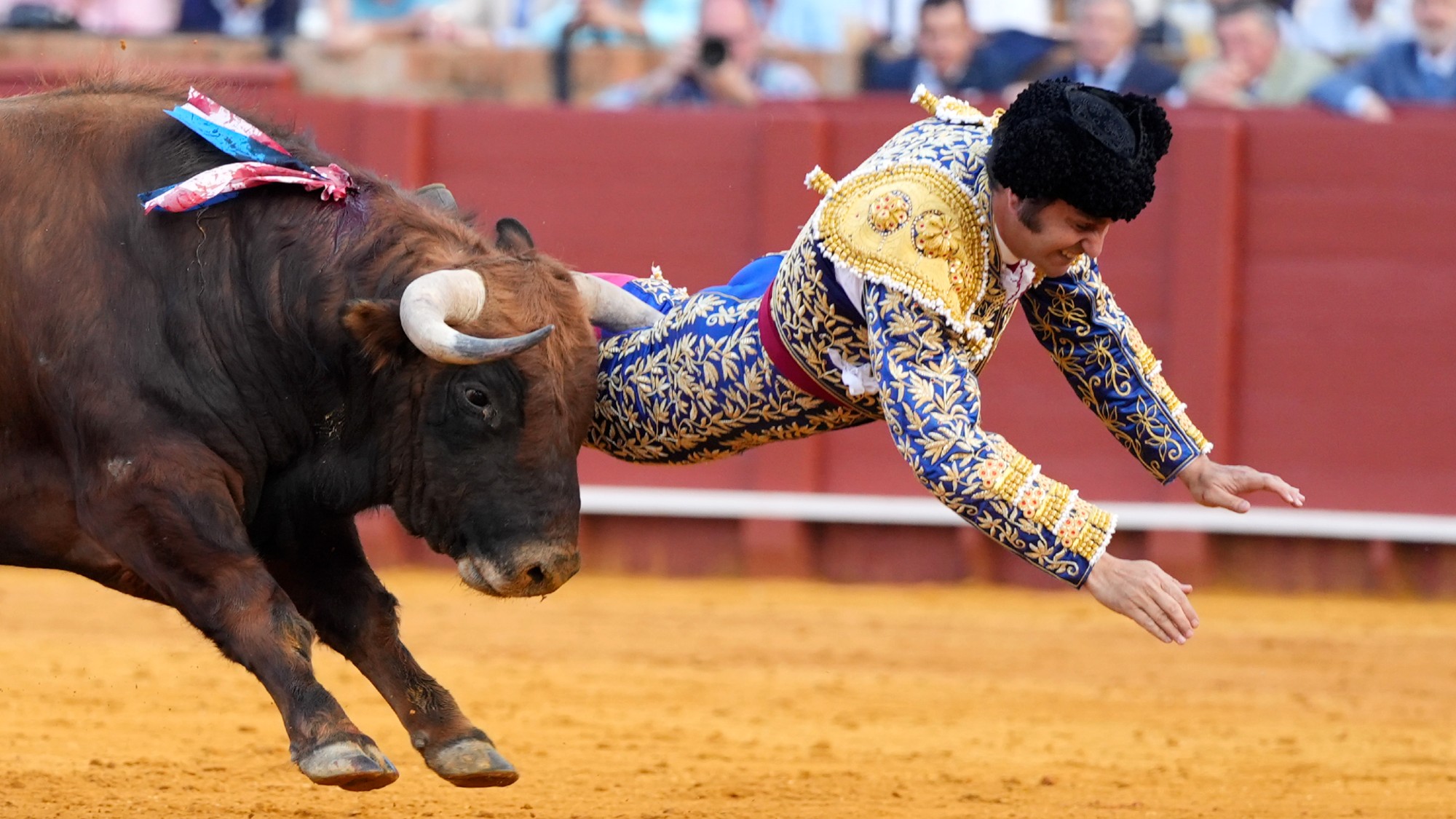
    Blow the horn

    Leading matador Morante de la Puebla suffers an eye-watering injury during a comeback performance at Spain’s Seville Fair. The “King of Bullfighters”, who announced his retirement last year, underwent two hours of surgery to repair a 10cm wound in his buttock.

    Joaquin Corchero / Europa Press / Getty Images


    Puzzles

    Guess the number

    Try The Week’s daily number challenge in our puzzles and quizzes section

    Play here


    THE WEEK RECOMMENDS

    Affordable safari holidays

    Safaris often come with an “eye-rolling price tag”, said The Times, but there are “bargains” to be had if you know where to look. One way to save money is to “rent a car and drive yourself”, avoiding the hefty cost of a fully guided package. It’s also worth choosing one of the “gateway towns” with a “locally run park outside of the national park”, rather than “an internationally owned lodge within it”.

    Everyone is keen to see the annual wildebeest migration, “but most people don’t realise that the migrating herds can be found year-round at various places in Africa”, said Condé Nast Traveller, “so you don’t necessarily have to be in the Masai Mara during July and August”. Consider travelling during the spring or autumn and “staying longer” in one safari destination instead of moving between lodges every few days, to cut down on travel costs and increase your chances of “finding a good deal”.

    “Africa has become synonymous with safaris,” said The Independent, but if you’re willing to expand your search, “more affordable Brazil has flown under the radar”. Home to the “highest concentration of wildlife in South America”, the Pantanal region is “sometimes dubbed the Brazilian Serengeti”. It even has its “own Big Five: the capybara, giant river otter, maned wolf, jaguar, and – tick – the giant anteater”. And with all-inclusive lodges costing a fraction of the price of a luxury resort, the country “promises an affordable alternative to a traditional safari”. 


    Statistic of the day

    3.4: How many times petrol was stolen from the average UK forecourt each week last month, up by 62% from March 2025. A BBC analysis of data from theft recovery firm Pay My Fuel found that the average value of fuel nicked in forecourt drive-offs rose by 46% over the same period.


    instant opinion

    Today’s best commentary

    We are one crisis away from a nuclear point of no return
    David Blair in The Telegraph
    The UN’s International Atomic Energy Agency aims to “preserve humanity from nuclear destruction”, writes David Blair, but “the whole intricate system designed to prevent calamity is crumbling before our eyes”. US-Russia disarmament treaties have collapsed and China is “expanding its nuclear arsenal at breakneck speed”. As “risk-reduction measures have fallen away”, countries including Japan, South Korea and Poland are considering joining the nuclear club. “And the more countries that have nuclear weapons, the greater the risk of catastrophe.”

    Even the job from hell teaches you something
    Gabriella Bennett in The Times
    “I’ve held short-term jobs since I was 12 years old” and “each one has taught me something”, writes Gabriella Bennett. “The thing about work” is that “you pick things up even when it’s hell”, from “how to fold a jumper perfectly even when hungover” to the lesson that with pub work, “you earn more tips in a crop top”. But most of all, work means “you meet people you’d never ordinarily encounter and they change your life”.

    King Charles’ message of peace presents hidden meanings in a fractured world
    Russell Myers in The Mirror
    “King Charles’ remarks on how unsettled his mother may have been” if she were alive today hints that “he too has struggled to come to terms” with our “fractured world”, writes Russell Myers. The Queen didn’t “live to see her disgraced son Andrew arrested” or the full “disintegration” of Prince Harry’s relationship with the royal family. Charles “has endured a difficult start to his reign”, but recent polling suggests his own “stature has not diminished in the face of adversity”.


    word of the day

    Grandma-style

    Shoppers are embracing nose-to-tail cooking, inspired by older people sharing traditional recipes online, according to Waitrose. Sales of lamb hearts are up 91% year-on-year, while searches for oxtail on the supermarket’s website are up 76%. “Social media has made mastering ‘Grandma-style’ techniques much easier,” said Waitrose meat counter buyer Libby Nicolls.


    Evening Review was written and edited by Hollie Clemence, Rebecca Messina, Harriet Marsden, Will Barker, Elliott Goat, Chas Newkey-Burden, Irenie Forshaw, Adrienne Wyper, David Edwards and Kari Wilkin, with illustrations from Stephen P. Kelly.

    Image credits, from top: Adrian Dennis / AFP / Getty Images; illustration by Stephen P. Kelly / Getty Images; Daniel Yovkov / Hans Lucas / AFP via Getty Images; Joaquin Corchero / Europa Press / Getty Images; Wolfgang Kaehler / Getty Images

    Morning Report and Evening Review were named Newsletter of the Year at the Publisher Newsletter Awards 2025
     

    Recent editions

    • Morning Report

      Trump says ceasefire extension is ‘unlikely’

    • Evening Review

      Mandelson vetting: who knew what?

    • Morning Report

      Starmer faces Commons grilling over Mandelson row

    VIEW ALL
    TheWeek
    • About Us
    • Contact Future's experts
    • Terms and Conditions
    • Privacy Policy
    • Cookie Policy
    • Advertise With Us
    • FAQ
    Add as a preferred source on Google Add as a preferred source on Google

    The Week UK is part of Future plc, an international media group and leading digital publisher. Visit our corporate site.

    © Future Publishing Limited Quay House, The Ambury, Bath BA1 1UA. All rights reserved. England and Wales company registration number 2008885.