The Week The Week
flag of US
US
flag of UK
UK
https://cdn.mos.cms.futurecdn.net/flexiimages/jzblygzdxr1769609154.gif

SUBSCRIBE

Try 6 weeks free

Sign in
  • View Profile
  • Sign out
  • The Explainer
  • Talking Points
  • The Week Recommends
  • Podcasts
  • Newsletters
  • From the Magazine
  • The Week Junior
  • More
    • Politics
    • World News
    • Business
    • Health
    • Science
    • Food & Drink
    • Travel
    • Culture
    • History
    • Personal Finance
    • Puzzles
    • Photos
    • The Blend
    • All Categories
  • Newsletter sign up Newsletter
  • The Week Evening Review
    Social media ban explained, return of assisted dying debate, and Gen Z’s AI

     
    THE EXPLAINER

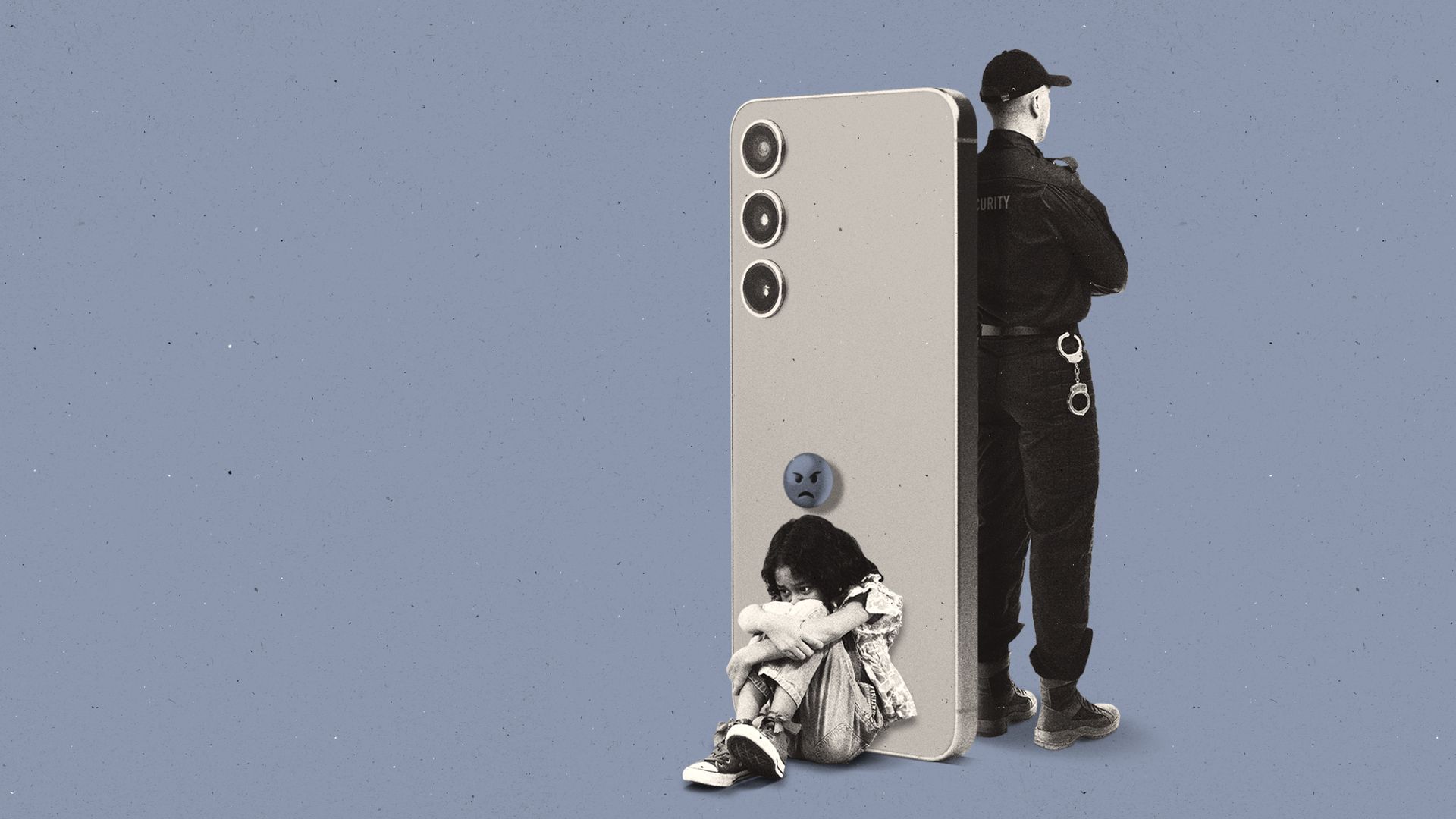
    The UK’s new social media ban explained

    Under-16s in the UK will be banned from social media under radical new plans set out by the prime minister today.

    In a televised speech in Downing Street, Keir Starmer said he was “calling time on a system that’s failing our kids”. Polling by YouGov suggests broad public support for the decision, with 77% of parents backing a ban. But the same parents were split on whether a ban would work, with 45% of those surveyed saying it would be effective and 46% saying it would not.

    How will it happen?
    The UK ban will cover the most popular social media platforms, including Snapchat, TikTok, YouTube, Instagram, Facebook and X (formerly Twitter), but not encrypted messaging apps such as WhatsApp and Signal. The government says it will “go further than any other country”, with its policy also including blocks on live-streaming and stranger communication for under-16s.  

    As ever, the devil will be in the detail. The government has said new restrictions will be enforced through “highly effective age assurance” systems, including facial age estimation using digital cameras. The media regulator Ofcom “will conduct a rapid study on what is effective age assurance for verifying whether someone is over 16”, said the government. The PM said he hoped the ban would come into effect in spring 2027.

    Can it work?
    The government is rushing out plans for a social media ban “without considering the knock-on effects it would have on surveillance, privacy and young people’s wellbeing”, said OpenDemocracy.

    Social media companies have argued that a ban could push children into unregulated parts of the internet and onto less safe sites and platforms. But Mark Dowey, whose son Murray died after being blackmailed on Instagram, told BBC Breakfast: “If that’s the best they’ve got, then I think they’re in trouble. I think they’re basically acknowledging they don’t have a reasonable position here.”

    Is a ban working elsewhere?
    Last year, Australia became the first country to introduce a social media ban for under-16s. More than 70% of parents there have said their children are still on the banned platforms, according to a survey for Australia’s internet regulator. But supporters of the UK ban argue that any problems in Australia “are about weak enforcement, not the model itself”, said The Times.


    TODAY’S BIG QUESTION

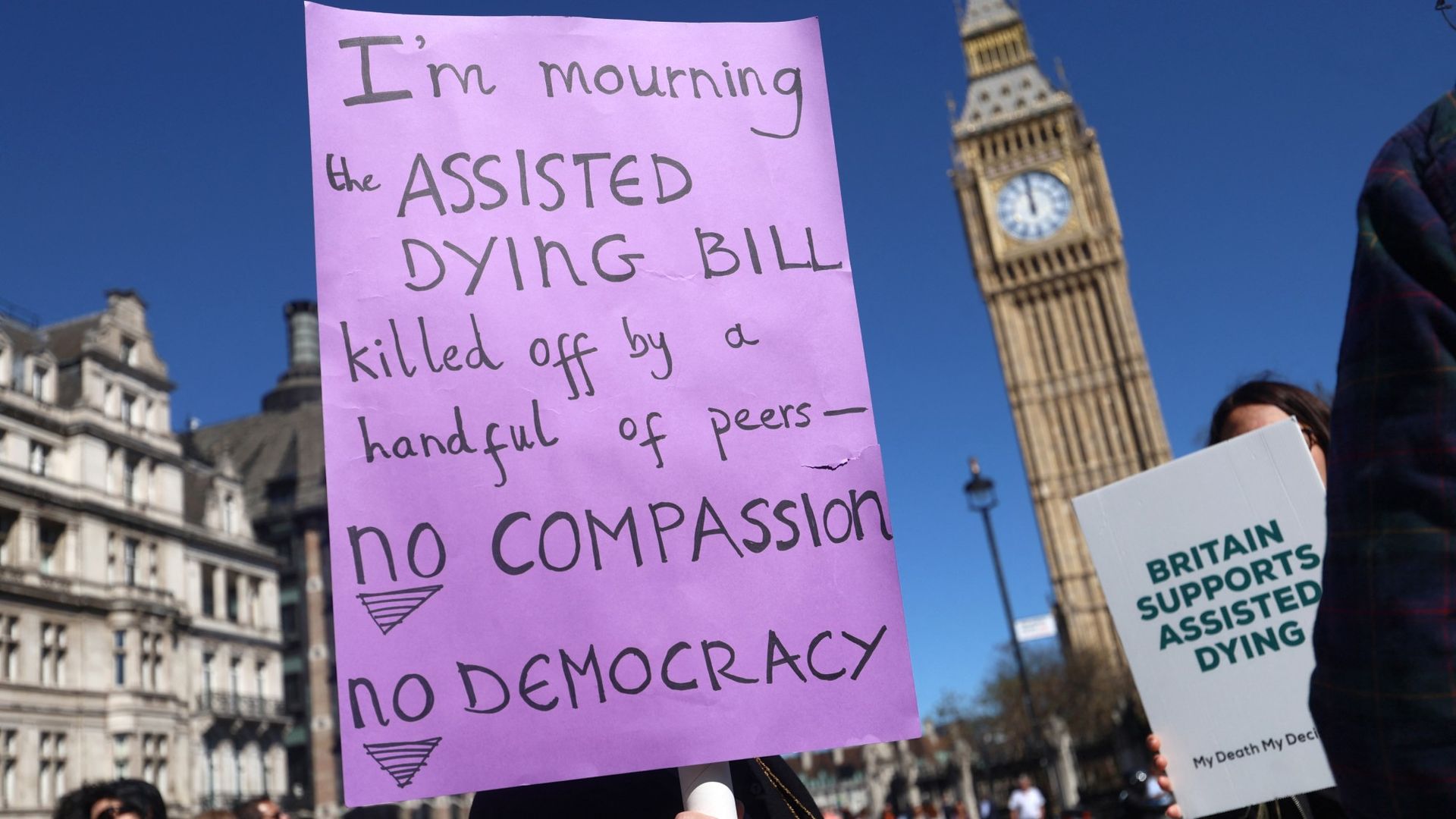
    Could resurrected assisted dying bill succeed?

    Rifts within the Labour Party look set to fracture along new lines, as a Labour MP says she’ll reintroduce the highly controversial assisted dying bill.

    Lauren Edwards, MP for Rochester and Strood, has said she will use her second place in the Private Members’ Bill ballot to bring forward the same Terminally Ill Adults (End of Life) bill Kim Leadbeater introduced last year. The original bill was narrowly voted through by the House of Commons but fell in April, after running out of time to clear the House of Lords because of the huge number of safeguarding amendments tabled.

    “By bringing exactly the same legislation, Edwards is threatening to trigger rarely used” parliamentary powers “to override peers’ objections should they refuse to pass it again”, said the BBC. 

    What did the commentators say?
    Supporters of assisted dying “insist” the bill only failed because “a handful of peers blocked it”, said Hannah Barnes in The New Statesman. Yet “blaming a handful of peers for the bill’s demise ignores the concerns that were raised by others before debate even began”. There were numerous worries from across the political spectrum “about the bill’s lack of pre-legislative scrutiny and the absence of detail about how assisted dying would work in practice”.

    I support the right to die but not this legislation, said Stephen Bush in the Financial Times. It only “covers a vanishingly small number of people”, whose needs could really “be met via decent palliative care”. It is designed for a person who has six or less months to live, is of sound mind and wishes to die without pain or uncertainty. But “when I talk to people about” assisted dying, most of those who “want the right” are those who do not want “to spend years in expensive, suspended animation while their dementia costs eat away at everything they’ve worked for”. I fear politicians are “much more squeamish about that aspect of wanting the right to die than the average British person”.

    What next?
    Some doubt that the bill would even pass the House of Commons this time. If it doesn’t, it would hardly be “a surprise, given that Leadbeater’s legislation passed its Commons Third Reading by just 23 votes”, said The Spectator. “That means only 12 MPs would need to switch from support to opposition for it to fall.”


    QUOTE OF THE DAY

    “The United States still has a long way to go before it can earn the trust of the Iranian people.”

    Iran’s Foreign Ministry spokesperson Esmaeil Baqaei warns that the framework for peace due to be signed by Tehran and Washington on Friday is “merely a step toward reducing tensions” and ending the war, during his weekly press briefing. 


    Poll watch

    Most Americans believe their country’s best days are over, according to a poll to mark the 250th anniversary of US independence. Of 3,000 adults surveyed for NBC News, 58% said they think the nation’s future will be less bright than its past, while only 38% predicted better years to come.


    IN THE SPOTLIGHT

    Why Gen Z is leading the charge against AI

    College leavers are booing company bosses booked to speak at their graduation ceremonies for mentioning artificial intelligence. Young people’s “AI anxiety” is “boiling over into public backlash”, said Business Insider. And it’s “highlighting a gulf” between older generations, who tend to feel the technology “offers new opportunities”, and Gen Z, who are “growing increasingly anxious” about what AI “means for their future”.

    Backlash and resistance
    Excitement about AI among Gen Z has fallen from 36% to 22% in the past year, according to a recent Gallup survey, while anger towards the technology has risen nine points, to 31%. Another survey, carried out by Numerator, found that among Gen Z people who don’t already use AI, 57% are not open to adopting it, compared to just 32% of Boomers.

    “Read that again,” said Fortune. “Older Americans are more open to AI than young ones.” It seems that a “surprising segment of the generation that was supposed to lead AI adoption” is actually “leading the resistance to it”. For them, AI was “foisted upon them” by their “parents, big tech CEOs” and Donald Trump.

    Young people were sold “the promise that a college education secured a good future”, but now employers are “gutting entry-level positions” in favour of AI, said Denison University student Jack Jackoboice in The Wall Street Journal. Some Gen Z workers are “actively sabotaging their company’s AI initiatives” by feeding sensitive company data into public AI tools and by “intentionally producing low-quality, AI-assisted junk work” to make the technology “look unreliable”, said Vice.

    ‘Existential melodrama’
    The “danger” is that “economic anxiety” can “curdle into existential melodrama”, said college student Ethan Tran in The Wall Street Journal. “Fear underrates human ingenuity”; young people shouldn’t “hide from replacement” but “look for opportunities that arise from the transformation”.

    AI anxiety also got short shrift from the CEO of Big Machine Records, Scott Borchetta, when graduates at Middle Tennessee State University booed him for saying that AI is rewriting the music industry. He told the hecklers: “You can hear me now, or you can pay me later.”


    Good day 🏃‍➡️

    … for reopening investigations, after a man was arrested in connection with an incident in which a woman was pushed in front of a London bus nine years ago. Scotland Yard had closed the investigation in 2018 after admitting they’d exhausted all lines of inquiry into a jogger, known as the “Putney Pusher”, who shoved a woman into the road on Putney Bridge. 


    Bad day 👪

    … for England’s WAGs, as families of the men’s World Cup football squad are set to stay in the team’s Miami base, 1,400 miles from the players’ group games in Kansas City. Some relatives will fly in for the matches but have been told they can only spend time with the squad immediately after the games, and there will be no overnight stays.


    PICTURE OF THE DAY

    A consuming fire

    Smoke and flames rise from Kyiv’s Dormition Cathedral, part of the Unesco-listed Pechersk Lavra monastery complex, following a wave of Russian missile and drone strikes on the Ukrainian capital. Volodymyr Zelenskyy condemned “one of Russia’s most serious crimes ​against Christian culture to date”. 

    Andriy Dubchak / Frontliner / Getty Images


    Puzzles

    Chain Word

    Try The Week’s new daily word challenge in our puzzles and quizzes section

    Play here


    THE WEEK RECOMMENDS

    Bring on the heat with ‘fricy’ flavours

    “Tropical fruit and chilli sauce” is a combination that “works”, said Lucy Knight in The Guardian. The zingy mix of “fricy” (fruity and spicy) flavours has been a staple of South American cuisine for years. Now, it’s being tipped as the food trend of the summer here.

    Fricy may sound like a “silly word” but the demand is real, Holly Thomson of online food retailer Sous Chef told the paper. Her company’s website has seen a 19% year-on-year increase in sales of their “hero” fricy product: a Mexican lime, salt and chilli spice blend, called Tajín.

    “The hashtag #fricy hasn’t quite gone viral” yet, said the BBC, but there are plenty of social media posts celebrating the flavour combination. The Mexican drink mangonada, a mix of mango with chamoy (a condiment made from pickled, spiced fruit), has already inspired “more than 47,000 TikTok posts”. Spicy fruit bowls containing “fruit such as pineapple and mango, covered in spices like chilli” are also having a moment.

    Food trends usually rely on “emotional pull” and “visual appeal”. Just as its “striking purple” hue is responsible for the rise of ube, or purple yam, the “vivid yellows, oranges, reds and browns” of the mangonada make people “curious” to taste it. And once they do, they find the “tangy, spicy, sweet, salty” combination quite memorable, Dominic Vargas, founder of the Mango Twist café in London, told The Guardian.


    Statistic of the day

    11,484: The number of convertible cars sold in the UK last year, a drop of nearly 90% from the 109,171 sold in 2005, according to the Society of Motor Manufacturers and Traders. “It’s a simple fact of people wanting more practicality these days,” car journalist Steve Fowler told the BBC.


    instant opinion

    Today’s best commentary

    Rejoining the EU is not the answer Brexit Britain is looking for
    Gina Miller in The Independent
    We need to grow up about Europe, writes anti-Brexit campaigner Gina Miller. Brexit’s “not delivering” and in today’s “more dangerous” world, “Britain needs allies”. But “rejoining the EU is not the answer”; it would take too long and cause “renewed division”. I’d back a “Swiss-style settlement in which we have a much closer relationship with the bloc”. Sovereignty “is the capacity to choose what works”, and “we cannot be safe and prosperous by standing outside the reality of our geography”.

    The real ‘two-tier’ policing scandal leaving disabled people powerless
    Ian Birrell in The i Paper
    Kemi Badenoch wants “an end to the duty placed on public bodies” to “fight discrimination”, writes Ian Birrell. Pushing “populist assertions” about “woke mindsets” and “two-tier policing”, the Tory leader dismisses “the need to treat any groups differently to achieve fairness”. But she’s “brazenly” overlooking people with disabilities, who face “routine discrimination” and even “abuse and hatred”. “Treating everybody the same” may be “a fine aspiration”, but “she needs to wake up to the true reality of our society”.

    Let me count the ways I love Harry Styles
    Robert Crampton in The Times
    Harry Styles’ Wembley residency is gathering “momentum”, and while “I can’t fathom” his music, writes Robert Crampton, “I can totally see why he is such a massive star”. I like how he winds up “the barmy American right” with his “glitter and sequins”. I like his “apparently ambivalent sexuality”. And I like his face: “open, pleasant, but with a hint of steel, a hint of geezer” – “timelessly English”. “I sense that, if push came to shove”, Styles “would have my back”.


    word of the day

    Osouji

    Japanese for “Big Cleaning”, part of a cultural ethic of tidying up after yourself. Football fans from Japan are winning plaudits at the men’s World Cup for staying behind after their team’s 2-2 draw with the Netherlands to clear litter from the stands of the Texas stadium. “There’s a saying: ‘A bird that flies never leaves a trace,’” intercultural expert Nozomi Morgan told CNN. 


    Evening Review was written and edited by Jamie Timson, Elliott Goat, Chas Newkey-Burden, Deeya Sonalkar, Irenie Forshaw, Helen Brown, David Edwards and Kari Wilkin, with illustrations from Stephen P. Kelly.

    Image credits, from top: illustration by Stephen P. Kelly / Getty Images / Shutterstock;
    Toby Shepheard / AFP / Getty Images; Raul Arboleda / AFP / Getty Images; Andriy Dubchak / Frontliner / Getty Images; iStock / Getty Images

    Morning Report and Evening Review were named Newsletter of the Year at the Publisher Newsletter Awards 2025
     

    Recent editions

    • Morning Report

      ‘Let the oil flow’: Trump announces Iran peace deal

    • Sunday Shortlist

      Russell T. Davies’ ‘deeply stirring’ state-of-the-nation TV

    • Saturday Wrap

      The ‘most politicised’ World Cup ever?

    VIEW ALL
    TheWeek
    • About Us
    • Contact Future's experts
    • Terms and Conditions
    • Privacy Policy
    • Cookie Policy
    • Advertise With Us
    • FAQ
    Add as a preferred source on Google Add as a preferred source on Google

    The Week UK is part of Future plc, an international media group and leading digital publisher. Visit our corporate site.

    © Future Publishing Limited Quay House, The Ambury, Bath BA1 1UA. All rights reserved. England and Wales company registration number 2008885.