The Week The Week
flag of US
US
flag of UK
UK
https://cdn.mos.cms.futurecdn.net/flexiimages/jzblygzdxr1769609154.gif

SUBSCRIBE

Try 6 weeks free

Sign in
  • View Profile
  • Sign out
  • The Explainer
  • Talking Points
  • The Week Recommends
  • Podcasts
  • Newsletters
  • From the Magazine
  • The Week Junior
  • More
    • Politics
    • World News
    • Business
    • Health
    • Science
    • Food & Drink
    • Travel
    • Culture
    • History
    • Personal Finance
    • Puzzles
    • Photos
    • The Blend
    • All Categories
  • Newsletter sign up Newsletter
  • The Week Evening Review
    White working-class gap, Wimbledon cash row, and climate change travel

     
    TODAY’s BIG QUESTION

    Why are white working-class kids being left behind?

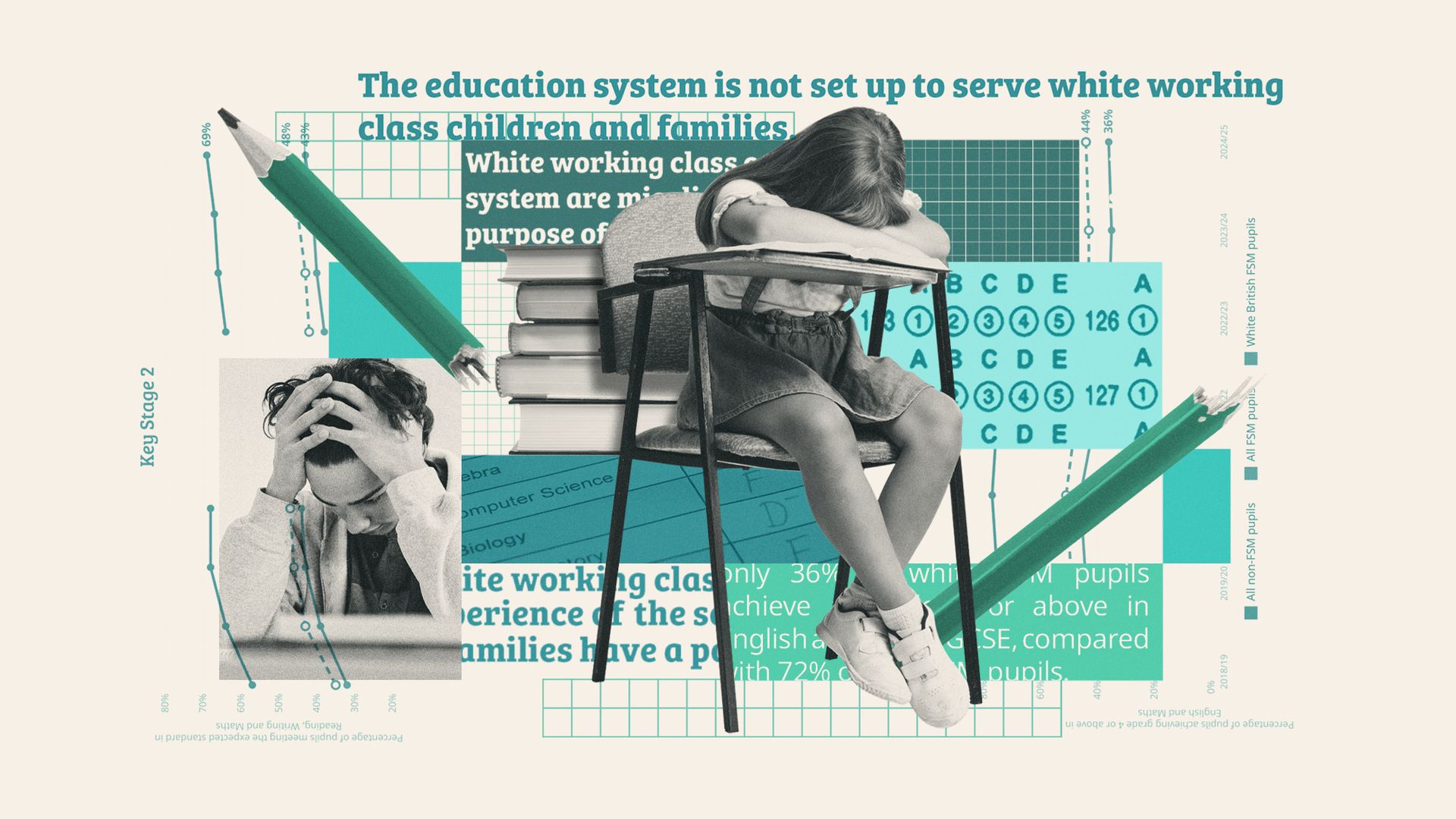
    The education system is “not set up to serve white working-class children and families”, an independent inquiry has found. And this has created a “white working-class disadvantage gap”.

    The Inquiry into White Working Class Educational Outcomes, found that, by the end of secondary school, just 36% of white pupils who receive free school meals in English schools achieve a Grade 4 or above in English and Maths GCSE, compared with 72% of pupils who don’t receive free school meals.

    What did the commentators say?
    “Behaviour, disengagement and absenteeism” seem to be the most significant factors for low attainment, said Channel 4’s social affairs editor Jackie Long on the TV channel’s Substack. But the “intersection between geography, culture, opportunity and aspiration” has yet to be “fully unravelled by the inquiry”. “There will be no quick fix.”

    Nigel Farage and the political right have “overreached” by blaming the Equality Act and the “proliferation of critical race theory” in British institutions, said Rakib Ehsan of the Policy Exchange think tank on UnHerd. There is an “endemic” problem, facilitated by a “broader economic malaise of regional and class disparity, de-industrialisation” and “lack of secure local employment”.

    The narrative that white working-class boys have been neglected by the system is “set like concrete”, said Terri White in Prospect. But “what about our white working-class lasses?” While white working-class girls still marginally outperform their male counterparts (by 38% to 35%) at GCSE level, the girls’ numbers have “dropped dramatically” over the past six years.

    Education has become “increasingly politicised”, and white boys are seen as a “problem”, said Joanna Williams on Spiked. They have been let down by a political class that has done little to provide “well paid, meaningful employment”, and have been ignored by a schooling system that “prioritises therapeutic interventions over discipline and high standards”. “All children deserve better.”

    What next?
    Possible solutions raised by the inquiry include free transport for under-21s, a “crackdown on excessive screen use”, and high-performing schools taking in “more white working-class children”, said Nicola Woolcock in The Times. Communities should also “provide significantly greater access to sport, arts, culture, volunteering, outdoor activity and employer engagement, backed by sustained long-term funding”.


    THE EXPLAINER

    Break point: the Wimbledon finances row

    As Wimbledon fortnight gets underway today, the record prize pot of £64.2 million has done little to assuage the “increasingly mutinous” mood of professional tennis players, said The Observer. The sport has jettisoned its “gentlemanly image” to become a “global cultural phenomenon”, and its stars want a “bigger slice of the pie”.

    What are the protests about?
    The players want a larger ratio of tournament revenues to acknowledge their contribution towards each event’s success, with “more money trickling down the draws”, said the BBC. They also want discussion about how much Grand Slams contribute to players’ pension, healthcare and maternity pots, and they want better consultation on questions such as scheduling, late-night finishes and elongated tournaments. 

    Prior to Wimbledon, several star names had planned to limit their contractual media commitments in protest, but they will now return to normal media duties following what they describe as “constructive meetings” with the All England Club. 

    What’s the reaction been?
    Wimbledon announced a 20% increase in prize money only a couple of weeks ago, so the All England Club was “surprised and disappointed” by the players’ threat of action, said the BBC. Former player and BBC tennis pundit Andrew Castle said the players were being “tone deaf”.

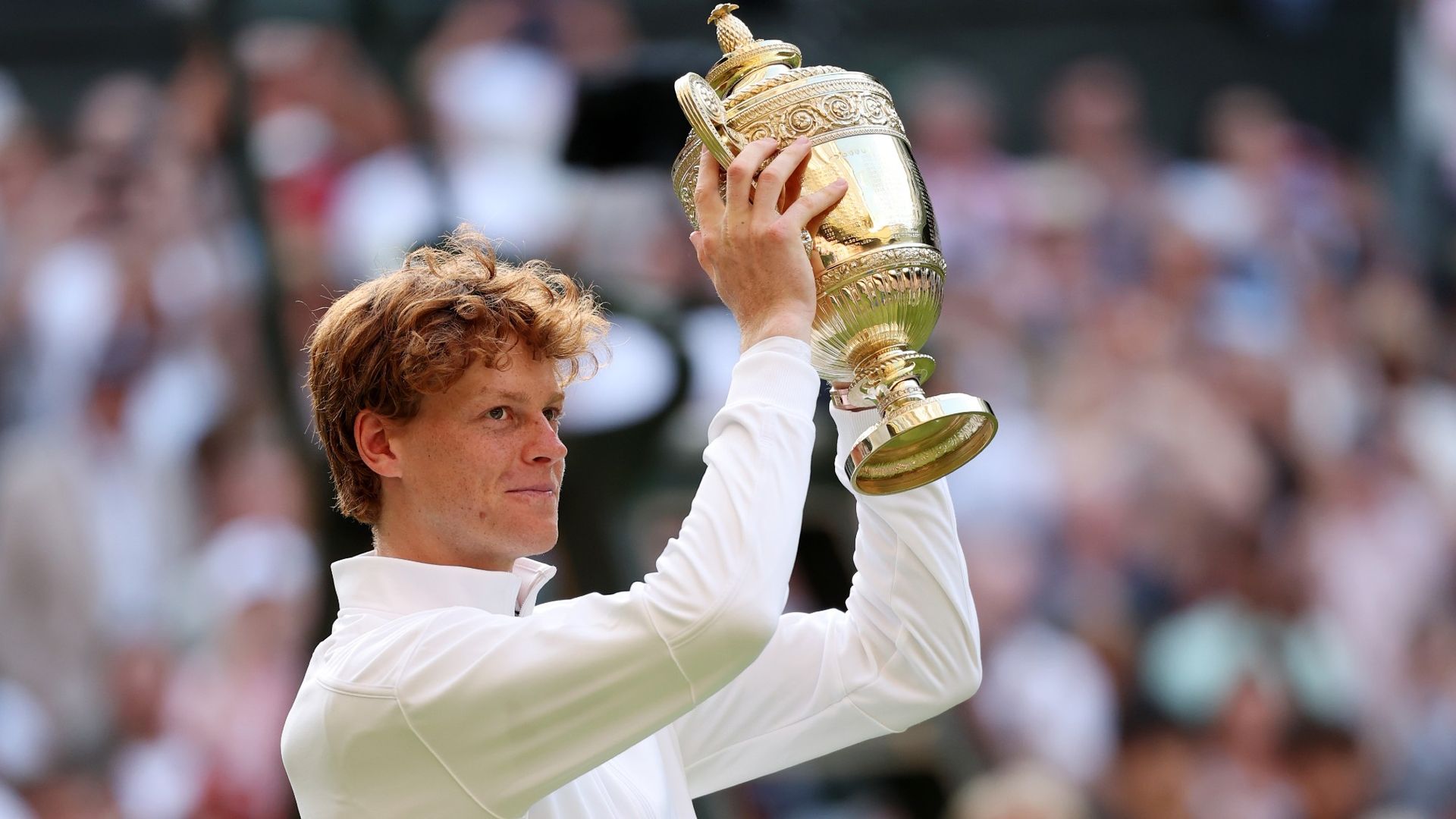
    Some of the game’s biggest names, including 2025 Wimbledon winner Jannik Sinner (pictured above), Carlos Alcaraz and Aryna Sabalenka, have threatened boycotts of future tournaments. With their huge career winnings and “lucrative” sponsorship deals, they would be “just fine if the money remained the same”, said The Observer. But it can be a “slog” for lower-ranked players, whose winnings must fund coaching and travel in a sport that “spans continents”, leaving them “barely breaking even”. “We don’t do it for ourselves,” said Sabalenka. “We do it for the rest of the players who are suffering to even hire a coach.”

    What next?
    Wimbledon argues that the players underestimate the costs of running tournaments and staging important warm-up events. But it has made a “commitment to return with specific proposals addressing their concerns”.


    QUOTE OF THE DAY

    “It was either do that or change the decency laws.”

    Andy Burnham reveals his decision to buy new (presumably longer) running shorts. In the rest of his speech today, the frontrunner to be the next prime minister described his vision for Britain as “good growth in every postcode and hope in every heart”. He declined to take questions – on jogging kit or anything else – from journalists afterwards. 


    Poll watch

    Nearly a third of Brits (31%) have declined a wedding invitation purely for financial reasons. Tesco Bank’s poll of 2,000 UK adults found that the average cost of attending a single wedding now stands at £316 per person. 


    IN THE SPOTLIGHT

    How climate change could transform travel

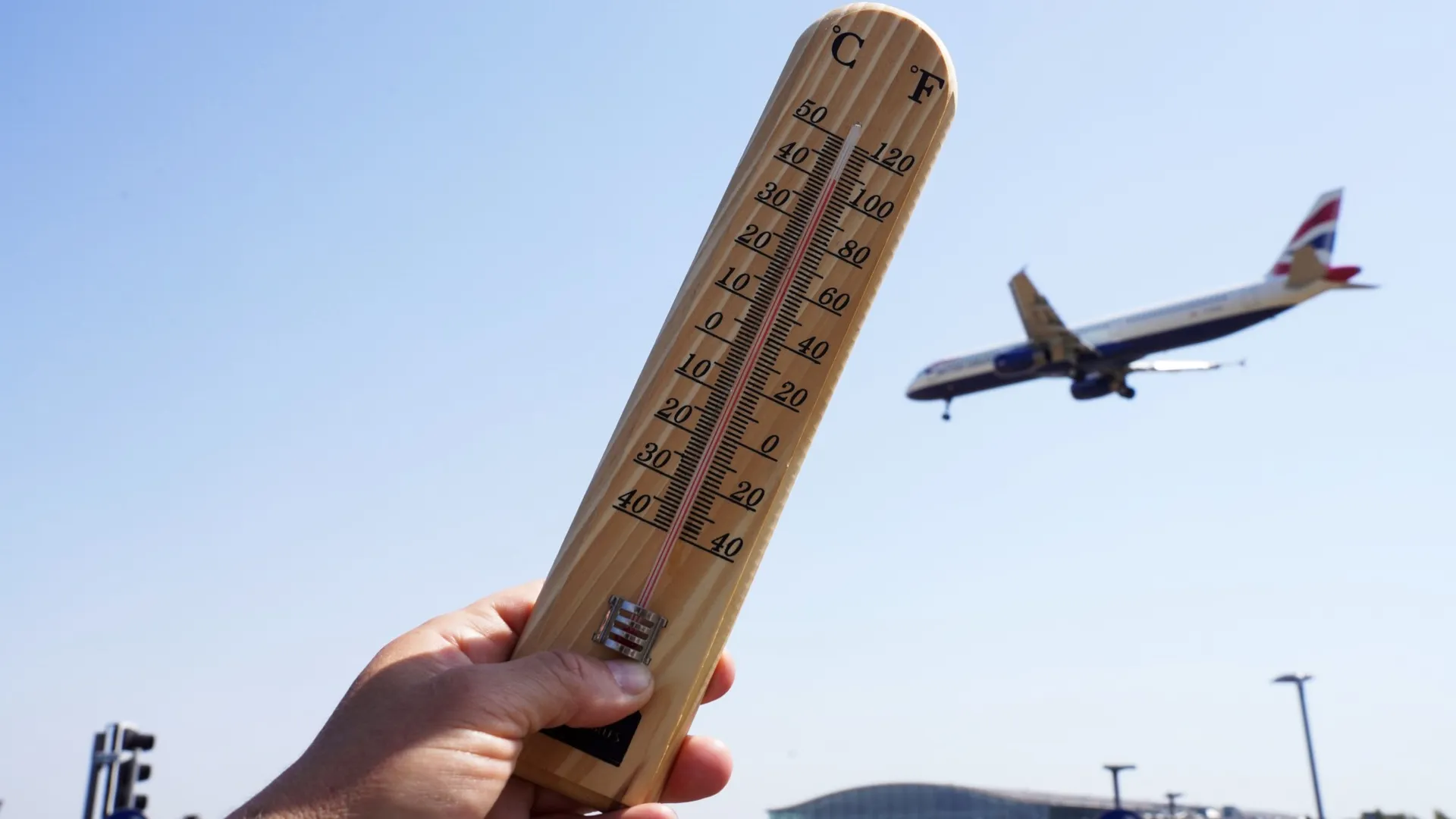
    The heatwave that’s broken records both here and across Europe could change how we travel in what seems to be the new normal of sizzling temperatures. And the impact of extreme temperatures on “tourism-reliant” countries could be “huge,” Alejandro Saez Reale, of the World Meteorological Organisation, told National Geographic.

    ‘Coolcation’ trend
    Travellers may increasingly seek more comfortable temperatures rather than the hottest destinations. They may also place greater value on places where weather is more steady and therefore less likely to disrupt their holiday.

    Travel itself could become trickier during the hottest months as heatwaves, storms, flooding and wildfires cause more delays and cancellations for flights, trains, ferries and even road travel. Avoiding the peak summer months might not even help because heatwaves are “spreading across the calendar”, said National Geographic. In May 2022, Spain endured a heatwave of “extraordinary intensity”, and the following year in France, “severe heat” extended into September. 

    There is already an “emerging trend” for “coolcations”: 81% of Europeans are adjusting their travel habits due to the changing climate, with 15% actively seeking out cooler climates and 14% avoiding destinations prone to extreme heat, according to a 2025 European Travel Commission study. Finland, Norway, Poland and Iceland are recording double-digit growth in inbound visitors.

    Numbers ‘not dropping’ yet
    And yet France and Spain remain the most visited countries in the world, with 102 million and 96.8 million visitors respectively, according to UN Tourism. So, while the “growth rate may have slowed”, the number of visitors to these warmer countries “is not dropping” yet.

    “On the whole,” people are still “enjoying Mediterranean destinations during the summer months”, said the Association of British Travel Agents. There is “increased interest in slightly cooler destinations” but it “remains the exception rather than the norm”.


    Good day 🦖

    … for de-cluttering drawers, as a forgotten fossil in the British Antarctic Survey collection turns out to be the first dinosaur bone ever found in Antarctica. Palaeontologists sorting through drawers in the geology archives have identified it as a tail bone from a titanosaur.


    Bad day 👑

    … for royal reunions, as Prince Harry reconsiders plans to bring his children to the UK to see their grandfather. He is said to be distraught his family will not to be granted police protection, and will not subject his children to being “chased by paparazzi wherever they go”, a source told The Guardian.


    PICTURE OF THE DAY

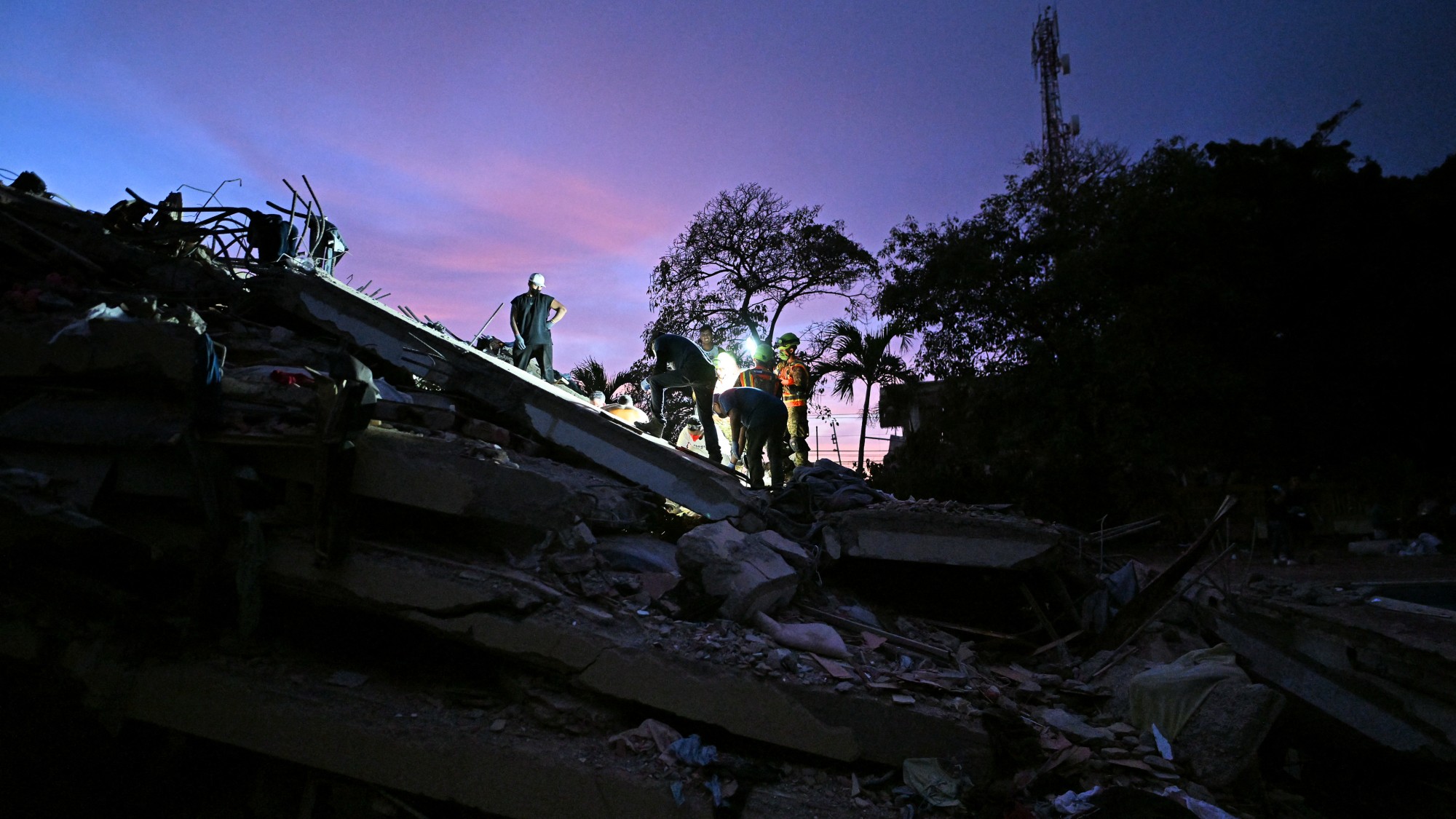
    Darkest hours

    Rescuers, relatives and volunteers dig round the clock, through mounds of concrete, to try to find survivors of the earthquakes that struck Venezuela last week. At least 1,450 are now known to have died but the number is still expected to rise.

    Juan Barreto / AFP / Getty Images


    Puzzles

    Chain Word

    Try The Week’s new daily word challenge in our puzzles and quizzes section

    Play here


    THE WEEK RECOMMENDS

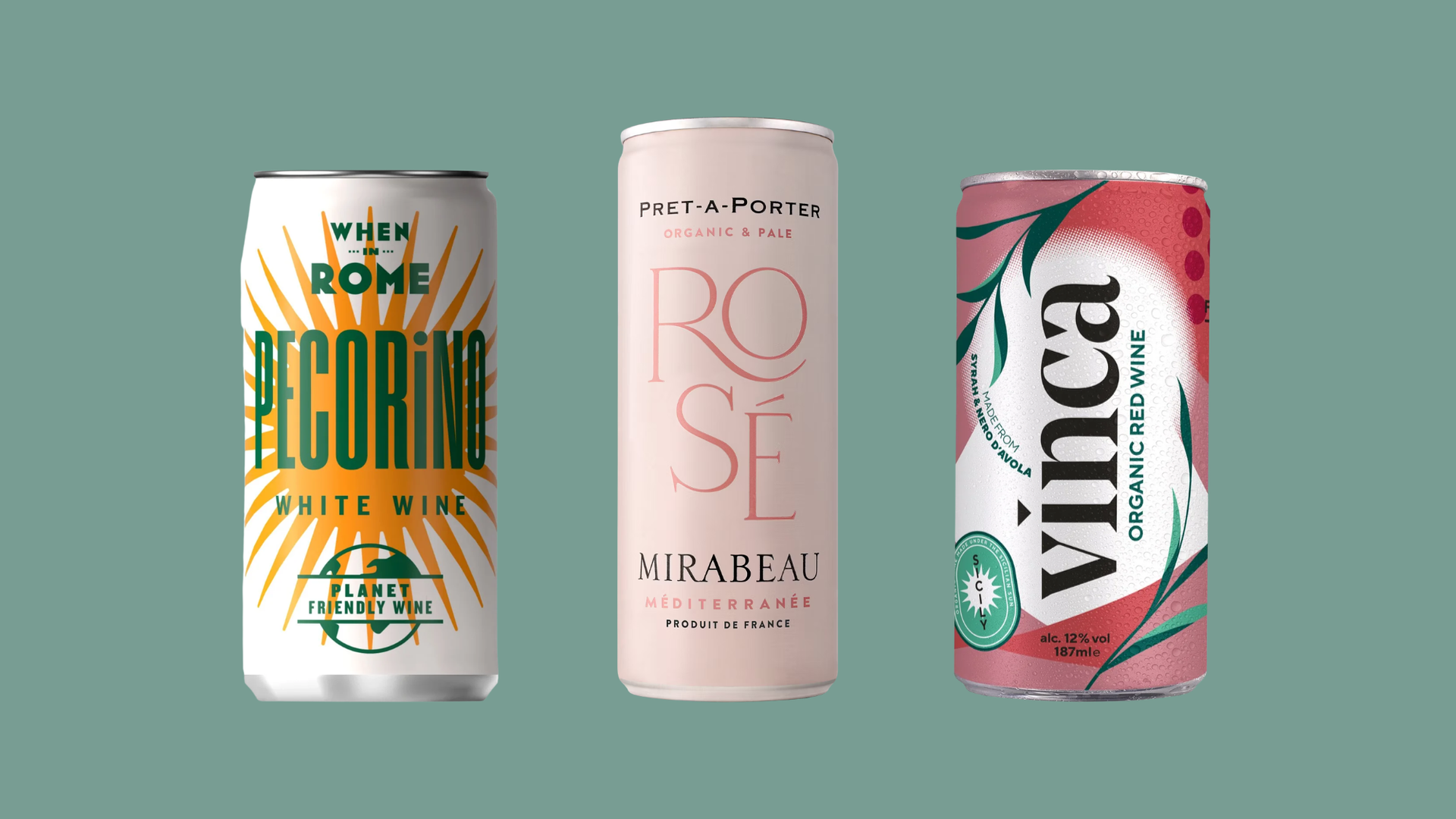
    Best canned wines to try this summer

    “The summer of the can? I’d say so,” said Jane MacQuitty in The Times. Canned wines used to have “dull, tinny, beery and oxidised notes” but advances in technology mean quality is “on the up” – and sales are “roaring”.

    Vinca Organic Red
    “Fuller-bodied, more robust” reds with higher alcohol content “take best to the canning process,” said MacQuitty. This Sicilian offering is made of “summery nero d’avola and frappato grapes”. It is bold in flavour and boasts “red berry pizzazz”. And it’s organic and vegan.

    Mirabeau Prêt-à-Porter Rosé
    If you’ve a penchant for a “pale and pink” wine, this one is for you, said Rosamund Hall in The Independent. Coming from renowned Provençal producer Maison Mirabeau, this organic wine is “delicate” in taste and has “aromas of ripe raspberries”, with notes of rose petals and “a lick of cream”. 

    When in Rome Pecorino White
    Italian wines are summertime’s best bet and a refreshing can of Pecorino is an “uncomplicated, fun” way to drink your grapes, said Hall. It is “packed full of soft nectarines” with “ripe pears and a lemon sherbert twist”.


    Statistic of the day

    £739 million: The amount the recently released Michael Jackson movie has taken at the global box office, bypassing “Oppenheimer” to become the highest-grossing biopic of all time – despite criticisms that “Michael” depicts a sanitised version of the star’s life and career.


    instant opinion

    Today’s best commentary

    Not just for rich people: the progressive case for air conditioning
    Phineas Harper in The Guardian
    Progressives rightly criticise air con for its “environmental harms” but “refusing to explore” better solutions is “blinkered”, writes Phineas Harper. “As temperatures rise, cooling systems” will be “fundamental to a functioning society”. We need to make air-con technology “more efficient”, plant more trees for shade in cities, and put “awnings and shutters” on buildings. And leftists should be demanding “public ownership of the cooling sector” to prevent “corporate profiteering at the expense of increasingly desperate customers”.

    Steven Bartlett: the glorified PR man quietly making Britain worse
    Eleanor Halls in The i Paper
    “The Diary of a CEO” podcast is a “slick podium from which” the powerful “prune their reputations”, writes Eleanor Halls. It has none of “the rigour of traditional media”, so “high-profile names” can “spread their own unchallenged narrative to millions”. Host Steven Bartlett positions himself as “Britain’s more thoughtful answer” to Joe Rogan but it’s “concerning” to hear him “Trojan-horsing manosphere ideology into his content”. Young British men “look up to him” but “he is not the role model they think he is”.

    No, we have not had enough of experts
    Pilita Clark in the Financial Times
    Pollsters tell us “Britain is back in love with boffins”, writes Pilita Clark. “Ten years after Michael Gove” told us we had “all ‘had enough of experts’”, public trust in “scientists”, “economists”, even “weather forecasters”, has risen. This is encouraging: “I’ve always had doubts” about preferring “generalists” in business. Big, successful firms “understand the value of expert leadership” because “having a boss who understands what you do – and did it well themselves” boosts employee confidence to a degree “that outsiders rarely replicate”.


    word of the day

    Micromoon

    A full or new moon that looks small and dim because the moon is at or near its apogee – the point in its elliptical orbit when it is furthest from Earth. June’s full moon, which rises tonight, is a micromoon, and is also known as the Strawberry Moon. The name comes not from its colour but from the Native American people, who used its appearance to mark the start of their wild strawberry harvest. 


    Evening Review was written and edited by Jamie Timson, Chas Newkey-Burden, Deeya Sonalkar, Will Barker, Irenie Forshaw, Helen Brown, Adrienne Wyper and Stephanie Jones, with illustrations from Stephen P. Kelly.

    Image credits, from top: illustration by Stephen P. Kelly / Getty Images;
    Clive Brunskill / Getty Images; Kristian Buus / In Pictures / Getty Images; Juan Barreto / AFP / Getty Images; When In Rome / Ocado; Pret-A-Porter / Waitrose; Vinca / Ocado

    Morning Report and Evening Review were named Newsletter of the Year at the Publisher Newsletter Awards 2025
     

    Recent editions

    • Morning Report

      Russia experiencing ‘problems’ in war, Putin concedes

    • Sunday Shortlist

      A charming ‘summer blockbuster’ at the Globe

    • Saturday Wrap

      Italy’s far-right ‘headache’

    VIEW ALL
    TheWeek
    • About Us
    • Contact Future's experts
    • Terms and Conditions
    • Privacy Policy
    • Cookie Policy
    • Advertise With Us
    • FAQ
    Add as a preferred source on Google Add as a preferred source on Google

    The Week UK is part of Future plc, an international media group and leading digital publisher. Visit our corporate site.

    © Future Publishing Limited Quay House, The Ambury, Bath BA1 1UA. All rights reserved. England and Wales company registration number 2008885.