The Week The Week
flag of US
US
flag of UK
UK
https://cdn.mos.cms.futurecdn.net/flexiimages/jzblygzdxr1769609154.gif

SUBSCRIBE

Try 6 weeks free

Sign in
  • View Profile
  • Sign out
  • The Explainer
  • Talking Points
  • The Week Recommends
  • Podcasts
  • Newsletters
  • From the Magazine
  • The Week Junior
  • More
    • Politics
    • World News
    • Business
    • Health
    • Science
    • Food & Drink
    • Travel
    • Culture
    • History
    • Personal Finance
    • Puzzles
    • Photos
    • The Blend
    • All Categories
  • Newsletter sign up Newsletter
  • The Week Evening Review
    Burnham’s social care plans, China’s AI excitement, and Hitler’s birthplace

     
    TODAY’S BIG QUESTION

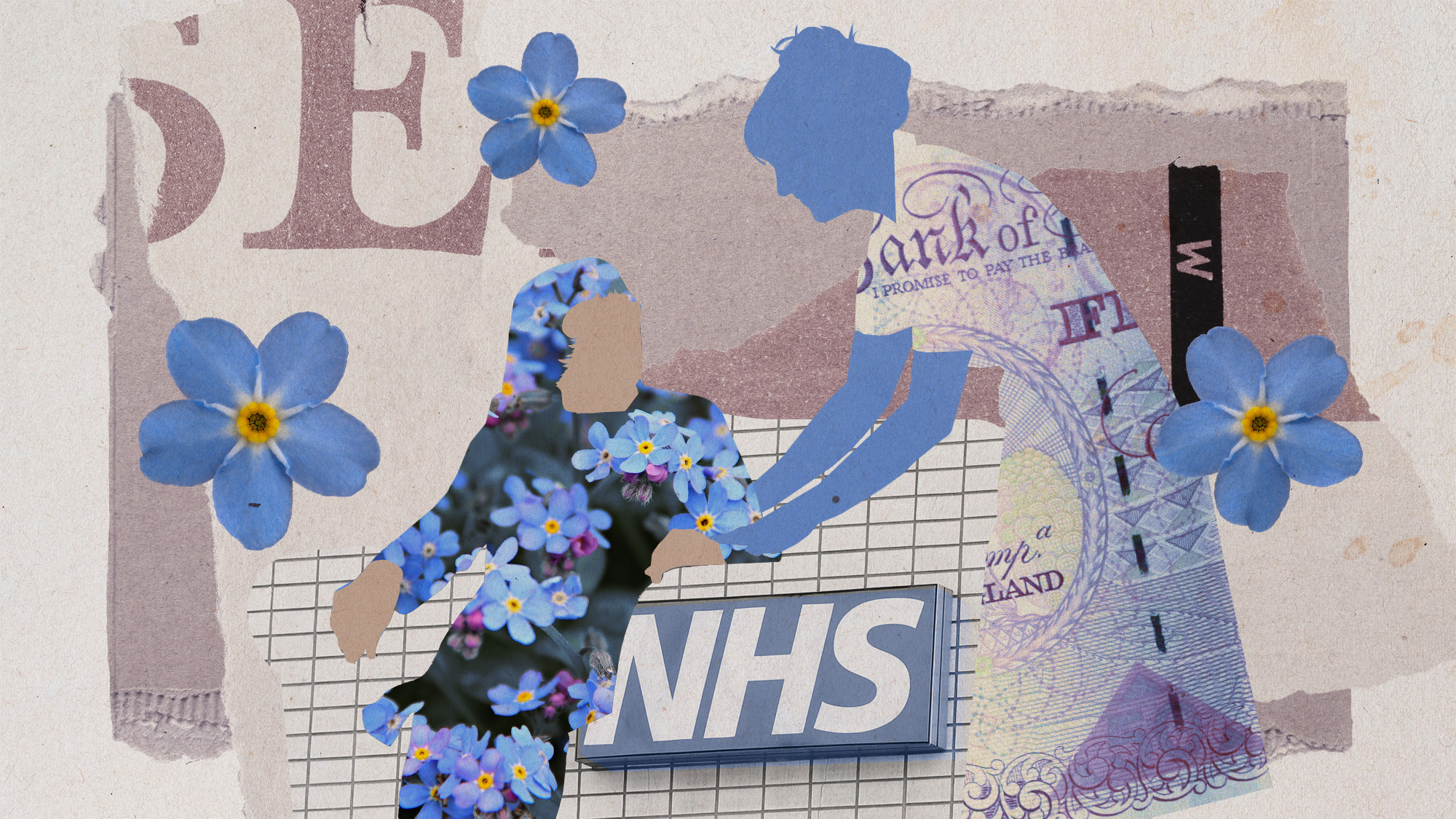
    Will Andy Burnham be the PM to finally fix social care?

    “Overlooked and underfunded” adult social care has become “the Cinderella service of our wider welfare system”, said Labour List. Now, Andy Burnham, whose father has Alzheimer’s and lives in a care home, has told the BBC that he will put “whatever political capital I have” into fixing it.

    What did the commentators say?
    There have been 22 botched attempts to reform the English adult social care system in the past 30 years, said Chris Smyth in the Financial Times, and those successive failures carry “a heavy political cost”. Long-term underfunding has made pay and conditions in the sector so unattractive to British workers that “visa rules were loosened after Brexit”, and care workers arriving from abroad became “the single biggest reason why net immigration to the UK rose to all-time high”.

    Within 50 years, more than 25% of the population could be over the age of 65, according to the Office for National Statistics. The “best solution” for funding social care on that scale, said The Telegraph’s editorial board, would be an “insurance-based system, where Britons would be encouraged to pay into a fund that would cover their own care in old age, should they need it”.

    But Burnham has said social care should be delivered “on an NHS basis”. This implies “a public service free at the point of delivery and funded by some form of taxation”, said The Guardian’s editorial board. When Burnham was health secretary back in 2010, he proposed a “national care service” to be funded by a deferred levy on dead people’s estates. 

    A more “ambitious” solution would be to take responsibility for funding social care away from local councils, whose “revenues don’t map neatly onto local care needs”, said Ben Zaranko in The Observer. In a simultaneous move, council tax should be reformed into a central tax that better reflects current property values and generates revenue for a national social care service. That would “create losers, be complicated and take time, but the course of true radical social care reform never did run smooth”.

    What next?
    Burnham is scheduled to deliver a speech on adult social care on Wednesday. He is expected to “stop short of unveiling” any concrete plans, said the BBC, and to instead announce that he is speeding up Louise Casey’s independent review of possible solutions for the system.


    THE EXPLAINER

    Kimi K3, the Chinese AI spooking Silicon Valley

    US dominance of the AI landscape is under threat with the release of Kimi K3, the newest model developed by a Chinese start-up called Moonshot AI.

    Kimi K3 is as “powerful as the most advanced AI systems” from the US, such as OpenAI and Anthropic, while being “cheaper to run”, said The Telegraph. It is available for people to freely download and is an “open-weight model”. This allows developers to download, modify and run K3 on their own servers for free, “positioning it for easier adoption and a wider market globally”, said CNN.

    How good is K3?
    K3 is “beating” Anthropic’s Opus 4.8 model and OpenAI’s 5.5 in most coding and “general AI agent benchmarks”, according to results released by Beijing-based Moonshot. And while it has been “falling short” of Anthropic’s Fable model, said the FT, K3 cost “about a third of Anthropic’s Opus 4.8”. 

    Unlike the “closed” and “proprietary” American systems, K3’s “open nature” allows global users to “modify the system for advanced reasoning and complex software development”, said the BBC. 

    How have Anthropic and OpenAI reacted?
    Anthropic and OpenAI have accused Chinese companies of “improperly harvesting data” from their systems to “accelerate” their own models’ development, said The New York Times. But after years of “operating under export controls” and “tight computing constraints”, China’s advances “cannot be explained by distillation alone”. There is “real innovation going on”, Stanford University professor Graham Webster told the paper.

    The “steady stream” of Chinese open-source AI models, including K3, that rival the performance of “costly systems from Silicon Valley” have become the “preferred choice” for developers, said the outlet. 

    What does this mean for US dominance in AI?
    US AI leaders and policymakers had taken “comfort” from “estimates that China remained six to 12 months behind”, even with Chinese open-weight models “gaining momentum”, said Axios. But the release of Kimi K3 suggests that “cushion may have collapsed far faster than expected”. With the “entire game changed”, this could “trigger some code red for some”, said AI analyst Kim Isenberg.

    American labs are “hardly out of ammunition” with OpenAI and Anthropic “racing ahead” to build newer systems like GPT-6 and Claude Opus 5, said Axios. But even if the US “pulls ahead” again, China has shown it can “close the gap quickly”.


    QUOTE OF THE DAY

    “We’ve not only lost a goodie, we’ve lost one of the besties.”

    Chris Packham pays tribute to his predecessor on BBC’s “Springwatch”, Bill Oddie, who has died at the age of 85. The former member of TV comedy trio The Goodies was “delightfully unpredictable, sparky” and “smart”, Packham said on X.  


    Poll watch

    Any hope Donald Trump has of a quick resolution to the US war with Iran is not shared by his citizens, according to a YouGov poll for CBS News. Of 2,193 adults surveyed, 37% expect the conflict to drag on for months, while 21% predict that it will last for years.


    IN THE SPOTLIGHT

    Why Hitler’s birthplace is now a police station

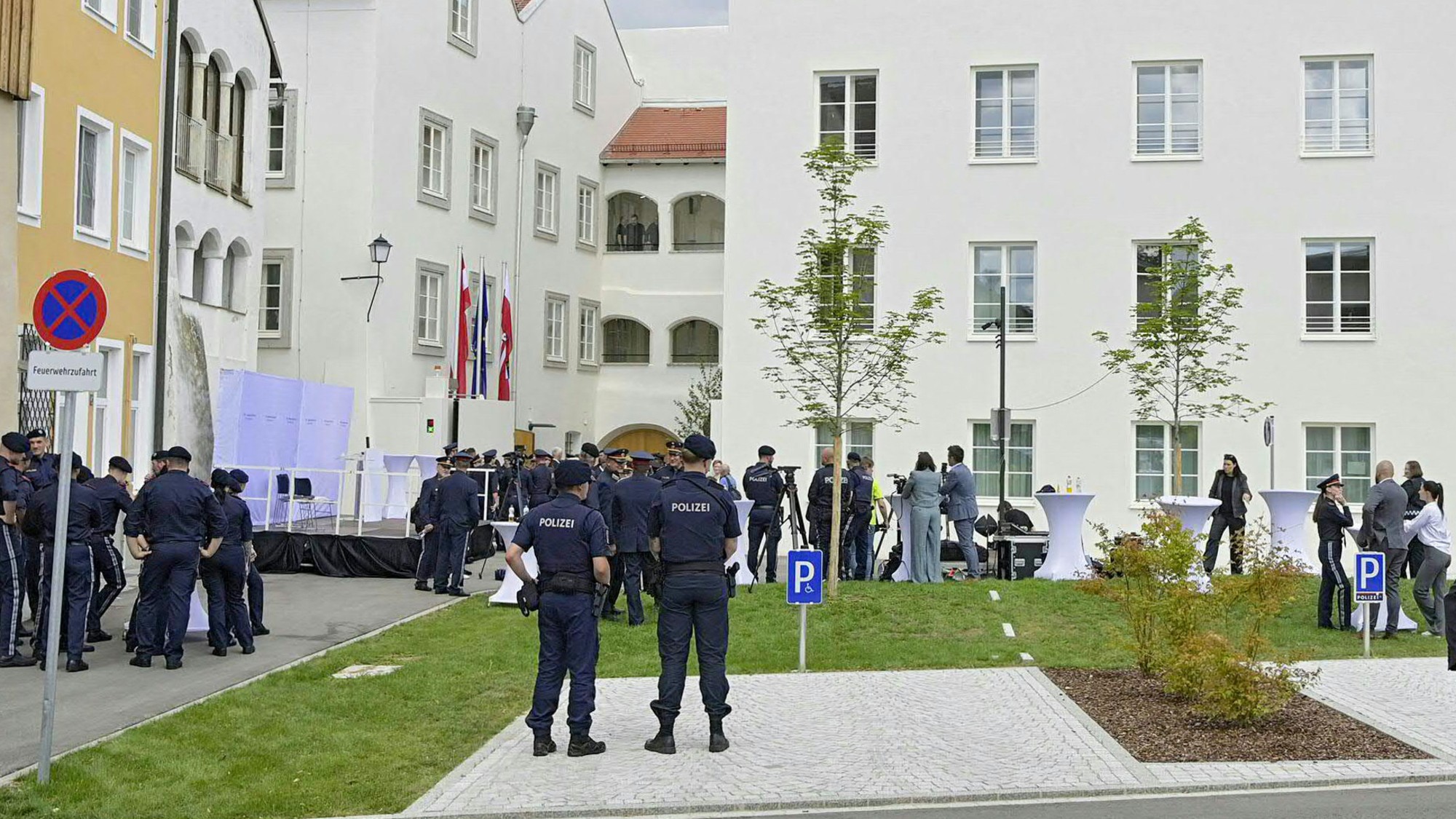
    “No remnants of Nazi influence remain” at Salzburger Vorstadt 15, the building in the Austrian town of Braunau where Adolf Hitler was born in 1889, said The New York Times. The former guesthouse has been remodelled into a police station, in an estimated £15 million renovation that concludes a “years-long effort” to prevent the site from becoming “an attraction for Nazi sympathisers”.

    ‘Never again fascism’
    The Austrian government acquired Salzburger Vorstadt 15 from private ownership in 2016. It then remained empty while a commission decided the future of the building, forcing the town to decide whether to “confront or erase this past”, said Katja Hoyer in The Telegraph.

    As a police station, the building will be seen as a place of “democracy, the rule of law, security, freedom and human dignity”, said Interior Minister Gerhard Karner. “Our police is the opposite of the darkest times of our history,” he said at the opening ceremony. However, “memory will not disappear”.

    Although there will be no information plaque at the site, a memorial stone remains at the front of the building. The stone, taken from Austria’s largest Nazi concentration camp at Mauthausen, bears the inscription: “For peace, freedom and democracy. Never again fascism. The millions of dead remind us.”

    ‘Concerns on several levels’
    Braunau residents had become “fed up” with “extremists and drunken revellers” who “posed for pictures” outside the building with the “straight-armed Hitler salute”, or laid “roses and wreaths” to mark the dictator’s birthday, said The Guardian. But choosing what to do with the site was no easy task. Turning it into a museum of Nazi atrocities could have continued “to draw right-wing extremists”, while demolishing the building would “obfuscate an important chapter of local history”.

    It was felt that a police station would “discourage Hitler admirers” from visiting the site, commission member Oliver Rathkolb told Deutsche Welle. However, in a 2023 poll, only 6% of respondents were in support of the police station idea, possibly due to concerns over the role of the Gestapo secret police as “one of the regime’s principal instruments of terror”, said the paper. Salzburger Vorstadt 15 should have become “a place dedicated to peace, freedom, democracy and tolerance”, said one local resident. Turning it into a police station “raises concerns on several levels”.


    Good day 🏆

    … for breaking curses, after County Mayo ended a 75-year wait for All-Ireland Senior Football Championship glory by defeating Kerry. Mayo had lost 11 finals since last winning the title in 1951, when the players are said to have been cursed by a priest for disrupting a funeral with their celebrations. The last surviving member of that team died in 2021 and yesterday’s final was Mayo’s first since his death.  


    Bad day 👓

    … for hi-tech specs, after a spoof advertisement featuring Jeffrey Epstein wearing Meta’s AI glasses was installed at a London bus stop as part of a protest against privacy risks. The latest attack ad from activist group Everyone hates Elon, at a stop on Carnegie Street, features an image of the sex offender above the slogan: “Glasses for people who don’t do consent.” 


    PICTURE OF THE DAY

    Tour of victory

    Slovenian cyclist Tadej Pogačar races past the Arc de Triomphe in Paris on his way to winning a record-tying fifth Tour de France title. The 27-year-old joins Eddy Merckx, Miguel Indurain, Jacques Anquetil and Bernard Hinault as the most successful riders in the event’s history. 

    Anne-Christine Poujoulat / AFP / Getty Images


    Puzzles

    Chain Word

    Try The Week’s new daily word challenge in our puzzles and quizzes section

    Play here


    THE WEEK RECOMMENDS

    Not so sweet: the rise of savoury cocktails

    The perfect summer cocktail used to include “enough sugar to make a dessert blush”, said The Times. But now “Britain’s drinks cabinets are taking a decidedly saltier turn”, as consumers opt for a “splash of pickle juice” or a sprinkle of chilli flakes in their cocktails.

    Waitrose has reported “rising sales of sauces, citrus juices and seasonings” as shoppers stock up for savoury cocktails, said Grocery Trade News. Amid the increased popularity of foodstuffs such as hot honey and chilli crisp, it’s only natural that drinks follow suit.

    If you want to delve into the world of savoury cocktails but don’t know where to start, try a gibson cocktail. The “punchy tipple” is “garnished with a pickled onion that’s been charred in a hot, non-stick frying pan”, said Good Food. Similar to a classic martini, the gibson is made by mixing dry vermouth and gin and adding some ice cubes. Give it a stir “for around 30 seconds” before straining into a “chilled cocktail glass”.

    Another twist on a classic is a Mediterranean savoury gin and tonic, which adds tomatoes and ginger to the traditional recipe. Garnish with a halved cherry tomato on a cocktail stick and sprinkle in some drops of “good-quality extra virgin olive oil” before serving, for an “elegant finish”. 


    Statistic of the day

    42,000: The number of hectares burnt in the southwest of France in one of the largest wildfires since the Second World War. The area lost to the ongoing blaze so far is bigger than the Isle of Wight.  


    instant opinion

    Today’s best commentary

    Military bosses say climate change is now a national security threat – ministers must not ignore them
    John Gummer in The Independent
    A military report on the national security implications of the climate crisis “so frightened government ministers” that only “a pared-down version” was made public, writes John Gummer, former chair of the UK’s Climate Change Committee. Leaks have now revealed the full, bleak picture: food shortages, mass migration, even the potential for “nuclear engagement” over water resources. These are not predictions by “tree-hugging environmental campaigners, but top-level, hard-bitten military men”, sounding the alarm that “our homeland is not safe”.

    Gianni Infantino’s rambling World Cup rant shows FIFA boss has gone ‘full Donald Trump’
    Andy Dunn in The Mirror
    Gianni Infantino has rejected criticism of the World Cup, in a “lengthy outburst” on Instagram, writes Andy Dunn. He insists this year’s tournament was nothing but “‘joy and happiness’”, and that those who say otherwise are “spreading hate”. “But no-one was ‘spreading hate’ when denouncing” the “suspension of Folarin Balogun’s automatic one-game ban” and the refusal to allow “African football’s best referee” onto US soil. Infantino “has been hanging around with” Donald Trump so much that he’s “been made truly delusional by power”.

    Labour should love school uniforms – they are a great equaliser
    Matthew Easter in The Telegraph
    The government claims an incoming cap on the number of school-branded items that pupils are required to wear “will save parents money”, because “they can buy the rest of their items from any shop or supermarket”, writes the Schoolwear Association’s Matthew Easter. But uniforms are generally cheaper than children’s fashionwear, the cost of which has “spiralled”. Uniforms reduce “visible inequalities between pupils” by protecting those whose parents “don’t have the financial luxury” to buy them the “latest trendy” brands.


    word of the day

    Squishy

    The latest toy trend is squishy blobs. “Goop-filled” balls have “become a sensation” among children after going viral on TikTok, said The New York Times, and the “enthusiasm for a decidedly analog hobby” may also please parents. The toy industry “can’t compete with digital”, games creator Dan Dan Klitsner told the paper, but kids love “things you can squish and twist and pull”. 


    Evening Review was written and edited by Jamie Timson, Elliott Goat, Rebecca Messina, Lea Tran, Deeya Solnalkar, Irenie Forshaw, David Edwards, Helen Brown and Kari Wilkin, with illustrations from Julia Wytrazek

    Image credits, from top: illustration by Julia Wytrazek / Getty Images; Lam Yik / Bloomberg / Getty Images; Manfred Fesl / APA / AFP / Getty Images; Anne-Christine Poujoulat / AFP / Getty Images; Lighthouse Films / Getty Images

    Morning Report and Evening Review were named Newsletter of the Year at the Publisher Newsletter Awards 2025
     

    Recent editions

    • Morning Report

      Thousands evacuate as wildfires threaten Bordeaux

    • Sunday Shortlist

      Christopher Nolan’s ‘jaw-detaching’ epic

    • Saturday Wrap

      The surprise choice at No. 11

    VIEW ALL
    TheWeek
    • About Us
    • Contact Future's experts
    • Terms and Conditions
    • Privacy Policy
    • Cookie Policy
    • Advertise With Us
    • FAQ
    Add as a preferred source on Google Add as a preferred source on Google

    The Week UK is part of Future plc, an international media group and leading digital publisher. Visit our corporate site.

    © Future Publishing Limited Quay House, The Ambury, Bath BA1 1UA. All rights reserved. England and Wales company registration number 2008885.