The Week The Week
flag of US
US
flag of UK
UK
https://cdn.mos.cms.futurecdn.net/flexiimages/jzblygzdxr1769609154.gif

SUBSCRIBE

Try 6 weeks free

Sign in
  • View Profile
  • Sign out
  • The Explainer
  • Talking Points
  • The Week Recommends
  • Podcasts
  • Newsletters
  • From the Magazine
  • The Week Junior
  • More
    • Politics
    • World News
    • Business
    • Health
    • Science
    • Food & Drink
    • Travel
    • Culture
    • History
    • Personal Finance
    • Puzzles
    • Photos
    • The Blend
    • All Categories
  • Newsletter sign up Newsletter
  • WeekDay AM: 10 Things you need to know this morning
    Europe’s wildfires rage, Pride attack suspect killed, and why gray whales are struggling

     
    today’s environment story

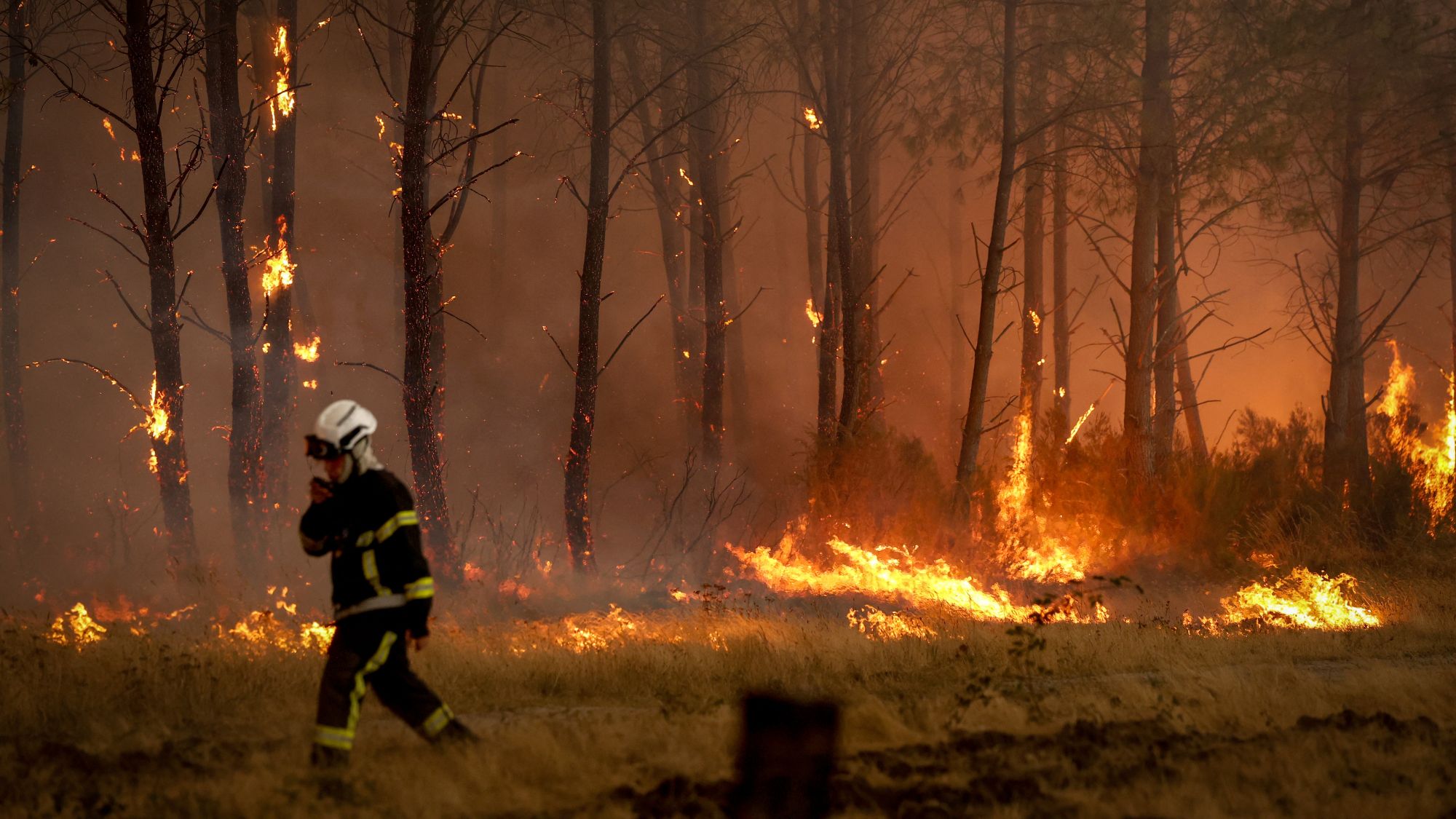
    Thousands flee as fire front threatens Bordeaux

    What happened
    Firefighters are battling major wildfires in south-west France that continue to threaten communities near Bordeaux, forcing the evacuation of about 55,000 people from villages in the Gironde region. Authorities said the main blaze was advancing unpredictably towards the city, although they played down the prospect of evacuating Bordeaux itself.

    Elsewhere in Europe, wildfires have also swept across Spain, where more than 90,000 people have been forced from their homes. Officials said the blaze in the Ávila region was the largest the country had faced in its recent history.

    Who said what
    French Interior Minister Laurent Nuñez described conditions as “very unfavourable”. French President Emmanuel Macron pledged that the nation would “rebuild” and said the government would “be there for as long as is needed”.

    “What is burning is not just forests, but a way of inhabiting the land,” said philosopher Cynthia Fleury and Socialist mayor Stéphane Delpeyrat-Vincent in Le Monde. Recurring summers of extreme heat and huge wildfires have “forced us to fundamentally rethink our relationship with the environments we have shaped”.

    What next?
    Thousands of firefighters, soldiers and police remain deployed as hot, dry and windy conditions threaten to drive the fires further. Transport disruption is expected to continue, with flights at Bordeaux Airport delayed or cancelled and part of the Tour de France’s final stage shortened so that security personnel can be reassigned to firefighting duties.


    today’s crime story

    Berlin police kill suspect after deadly Pride attack

    What happened
    German police have shot dead the man suspected of carrying out a deadly attack at Berlin’s Pride celebrations after locating him nearly a day after the violence. Abdul Ballout, a 21-year-old German citizen of Lebanese heritage, was found at an allotment site in the city’s Spandau district yesterday evening. Officers said he charged at emergency responders carrying a “stabbing weapon”, prompting armed police to open fire.

    Authorities believe Ballout drove a car into people in the Tiergarten park before attacking others with a machete. A woman was killed and 29 people were injured, with three still in a critical condition and eight seriously hurt.

    Who said what
    German Interior Minister Alexander Dobrindt said investigators believed that “everything we see here points to us dealing with an Islamic terror attack”.

    Yesterday, despite the suspect then still being at large, hundreds of mourners gathered at the Brandenburg Gate “to grieve the victims of the attack and express the anger and shock over what is seen as an attack on the LBGTQ+ community”, said Deutsche Welle. “Yesterday was an attack on all of us,” said one speaker. “On all our identities, our existence, our community and our democracy. But we will not let it defeat us.”

    What next?
    Police have ended their manhunt, but German authorities will now review security arrangements for major public events – including upcoming Pride celebrations – amid concerns about possible copycat attacks.


    Today’s culture story

    The Odyssey sparks surge of interest in learning Greek

    What happened
    Christopher Nolan’s film adaptation of “The Odyssey” has prompted a sharp rise in the number of people wanting to master Greek, according to new data from language-learning platform Preply. Google searches in the UK for “learn Greek” have climbed 550% over the past month to about 6,000 a month. This burst of enthusiasm has also boosted interest in the literary classic itself, with UK sales of “The Odyssey” increasing by 70% this year to almost 40,000 copies.

    Who said what
    The teaching of classics “continues to face challenges over access in schools and colleges”, said Georgia Lambert in The Times. Many independent schools teach ancient Greek, but “opportunities for pupils in the state sector are uneven”. In 2021 Susan Greenfield, an Oxford neuroscientist, told The Times Education Commission that the study of classics was a “very economic way of learning” because it combined history, literature and language.

    What next?
    “The Odyssey” has stormed the global box office, raking in more than $639 million (£479 million) in less than two weeks. Nolan recently told America’s “Today” show that it will be “at least” three years until he makes another movie due to the exhausting challenges that he faced in bringing the epic to the big screen.


    It’s not all bad

    Eating within a nine-hour window and avoiding food for four hours before bed could help protect the brain as we age, a small study suggests. Researchers found that older women who limited when they ate performed slightly better on memory, planning and problem-solving tests than those who spread meals across the day, despite losing the same amount of weight. Experts say larger studies are needed, but the findings add to growing evidence that when we eat may matter as much as what we eat.


    under the radar

    Gray whales are dying in the Pacific

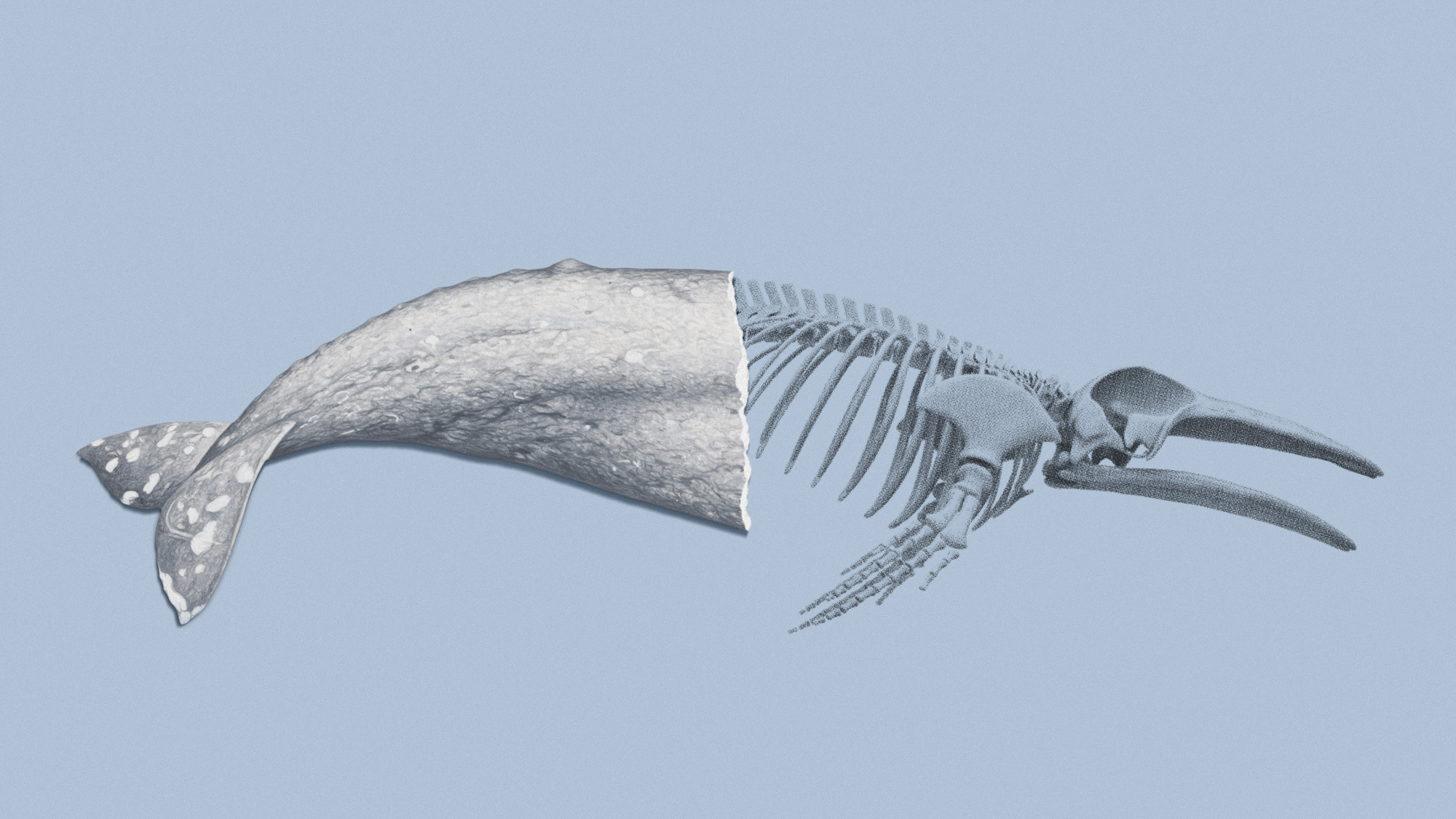
    Gray whales along the West Coast of the United States’ are undergoing a “catastrophic mortality event”, according to the non-profit group Public Employees for Environmental Responsibility (PEER). Close to 150 carcasses have been found on beaches along the Pacific Ocean this year, with the deaths attributed to “multiple threats, including ship strikes and reduced food sources”.

    Between last year and this year an estimated 2,500 to 8,000 whales have died, further reducing a population that had already fallen from 20,500 to 14,526 between 2019 and 2023. The true picture may be even worse, as “marine biologists can only count the whales that are stranded”, said The Guardian. The ones that “wash ashore are only maybe 10% of the whales that are dying”, Rick Steiner, chair of PEER’s board of directors, told Alaskan news station KTOO.

    The West Coast’s whale population travels approximately 10,000 miles (16,000 kilometres) between Baja California, Mexico and its feeding grounds in the Arctic, where the mammals “feed on crustaceans called amphipods”, according to the Smithsonian Magazine. But climate change is reducing the amphipod population, forcing whales into dangerously congested places like San Francisco Bay “where they are being fatally struck by ships or becoming entangled in fishing gear”. Other threats include oil spills, algal blooms and microplastic pollution.

    Gray whales were removed from the US Endangered Species Act’s protection list in 1994, but it may be necessary to relist them to “give these guys the best chance of making it through this climate bottleneck”, said Steiner. “The loss of thousands of whales in just two years should be of concern to us all.”


    on this day

    27 July 1586

    Walter Raleigh brought the first tobacco to England from the American colonies when he returned with settlers from Roanoke Island off North Carolina. In April the Tobacco and Vapes Act received Royal Assent and officially became law, making it illegal to sell tobacco products to anyone born on or after January 1, 2009. Ministers say they hope that the law will create “smoke-free generations”.


    Today’s newspapers

    ‘Anxiety pays’

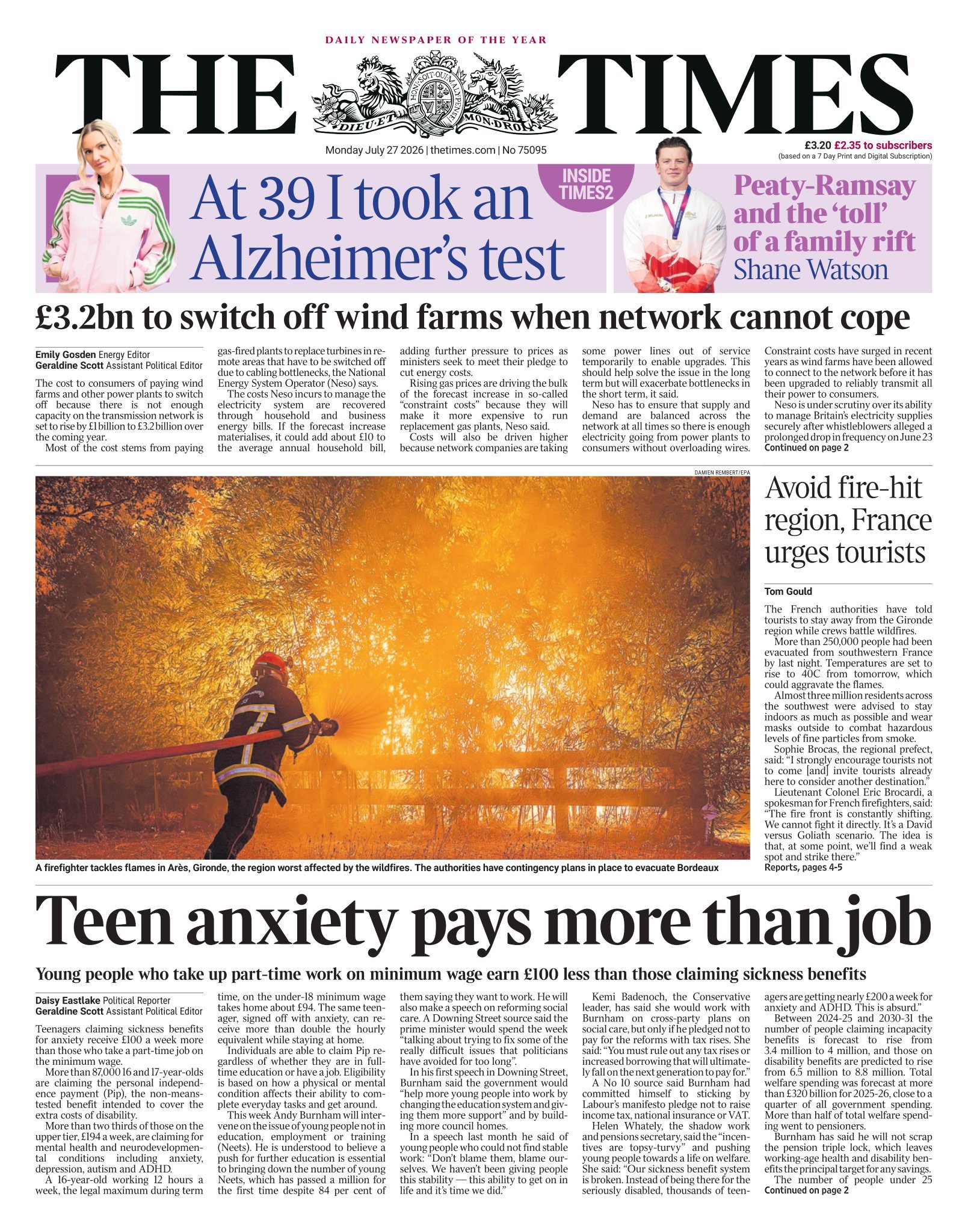
    “Teen anxiety pays more than job”, says The Times, in a report on the “teenagers claiming sickness benefits” who “receive £100 a week more than those who take a part-time job on the minimum wage”. “PM to crack down on youth benefits”, adds The Telegraph. “Miliband vows to give UK global role on climate crisis”, reports The Guardian. The foreign secretary is to “take up a World Bank seat and play an active role in shaping changes to the global lender”. “Modi caves in to protesters”, says the Financial Times, following the ousting of India’s education minister. “Tanks for nothing”, says the Daily Star, in a story on the “huge rise in drivers filling up without paying”.

    See the newspaper front pages


    tall tale

    Second self

    Tech multi-millionaire Bryan Johnson has taken self-care to a whole new level, claiming that he has “cloned” himself as a newborn baby. Johnson’s “baby Bryan” reportedly exists only in a petri dish at present, with the aim of testing therapies, growing organs for transplantation and injecting young cells. While Johnson calls it the future of health, critics say it is just what happens when a man with too much money fears death. Johnson recently disclosed a diagnosis of an incurable autoimmune disease, which he plans to “solve” using AI, multiomics and custom-built DNA.


    Morning Report was written and edited by Arion McNicoll, Devika Rao and Ross Couzens, with illustrations by Stephen P. Kelly.

    Image credits, from top: Romain Perrocheau / AFP / Getty Images; John MacDougall / AFP / Getty Images; Aalok Soni / Getty Images for Universal Pictures; Illustration by Stephen P. Kelly / Getty Images.

    Morning Report and Evening Review were named Newsletter of the Year at the Publisher Newsletter Awards 2025
     

    Recent editions

    • Sunday Shortlist

      Christopher Nolan’s ‘jaw-detaching’ epic

    • Saturday Wrap

      The surprise choice at No. 11

    • Evening Review

      Are Russia and China helping Iran?

    VIEW ALL
    TheWeek
    • About Us
    • Contact Future's experts
    • Terms and Conditions
    • Privacy Policy
    • Cookie Policy
    • Advertise With Us
    • FAQ
    Add as a preferred source on Google Add as a preferred source on Google

    The Week UK is part of Future plc, an international media group and leading digital publisher. Visit our corporate site.

    © Future Publishing Limited Quay House, The Ambury, Bath BA1 1UA. All rights reserved. England and Wales company registration number 2008885.