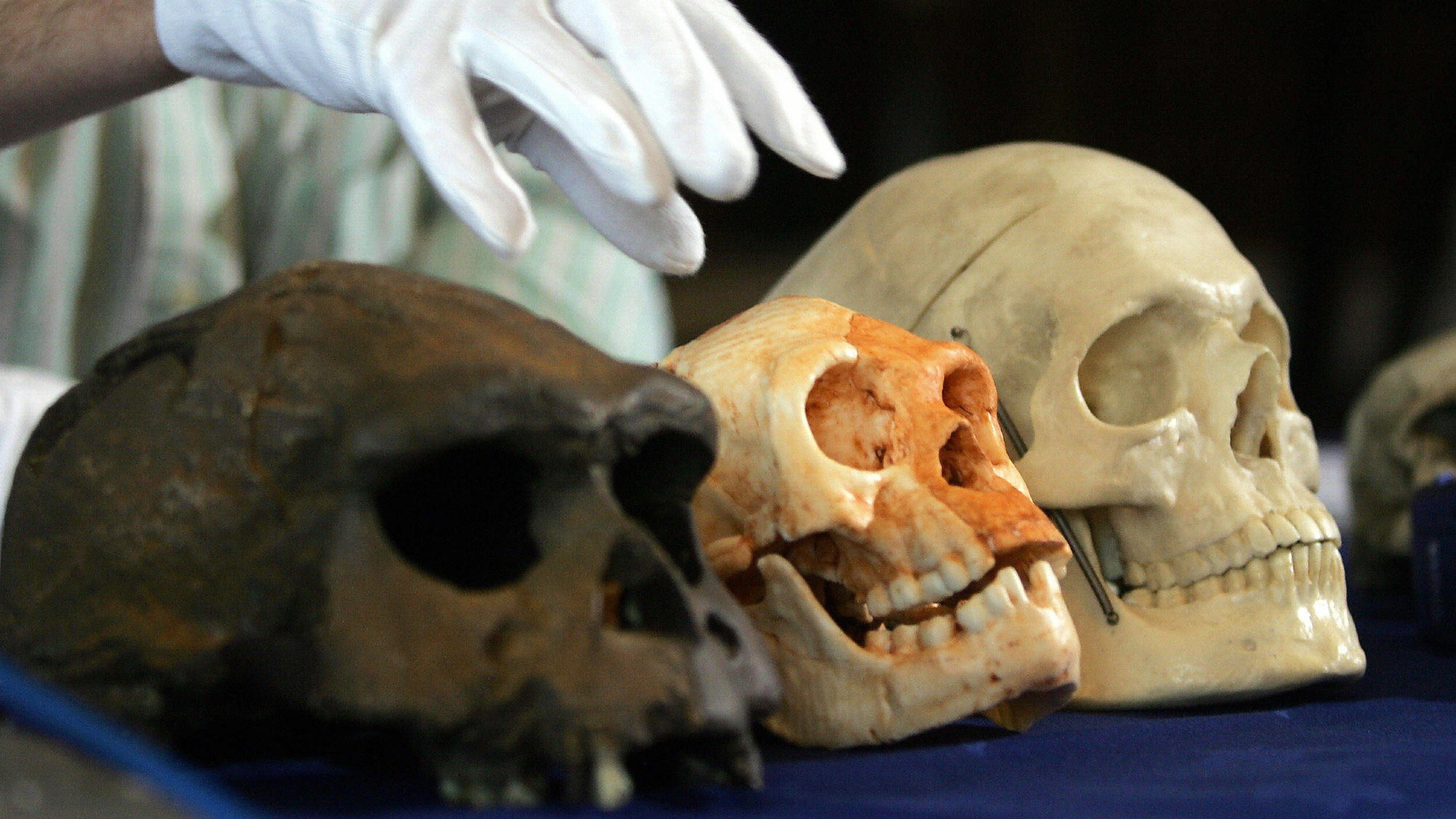
“Experts have long debated the date that humans arrived in Australia,” said LiveScience. Now a study using DNA from both ancient and modern Aboriginal people across Oceania may have finally “settled the debate”.
The research, published last week in Science Advances, looked at an “unprecedentedly large” dataset of nearly 2,500 genomes to determine that humans began to settle in northern Australia about 60,000 years ago.
But “even more interestingly”, the study also added to growing evidence that along the way these “early human pioneers likely interbred with archaic humans”, including a species known as “the hobbit” – Homo floresiensis.
At the start of the millennium most paleoanthropologists believed Homo sapiens was the only human species that had managed to reach Sahul, an ancient landmass that includes modern-day Australia. “It seemed very unlikely that archaic humans had watercraft capable of crossing the ocean,” said the Natural History Museum.
But the discovery of Homo floresiensis in 2003 “changed things dramatically”. A team uncovered more than 100 fossils in a cave on “a remote Indonesian island” called Flores, including the partial skeleton of a female: still the most complete Homo floresiensis fossil to date. The adult female was just 1.05 metres tall, earning the species its nickname the hobbit.
Before the discovery, anthropologists had “assumed that the evolution of the human lineage was defined by bigger and bigger brains”, said anthropology professors Tesla Monson and Andrew Weitz on The Conversation. This, they believed, enabled early modern humans to perform “more complex tasks such as using fire, forging and wielding tools”. The discovery of the hobbits, with their “chimp-sized brain”, has forced scientists to throw these theories “out the window”. |