The Week The Week
flag of US
US
flag of UK
UK
https://cdn.mos.cms.futurecdn.net/skoGBi9qKFoUtnNWkovjJQ.jpg

SUBSCRIBE

Try 6 Free Issues

Sign in
  • View Profile
  • Sign out
  • The Explainer
  • Talking Points
  • The Week Recommends
  • Podcasts
  • Newsletters
  • From the Magazine
  • The Week Junior
  • More
    • Politics
    • World News
    • Business
    • Health
    • Science
    • Food & Drink
    • Travel
    • Culture
    • History
    • Personal Finance
    • Puzzles
    • Photos
    • The Blend
    • All Categories
  • Newsletter sign up Newsletter
  • WeekDay AM: 10 Things you need to know this morning
    A ‘super flu’ wave, museum theft, and why Denmark is entering its post-postal era

     
    today’s health story

    No peak yet as ‘super flu’ wave sweeps England

    What happened
    Hospitals in England are treating more than 50% more flu patients than a week ago, with daily admissions averaging 2,660 and still climbing. NHS England said the current caseload was comparable to filling three entire hospitals, with some sites reporting that nearly one in 10 beds is now occupied by a person with the virus. Officials fear that the overall number could pass 5,000 by the weekend.

    A similar pattern is playing out across Scotland, Wales and Northern Ireland, where sharp increases in infections and hospitalisations are occurring, particularly among children. Some schools have temporarily closed or shortened hours to limit the spread. The rise is linked to an early season jump driven by a genetically altered strain of H3N2.

    Who said what
    “This winter our NHS faces a challenge unlike any it has seen since the pandemic,” warned Health Secretary Wes Streeting in The Times, adding that flu admissions “could triple by the peak … and the NHS doesn’t know when the peak will hit”.

    Flu symptoms develop very rapidly and extreme tiredness is common, which differs from the symptoms of colds that come on more gradually, according to the UK Health Security Agency. To help limit the spread of flu, “frequent hand washing and coughing, or sneezing into tissues that are immediately thrown in the bin can help”, said The Guardian’s health editor Andrew Gregory. Health leaders have also urged eligible people to come forward and get their flu jab.

    What next?
    Resident doctors are due to begin a five-day walkout on Wednesday, although the British Medical Association will announce on Monday whether members will pause the action following a new government proposal.


    today’s international story

    Nato chief tells Europe to prepare for war with Russia

    What happened
    Nato Secretary General Mark Rutte has issued one of the alliance’s starkest warnings in years, telling European leaders they must be ready for a confrontation with Russia “on the scale our grandparents endured”. His remarks follow weeks of heightened tension, including drone intrusions into Nato territory and President Vladimir Putin’s declaration that Russia is “ready for war right now”. Rutte (pictured above) argued that Moscow could move against the alliance within five years and Europe was dangerously unprepared.

    Who said what
    “We are Russia’s next target. And we are already in harm’s way,” Rutte told an audience in Berlin, adding: “Conflict is at our door.”

    Donald Trump “clearly thinks that it is the Europeans who are the problem”, said Rebekah Koffler in The Telegraph. The US president’s unreliability means that “it is time for Europe to wake up to a chilling truth”, said Sean O’Grady in The Independent. “America has switched sides.”

    What next?
    Hybrid threats attributed to Russia – from airspace incursions to cyber attacks – continue to rise, fuelling calls for accelerated military investment and unity ahead of an unpredictable winter.


    Today’s crime story

    Hundreds of artefacts stolen from museum

    What happened
    More than 600 items have been snatched from the archives of Bristol Museum. The objects taken included “military memorabilia, jewellery, natural history pieces and carved ivory”, with four persons of interest picked up on CCTV, according to the BBC.

    Who said what
    Detective Constable Dan Burgan said the theft of the items was a “significant loss” for the city of Bristol. The artefacts carry a significant “cultural value” and the collection “provides insight into a multi-layered part of British history”.

    Philip Walker, head of culture and creative industries at Bristol City Council, said he was “deeply saddened” by the robbery on 25 September. The haul – which contained a ship’s lantern, ivory Buddha and waist belt plate mount – provided an “invaluable record and insight into the lives of those involved in and affected by the British Empire”.

    What next?
    The police have released images and descriptions of the four figures captured on CCTV to whom they would like to speak. “Security at the facility has been tightened and members of our museum community have been informed,” said Walker.


    It’s not all bad

    A mile-long network of tunnels in central London, dug during the Blitz, is being refurbished into what is projected to become one of the capital’s leading tourist attractions. The tunnels, which sit between the British Museum and Tate Modern, were built as bomb shelters in 1941, then later used by British spies. Now they are being renovated at a cost of £220 million in a development that Angus Murray, the Australian banker heading up the project, hopes will one day be “a rival for the London Eye”.


    under the radar

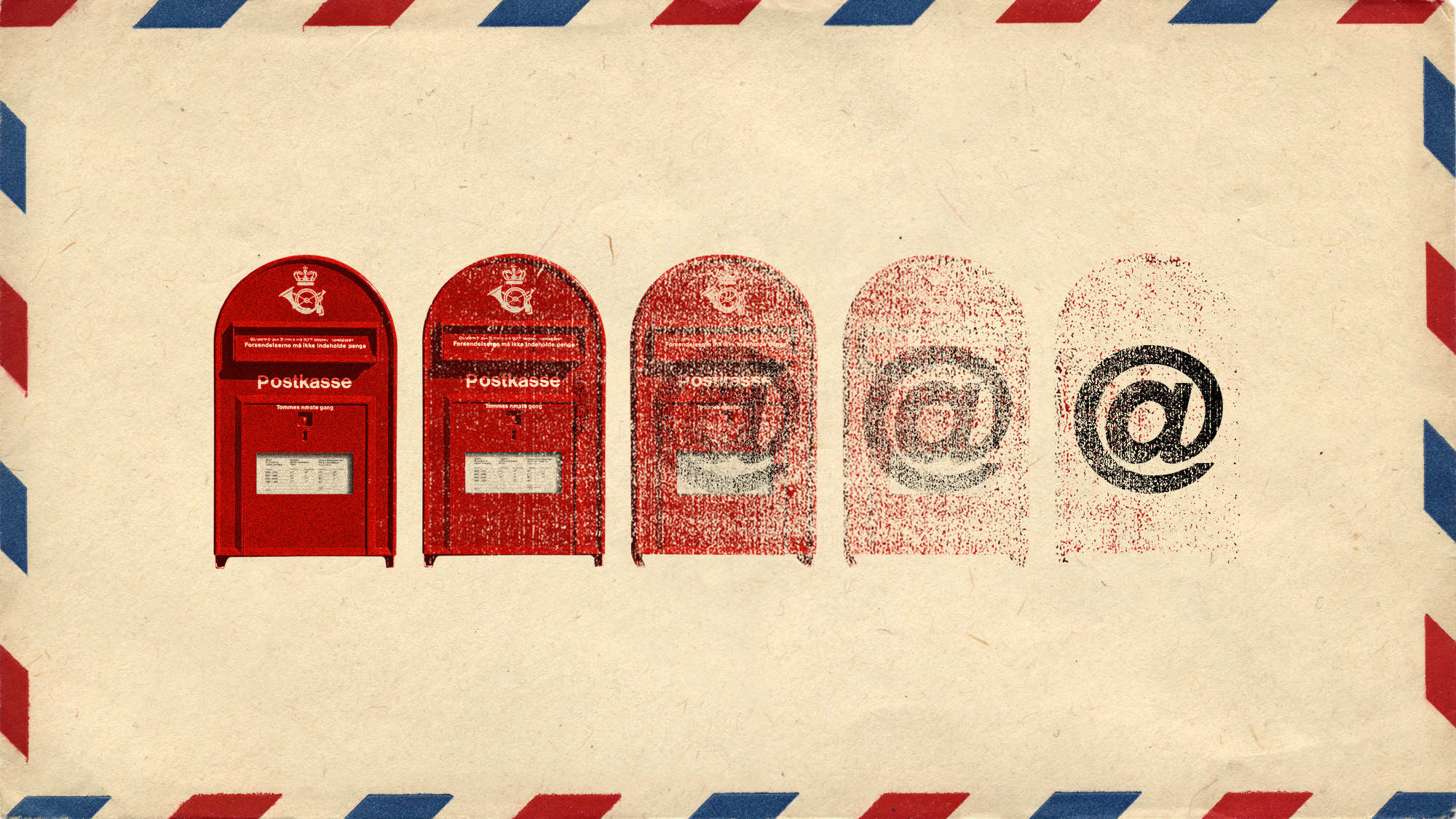
    Denmark scraps letters and its iconic red post boxes  

    Danes are sending their last Christmas cards through the post. PostNord, Denmark’s state-owned postal service, will stop delivering letters at the end of this year, bringing an end to the 400-year-old tradition.

    The country’s 1,500 remaining red post boxes have been “vanishing” since June, said The Times. A “handful” will be saved and end up on display in museums. The news has “rattled” postal services around the world. Could this be a sign of things to come for Britain’s “beleaguered” Royal Mail?

    PostNord has seen a “steep decline in letter volumes” in recent years, according to the BBC. Since 2000, the number has plummeted from 1.4 billion to 110 million last year.

    The sharp downward trend is being driven by a shift towards digitalisation – Denmark is one of the world’s most tech-dominant nations, trailing only South Korea, according to the OECD’s 2023 Digital Government Index. A “digital by default” policy has been “embraced” by the Danish government, with all correspondence carried out electronically for more than a decade.

    It’s hard not to imagine the UK postal system entering a “doom loop” as higher prices for a lesser service will “inevitably lead people to consider whether they actually need to send that card or whether an email greeting will suffice”, said James Moore in The Independent. Royal Mail would be wise to “watch and learn” from how things play out in Denmark. The volume of letters being sent in the UK has dropped from 20 billion in 2004-05 to 6.6 billion in 2023-24, but that’s still a lot of letters. “So you can breathe easy. For now.”


    on this day

    12 December 1822

    Mexico was officially recognised as an independent nation by the US. This week the Trump administration announced plans for a new militarised zone in California along the US-Mexico border.


    Today’s newspapers

    ‘Winter crisis’

    The UK is facing its “worst ever winter crisis” as serious cases of flu reach record levels, says The Guardian. GPs, hospitals and ambulance services are already under “intense strain”. The highest flu case numbers are being reported in children at school, says The i Paper, and the Daily Express says the resident doctors’ strike planned for next week is “reckless”. The Minister for Armed Forces, Alistair Carns, tells The Telegraph that Nato countries, including the UK, must increase their “lethality”, and stop relying on US security guarantees. “Britain is on a war footing”, Carns says in the Daily Mail.

    See the newspaper front pages


    tall tale

    Wheely drunk

    Nine hundred cyclists in Japan have had their driver’s licences suspended after they were caught riding bicycles under the influence of alcohol. Authorities deemed the offenders “likely to pose a significant danger when driving a car”. The crackdown is part of new rules in Japan that also involve penalties for people who offer alcohol to cyclists or provide a bicycle to someone who may ride it drunk.


    Morning Report was written and edited by Arion McNicoll, Jamie Timson, Will Barker, Irenie Forshaw, Ross Couzens and Chas Newkey-Burden, with illustrations by Julia Wytrazek.

    Image credits, from top: Jack Taylor / Getty Images; Omar Havana / Getty Images; Geography Photos / Universal Images Group / Getty Images; Illustration by Julia Wytrazek / Getty Images.

    Morning Report and Evening Review were named Newsletter of the Year at the Publisher Newsletter Awards 2025
     

    Recent editions

    • Evening Review

      China’s $1trn trade milestone

    • Morning Report

      US seizes tanker near Venezuela

    • Evening Review

      Normalising the Taliban

    VIEW ALL
    TheWeek
    • About Us
    • Contact Future's experts
    • Terms and Conditions
    • Privacy Policy
    • Cookie Policy
    • Advertise With Us
    • FAQ
    Add as a preferred source on Google

    The Week UK is part of Future plc, an international media group and leading digital publisher. Visit our corporate site.

    © Future Publishing Limited Quay House, The Ambury, Bath BA1 1UA. All rights reserved. England and Wales company registration number 2008885.