The Week The Week
flag of US
US
flag of UK
UK
https://cdn.mos.cms.futurecdn.net/skoGBi9qKFoUtnNWkovjJQ.jpg

SUBSCRIBE

Try 6 Free Issues

Sign in
  • View Profile
  • Sign out
  • The Explainer
  • Talking Points
  • The Week Recommends
  • Podcasts
  • Newsletters
  • From the Magazine
  • The Week Junior
  • More
    • Politics
    • World News
    • Business
    • Health
    • Science
    • Food & Drink
    • Travel
    • Culture
    • History
    • Personal Finance
    • Puzzles
    • Photos
    • The Blend
    • All Categories
  • Newsletter sign up Newsletter
  • WeekDay AM: 10 Things you need to know this morning
    Maduro in court, Starmer’s ‘softer Brexit’, and criminal case opened in Crans-Montana

     
    today’s AMERICAS story

    Nicolás Maduro set to appear in a New York court

    What happened
    President Nicolás Maduro is expected to appear in court today after he was captured by US forces at the weekend. Venezuela’s president was seized alongside his wife from their bedroom in Caracas as air strikes rang out across the capital. He has since been indicted in New York on charges including narco-terrorism conspiracy.

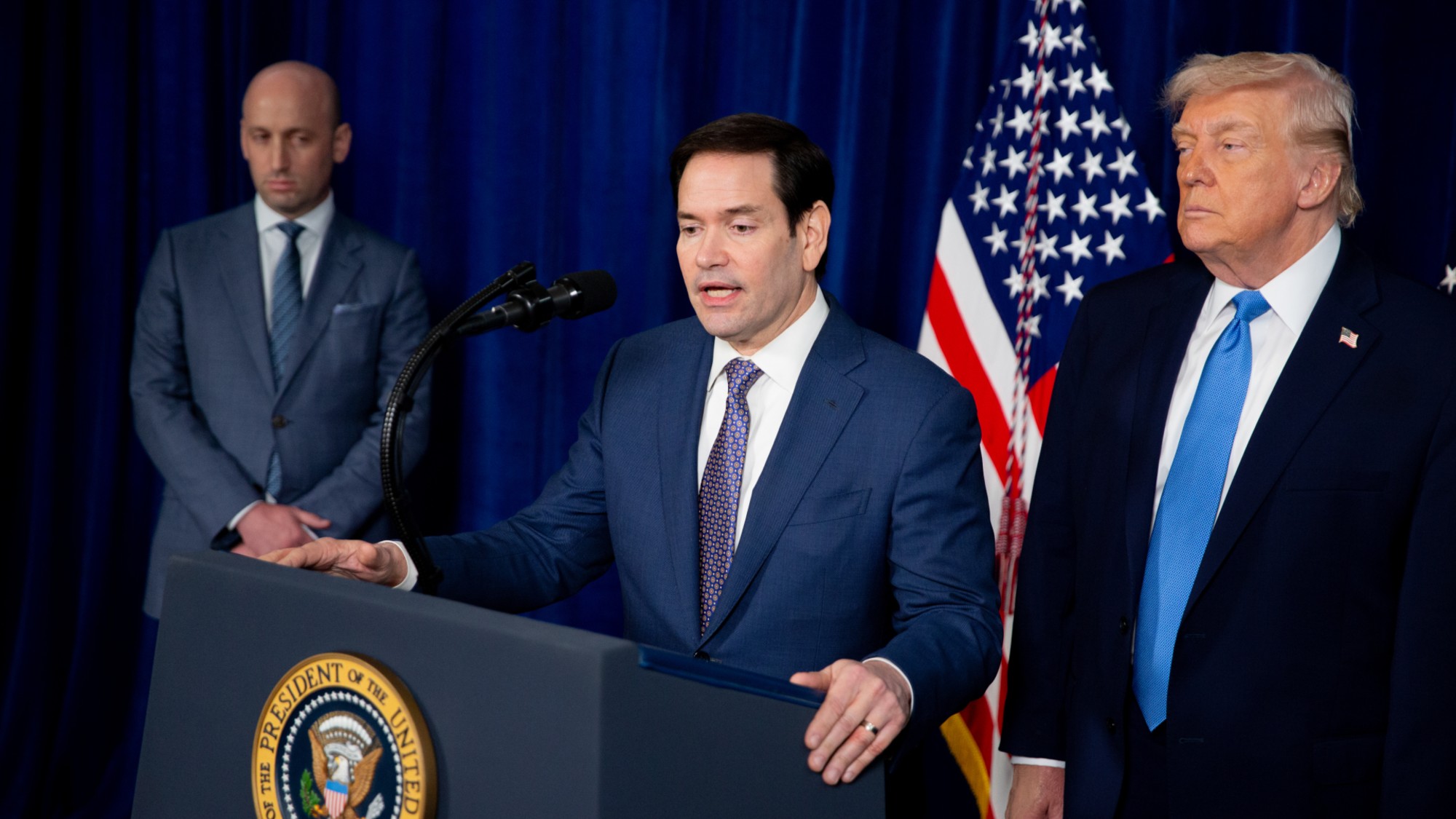
    US Secretary of State Marco Rubio (pictured above) yesterday said that Washington was not at “war” with Venezuela after Donald Trump declared on Saturday that the US plans to “run” the country until a transition of power takes place.

    Who said what
    Trump has said that US oil companies would be sent into Venezuela to “fix the badly broken infrastructure” and “start making money for the country”. Rubio said the US doesn’t “need Venezuela’s oil” but does not want it to be “controlled by adversaries of the United States”.

    “Much of the world”, including “a majority of Venezuelans”, didn’t see Maduro as “legitimate”, said Michael Hirsh in Foreign Policy. But many experts think Trump’s actions have set a “potentially devastating precedent”. He “may well have shredded what little is left of international norms and opened the way to new acts of aggression from US rivals China and Russia on the world stage”.

    What next? 
    Trump has said Delcy Rodríguez, Maduro’s vice president, would be Venezuela’s new leader for now. She is due to be sworn in today. But, in an interview with The Atlantic, Trump warned: “If she doesn’t do what’s right, she is going to pay a very big price, probably bigger than Maduro.”


    today’s POLITICS story

    Starmer hints at ‘softer Brexit deal’

    What happened
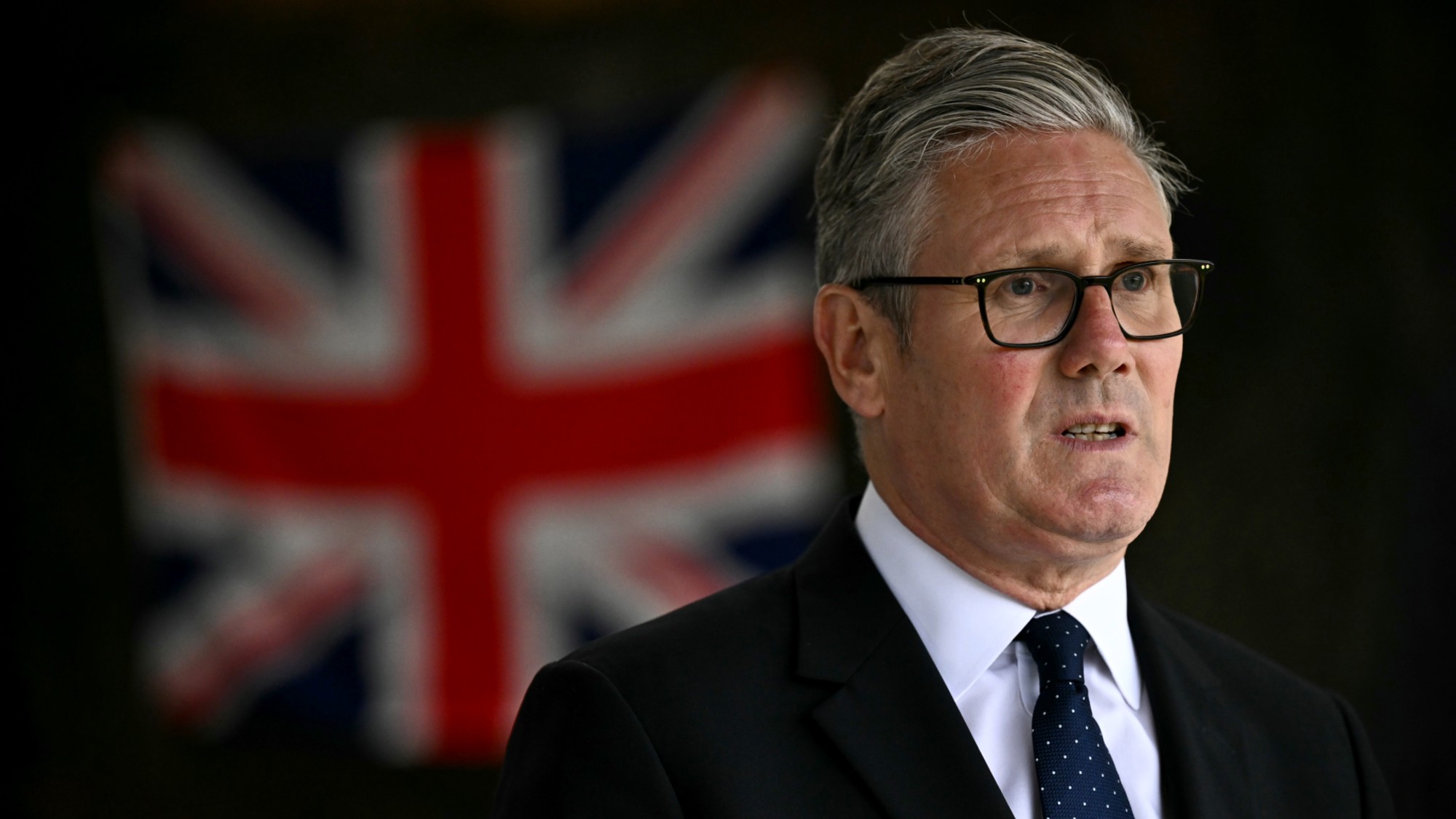
    Keir Starmer has signalled a shift towards an “even closer alignment” with the EU’s single market if it proves to be “in our national interest”. Speaking to the BBC’s Laura Kuenssberg, the prime minister said this would be preferable to rejoining the customs union as it would help safeguard prospective trade deals with countries such as India and the US.

    Who said what
    This is the “starkest signal yet” that Starmer wants a “radically softer Brexit deal”, said The i Paper. It’s being seen as an attempt to “appease unruly Labour MPs posing a threat to his leadership”.

    The comments set up a “political fight" with Nigel Farage that Starmer “hopes will help turn his government’s fortune around”, said Ellen Milligan on Bloomberg. Labour strategists think Reform’s economic and foreign policies are Farage’s “weakest areas” and they want to “exploit this”.

    The PM has “doubled down” on his desire to see Britain “back under the thumb of eurocrats”, wrote Richard Tice, Reform’s deputy leader, in the Daily Express. His plan will “shatter” Labour’s “clear and unambiguous election pledge” to “never accept freedom of movement”.

    What next?
    The Liberal Democrats have said they will try to force a parliamentary vote on a new customs union, by tabling an amendment to the EU Reset Bill, expected to be brought forward by the government in the coming weeks.


    Today’s EUROPE story

    Swiss bar victims honoured as criminal case opened

    What happened
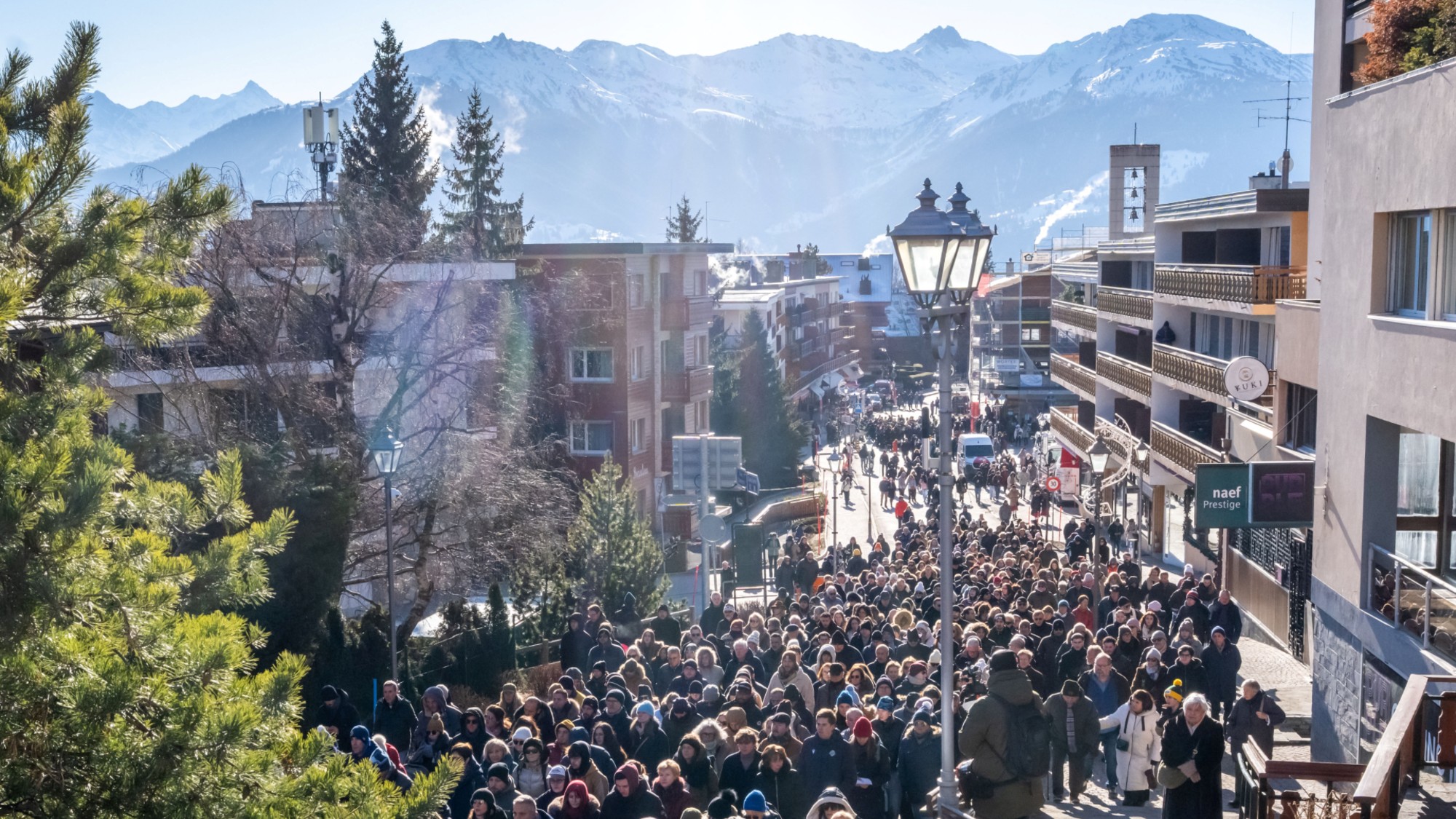
    Hundreds of people took part in a silent march yesterday to honour the victims of the Crans-Montana fire, as the owners of Le Constellation bar face a criminal investigation. Local authorities have now identified all of the 40 people who died in the New Year’s Eve blaze at the Swiss ski resort.

    Who said what
    “Mourners gathered in sub-zero temperatures” for a multilingual service at St Christopher’s Church in Crans-Montana, said The Times. Then, “under a clear blue sky with the snow-covered Alps glistening in bright sunshine”, the crowd silently walked up to the site of the tragedy.

    The Rev Gilles Cavin talked about the “terrible uncertainty” that families had faced. The forensic work to identify the victims had been “particularly slow-going due to the horrific burns sustained” by most of them, said The Guardian. The youngest of the dead were a Swiss girl and a French boy, both 14-years-old.

    What next?
    Prosecutors said Le Constellation owners Jacques and Jessica Moretti were under investigation for negligent homicide, negligent bodily harm and negligent arson. No detention or travel ban has been imposed. “Until there is a conviction,” said Béatrice Pilloud, attorney-general of the Valais region, “there is a presumption of innocence which prevails.”


    It’s not all bad

    Renewable energy generated a “record amount of electricity” in Britain last year, according to BBC analysis of the National Energy System Operator’s provisional figures. Wind was the biggest single green electricity source, while solar-powered electricity rose by nearly a third year on year.


    UNDER THE RADAR

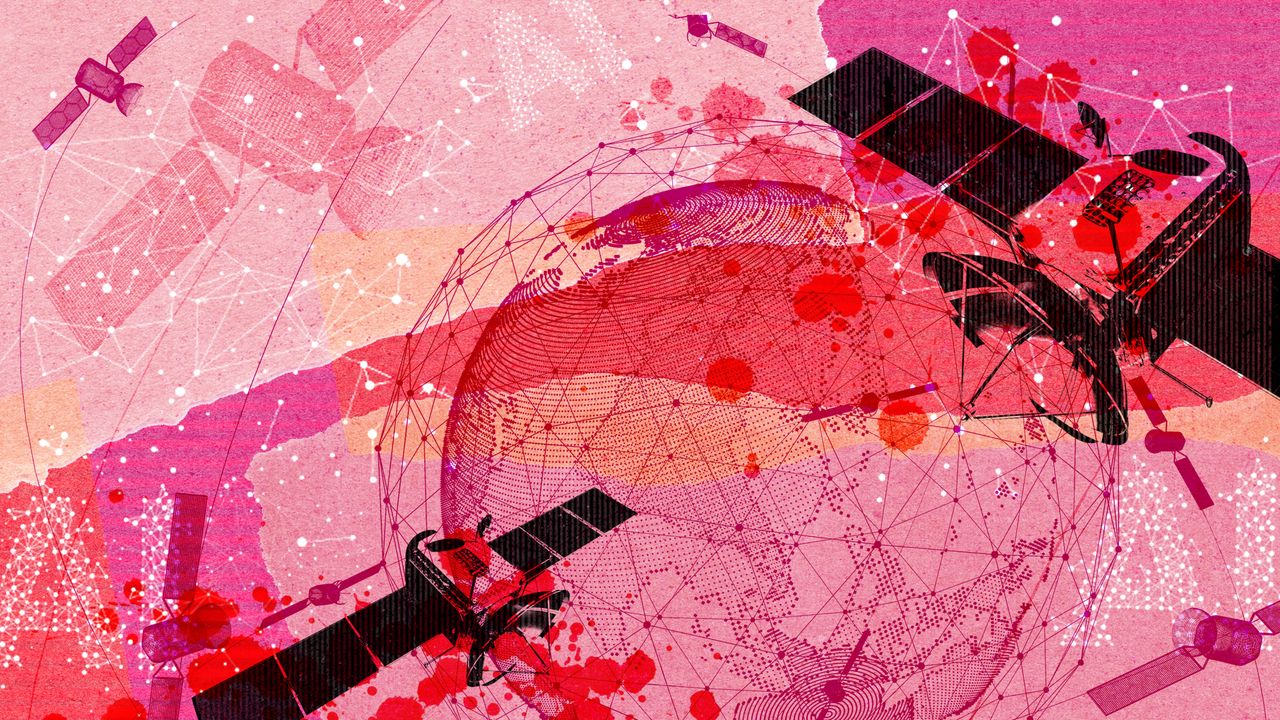
    Data centres could soon be orbiting in space

    Artificial intelligence increasingly requires so much space and power that we may run out of both on Earth. As a solution, tech companies are looking to create data centres in space that harness solar power. While this would demand less cooling, it could create other costs and problems.

    The enormous amount of data required by AI has led to data centres being built across the world, and “global power requirements could double by the end of this decade as companies train larger AI models”, said Scientific American. A move to space could “resolve long-standing challenges around powering data centre computation in a carbon-efficient manner”.

    The sun’s rays are “direct and constant for solar panels to collect”, said The Wall Street Journal. There are “no clouds, no rainstorms, no nighttime”, and “demands for cooling could also be cut because of the vacuum of space”.

    Tech giants, including Amazon, Google, OpenAI and Elon Musk’s xAI, are “running into physical limits to their AI ambitions on Earth”, said The Verge, but launch costs are “still prohibitively expensive”.

    Space-based computing will “not become cost-effective unless rocket launch costs decline substantially”, said Scientific American. Experts also warn that these systems could have “even bigger environmental and climate effects than their earthly counterparts”.

    Data centres “visible in the night sky at dawn or dusk” could disrupt astronomers who “rely on twilight to hunt for near-Earth asteroids” and it could worsen the space junk problem, as “more hardware is launched and more debris and fragments fall back through the atmosphere”.


    on this day

    5 January 1895

    Jewish French army captain Alfred Dreyfus is stripped of his rank after being wrongly convicted of treason. He would eventually be exonerated, after several years in the notorious Devil’s Island penal colony. In November last year, France posthumously promoted Dreyfus to brigadier general, recognising him as a victim of antisemitism.


    Today’s newspapers

    ‘Big price to pay’

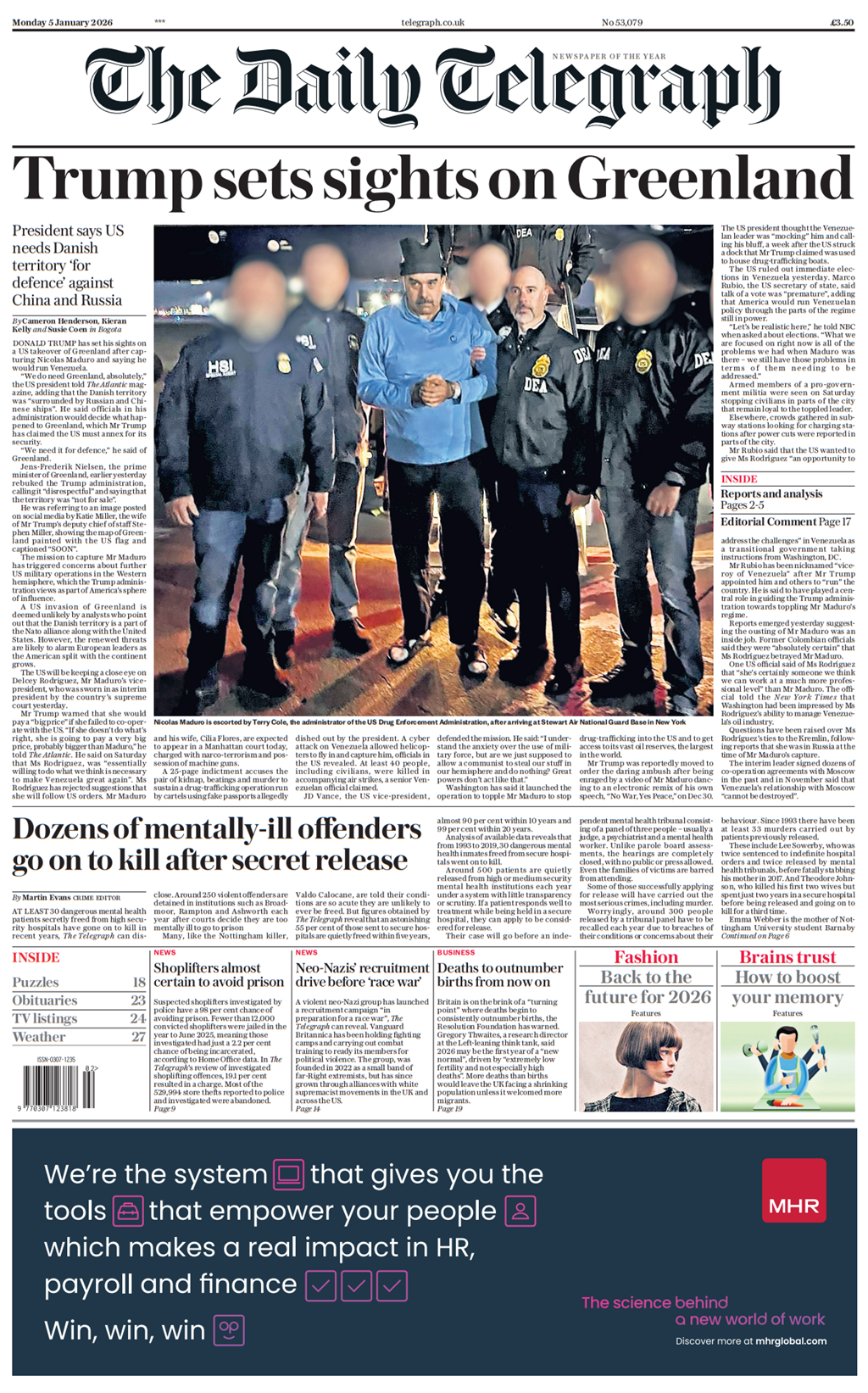
    “Trump sets sights on Greenland”, says The Telegraph. “Trump warns of ‘big price to pay’ if Caracas fails to toe line”, says The Guardian. “PM faces revolt by Labour’s Maduro apologists”, reports the Daily Mail. “Starmer plots course for a softer Brexit – as leadership rivals circle”, The i Paper says.

    See the newspaper front pages


    tall tale

    Cheeky stunt

    Fans of Timothée Chalamet can rest easy: a much-discussed spanking scene in his upcoming film really does feature the actor’s own derrière. Kevin O’Leary, Chalamet’s co-star in “Marty Supreme”, told Variety that the Oscar-nominated actor was given the option of a stunt double, but he insisted on doing the scene himself because he “didn’t want some other ass immortalised”.


    Morning Report was written and edited by Hollie Clemence, Rebecca Messina, Chas Newkey-Burden, Rebekah Evans and Devika Rao, with illustrations from Marian Femenias-Moratinos.

    Image credits, from top: Nicole Combeau / Bloomberg / Getty Images; Ben Stansall / WPA Pool / Getty Images; Maxime Schmid / AFP / Getty Images; illustration by Marian Femenias-Moratinos / Getty Images

    Morning Report and Evening Review were named Newsletter of the Year at the Publisher Newsletter Awards 2025
     

    Recent editions

    • Morning Report

      Maduro’s ‘humbling moment’

    • Evening Review

      Greenland, Colombia or Cuba: where next for Trump?

    • Morning Report

      Maduro to appear in court

    VIEW ALL
    TheWeek
    • About Us
    • Contact Future's experts
    • Terms and Conditions
    • Privacy Policy
    • Cookie Policy
    • Advertise With Us
    • FAQ
    Add as a preferred source on Google

    The Week UK is part of Future plc, an international media group and leading digital publisher. Visit our corporate site.

    © Future Publishing Limited Quay House, The Ambury, Bath BA1 1UA. All rights reserved. England and Wales company registration number 2008885.