The Week The Week
flag of US
US
flag of UK
UK
https://cdn.mos.cms.futurecdn.net/skoGBi9qKFoUtnNWkovjJQ.jpg

SUBSCRIBE

Try 6 Free Issues

Sign in
  • View Profile
  • Sign out
  • The Explainer
  • Talking Points
  • The Week Recommends
  • Podcasts
  • Newsletters
  • From the Magazine
  • The Week Junior
  • More
    • Politics
    • World News
    • Business
    • Health
    • Science
    • Food & Drink
    • Travel
    • Culture
    • History
    • Personal Finance
    • Puzzles
    • Photos
    • The Blend
    • All Categories
  • Newsletter sign up Newsletter
  • The Week Evening Review
    Trump’s next targets, party politics in the UK, and the problem with willpower

     
    TODAY’S BIG QUESTION

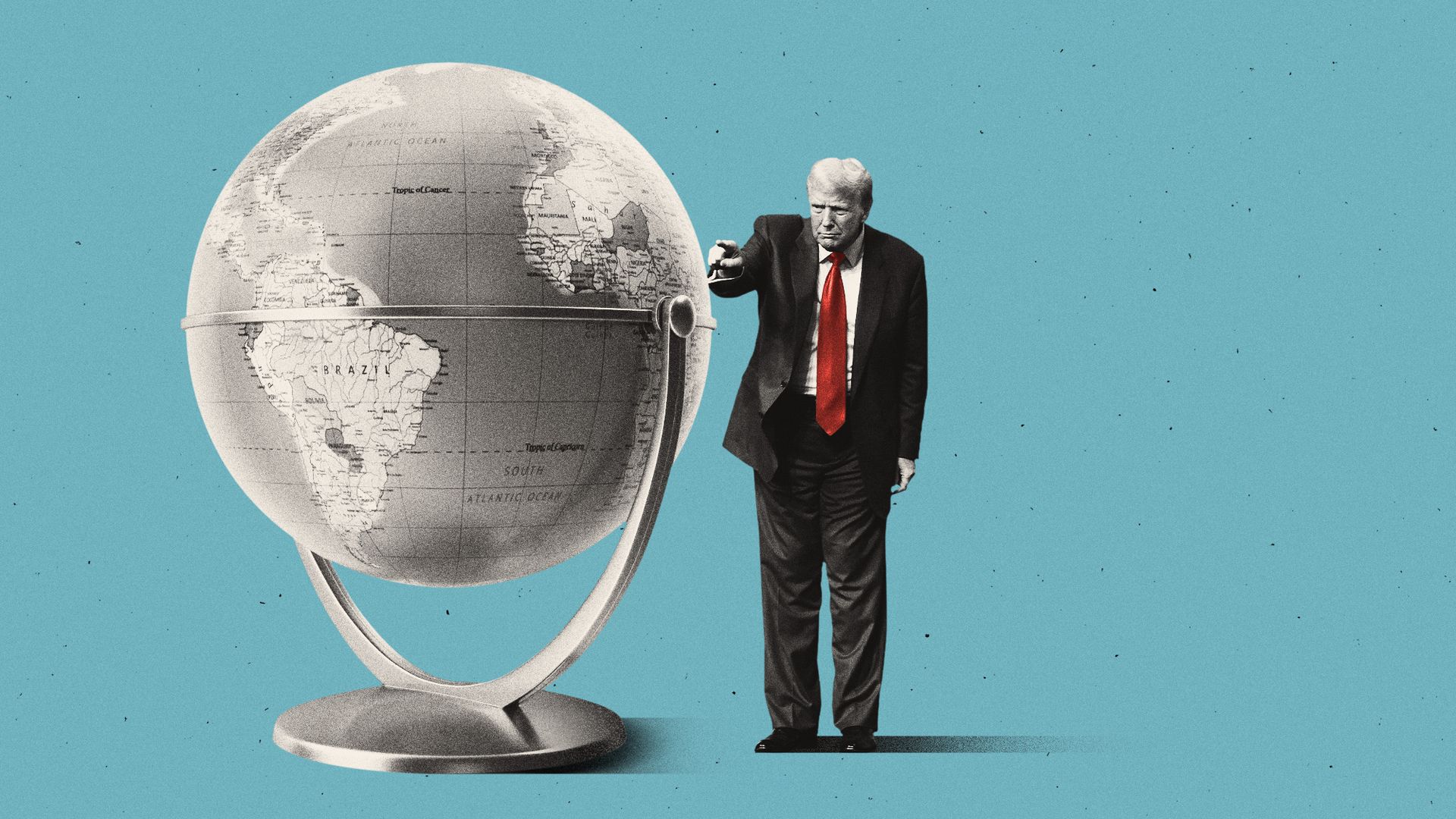
    After Venezuela, where is Trump eyeing up next?

    Following the shock extraction of Nicolás Maduro from Venezuela, Donald Trump has suggested the US could take military action against other countries in Latin America – or even Europe.

    The US president has threatened Colombia and its “sick man” president, Gustavo Petro; warned Mexico’s leaders to “get their act together”, and said Cuba is “ready to fall”. He’s told Iran that America is “locked and loaded and ready” to rescue “peaceful protestors” against the regime. And, speaking on Air Force One yesterday, he said that “we need Greenland from the standpoint of national security” – drawing criticism from European leaders, including Keir Starmer.

    What did the commentators say?
    “The attack on Venezuela and the capture of Maduro herald the decoupling of Trump’s United States from the rules-based international order” and the crumbling of the “liberal order as a whole”, said Juan Luis Manfredi, a journalism professor at Spain’s University of Castilla-La Mancha, on The Conversation. “A new international order is now emerging, based on the use of force, revisionism and security on the American continent.”

    The “heady rush to instant criticism” can divorce policy “from its historical contexts”, said historian Jeremy Black in The Telegraph, but Trump’s policies are “in line with long-standing patterns of American behaviour”. America’s policies “clash with notions of the national sovereignty of others”, but these notions can also “protect dictatorships and oppression”.

    As we’ve seen with Ukraine, Yemen and the Israel-Gaza conflict, Trump has a “focus on short-term achievements over more complicated, longer-term questions about governance and stability”, said Courtney Subramanian and Kate Sullivan on Bloomberg. But this is a “philosophy that could backfire on American interests”. China could use the “Trumpian approach” as a template “to take back Taiwan”, while Russia could feel emboldened “to renew its efforts to topple” Ukraine’s Volodymyr Zelenskyy.

    What next?
    For Trump, what happens next will depend largely on how the situation plays out in Venezuela over the coming weeks and months. Success could encourage the US administration “to expand its pressure campaign to Cuba or other disfavoured regimes”, geoeconomics analyst Jimena Zuniga told Bloomberg. On the other hand, “failure could temper its appetite for intervention”.


    THE EXPLAINER

    The potential electoral pacts at the next election

    If 2024 was the year of the Labour landslide, 2025 was the year that smaller parties were on the rise – with potentially huge ramifications for the next election.

    As polls continue to show voters “deserting Labour and the Tories”, the talk of election deals is “becoming more urgent”, said The i Paper. The two main parties are losing supporters to Reform UK and the Green Party, fuelling predictions that tactical voting “may decide the next general election, due in 2029”. But who would make a pact with whom?

    Tory-Reform
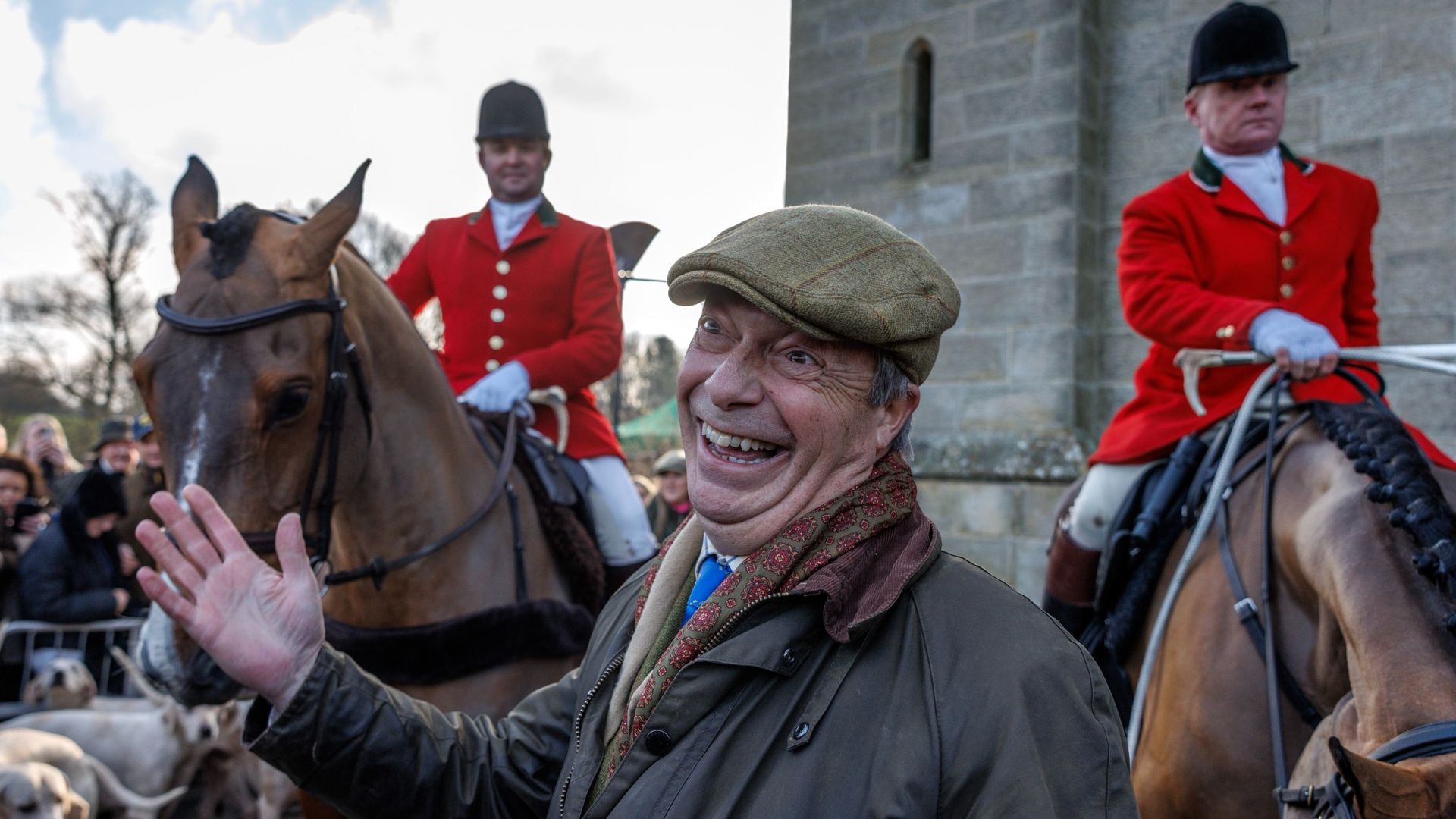
    Nigel Farage has denied claims from unnamed Reform donors in the Financial Times that he expects an electoral pact or a merger between his party and the Conservatives before the next general election. Such a move would be a historic realignment on the right of British politics, but Farage said he is in fact aiming for a “reverse takeover” of the Conservatives. “A deal with them as they are would cost us votes,” he said.

    Kemi Badenoch has also ruled out the idea. But “there are posh Southern seats where Reform can’t win, and working-class seats where the Tories can’t win”, said The Telegraph. While there is unlikely to be any “formal arrangement”, each party “quietly standing aside” in certain constituencies “makes sense”.

    Green-Labour
    The Greens are eyeing a “pact” with Labour to “shut out Farage”, two senior Green Party officials told Politico. Zack Polanski’s party is “discussing the prospect of informal, local prioritisations of resources, so the best-placed progressive challenger can win”.

    But Labour is “keen to tamp down talk of working together”. A senior government adviser said Labour is “not even thinking about” working with Polanski. There’s “scepticism” that a “non-aggression deal” would work because the Greens will be “vying for the kind of urban heartlands Labour can’t afford to back down from”.

    Lib Dem-Labour
    The Liberal Democrats and Labour have teamed up in the past – in 1903, 1924, 1929 and 1977. The question of them uniting again for a “common national project” has been “asked repeatedly, in various guises and circumstances, for more than 100 years”, said The Guardian.

    But what about now? Would Lib Dem leader Ed Davey work with Labour? “Everyone knows he would,” said The Independent, but “everyone also knows he can’t say so”.


    QUOTE OF THE DAY

    “Fame does not protect against hardship, and talent does not guarantee stability.”

    Mickey Rourke’s message on a GoFundMe launched yesterday to help him avoid eviction from his LA home. The crowdfunder for the Oscar-nominated actor has a target of $100,000 and, by this afternoon, had already exceeded the $59,100 that he allegedly owes in back rent.


    Poll watch

    Reform is on track to win a majority of 112 at the next election, according to a new megapoll. Based on responses from more than 16,000 Brits, the More in Common MRP model estimates that Reform would take 381 seats, with Labour and the Conservatives fighting for second place.


    IN THE SPOTLIGHT

    The diminishing strength of willpower

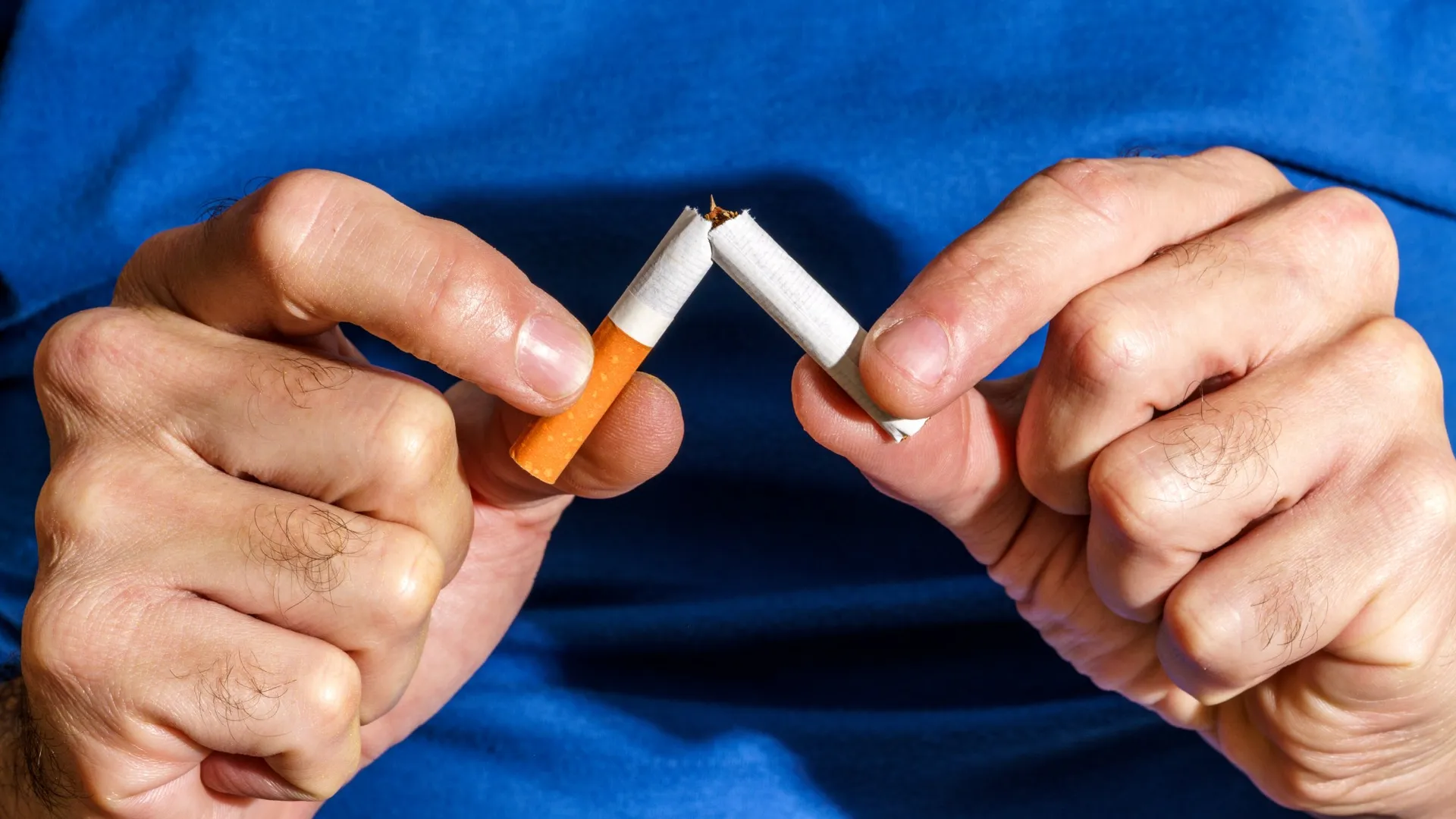
    For many, a new year brings with it an iron determination to break old habits or start new, positive ones. And then “holiday treats” and “sales confront us at every turn”, so we waver and indulge, said psychologist Angela Duckworth in The New York Times.

    The logical conclusion would be to “try harder” to say no but studies of how people achieve their goals suggest the opposite may be true. “Willpower is overrated.”

    ‘Cultural hangover’
    Iron self-control may be lauded socially but most successful people “rarely rely on inner fortitude to resist temptations”, said Duckworth. Instead, they exercise “situational agency”, and “minimise the need for willpower in the first place”.

    If you want to keep off social media, avoid owning a smartphone, like Ed Sheeran and Zadie Smith do. If you tend to duck out of an early morning run, make sure your “shoes are warm, dry and waiting” on the doormat, like former Olympic triathlon champion Alistair Brownlee does. 

    Believing in willpower alone as a means to tackle temptation head-on is a “cultural hangover”, said behavioural scientist Michael Hallsworth in The i Paper. We have been conditioned to believe that it is “more virtuous to fail” in succumbing to desires than to “succeed with help”. But “that attitude is a trap”. 

    ‘Commitment devices’
    There is no shame in relying on tricks and tips to achieve your goals, said Hallsworth. “Commitment devices” such as public pledges – posting your intention to run a half marathon on social media, for example – hold you accountable by “weaponising social pressure against yourself”.

    Incentives and rewards work well, too, psychologist Kimberley Wilson told BBC Radio 4. By telling yourself a “positive story”, you give yourself the “best chance to achieve your goal” and the “rest is likely to follow”.

    Be wary of comparing yourself to others and, above all, don’t be put off by a “momentary stumble”. With “planning, self-belief and the will to change”, goals can still be achieved, even if the willpower wavers from time to time.


    Good day 👑

    … for royal reunions, amid reports that Prince Harry has won his fight for armed police protection when he and his family visit the UK. The decision “could lead to his children visiting the King for the first time in years”, said The Times.


    Bad day ⚽

    … for remaining United, as Ruben Amorim gets the boot after 14 months in charge of the Red Devils. The Portuguese manager, who had publicly criticised the Manchester football club’s hierarchy, was sacked due to a “breakdown in relations behind the scenes”, according to The Athletic. 


    picture of the day

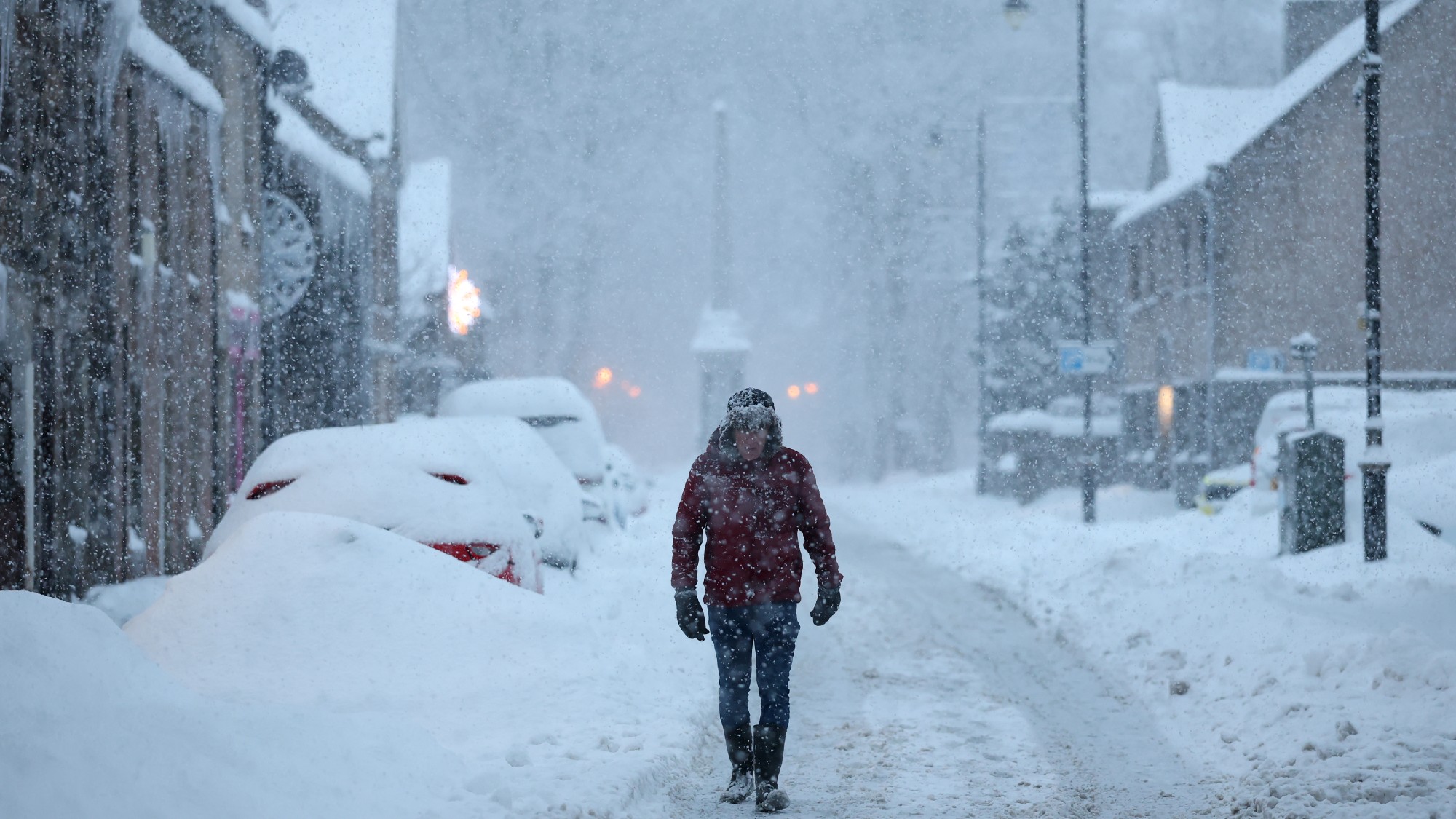
    You take the snow road

    A man walks through the frozen streets of Huntly, near Aberdeen. Further heavy snowfalls are forecast for Scotland as Arctic air continues to sweep across the UK.

    Jeff J Mitchell / Getty Images


    Puzzles

    Guess the number

    Try The Week’s new daily number challenge in our puzzles and quizzes section

    Play here


    THE WEEK RECOMMENDS

    Alcohol-free alternatives for Dry January

    A “sobering shift” is taking place, with “stiff drinks” giving way to “soft power”, said Tamzin Reynolds in Tatler. As “Dry January hits its stride”, low- and non-alcoholic alternatives to booze are booming.

    Whether you’re “zebra striping” (alternating between alcoholic and soft drinks), or going cold turkey (perhaps literally if you still have leftovers), “abstinence has never been more indulgent”. Here are some of our favourites to kick off 2026.

    Lucky Saint unfiltered alcohol-free lager (0.5%)
    One of the reasons Lucky Saint is such an “old favourite” is that the company only makes alcohol-free products, said Victoria Moore in The Telegraph. The “Pilsner style beer” is an “excellent” lager made with “citrussy, floral Hallertau hops”. Its popularity means it is widely available in major supermarkets.

    Almave Blanco Blue Agave spirit (0%)
    “A zero-proof tequila-style spirit may not be the first thing you’d think to turn to but this was an unexpected hit,” said Joanne Gould in The Guardian. Almave was founded by Formula 1 driver Lewis Hamilton and Mexican spirits group Casa Lumbre and, once you pop the stopper on a bottle, you are met with an “immediately distinctive” and “extremely convincing” agave aroma, with the taste to match. It is “genuinely nice even for sipping straight” but, when mixed into a spicy margarita, it is “fantastic”.

    Wild Idol sparkling wine (0%)
    This is perfect for a “special” occasion, said Hermione Blandford in Shortlist. Unlike other similar products, this alcohol-free drink is made with grapes, so it “looks the part” and “tastes the part” of wine. It comes with a hefty price tag (bottles start from around £29.99), so it is a luxury option, but is definitely “worth it”.

    Château La Coste Sparkling Rosé (0%)
    Such is the “booming” trend for no- and low-alcoholic drinks, “even the bastions of Bordeaux and Provence” are trying to tap into it, said Reynolds in Tatler. And this rosé, in particular, is a “perfect example” of how non-alcoholic wines can compete with the real thing. It’s been de-alcoholised, with the “red and citrus fruit flavours” preserved. Though it may not have quite the same “mouth-feel”, expect delicate “hints of jasmine, conjuring summers in the South of France”.


    Statistic of the day

    243kg: The weight of a bluefin tuna sold for a record 510.3 million yen (£2.4 million) this morning at Tokyo’s Toyosu fish market’s first auction of 2026. The winning bid came from sushi entrepreneur Kiyoshi Kimura, known as the Tuna King, who set the previous record of 334 million yen in 2019.


    instant opinion

    Today’s best commentary

    The outstanding beigeness of Keir Starmer
    Sam Leith in The Spectator 
    “I am honestly surprised and bewildered by how useless” Keir Starmer “has turned out to be” as prime minister, writes Sam Leith. “Where’s the drama? Where’s the life?” Even “when the head of state of a sovereign nation is kidnapped” by the “armed forces of another, he doesn’t dare say” that it sets a “concerning precedent”. If Starmer continues like this, “the question won’t be so much whether he’s in power as how anyone is supposed to tell”.

    Why the melt-up is still on
    Katie Martin in the Financial Times
    As 2026 begins, the markets “pessimists appear to be giving up the fight“, writes Katie Martin. Those “dark days” when Donald Trump’s “whackadoodle global trade policy” sent stocks “careering lower” are now a “distant memory”. Even “bubble anxiety” about tech firms hasn’t dampened the mood: “Wall Street thinks we’re heading into a great year”. Investors aren’t “complacent about the risks” but “it’s very much starting to feel like the only way is up”.

    I’m a man and I’m sick of being asked about my feelings
    Stefano Hatfield in The i Paper
    “There is a particular modern anxiety” about men who seem “to be enjoying themselves without talking very much”, writes Stefano Hatfield. Just “what feelings are being dangerously stockpiled beneath the surface”? Actually, “many men do want to talk about their feelings”, but they “don’t want to be told when, how, or by whom”. We should not “harangue men into disclosure” or mistake silence for “refusal”. If “given time, trust and the absence of instruction, many will talk”.


    word of the day

    Naibbe

    A 14th-century Italian card game and the name of a new cipher that uses playing cards and dice to turn languages into glyphs. The Naibbe cipher has been used to produce glyphs strikingly similar to those in the Voynich Manuscript, a medieval illustrated book in an unknown script that has baffled experts for centuries. Although the cipher “does not decode” the manuscript, said Live Science, it “is one of the closest attempts yet”.


    Evening Review was written and edited by Jamie Timson, Elliott Goat, Chas Newkey-Burden, Will Barker, Irenie Forshaw, Helen Brown, David Edwards and Kari Wilkin, with illustrations from Stephen Kelly.

    Image credits, from top: illustration by Stephen Kelly / Getty Images / Shutterstock; Dan Kitwood / Getty Images; Javier Zayas Photography / Getty Images; Jeff J Mitchell / Getty Images; Dragon Claws / Getty

    Morning Report and Evening Review were named Newsletter of the Year at the Publisher Newsletter Awards 2025
     

    Recent editions

    • Morning Report

      Britain signs deal to deploy troops to Ukraine

    • Evening Review

      Would Europe defend Greenland?

    • Morning Report

      Maduro’s ‘humbling moment’

    VIEW ALL
    TheWeek
    • About Us
    • Contact Future's experts
    • Terms and Conditions
    • Privacy Policy
    • Cookie Policy
    • Advertise With Us
    • FAQ
    Add as a preferred source on Google

    The Week UK is part of Future plc, an international media group and leading digital publisher. Visit our corporate site.

    © Future Publishing Limited Quay House, The Ambury, Bath BA1 1UA. All rights reserved. England and Wales company registration number 2008885.