The Week The Week
flag of US
US
flag of UK
UK
https://cdn.mos.cms.futurecdn.net/skoGBi9qKFoUtnNWkovjJQ.jpg

SUBSCRIBE

Try 6 Free Issues

Sign in
  • View Profile
  • Sign out
  • The Explainer
  • Talking Points
  • The Week Recommends
  • Podcasts
  • Newsletters
  • From the Magazine
  • The Week Junior
  • More
    • Politics
    • World News
    • Business
    • Health
    • Science
    • Food & Drink
    • Travel
    • Culture
    • History
    • Personal Finance
    • Puzzles
    • Photos
    • The Blend
    • All Categories
  • Newsletter sign up Newsletter
  • The Week Evening Review
    Europe’s ‘fine line’, human hibernation, and a new job opening at Man Utd

     
    TODAY’S BIG QUESTION

    Would Europe defend Greenland?

    Any US attempt to seize control of Greenland by force would be the end of Nato and “post-Second World War security”, Denmark’s prime minister has warned. Mette Frederiksen spoke out as Donald Trump reiterated his desire to take control of the semi-autonomous Danish territory.

    European leaders, including Keir Starmer, issued a joint statement today saying that “it is for Denmark and Greenland, and them only, to decide on matters concerning Denmark and Greenland”. But the “mildness” of their words “illustrates the bind Europe finds itself in”, said Politico. 

    What did the commentators say?
    The fear of “potential retaliation from Trump on trade or Ukraine” means Europe has “mostly pulled its punches in responding to his sabre-rattling” on Greenland, said Politico. Nato is also walking a “fine line to avoid antagonising the US president”. But, while many Nato countries have previously “brushed off an all-out Greenland incursion as implausible, Trump’s comments are beginning to stir anxiety – and defiance – within the alliance”.

    The US president could go for “force, coercion, or an attempt to buy off the local population of about 56,000 people with the promise of cutting them in on future mining deals”, said The Atlantic. Since “neither Denmark nor its European allies possess the military force to prevent the US from taking the island”, all it may take is a Truth Social post announcing that Greenland is now an American “protectorate”. Given America’s status as Nato’s leading military and financial guarantor, such a development would “paralyse” the alliance.

    Denmark – and Europe – “have few cards to play in the world of might-makes-right that Trump is ushering in”, said Marc Champion on Bloomberg. Their “entire economic and security postures” have been built “around the rules and alliance-based order that the US created for its friends” after the Second World War. “Now they’re too dependent on US arms to resist as he tears it down.”

    What next?
    Trump might use his leverage “to get what he wants in Greenland through some means short of outright annexation”, said Sam Ashworth-Hayes in The Telegraph. He could look to trade America’s continued support in Europe’s eastern defence for a greater US security presence in the Arctic. If that happens, “the diplomatic side will be smoothed over” but “the fault lines will still exist”.


    THE EXPLAINER

    Why don’t humans hibernate?

    As temperatures plummet and back-to-work blues kick in among people nationwide, many other creatures are spending winter in blissful hibernation. It might be easy to envy the seasonal torpor of bats, bears and hedgehogs, but research suggests humans once hibernated, too – and scientists believe we may one day do so again.

    Have humans ever hibernated?
    It was long thought that we did not. After all, humans “discovered fire, clothes, shelter, hunting and agriculture”, which are “much more effective ways of surviving the cold” than hibernating for months on end, said BBC Science Focus. It’s been assumed that any “ancient tribes that tried to sleep their way through the winter” would have been swiftly “ousted” by “the guys with the fur clothes sitting around the campfire in the next cave along”.

    But this may not be the complete picture, scientists suggested in a 2020 study in the journal L’Anthropologie. They analysed more than 1,600 fossilised bones of an extinct human species found in Spain that dated back around 500,000 years. Evidence of recurrent nutritional disease and bone weakening indicated that these human ancestors “sacrificed nutrition and vitamin D from the Sun” in order to “spend the worst part of the year trying to sleep through it inside relatively safe caves”, said Popular Mechanics.

    These findings pointed to this extinct human species spending a lot of time inside caves, particularly “through the cold and difficult winter months”. Not exactly hibernation – but close.

    Will humans hibernate in the future?
    “Putting people into sleep mode is a sci-fi concept that’s a lot closer to becoming real than you might think,” said National Geographic. Nasa and the European Space Agency are involved in trials that use carefully dosed sedatives to put participants into a “state that mimics some of the key features of hibernation”, including a drastically slowed metabolism and a “twilight” state of consciousness that still allows for biological functions such as eating, drinking and bowel movements.

    Being in a “bearlike state of hibernation” could help astronauts on future deep space missions, alleviating “the tedium of extended space travel”, reducing cargo requirements and limiting “crewmate conflict”.


    QUOTE OF THE DAY

    “Governments do not lose because polls go down. They lose when they lose belief or nerve. We will do neither.”

    Keir Starmer tells his ministers to keep calm and carry on, in a Cabinet meeting today after YouGov polling put Labour in third place behind Reform UK and the Conservatives.


    Poll watch

    More than half (51%) of Brits disapprove of Donald Trump’s raid on Venezuela to capture President Nicolás Maduro. A YouGov survey of 4,667 adults found that 21% “somewhat” or “completely” approved, while 28% were unsure.


    IN THE SPOTLIGHT

    Amorim follows Maresca out of Premier League

    “Ruben Amorim has shown that there is only so far a manager can push it,” said Sky News, after the Manchester United head coach was shown a red card yesterday.

    Following Sunday’s 1-1 draw against Leeds United, Amorim (pictured above) “inflamed tensions” with the Old Trafford hierarchy, telling the club’s director of football Jason Wilcox and scouting team to “do their jobs” as he had come to the club to be the manager, “not just the coach”. Like Enzo Maresca, who left Chelsea on New Year’s Day, “challenging the leadership in public has ended in the sack” for Amorim, only 14 months after he joined from Sporting Lisbon.

    ‘Recurring instability’
    Amorim’s sacking was “inevitable and predictable”, said Sky Sports. The Portuguese was the club’s 10th manager since Alex Ferguson left in 2013; the United hierarchy was “desperate to give him a full season in charge before judging him” – partly because of the £12 million cost of sacking him and also to avoid the “recurring instability” of ever-changing leadership. But United’s results since Amorim took charge were “so poor, they never afforded the club’s bosses, or Amorim, the luxury of time”.

    United are “adamant there have been no power clashes” and that Amorim was “sacked due to a lack of progress”, said The Guardian. 
    Despite “signs of progress” and a “charismatic approach that charmed supporters”, he “must be considered United’s worst permanent manager of the post-Ferguson era”.

    Role swaps
    Amorim’s press conferences in recent weeks suggested he was “not happy with something within the hierarchy”, former United defender Gary Neville told Sky Sports. He was “starting to unleash a little bit”. Maresca did likewise in mid-December, when he said that he’d endured “the worst 48 hours” of his career at Chelsea.

    The Italian had a strong start at Stamford Bridge after arriving from Leicester in 2024. But on New Year’s Day, he “dramatically left his role” after “an irretrievable breakdown in his relationship with the club’s board”, said The Sun.  Having “cycled through” four managers and two interim bosses in less than four years, Chelsea today confirmed the appointment of Liam Rosenior as new head coach on a contract to 2032.

    Maresca’s decision to forego his £14 million payout means he is immediately available for a new role. He is now, according to Sporting Life, one of the favourites to replace Amorim at United.


    Good day 💡

    … for interactive play, following the unveiling of Lego Smart Bricks and minifigures that sense and respond to each other with sound and light effects. The Danish toymaker’s new Smart Play System is launching with Star Wars sets that light up, emit lightsaber noises and even blast out “The Imperial March” music.


    Bad day 🚘

    … for France’s former leaders, who have lost their lifetime state perks in a new year cost-cutting drive. Former prime ministers and interior ministers will no longer have the automatic right to taxpayer-funded chauffeurs and bodyguards for life.


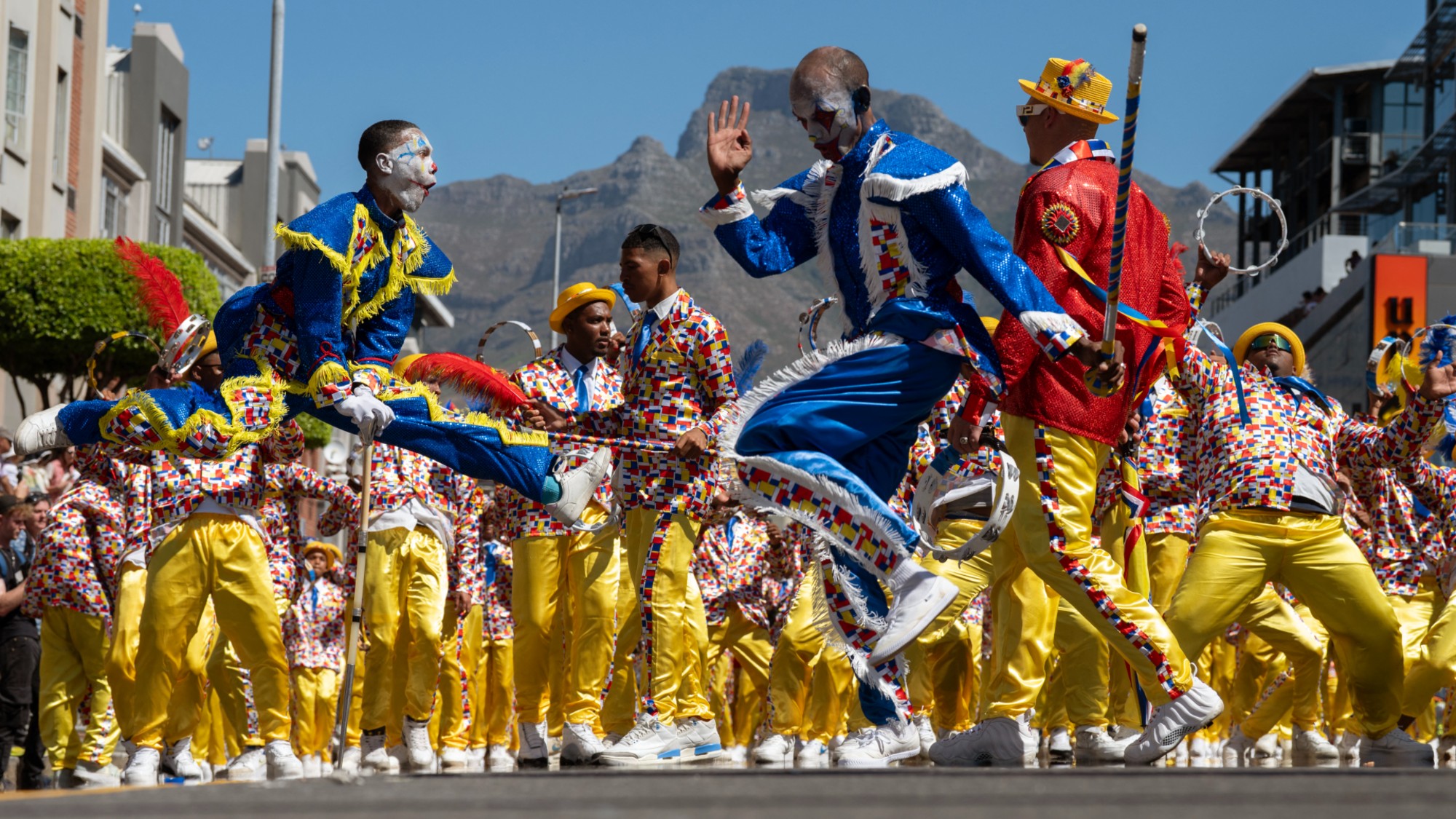
    picture of the day

    Party time

    South Africans join in the Tweede Nuwe Jaar (Second New Year) parade in Cape Town. The annual event is thought to have begun in the 1800s, to celebrate the one day off that the city’s enslaved people were traditionally allowed each year.

    Rodger Bosch / AFP / Getty Images


    Puzzles

    Guess the number

    Try The Week’s new daily number challenge in our puzzles and quizzes section

    Play here


    THE WEEK RECOMMENDS

    The rise of runcations

    Distance running has become a “fascinating way for travellers to explore new destinations”, blending fitness with adventure, said Pooja Naik in National Geographic. As running clubs continue to surge in popularity, “running holidays seem like the natural next step”. As well as boosting your cardiovascular health, these trips are a great way to immerse yourself in “rugged nature” and meet new people.

    “Time off is no longer just about doing nothing,” said Jenna Ryu on Self. Many travellers want to “step away from their daily grind” while also doing something “productive”. So running breaks have “struck a chord”, as the sport explodes into a “full-on cultural movement” thanks to platforms such as Strava.

    Having “breathlessly struggled” up a volcano in Ecuador and “capered through the Rockies”, running holidays are among the “most thrilling – and humbling – trips I’ve ever taken”, said Jennifer Malloy on Outside. “A guided tour is the best option when planning a runcation.” As well as not having to deal with the logistics, you also have “coaching to help you understand your limits on a trip of this nature”.

    For truly “spectacular landscapes”, consider a trip to Iceland. The trail-running season there kicks off in May with the annual Puffin Run, a 12.5-mile loop around Heimaey (the biggest of the Westman islands) that has plenty of opportunities to spot the “charming birds”. Or, if you’re really adventurous, consider booking Runcation Travel’s retreat in southern Patagonia, where “some of the world’s most awe-inspiring (and unpredictable) terrain and weather await”. Just remember to pack plenty of waterproof gear.


    Statistic of the day

    2,020,373: The number of new cars registered in 2025, the highest total since 2019. Almost a quarter (23.4%) were electric vehicles, according to data from the Society of Motor Manufacturers and Traders, but the trade association warned that EV sales were not increasing fast enough to meet government targets.


    instant opinion

    Today’s best commentary

    If Mumsnet is now backing Reform UK, it’s over for Starmer’s Labour
    Victoria Richards in The Independent
    “Forget Donald Trump, Israel, antisemitism and the polls,” writes Victoria Richards. “The biggest threat to Keir Starmer right now is mums.” Reform UK has become the “top choice” for Mumsnet’s “politically engaged, historically left-leaning mothers”. That’s a “death knell” for Labour: “lose Mumsnet and you’ve lost the next election”. But “I’m not surprised”. Nigel Farage is a “seductive, ‘swarms of migrants’-bleating snake-oil salesman” who “plays right into the heartland of Mumsnet’s little England, cos-playing in a middle-class suit”.

    Trump Wants Control, Not Change, in Venezuela
    Steven Methven on Novara Media
    “Panto season” is “long over” but it seems “puppetry” is “about to make a comeback”, writes Steven Methven. Donald Trump’s “limited aims” in oil-rich Venezuela are clear: “rebuff” Nobel-winning opposition leader María Corina Machado and install a “pliant replacement” president. This is “regime control, rather than regime change”. And it’s easier to win control “from a fragile remnant of the old regime” than from a “newcomer with big ideas, international support and a democratic mandate”.

    Shutting down Britain because of bad weather is pathetic
    Celia Walden in The Telegraph
    I’ve just come back from New York, where it was -16C yet “hardy” locals “in their duvet coats, balaclavas and snow boots” still “got on with their lives”, writes Celia Walden. Here in Britain, a “light dusting of snow” has “prompted the usual hilariously overblown rhetoric” about “travel chaos” and workers’ “dangerous” commutes. I don’t think “we are an inherently feeble country”, but “assumed feebleness creates real feebleness”, and that “really would be a national crisis”.


    word of the day

    Phoenixism

    “The art of liquidating a company and allowing the directors to rise from the ashes with a new entity, free of debts,” said The Guardian. The practice is estimated to cost taxpayers around £840 million a year. Some accounting experts “argue that phoenixism allows the Exchequer to eventually recoup lost taxes”, but others cast doubt on this “optimistic” notion.


    Evening Review was written and edited by Hollie Clemence, Rebecca Messina, Jamie Timson, Elliott Goat, Chas Newkey-Burden, Harriet Marsden, Irenie Forshaw, Helen Brown, David Edwards and Kari Wilkin, with illustrations from Stephen Kelly.

    Image credits, from top: masterSergeant / Getty Images; illustration by Stephen Kelly / Alamy / Getty Images; Gareth Copley / Getty Images; Rodger Bosch / AFP / Getty Images; Justin Paget / Getty Images

    Morning Report and Evening Review were named Newsletter of the Year at the Publisher Newsletter Awards 2025
     

    Recent editions

    • Morning Report

      UK forces aid US seizure of tanker

    • Evening Review

      Artemis II: back to the Moon

    • Morning Report

      Britain signs deal to deploy troops to Ukraine

    VIEW ALL
    TheWeek
    • About Us
    • Contact Future's experts
    • Terms and Conditions
    • Privacy Policy
    • Cookie Policy
    • Advertise With Us
    • FAQ
    Add as a preferred source on Google

    The Week UK is part of Future plc, an international media group and leading digital publisher. Visit our corporate site.

    © Future Publishing Limited Quay House, The Ambury, Bath BA1 1UA. All rights reserved. England and Wales company registration number 2008885.