The Week The Week
flag of US
US
flag of UK
UK
https://cdn.mos.cms.futurecdn.net/skoGBi9qKFoUtnNWkovjJQ.jpg

SUBSCRIBE

Try 6 Free Issues

Sign in
  • View Profile
  • Sign out
  • The Explainer
  • Talking Points
  • The Week Recommends
  • Podcasts
  • Newsletters
  • From the Magazine
  • The Week Junior
  • More
    • Politics
    • World News
    • Business
    • Health
    • Science
    • Food & Drink
    • Travel
    • Culture
    • History
    • Personal Finance
    • Puzzles
    • Photos
    • The Blend
    • All Categories
  • Newsletter sign up Newsletter
  • The Week Evening Review
    Nasa’s Moon mission, Maduro’s rise to power, and the UK’s promise to Ukraine

     
    THE EXPLAINER

    Artemis II: back to the Moon

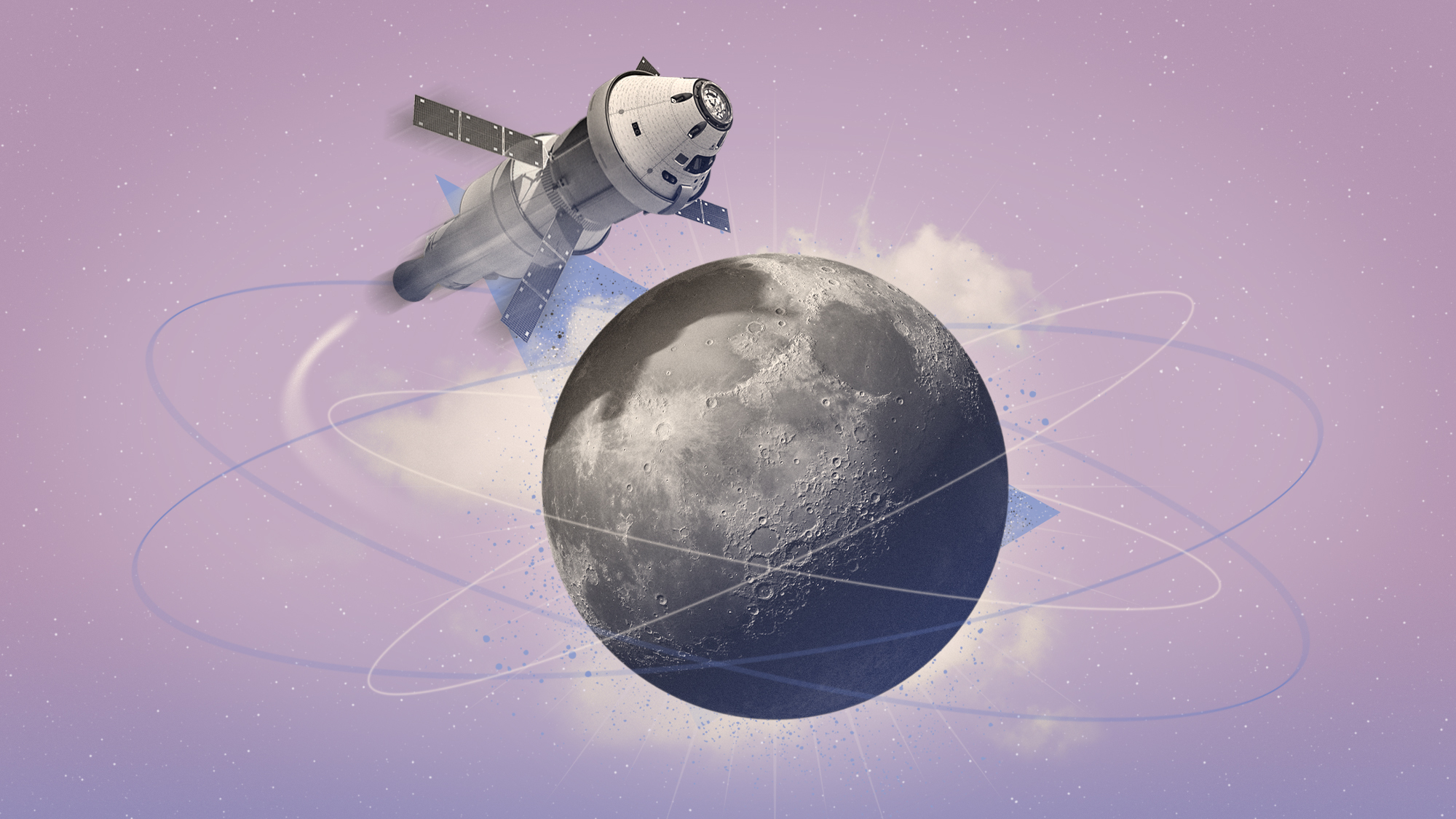
    It’s been a long time coming. No human has ventured into deep space since the final Apollo mission in 1972, but that is about to change. Four astronauts – three Americans and a Canadian – will soon be heading back to the Moon as part of Nasa’s Artemis II programme, possibly as early as 6 February and “no later than April”, according to the space agency. 

    Although they won’t land on our rocky satellite during the 10-day mission, they will pass just a few thousand miles from it, in a mission that promises to unlock valuable lessons for future missions – to the Moon and beyond.

    What is the Artemis programme?
    Artemis began in 2017. Nasa’s aim was to return astronauts to the Moon and ultimately establish a permanent lunar base. In November 2022, Artemis’s Space Launch System rocket – the most powerful rocket ever built by Nasa – and its Orion capsule were launched on a 25-day crewless test flight, Artemis I, that circled the Moon only 80 miles from its surface.

    What is Artemis II’s mission?
    The four astronauts will lift off from Nasa’s Kennedy Space Center in Florida and spend the first two days orbiting the Earth, testing their life-support systems. Then the Orion capsule will fire up its main thruster and shoot off towards the Moon on its 240,000-mile, four-day journey. It will follow a figure-of-eight path, looping around the far side of the Moon, before beginning the four-day return trip and splashing down in the Pacific Ocean.

    The three Nasa astronauts on the mission– Reid Wiseman, Victor Glover and Christina Koch – have travelled to space once before. The fourth astronaut, Canadian Jeremy Hansen, will be on his maiden flight. As well as testing the various systems on board, the crew will be test subjects, helping Nasa to understand the effects that space travel has on their cognition, sleep, stress, immune responses and cardiovascular health.

    What’s the next goal?
    If all goes well, Artemis III will be next. Slated for 2027, the mission would be the first Moon landing and the first chance for a human to walk on the lunar surface since Apollo 17 commander Eugene Cernan left his footprints there more than 50 years ago.


    TODAY’S BIG QUESTION

    How would a UK deployment to Ukraine work?

    The UK and France have made a “genuine step forward” with their pledge to deploy troops to Ukraine in the event of a peace deal with Russia, said Eliot Wilson in The Spectator. The new agreement – along with wider security guarantees from the Coalition of the Willing – has the backing of the Trump administration. But there are some “obvious problems”.

    What did the commentators say?
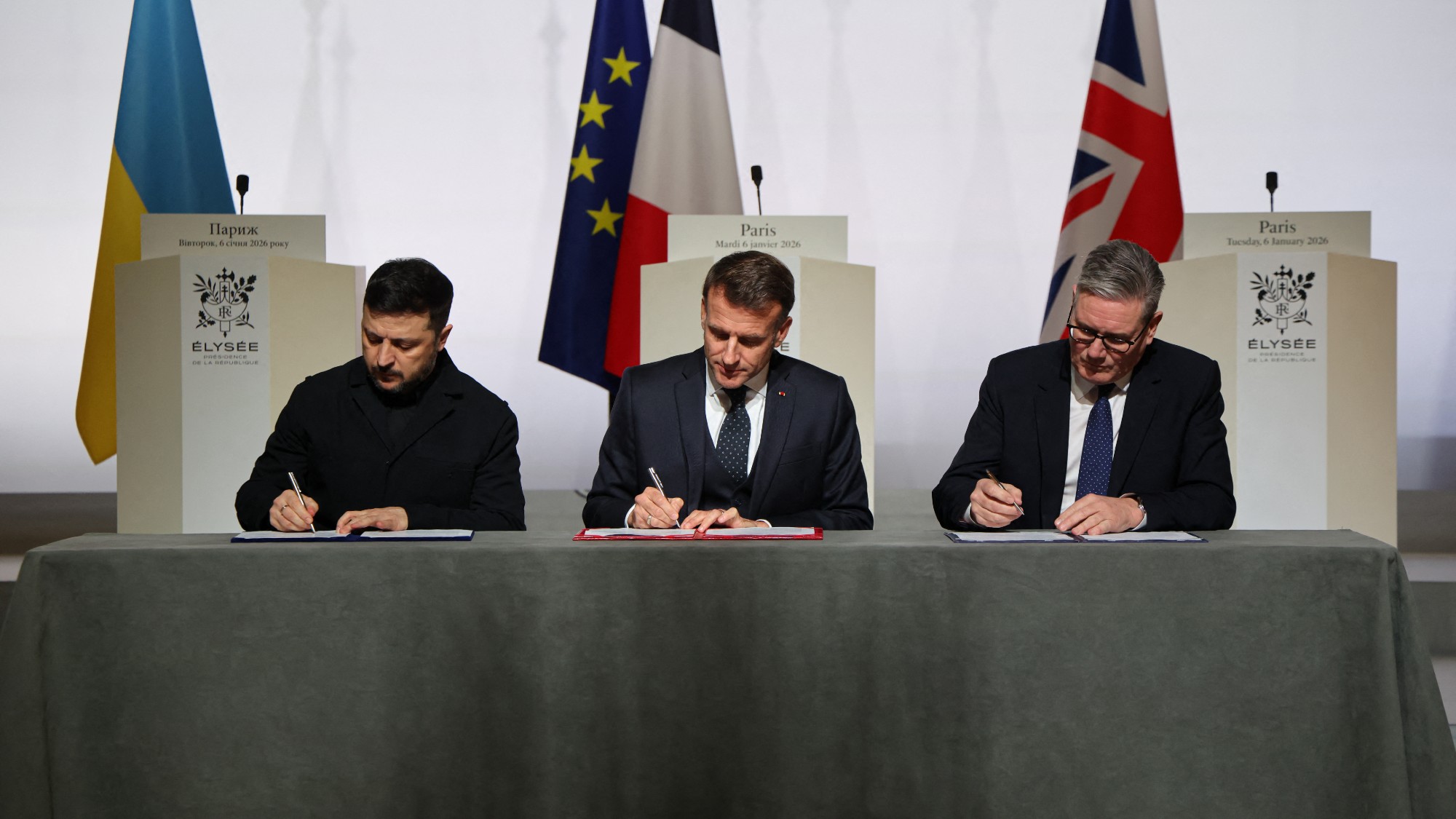
    The announcement from Keir Starmer and Emmanuel Macron in Paris yesterday is “not a magic wand”, said Bel Trew in The Independent. “But it is a key moment.” According to Volodymyr Zelenskyy, France and Britain have already “worked out in detail” the “force deployment”, including “numbers, specific types of weapons, and the components of the armed forces required”. In a possible bid to reassure a wary French public, Macron said that “these are not forces that will be engaged in combat” but rather deployed “away from the contact line” to provide the necessary “reassurance”.

    This “does seem at first glance to be a well-developed framework for ending the conflict in Ukraine”, said The Spectator’s Wilson. But it is “not at all clear that the UK and France have the military resources available to do what they say”. There are “deep divisions” over increased defence spending in France, and “the British army is the smallest it has been since the 1790s”. About 7,500 UK personnel are already deployed internationally and “resources for our leadership of the Nato Multinational Battlegroup in Estonia are stretched”.

    Then there is the lack of public appetite for a prolonged military intervention overseas. Yet Starmer “begins from a stronger position than almost any of his counterparts” in the EU, said George Eaton in The New Statesman. Polls suggest UK voters are “among the most pro-Ukraine in Europe”, although that is “yet to be tested by events”.

    What next?
    Starmer announced this afternoon that MPs would have the opportunity to debate and vote on whether UK troops would be deployed in Ukraine. He told the Commons that any deployment, to “conduct deterrent operations and to construct and protect military hubs”, would only happen after a ceasefire comes into force.

    Vladimir Putin has shown “no sign” that he is “willing to countenance any of this”, said Politico. This week’s potentially game-changing breakthrough does, however, “thrust the ball further into his court”.


    QUOTE OF THE DAY

    “We need to have more, if you will, AI immigrants to help us in the manufacturing floors.”

    Nvidia’s CEO Jensen Huang argues that robots with built-in artificial intelligence could solve the world’s labour shortage problems. Humanoids could one day “do the type of work that maybe we decided not to do anymore”, he told Sky News.


    Poll watch

    Nine in ten Britons support the government’s plan to make drivers over the age of 70 have their eyesight tested every three years. A YouGov survey of 4,324 people found that only 7% were “somewhat” or “strongly” opposed to the mandatory vision checks, while 3% were unsure.


    IN THE SPOTLIGHT

    Nicolás Maduro: from bus driver to president

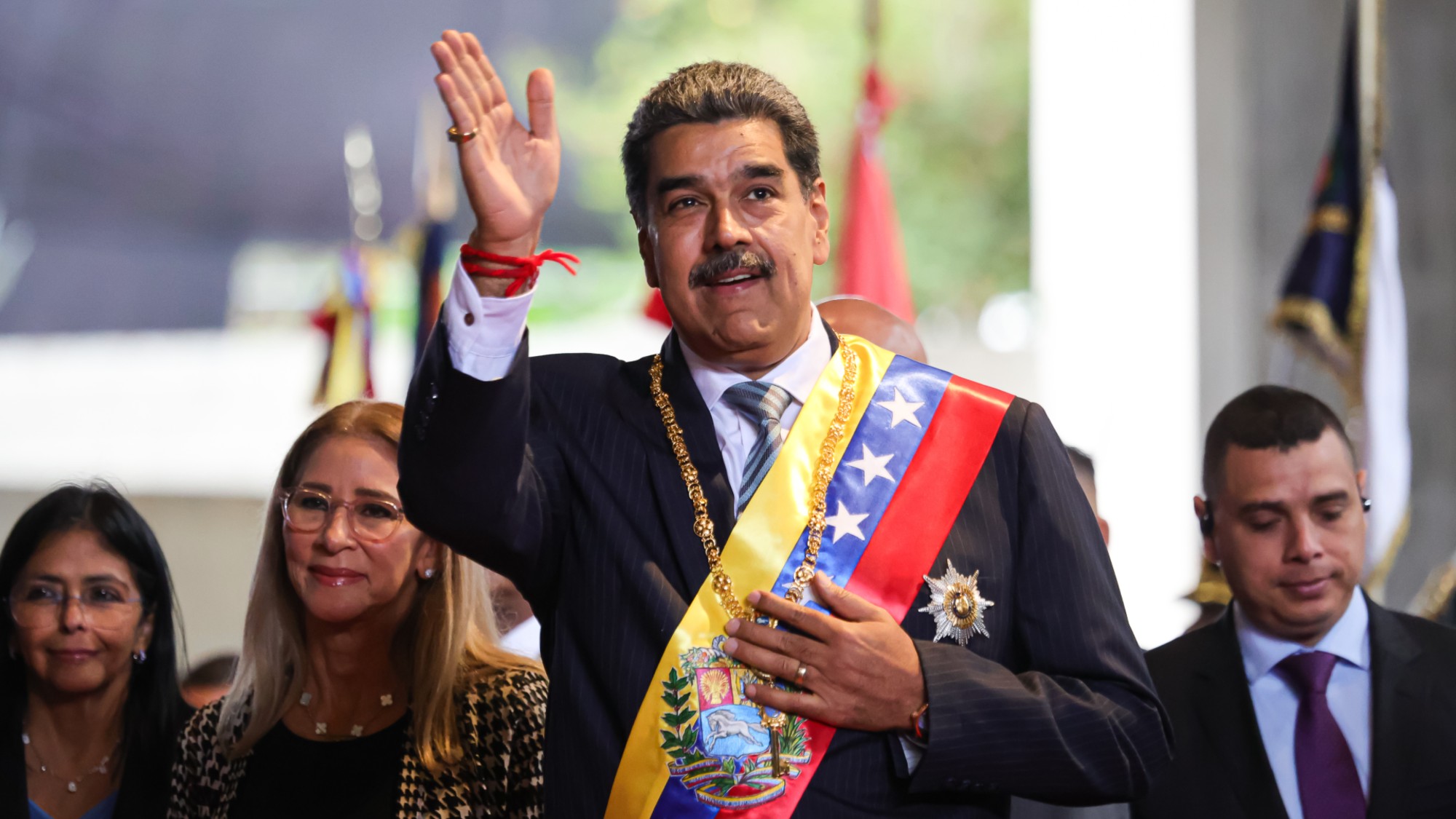
    “I’m a president and prisoner of war,” Nicolás Maduro shouted as he was led out of a New York courtroom in tears on Monday. It was a remarkable fall from grace for the former Venezuelan leader, after he and his wife, Cilia Flores, were captured by US special forces and whisked out of their country to face drug trafficking and weapons charges.

    Humble roots
    Born in 1962 in Caracas to a working-class family, Maduro began his working life as a bus driver in the capital. A member of the Socialist League since his student days, he was an up-and-coming union leader when he met his now wife in the 1990s. Flores would later become the first woman to lead the National Assembly.

    Maduro’s union activities also brought him into contact with the man who became his political mentor: Hugo Chávez. When Chávez took office in 1998, Maduro’s “loyalty, political skill and ideological commitment led to a rapid rise through the ranks of Venezuela’s ruling party”, said Jason Burke in The Guardian. After a stint as foreign minister and then vice president, he emerged from a pool of possible successors when Chávez fell ill with cancer. A month after Chávez’s death in 2013, Maduro narrowly won the presidential election.

    ‘Eccentric’ president
    Almost immediately, Maduro’s presidency was “plunged into crisis”, said The Guardian’s Burke. In a sign of the repressive tactics to come, security forces brutally cracked down on opposition protests, killing 42. Having survived an assassination attempt in 2018, Maduro ran nearly unopposed in the presidential election that year after opposition parties were blocked from the ballot. Some opposition figures were either imprisoned or fled into exile. 

    Over the following years, his “decisions and statements were seen as so eccentric” that Venezuelans had a name for them: “maduradas”, said CNN. Maduro believed that Chávez had appeared to him as a butterfly and that celebrating Christmas two months early might help “lift the spirits of Venezuelans”.

    But, along with allegations of rigged elections and human rights abuses under Maduro’s leadership, Venezuela experienced a “severe economic collapse”, said Modern Diplomacy. Millions of Venezuelans left the country, sparking an ongoing refugee crisis across Latin America. Any hopes of change were dashed in 2024, after another presidential election that was widely denounced as fraudulent.


    Good day 🏯

    … for Japanese aesthetics, which are set to dominate this year’s RHS Chelsea Flower Show. Yohaku no bi (the beauty of empty space) and wabi-sabi (beauty that is imperfect) will be among the Japanese design philosophies behind four of the nine main show gardens at May’s big horticultural event.


    Bad day 💰

    … for prescient gamblers, after prediction market platform Polymarket refused to pay out on millions of dollars’ worth of bets on a US invasion of Venezuela. Traders had placed more than $10.5 million on it happening this year, but the New York-based site said Nicolás Maduro’s capture did not qualify as an invasion.


    picture of the day

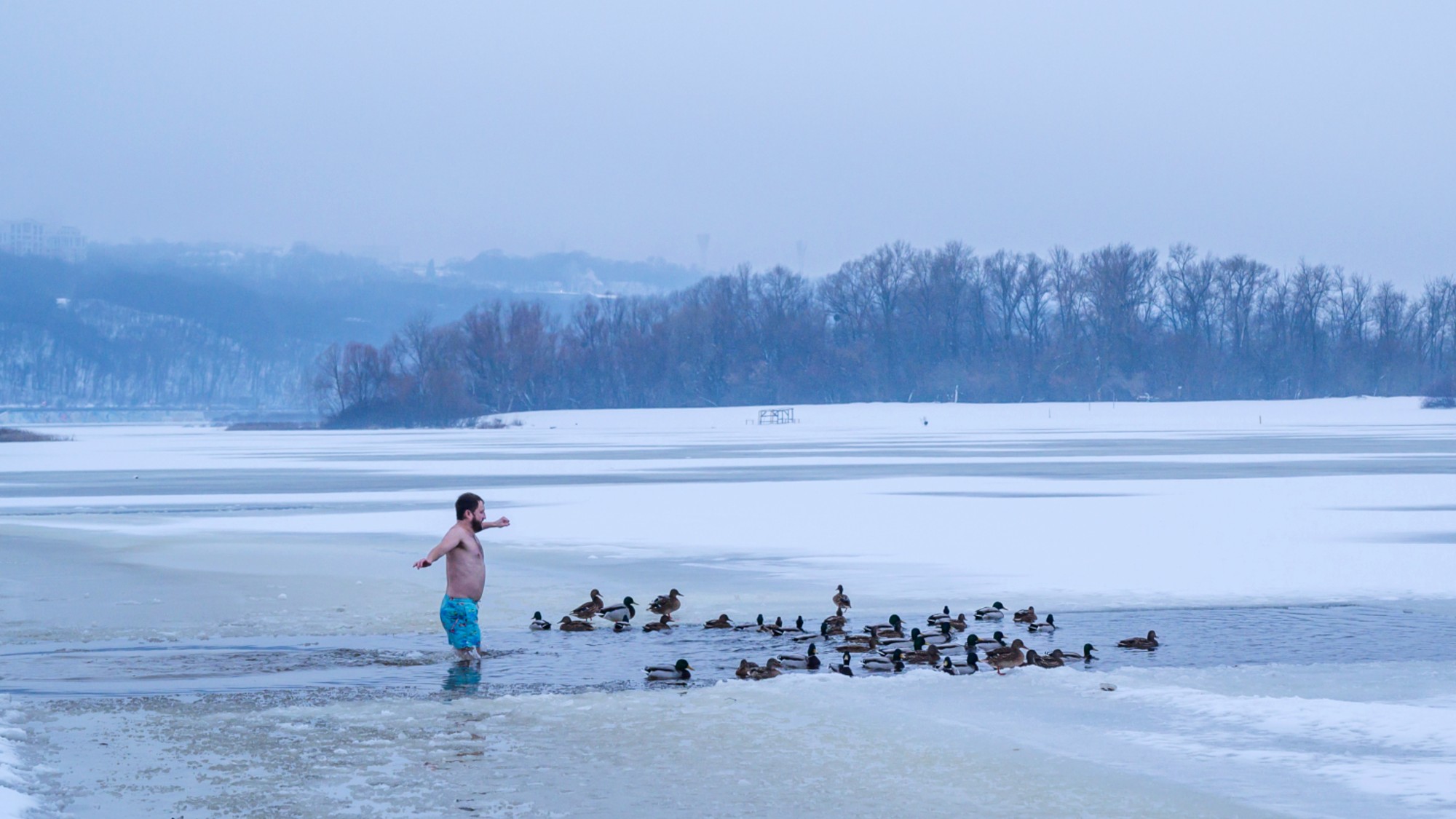
    Ducks and dives

    A man wades into Kyiv’s Dnipro River to mark the Christian festival day of Epiphany. Thousands of people plunge into icy waters across Ukraine during the annual celebration of Jesus’ baptism in the Jordan River.

    Artem Gvozdkov / Global Images Ukraine / Getty Images


    Puzzles

    Guess the number

    Try The Week’s new daily number challenge in our puzzles and quizzes section

    Play here


    THE WEEK RECOMMENDS

    The Night Manager: a ‘classy’ follow-up

    “Meddling with perfection is a risky proposition,” said Christopher Stevens in the Daily Mail. When “The Night Manager” first hit the small screen in 2016, the “sublime espionage thriller” was praised by many as “the best Le Carré adaptation in decades”. Another season seemed “inevitable”.

    The follow-up is finally here and, judging by the first few episodes, this is “another classy thriller”, said Anita Singh in The Telegraph, “albeit suffering from the lack of Hugh Laurie as cold-blooded arms dealer Richard Roper and Tom Hollander as his scene-stealing sidekick, Corky”.

    Picking up a few years after the events of the first series, Jonathan Pine (Tom Hiddleston) is still haunted by his mission that brought down Roper. Now, he is trying to live a quiet life, running an unglamorous subdivision of MI6 – the Night Owls – dedicated to the nocturnal surveillance of luxury hotels. But after spotting a familiar face, he ends up infiltrating a Colombian drugs cartel.

    Teddy Dos Santos (Diego Calva) is a “much more generic antagonist” than Roper, and the show “loses its naughty glint when Pine isn’t directly up against other members of the British upper classes”, said Jack Seale in The Guardian. There is also something “fundamentally gauche” about the way the second season attempts to replicate the “dynamic” of the first. Still, it “floats far above most of the competition”.

    There is “much to be admired”, said Nick Hilton in The Independent. “The pace, the intrigue, the sly sexiness; all are retained.” At the end of the first two episodes, I was keen to see more. “That’s the sign of good TV.”


    Statistic of the day

    £4 million: The annual upkeep cost of a UK prison that hasn’t held any inmates for a year and a half. More than 600 prisoners were moved out of HMP Dartmoor in July 2024, after high levels of radioactive radon gas were detected, but the 11-year lease on the empty jail doesn’t end until 2033.


    instant opinion

    Today’s best commentary

    America’s imperial fights are not necessarily ours
    Andrew Marr in The New Statesman
    The “illusion” of a global peace backed by “international law” is “shattered”, writes Andew Marr. The “pretence that small, weak” states are sovereign is “gone”, and “we are back in a world where missiles and attack helicopters trump law”, and national borders are “altered by force”. We “must look after ourselves” by rearming and radically “recasting” our stance to the US. “As Keir Starmer discovered when forced to choose over Greenland, we are Europeans first.”

    This is the year we’ll see Kemi Badenoch at her best
    Alice Thomson in The Times
    Last summer, it looked like Kemi Badenoch had “reached her sell-by date”, writes Alice Thomson, but now “the woman who hates sandwiches is gaining a fanbase”. The Tory leader has “started to say what she really” thinks and is going “for the jugular” in the Commons. She’s “turned her fortunes round” by working out “where her boundaries lie” and shaping herself into a “pragmatist, not a populist”. Badenoch is “clearly beginning to enjoy the job”.

    My one wish for the year: let me be fat in peace
    Kate Lister in The i Paper
    After “weeks of eating selection boxes for breakfast and brushing our teeth with Baileys”, the pressure is on “to detox, dry out” and “become better human beings”, writes Kate Lister. But we could just “stick two fingers up” at the “new year, new you” slogans. “Given the terrifying state” of world politics as 2026 gets going, “just making it out sane will be an accomplishment, bollocks to being thinner as well”.


    word of the day

    Carnyx

    A Celtic war trumpet used by tribes to “intimidate their enemies” and “inspire and direct warriors during battle”, said the BBC. Archaeologists have unearthed the most complete carnyx “ever found in Europe”, at a Norfolk site near Thetford. The discovery, featuring in BBC Two’s “Digging for Britain” next week, “will reshape our view of sound and music in the Iron Age”, said National Museums Scotland curator Fraser Hunter.


    Evening Review was written and edited by Hollie Clemence, Rebecca Messina, David Edwards, Elliott Goat, Chas Newkey-Burden, Irenie Forshaw, Helen Brown, Natalie Holmes, Adrienne Wyper and Kari Wilkin, with illustrations from Stephen Kelly.

    Image credits, from top: illustration by Stephen Kelly / Getty Images; Ludovic Marin / Pool / Getty Images; Jesus Vargas / Getty Images; Artem Gvozdkov / Global Images Ukraine / Getty Images; BBC / Ink Factory / Des Willie

    Morning Report and Evening Review were named Newsletter of the Year at the Publisher Newsletter Awards 2025
     

    Recent editions

    • Morning Report

      Britain signs deal to deploy troops to Ukraine

    • Evening Review

      Would Europe defend Greenland?

    • Morning Report

      Maduro’s ‘humbling moment’

    VIEW ALL
    TheWeek
    • About Us
    • Contact Future's experts
    • Terms and Conditions
    • Privacy Policy
    • Cookie Policy
    • Advertise With Us
    • FAQ
    Add as a preferred source on Google

    The Week UK is part of Future plc, an international media group and leading digital publisher. Visit our corporate site.

    © Future Publishing Limited Quay House, The Ambury, Bath BA1 1UA. All rights reserved. England and Wales company registration number 2008885.