The Week The Week
flag of US
US
flag of UK
UK
https://cdn.mos.cms.futurecdn.net/skoGBi9qKFoUtnNWkovjJQ.jpg

SUBSCRIBE

Try 6 Free Issues

Sign in
  • View Profile
  • Sign out
  • The Explainer
  • Talking Points
  • The Week Recommends
  • Podcasts
  • Newsletters
  • From the Magazine
  • The Week Junior
  • More
    • Politics
    • World News
    • Business
    • Health
    • Science
    • Food & Drink
    • Travel
    • Culture
    • History
    • Personal Finance
    • Puzzles
    • Photos
    • The Blend
    • All Categories
  • Newsletter sign up Newsletter
  • WeekDay AM: 10 Things you need to know this morning
    Reining in Grok, Trump to meet Machado, and the discovery of ‘Port Talbot’s Pompeii’

     
    today’s technology story

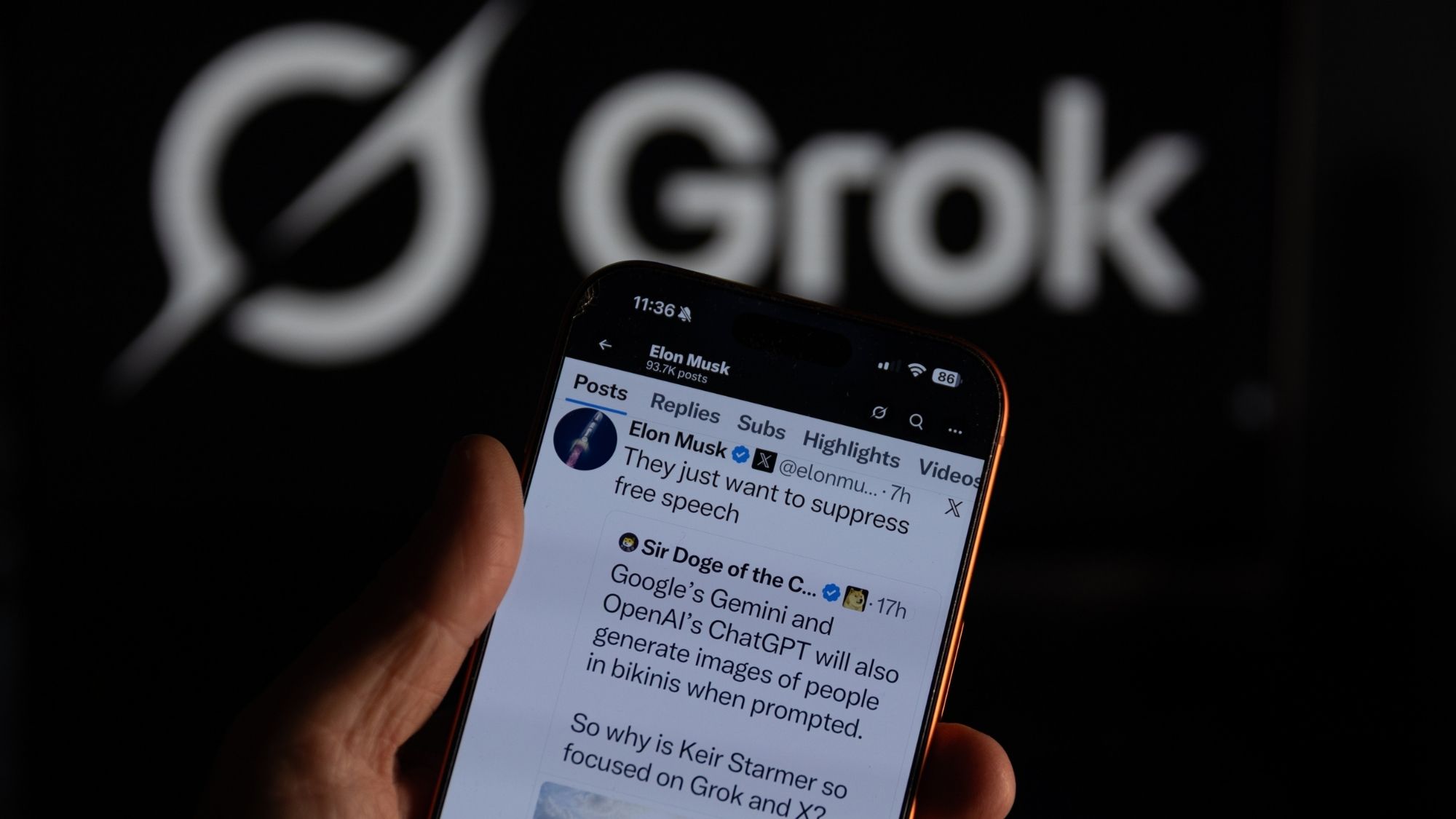
    Starmer vows ‘fast action’ to end Grok abuse

    What happened
    The prime minister has warned that the UK will intervene rapidly if X fails to rein in misuse of its AI chatbot, Grok, after reports that the tool is being used to create sexualised images of women and children. The intervention came as Ofcom opened a formal investigation into whether the platform has breached UK online safety laws. 

    Who said what
    Addressing Labour MPs, Keir Starmer condemned the behaviour linked to Grok and issued a direct warning to Elon Musk: “If X cannot control Grok, we will – and we'll do it fast because if you profit from harm and abuse, you lose the right to self-regulate.” 

    This “flurry of nonconsensual imagery” is the “predictable outcome of the combination of X’s lax content moderation policies and the accessibility of powerful generative AI tools”, said law professor Wayne Unger on The Conversation. This is “not the first time that critics have called for a ban on X” in the UK, said Albert Toth in The Independent. However, new powers given to Ofcom under the Online Safety Act at the end of March 2025 “mean it now has a greater ability to act on unlawful content, especially where it relates to children’s safety”.

    What next? 
    Ofcom will assess whether X met its legal duties to protect UK users, with potential sanctions to follow. Ministers have signalled support for tough penalties, while some opposition figures have warned against banning the platform on free speech grounds.


    today’s international story

    Trump set to meet Venezuela’s Machado

    What happened
    Venezuelan opposition figure and Nobel Peace Prize recipient María Corina Machado is due to visit the White House on Thursday for talks with Donald Trump. The meeting follows the recent removal of Nicolás Maduro in a US-led operation in Caracas. Despite Machado’s prominence and her bloc’s claim of winning the disputed 2024 election, Washington has not recognised her as Venezuela’s new leader. Instead, the US has thrown its support behind Delcy Rodríguez, Maduro’s loyal vice president, as interim leader. “So, rather than bringing regime change”, Trump is now “propping up the Maduro regime from Washington”, said human right lecturer Luis Gómez Romero on The Conversation.

    Who said what
    Machado has said she wants to thank Trump for the action against Maduro and has floated the idea of offering him her Nobel Prize, a gesture Trump called “a great honour,” though the Nobel Committee later said the award could not be passed on. 

    What next?
    Some “GOP hawks” have “pushed for a faster timeline for elections in Venezuela” after Trump suggested that the US could run the country for several years, said Jacob Wendler on Politico. Asked about Machado’s role in Venezuela’s future, Trump said: “She might be involved in some aspect of it,” adding: “I will have to speak to her.” 


    Today’s archaeology story

    Vast Roman villa found under Welsh park

    What happened
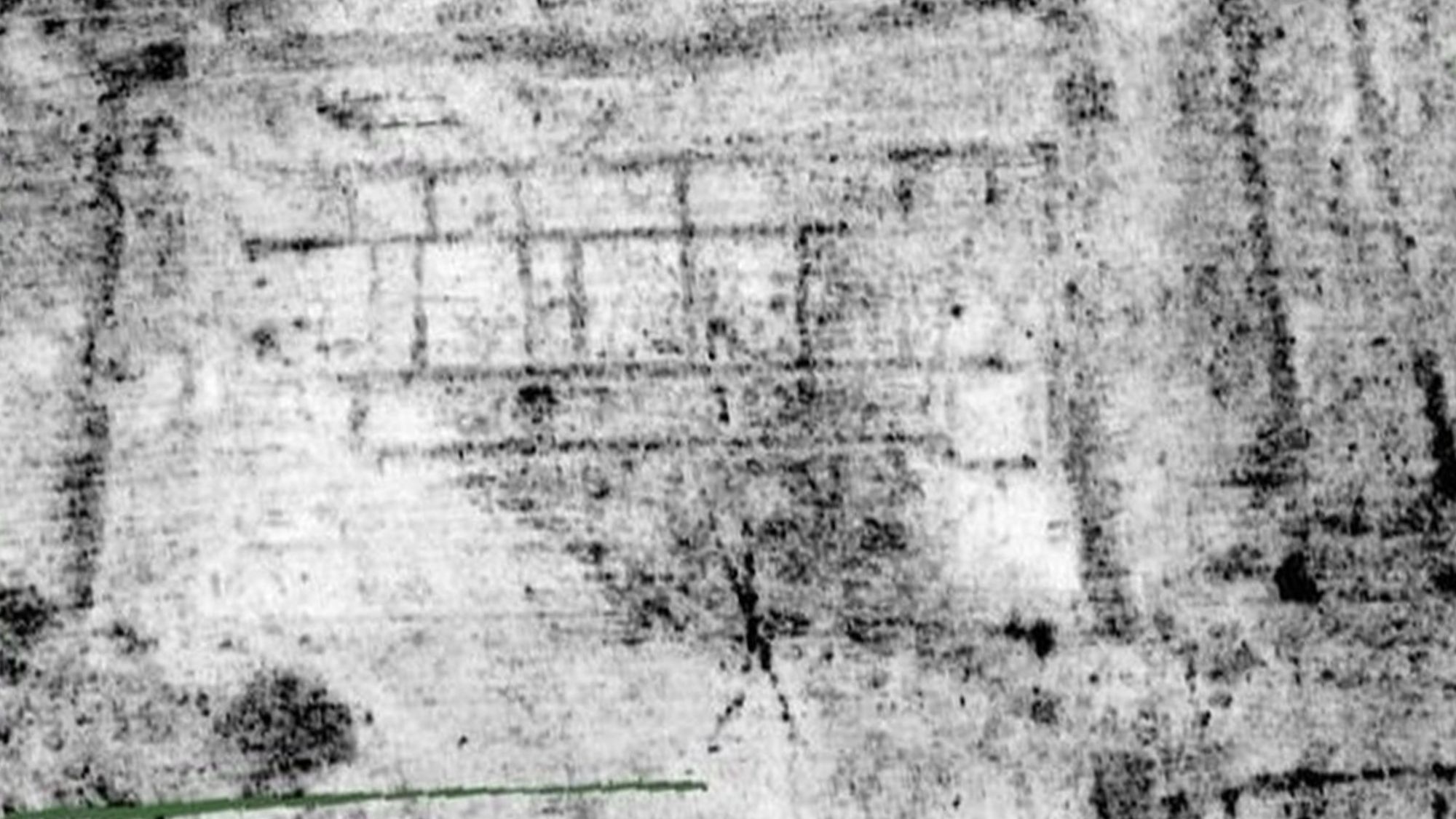
    Archaeologists have discovered the largest Roman villa ever found in Wales, which they say has the potential to be “Port Talbot’s Pompeii”. The villa’s remains – which sit less than one metre below the surface – look to be well preserved, and were found in an historical deer park.

    Who said what
    Comprising eight rooms, two wings and a veranda in a 572 square metres, the site would have “almost certainly” been home to a “major local dignitary”, project lead Dr Alex Langlands told the BBC. With most discoveries in Wales linked to the military – comprising camps and forts – a site of this calibre is something of a rarity.

    The discovery is “just incredible” and “something we couldn't dream of”, said Harriet Eaton, Heritage Education Officer for Neath Port Talbot council. “It would be fantastic if there was a community excavation here”, giving local people a “hands on connection” to the history of their area, and inspire people to get involved.

    What next?
    The villa’s exact location is being kept secret until an official announcement is made, over fears it could be targeted by scavengers, who could disturb the site.


    It’s not all bad

    Doctors say a simple, low-cost gel injection could restore sight for people around the world after Nicki Guy, one of several patients in a pioneering trial, regained her vision following treatment in London. Specialists at Moorfields Eye Hospital used a clear surgical gel to stabilise eye pressure in a small group of patients with severe vision loss. Clinicians say early results across the group are encouraging, suggesting the approach could offer a safer, more accessible alternative to existing treatments and potentially transform care globally.


    under the radar

    Nasa discovers ‘resilient’ microbes in its cleanrooms

    Spacecraft are built inside tightly controlled “cleanrooms” designed to keep out dust and microbes that could contaminate missions. However, scientists have now identified 26 previously unknown species of bacteria inside Nasa’s Kennedy Space Center in Florida, showing that even the most sterile environments are not completely free of life.

    Nasa’s cleanrooms have “stringent controls such as regulated airflow, temperature management and rigorous cleaning,” said a study published in the journal Microbiome. But these previously unidentified bacteria “resist cleaning chemicals and cling to sterile surfaces by producing sticky films,” said Nature. Many also have “genes that protect their DNA from radiation damage, while some have genes that help control cell repair under oxidative stress.” 

    As a result, these “resilient microorganisms” pose “potential risks for space missions,” said Microbiome. One of the bacteria, Tersicoccus phoenicis, is capable of playing dead to survive stressors. While dormant, it “can’t be detected by the usual method of swabbing surfaces,” said Scientific American. That means it could “theoretically sneak aboard spacecraft that are supposed to be free of Earth contaminants.” 

    Any microbe “capable of slipping through standard cleanroom controls could also evade the planetary-protection safeguards meant to prevent Earth life from contaminating other worlds,” said Live Science. Still, these findings “not only raise important considerations for planetary protection but also open the door for biotechnological innovation,” said study author Junia Schultz. However you look at it, “identifying these unusually hardy organisms and studying their survival strategies matters,” said Live Science.


    on this day

    13 January 2000

    Microsoft chairman Bill Gates steps aside as chief executive and promotes company president Steve Ballmer to the position. This week, it was revealed from tax filings that the billionaire paid out £5.9 billion to his ex-wife Melinda French Gates’s private foundation. The payment, made in 2024 as part of their $76 billion divorce settlement, is “believed to be one of the biggest charitable donations in history”, said The Times.


    Today’s newspapers

    ‘Social media ban’

    “UK under-16s could be banned from social media within months”, says The i Paper. The Telegraph reports on the “China embassy’s secret threat to the City”, revealing a “hidden” chamber. “Former Fed chiefs attack ‘emerging market-style’ investigation of Powell”, the Financial Times says. “Crash! Gangs walloped”, says Metro, joining the Met police in a dawn drug raid. “Bin Diesel”, The Sun says, citing a report that diesel will start vanishing from pumps within four years.

    See the newspaper front pages


    tall tale

    Clapping back at crime

    An Oxford city councillor has adopted a traditional Japanese ritual to ward off vandals in his local area of Littlemore, said The Times. Three times a week, David Henwood uses the Japanese musical instrument “hyoshigi” – two pieces of wood banged together – which emits an “unsettling” and “sharp” sound on patrols. Met with an “overwhelmingly positive” reception from local residents, Henwood claims the number of reported tyre slashings had “dramatically gone down” since his initiative. Thames Valley police, however, don’t quite chime with his theory, saying that Littlemore was “safe” and “there is no need for vigilantism”.


    Morning Report was written and edited by Arion McNicoll, Will Barker, Devika Rao, Ross Couzens, and Chas Newkey-Burden, with illustrations by Julia Wytrazek.

    Image credits, from top: Anna Barclay / Getty Images; Lars Martin Hunstad / Bloomberg via Getty Images; Swansea University; Illustration by Julia Wytrazek / Getty Images.

    Morning Report and Evening Review were named Newsletter of the Year at the Publisher Newsletter Awards 2025
     

    Recent editions

    • Evening Review

      What are Donald Trump’s options in Iran?

    • Morning Report

      Iran warns US as protest death toll mounts

    • Sunday Shortlist

      Sydney Sweeney’s enjoyably ‘pulpy’ thriller

    VIEW ALL
    TheWeek
    • About Us
    • Contact Future's experts
    • Terms and Conditions
    • Privacy Policy
    • Cookie Policy
    • Advertise With Us
    • FAQ
    Add as a preferred source on Google

    The Week UK is part of Future plc, an international media group and leading digital publisher. Visit our corporate site.

    © Future Publishing Limited Quay House, The Ambury, Bath BA1 1UA. All rights reserved. England and Wales company registration number 2008885.