The Week The Week
flag of US
US
flag of UK
UK
https://cdn.mos.cms.futurecdn.net/flexiimages/jzblygzdxr1769609154.gif

SUBSCRIBE

Try 6 weeks free

Sign in
  • View Profile
  • Sign out
  • The Explainer
  • Talking Points
  • The Week Recommends
  • Podcasts
  • Newsletters
  • From the Magazine
  • The Week Junior
  • More
    • Politics
    • World News
    • Business
    • Health
    • Science
    • Food & Drink
    • Travel
    • Culture
    • History
    • Personal Finance
    • Puzzles
    • Photos
    • The Blend
    • All Categories
  • Newsletter sign up Newsletter
  • WeekDay AM: 10 Things you need to know this morning
    Reform’s ‘shadow cabinet’, Chinese robots, and Olympic timekeepers

     
    today’s politics story

    Reform vows to axe Equality Act amid ‘shadow’ launch

    What happened
    Reform UK has pledged to abolish the Equality Act immediately if it wins the next general election. Suella Braverman, who recently joined the party from the Conservatives, said the legislation would be removed on the first day of a Reform government. The 2010 law enables individuals to pursue discrimination claims based on protected traits such as race, age and sexual orientation. Braverman also promised to introduce sweeping changes to schools and universities, including a curriculum centred on national pride and the prohibition of gender transitioning in classrooms. The announcements came as Nigel Farage revealed a slate of senior figures in newly styled “shadow” roles.

    Who said what
    Braverman argued that Britain was being “ripped apart by diversity, equality and inclusion” policies. Critics from the Conservatives labelled Reform’s new team “underwhelming”, while Labour accused Reform of recycling “failed Tories”.

    Farage’s struggle to balance his “loyalist impulse and visionary ambition was on awkward display at the unveiling of his top team” yesterday, said Sherelle Jacobs in The Telegraph. Reform UK “still lacks a mature political prospectus”, said The Times’s editorial board. “­Despite recent defections, its upper echelons are still short on talent.”

    What next?
    Braverman’s plans have been “heavily criticised by equalities charities and lawyers”, said The Independent. Jo Maugham KC, executive director of the Good Law Project, accused her of “pitching for the votes of misogynists, homophobes”.


    today’s crime story

    Child abuse crimes surge across the UK

    What happened
    The number of child sexual abuse offences being committed in the UK has escalated sharply, according to the National Crime Agency (NCA). About 1,000 suspected offenders are being detained each month while the number of children placed under protection has climbed by half over the past five years. Investigators say tip-offs relating to individuals seeking to harm children have increased tenfold in a decade, with more than 33,000 intelligence reports recorded last year. Officers warn that online platforms are being used to identify and exploit victims, with livestreamed abuse reportedly available for as little as £20.

    Who said what
    Rob Jones, the NCA’s director general of operations, said the rise across all indicators “really worries us”, adding: “The threat is getting worse despite our best efforts.”

    There is “barely concealed annoyance in UK law enforcement at the perceived lack of action by tech companies while children suffer”, said Vikram Dodd in The Guardian.

    What next?
    Jones said images that are already circulating, which accounts for the majority of such abuse, could be spotted by tech companies and taken down. “They could stop a lot more.”


    Today’s tech story

    Robots steal spotlight at China’s Spring Festival Gala

    What happened
    China’s annual Spring Festival television spectacular placed robotics centre stage this year, turning the broadcast into a high-profile technology showcase. The programme, staged by the China Media Group and known as the Spring Festival Gala, drew 677 million live viewers, with billions more online interactions. Building on last year’s popular appearance by mechanical dancers, the 2026 edition featured robots performing comedy sketches, martial arts routines and choreographed numbers alongside children.

    Who said what
    This was an “effort to showcase its technological might to the West”, said James Titcomb in The Telegraph. China’s “growing prowess in humanoid robotics has raised security concerns”. The US think tank Rand warned last year that Beijing’s advances in the sector could lead to “dependence on Chinese robotics firms for this critical dual-use technology”.

    What next?
    The display wasn’t “just for fun”, said Richard Spencer in The Times. The importance of the gala, annually the most-watched show in the world, “is such that the companies behind the robots paid tens of millions of yuan for the chance to show off their wares”.  E-commerce platform JD.com said online searches for robots had jumped 300% within two hours of the broadcast.


    It’s not all bad

    A new app called Birdex is turning birdwatching into a points-based game, rewarding users with digital cards for spotting UK species. Rarer birds earn higher scores and friends can compete over sightings. Co-developer Harry Scott said the aim was to have younger people engage with nature. “I think birdwatching and Pokémon do share a lot of similarities,” he said. More than 200,000 birds have already been logged, although some users have criticised the app’s AI-generated artwork.


    under the radar

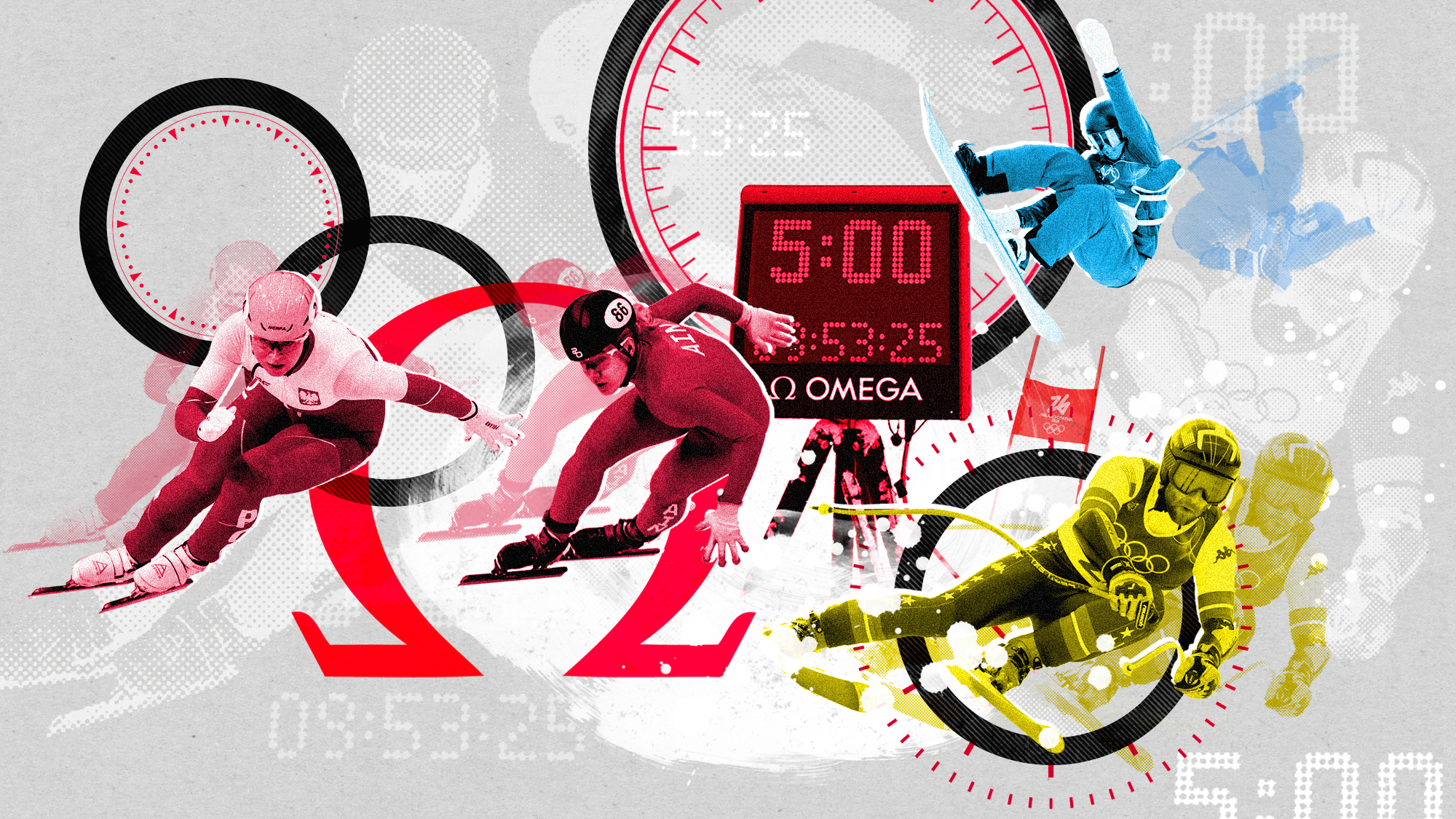
    The Olympic timekeepers keeping the Games on track

    In an Olympic event as fast as downhill skiing or speed skating, the margin between winners and losers can be measured by thousandths of a second.

    Careers are “forever altered by that tiny difference”, said NBC News. There is a “baseline expectation” that “every result must be perfect”. And that is “determined by the most important team at the Olympics you don’t know about”: the timekeepers.

    Swiss watchmaker Omega has been the official timekeeper of every Olympic event for nearly 100 years. It was initially chosen for the role at the 1932 Los Angeles games because it was the only watch brand capable of providing accurate timing to the nearest tenth of a second.

    The company dispatched one “intrepid watchmaker” from its Swiss headquarters with 30 high-precision stopwatches in his suitcase, said The Times. “Each night he would take the stopwatches back to his hotel room and recalibrate them before handing them back to race officials the next morning.”

    The intervening years have, of course, seen “extraordinary technical developments”. Omega arrived in Paris for the 2024 Summer Games with “the most advanced tech it has ever delivered”: 350 tonnes of equipment, including 200km of cables, hundreds of scoreboards and 550 professional timekeepers.

    Yet despite all the tech, the final call is still human. Even today an operator looks at a monitor with footage from the finish line cameras and “manually places a cursor where the athlete crosses the finish”, said NBC News.


    on this day

    18 February 2006

    American speed skater Shani Davis became the first Black athlete to win an individual Winter Olympics gold medal at the Turin Games. This week Team USA bobsledder Elana Meyers Taylor became the most medalled Black athlete in Winter Games history, winning her sixth Olympic medal – and first gold – in the monobob.


    Today’s newspapers

    ‘No laughing matter’

    “Reform jokers are dangerous”, says The Mirror, describing the party’s new shadow cabinet as “no laughing matter”. The Times says that “Labour may drop youth wage pledge to boost jobs”. A “third police force examines Andrew’s links to Epstein”, says The i Paper. the Daily Mail says “pressure” is piling on Andrew as a “fourth police force probes Epstein claims”. The Guardian pays tribute to Jesse Jackson, who has died at 84, saying: “We stood on his shoulders”.

    See the newspaper front pages


    tall tale

    Hiss and run

    A bride-to-be posed as a mythical snake in order to avoid an arranged marriage in Uttar Pradesh, India, according to the Deccan Herald. The unnamed woman left the shed skin of a snake and some bangles on her bed in an apparent reference to “ichchadhari nagin”, a shape-shifting folkloric creature that can appear as a woman or a serpent. Locals went to the house to “perform rituals and offer prayers”. Meanwhile, the woman had eloped with her preferred suitor.


    Morning Report was written and edited by Arion McNicoll, Harriet Marsden, Will Barker, Ross Couzens and Chas Newkey-Burden, with illustrations by Marian Femenias-Moratinos.

    Image credits, from top: Leon Neal / Getty Images; Thomas Trutschel / Photothek / Getty Images; China Central Television; Illustration by Marian Femenias-Moratinos / Getty Images.

    Morning Report and Evening Review were named Newsletter of the Year at the Publisher Newsletter Awards 2025
     

    Recent editions

    • Evening Review

      How poison became Russia’s weapon of choice

    • Morning Report

      Starmer faces backlash after council election U-turn

    • Evening Review

      One man’s terrorist is another’s pensioner with a placard

    VIEW ALL
    TheWeek
    • About Us
    • Contact Future's experts
    • Terms and Conditions
    • Privacy Policy
    • Cookie Policy
    • Advertise With Us
    • FAQ
    Add as a preferred source on Google

    The Week UK is part of Future plc, an international media group and leading digital publisher. Visit our corporate site.

    © Future Publishing Limited Quay House, The Ambury, Bath BA1 1UA. All rights reserved. England and Wales company registration number 2008885.