The Week The Week
flag of US
US
flag of UK
UK
https://cdn.mos.cms.futurecdn.net/skoGBi9qKFoUtnNWkovjJQ.jpg

SUBSCRIBE

Try 6 Free Issues

Sign in
  • View Profile
  • Sign out
  • The Explainer
  • Talking Points
  • The Week Recommends
  • Podcasts
  • Newsletters
  • From the Magazine
  • The Week Junior
  • More
    • Politics
    • World News
    • Business
    • Health
    • Science
    • Food & Drink
    • Travel
    • Culture
    • History
    • Personal Finance
    • Puzzles
    • Photos
    • The Blend
    • All Categories
  • Newsletter sign up Newsletter
  • WeekDay AM: 10 Things you need to know this morning
    Jenrick joins Reform, Trump’s military threat, and the ‘eclipse of the century’

     
    today’s politics story

    Jenrick defects to Reform

    What happened
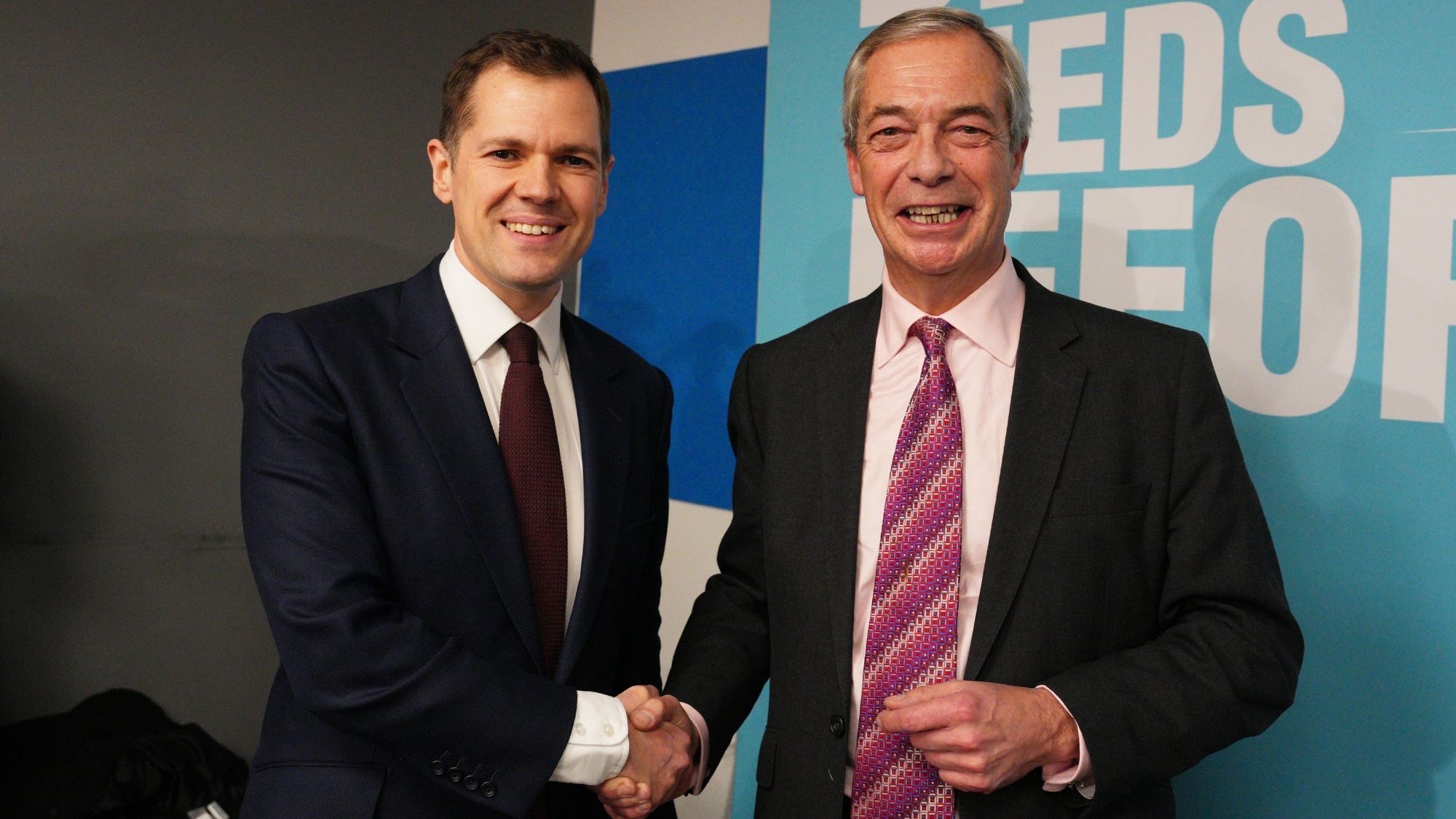
    Robert Jenrick has left the Conservatives to join Reform UK, marking the highest-profile switch yet from the opposition front bench to Nigel Farage’s party. The move followed his removal from the shadow cabinet by Kemi Badenoch earlier yesterday, after she stripped him of the party whip and suspended his membership due to her suspicions he was planning to defect.

    Who said what
    At a Westminster appearance alongside Farage, Jenrick launched “excoriating attacks” on the Conservatives, said Jack Elsom in The Sun. He said his former party “isn’t sorry, it doesn’t get it, it hasn’t changed, it won’t change, it can’t change” and added: “I can’t in good conscience stick with a party that has failed so badly.” Farage welcomed the switch, joking it was “the latest Christmas present I’ve ever had”. 

    Jenrick’s departure “marks the start of the Conservatives’ fight to the death with Farage’s Reform”, said Simon Walters in The Independent. But “Farage may regret this dalliance”, said Kevin Maguire in The Mirror. Reform demonstrating it is a “Tory Party Mk II, hoovering up failed, disillusioned and bitter Conservatives, is a gift for Labour in working class areas”.

    What next? 
    Reform plans to assign roles to senior figures in coming weeks, though Jenrick denied seeking leadership ambitions. Badenoch, speaking in Scotland, dismissed the defection, saying: “Robert Jenrick is not my problem any more. He’s Nigel Farage’s problem now.”


    today’s international story

    Minnesota unrest sparks Trump military threat

    What happened
    Minnesota’s governor, Tim Walz, appealed for calm after another confrontation between protesters and federal agents in Minneapolis intensified an already volatile situation. A second shooting involving a federal officer in a week sparked renewed clashes last night, prompting Donald Trump to say he was weighing the use of the Insurrection Act. The law would allow the deployment of US troops domestically, escalating a standoff driven by protests against Immigration and Customs Enforcement operations in the state.

    Who said what
    Walz called on demonstrators to remain non-violent and asked the president to “turn the temperature down” and “stop this campaign of retribution”. The White House rejected that appeal, with senior officials accusing state and local leaders of enabling unrest. 

    Last month the US Supreme Court refused to let President Trump deploy National Guard troops in Illinois, but that “rare loss” may have made Trump “more apt to invoke the greater powers” of the Insurrection Act, said Adam Liptak in The New York Times.

    What next?
    Federal authorities have detained several people following the latest shooting, though no federal charges have been laid so far. Families of those killed are pursuing independent inquiries, while some schools have shifted online as officials brace for further unrest.


    Today’s space story

    Nasa stages first-ever ISS medical evacuation

    What happened
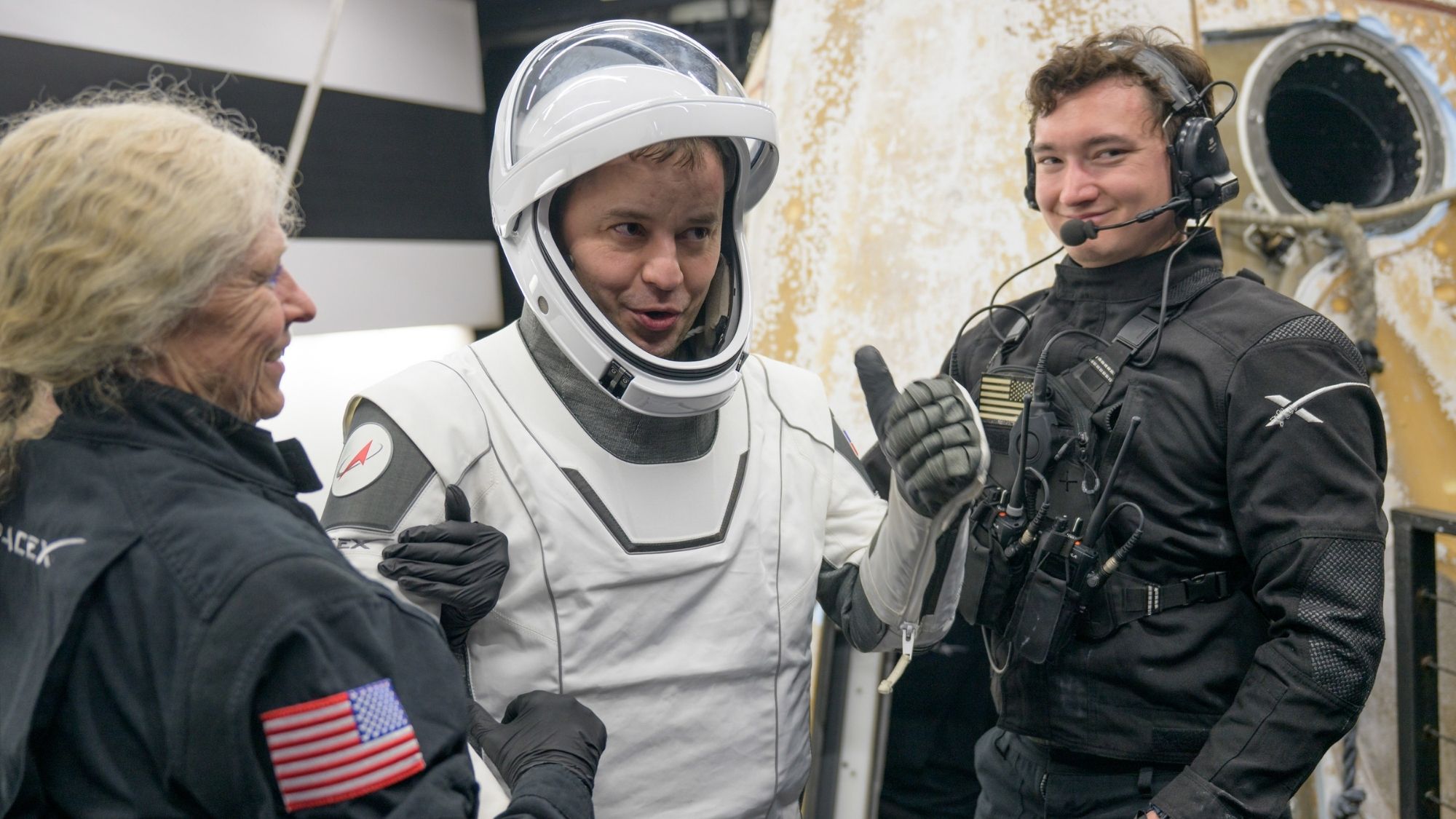
    An astronaut suffering a “serious medical condition” and his colleagues have been brought back to Earth, in the world’s first emergency evacuation space flight. The crew of four returned from the International Space Station early yesterday morning, splashing down safely off the coast of San Diego, California.

    Who said what
    Nasa administrator Jared Isaacman said the crew was “safe” and in “good spirits”. The astronaut is “doing fine”, and an update on their health will be given “when it is appropriate”, he told a press conference. 

    The medical incident began on 7 January, prompting Nasa to cancel the next day’s spacewalk. Nasa then decided to bring Crew-11 crew home “about a week ago”, said deputy associate administrator Joel Montalbano.  Crew commander Mike Fincke said the early return was “bittersweet”.

    Officials haven’t revealed which astronaut had the problem, or what it was, citing medical privacy. But “it was serious enough” to bring them home a month early, said Sky News’ science correspondent Thomas Moore.

    What next?
    A skeleton crew of three remains on the ISS and will keep essential services running until a SpaceX launch brings four more astronauts in mid-February for a six-month mission.


    It’s not all bad

    The Eurovision song contest will mark its 70th anniversary with its first-ever live tour, organisers have announced. Running from mid-June to early July, the tour will feature past Eurovision favourites alongside performers from the 2026 contest. Ten cities, including London and Paris, will host shows celebrating seven decades of music. The European Broadcasting Union said the tour would honour Eurovision’s legacy and global fan base, with artists performing their own entries and classic songs from the contest’s history.


    under the radar

    The ‘eclipse of the century’ is coming in 2027

    A total solar eclipse, the likes of which will never be seen again this century, is coming to the skies on August 2, 2027. This eclipse will be longer than any other in the past three decades. And it may be the right time to plan a trip in hopes of witnessing the natural phenomenon.

    The upcoming astronomical spectacle has been deemed the “eclipse of the century” because it is supposed to be the longest total solar eclipse until after 2100. At its peak, its totality will “last 6 minutes and 23 seconds, close to the maximum possible on Earth,” said Forbes. Comparatively, the total solar eclipse in April 2024 lasted 4 minutes and 28 seconds at its peak. 

    The long length of the 2027 eclipse is “due to a perfect cosmic alignment,” said Forbes. This means the moon will be “near its closest point to Earth (perigee) and the sun near its farthest (aphelion), making the moon appear large enough to block the entire disk of the sun for a longer-than-usual time.”

    The total solar eclipse is slated to begin in Morocco and southern Spain and “advance through Algeria, Tunisia, Libya, Egypt and Saudi Arabia, culminating in Yemen and the coast of Somalia,” said Wired. It will persist the longest in Egypt, specifically in Luxor and Aswan. Other parts of Europe, Asia and Africa will see a partial solar eclipse. 

    However, the next total solar eclipse is on 12 August this year, when a “path of totality will sweep across eastern Greenland, western Iceland and northern Spain, with 1-2 minutes of totality occurring late in the day,” said Forbes.


    on this day

    16 January 1979

    Mohammad Reza Pahlavi, the last Shah of Iran, fled to Egypt with his family during the Iranian Revolution. Amid recent protests in Iran, his son Reza – who grew up in exile in the United States and has been a vocal critic of the ayatollahs – has put himself forward as the potential leader of a new regime.


    Today’s newspapers

    ‘Stop fighting’

    “Stop fighting each other and end the Labour nightmare”, says the Daily Mail. “Would you trust any of them?” asks The Mirror, reporting on Nigel Farage’s “party of Tory failures”. It was a “day of poison and betrayal as the “right-wing feud deepens”, says The i Paper. The Sun says simply: “Traitories”. The “cost of a big family drives abortions to a record high”, says The Times. The “US dialogue with Iran helps de-escalate tensions in the Gulf”, says the Financial Times.

    See the newspaper front pages


    tall tale

    Wheelie fast

    A UK inventor who set the Guinness World Record for the fastest wheelie bin says his machine can now go even faster. Michael Wallhead, who reached a record-breaking 55mph in “The General Waste”, says he has since got up to 66mph in the machine and believes he could ultimately reach a top speed of 79 mph. Wallhead bought the wheelie bin on Facebook Marketplace, before adding modifications including a two-stroke engine, go-kart wheels and a gear box.


    Morning Report was written and edited by Arion McNicoll, Harriet Marsden, Will Barker, Devika Rao, and Chas Newkey-Burden, with illustrations by Julia Wytrazek.

    Image credits, from top: Carl Court / Getty Images; Octavio Jones / AFP via Getty Images; Nasa / Bill Ingalls / Anadolu via Getty Images; Illustration by Julia Wytrazek / Getty Images.

    Morning Report and Evening Review were named Newsletter of the Year at the Publisher Newsletter Awards 2025
     

    Recent editions

    • Evening Review

      Italy’s Pandoro-gate scandal

    • Morning Report

      Denmark rebuffs US over Greenland

    • Evening Review

      The Maccabi Tel Aviv fan-ban blunder

    VIEW ALL
    TheWeek
    • About Us
    • Contact Future's experts
    • Terms and Conditions
    • Privacy Policy
    • Cookie Policy
    • Advertise With Us
    • FAQ
    Add as a preferred source on Google

    The Week UK is part of Future plc, an international media group and leading digital publisher. Visit our corporate site.

    © Future Publishing Limited Quay House, The Ambury, Bath BA1 1UA. All rights reserved. England and Wales company registration number 2008885.