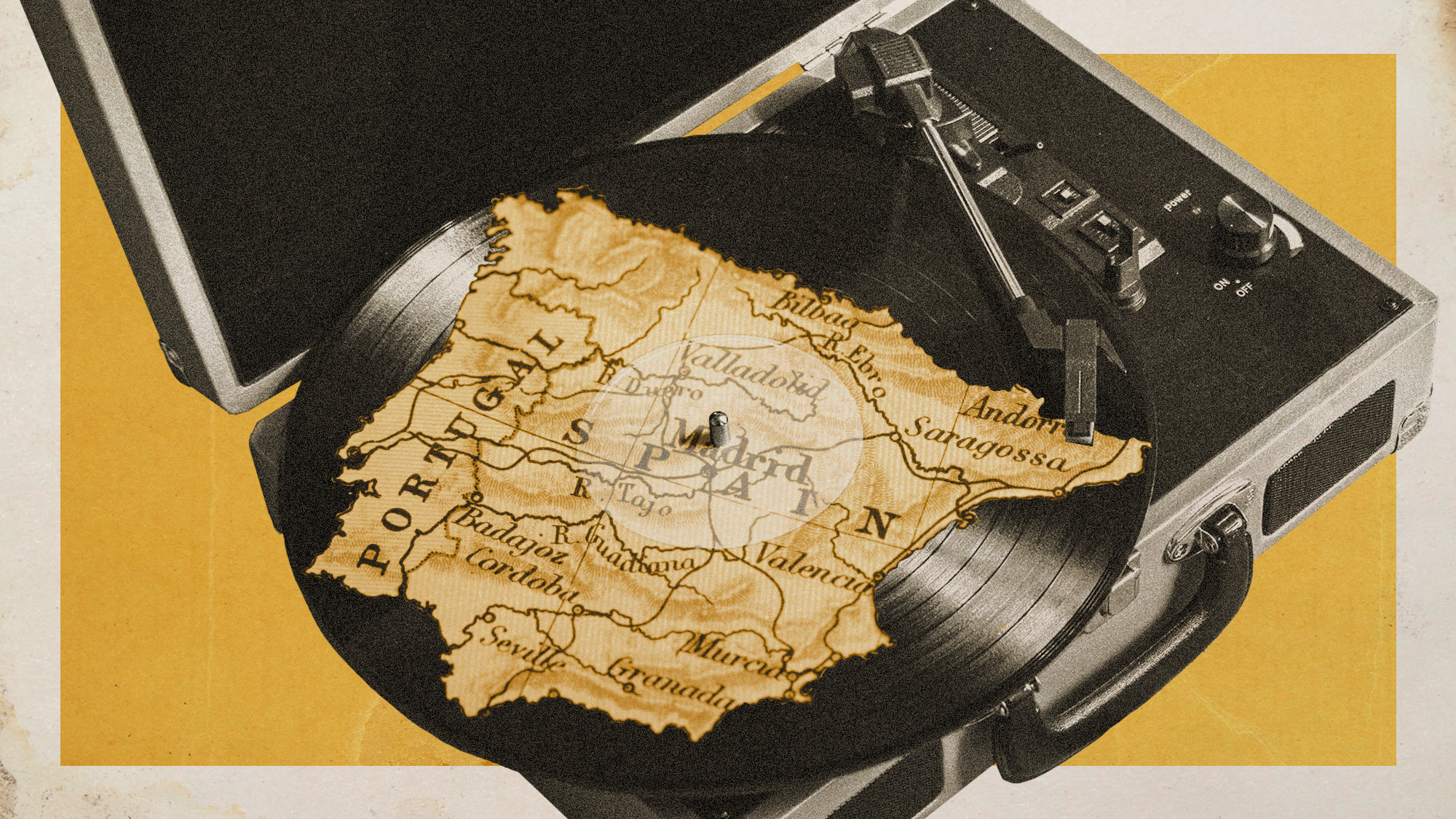
Spain and Portugal are taking a turn. The Iberian Peninsula sits on a boundary between two large tectonic plates that are being stressed by a variety of forces, and because of this, the peninsula is turning clockwise very slowly. A noticeable shift of the land is still far off, but understanding the dynamics can help us even today.
Using earthquake records and satellite observations, scientists were able to match patterns of earthquake stress with estimates of strain on the Earth’s surface to determine that the Iberian Peninsula is rotating, according to a study published in Gondwana Research. The Earth’s crust is “fractured into portions that float and move on a nearly liquid and ductile lower mantle,” called tectonic plates, said El País.
Plate motion is “pushing Iberia from the southwest and making it rotate clockwise”, said Asier Madarieta, a researcher at the University of the Basque Country and the leader of the study, in a statement.
Even though it is far in the future, the “very long-term consequences will be enormous,” said El País. The “Mediterranean will once again become a closed sea, Africa and Europe will be joined to the west and what is now southern Iberia will either face the Americas or will have merged with the area of Ceuta, a Spanish exclave in North Africa.” Going forward, the “data will increase exponentially,” said Madarieta. “We will be able to calculate the deformations in more detail, even in the places where we have little information available.” |