The Week The Week
flag of US
US
flag of UK
UK
https://cdn.mos.cms.futurecdn.net/flexiimages/jzblygzdxr1769609154.gif

SUBSCRIBE

Try 6 weeks free

Sign in
  • View Profile
  • Sign out
  • The Explainer
  • Talking Points
  • The Week Recommends
  • Podcasts
  • Newsletters
  • From the Magazine
  • The Week Junior
  • More
    • Politics
    • World News
    • Business
    • Health
    • Science
    • Food & Drink
    • Travel
    • Culture
    • History
    • Personal Finance
    • Puzzles
    • Photos
    • The Blend
    • All Categories
  • Newsletter sign up Newsletter
  • WeekDay AM: 10 Things you need to know this morning
    Israel ‘owns’ gas field strike, Denmark’s Greenland plan, and Shetland tunnels

     
    today’s middle east story

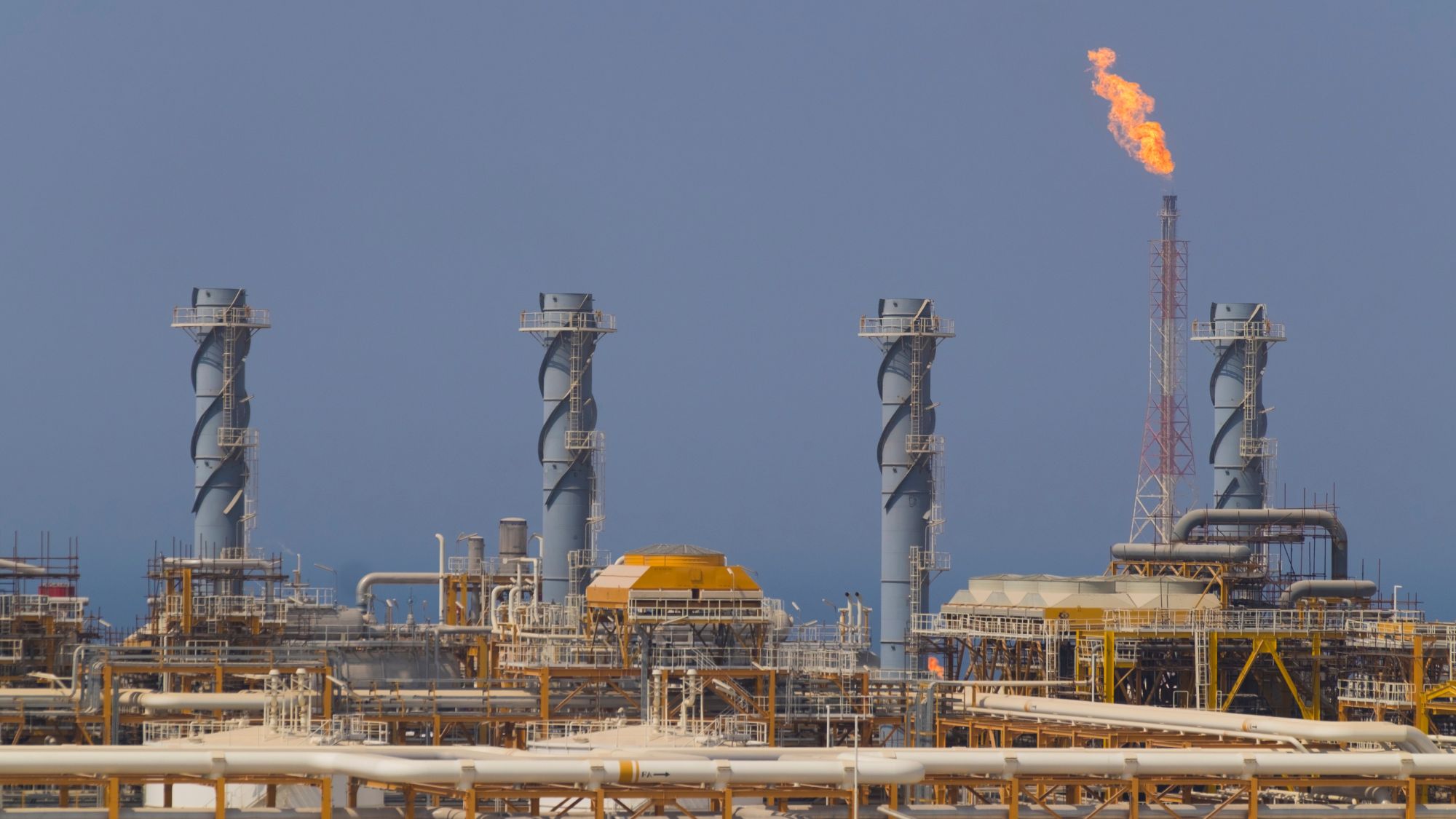
    Israel says it acted alone in strike on Iranian gas field

    What happened
    Israeli Prime Minister Benjamin Netanyahu has confirmed that his country independently carried out the strike on Iran’s South Pars gas facility after Donald Trump made comments that were critical of the attack. The strike on the energy site represents a notable widening of war targets beyond military infrastructure. It also appears to have taken place despite reservations from Washington, highlighting a moment of divergence within an otherwise closely aligned partnership.

    Who said what
    “Israel acted alone against the gas compound,” said Netanyahu, adding: “President Trump asked us to hold off on future attacks and we’re holding out.” Earlier, Trump said he had urged restraint. “I did, I did, I told him ‘don’t do that’.”

    “Are Israeli and American war aims diverging?” asked Paul Adams on the BBC. According to David Satterfield, a former US special envoy for the Middle East, the two countries remain broadly aligned, but diverge on how soon to call a halt to the war. “I strongly believe that he (Trump) wishes to find a means to credibly declare a victory that does not ring empty,” said Satterfield.

    Netanyahu dismissed suggestions of a rift, insisting that the claims of misalignment were unfounded while stressing the two nations’ long-standing shared concerns about Iran.

    What next?
    The US is currently considering easing restrictions on some Iranian oil exports in an effort to stabilise global energy markets as the conflict disrupts supply and shipping. The proposal, floated by Treasury Secretary Scott Bessent, would mark a dramatic shift in policy, although analysts warn that it may do little to curb prices while potentially funnelling more revenue to Tehran.


    today’s europe story

    Denmark planned to ‘destroy Greenland runways’

    What happened
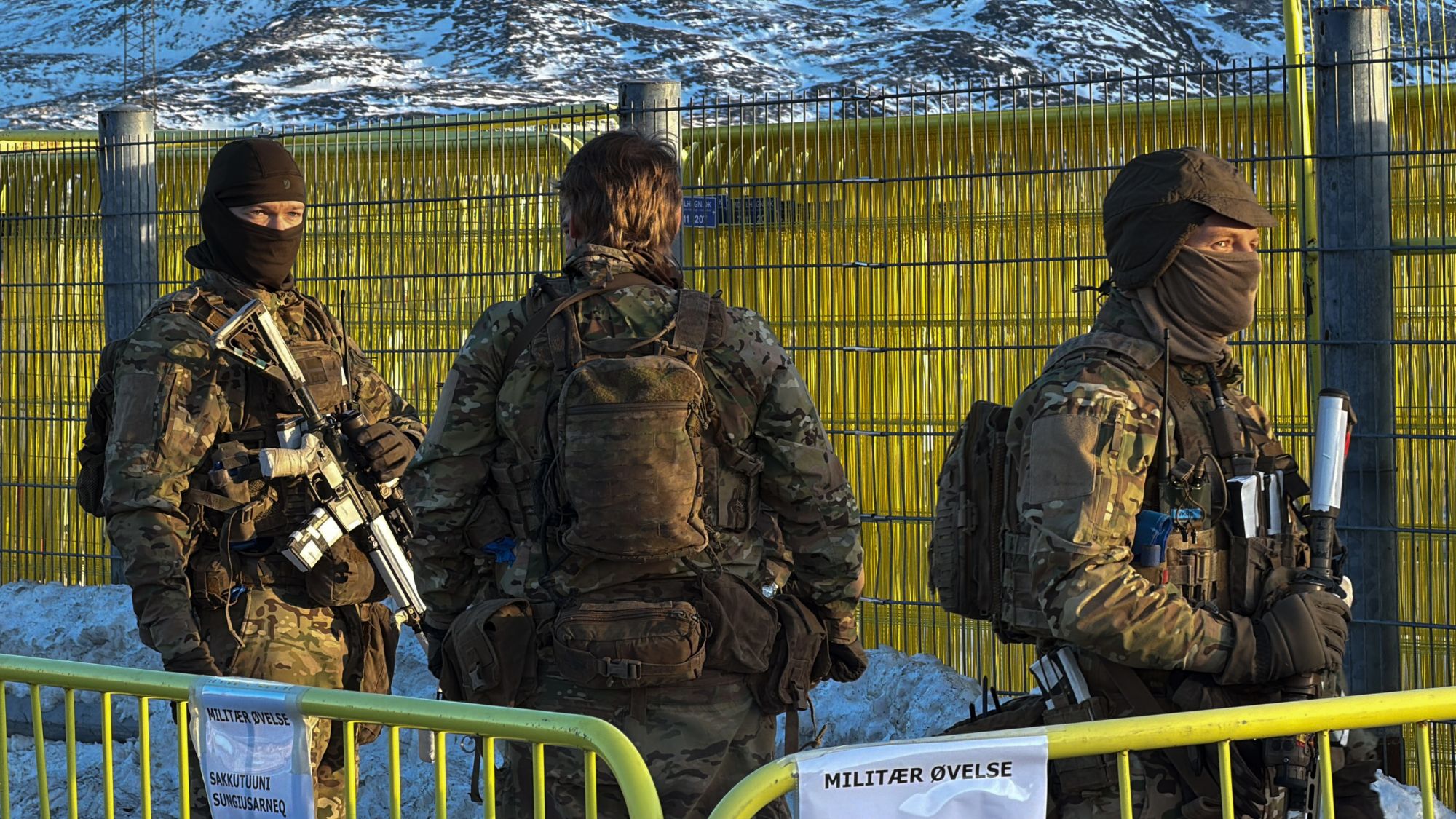
    Danish troops deployed to Greenland this year were quietly sent to key locations including Nuuk and Kangerlussuaq carrying explosives intended to disable airstrips, according to reports. The preparations were made amid concerns that Washington could attempt to seize the Arctic territory, a self-governing part of Denmark. The deployment, publicly framed as a joint European training exercise, was in reality designed as a deterrent against any sudden US intervention.

    Who said what
    “When Trump says all the time that he wants to buy Greenland … we had to take all possible scenarios seriously,” an unnamed Danish military official told Danish broadcaster DR.

    Many nations joined the operation, whose reported aim was to have “as many different nationalities of soldiers as possible to force the US to take a significant hostile action if it was to occupy Greenland”, said Miranda Bryant in The Guardian.

    What next?
    Donald Trump announced a vague “framework” agreement on Greenland with Nato Secretary-General Mark Rutte on 21 January, although the “details remain unclear”, said Sky News. At the World Economic forum in Davos, the US president said: “I don’t want to use force. I won’t use force. All the United States is asking for is a place called Greenland.”


    Today’s health story

    NHS came close to collapse, Covid inquiry finds

    What happened
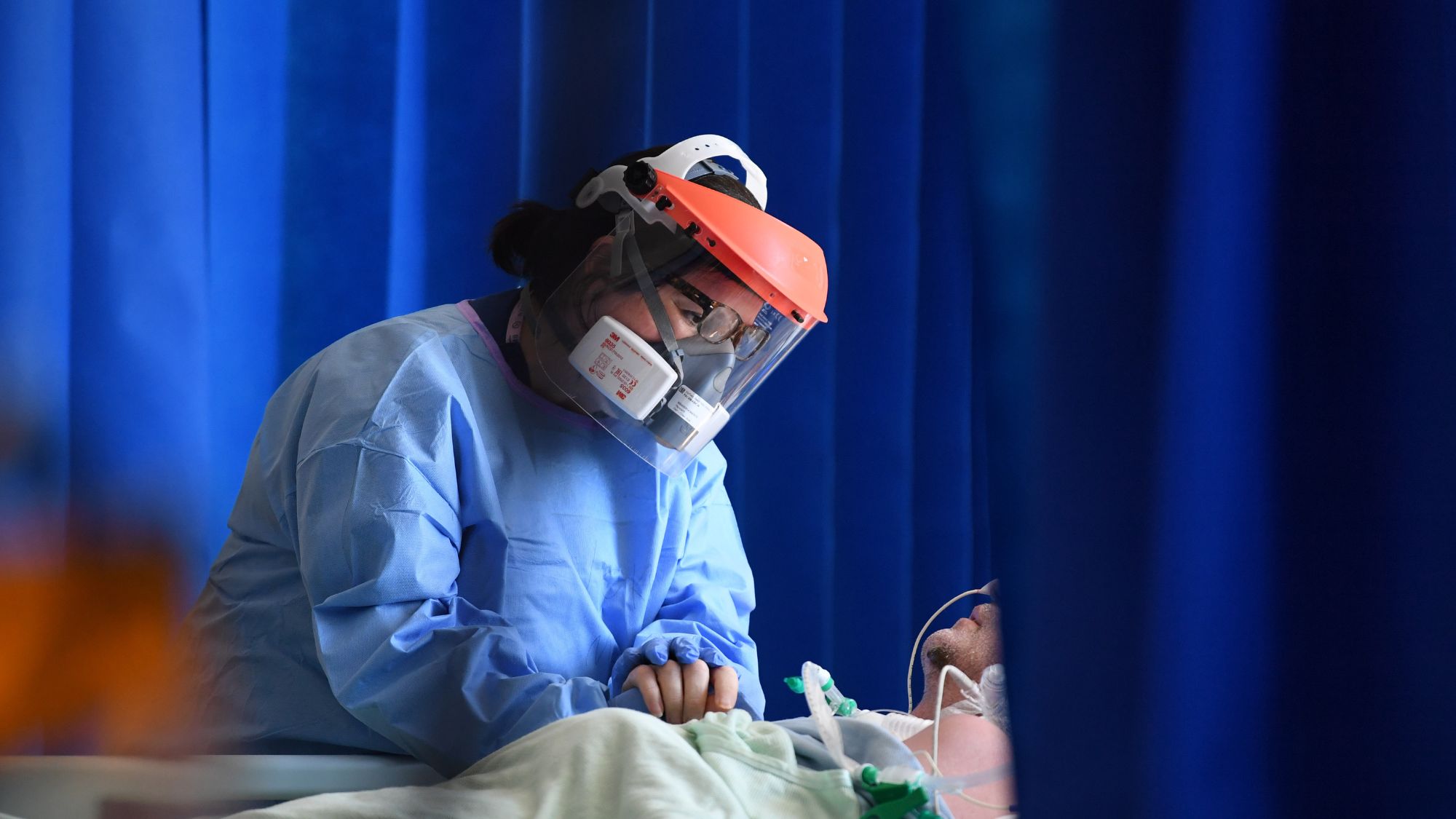
    The NHS in England teetered “on the brink of collapse” during the Covid pandemic, saved only by the “superhuman” efforts of healthcare workers, the UK’s Covid-19 inquiry has concluded.

    The 400-page report, based on 300 written statements and 300,000 pages of evidence, also states that the nation’s healthcare systems remain in a “perilous state”, with little evidence of adequate planning for future pandemics.

    Who said what
    Covid-19 inquiry chair Heather Hallett summarised the report’s findings as “we coped, but only just”, while Dr Ian Higginson, president of the Royal College of Emergency Medicine, said “our hospitals are in a much more perilous state than they were before the last pandemic”.

    While the report “uses strong language to describe what happened”, said the BBC’s health correspondent Nick Triggle, perhaps “the most illuminating and thought-provoking parts” are about the strictness of the regulations and the restrictions on visitors. There “were trade-offs and difficult balances that were struck when it came to the NHS”, said Triggle, but “did the government go too far?”

    What next?
    This report and its 10 recommendations is the third of 10 due to be published as part of the inquiry, which finished taking evidence this month, almost three years after hearings began. The inquiry’s final report is expected to be published next summer.


    It’s not all bad

    London’s Natural History Museum was the UK’s most visited attraction last year, drawing a record 7.1 million people. A major revamp, including new gardens and a climate-focused gallery, helped boost visitor numbers, while free entry remained a key drawcard. Tourism leaders said the museum’s ongoing appeal showed that, even during a cost-of-living squeeze, people still prioritised shared experiences. The success also marks a third straight year of rising attendance.


    under the radar

    Tunnel vision: the plan to link the Shetland Islands

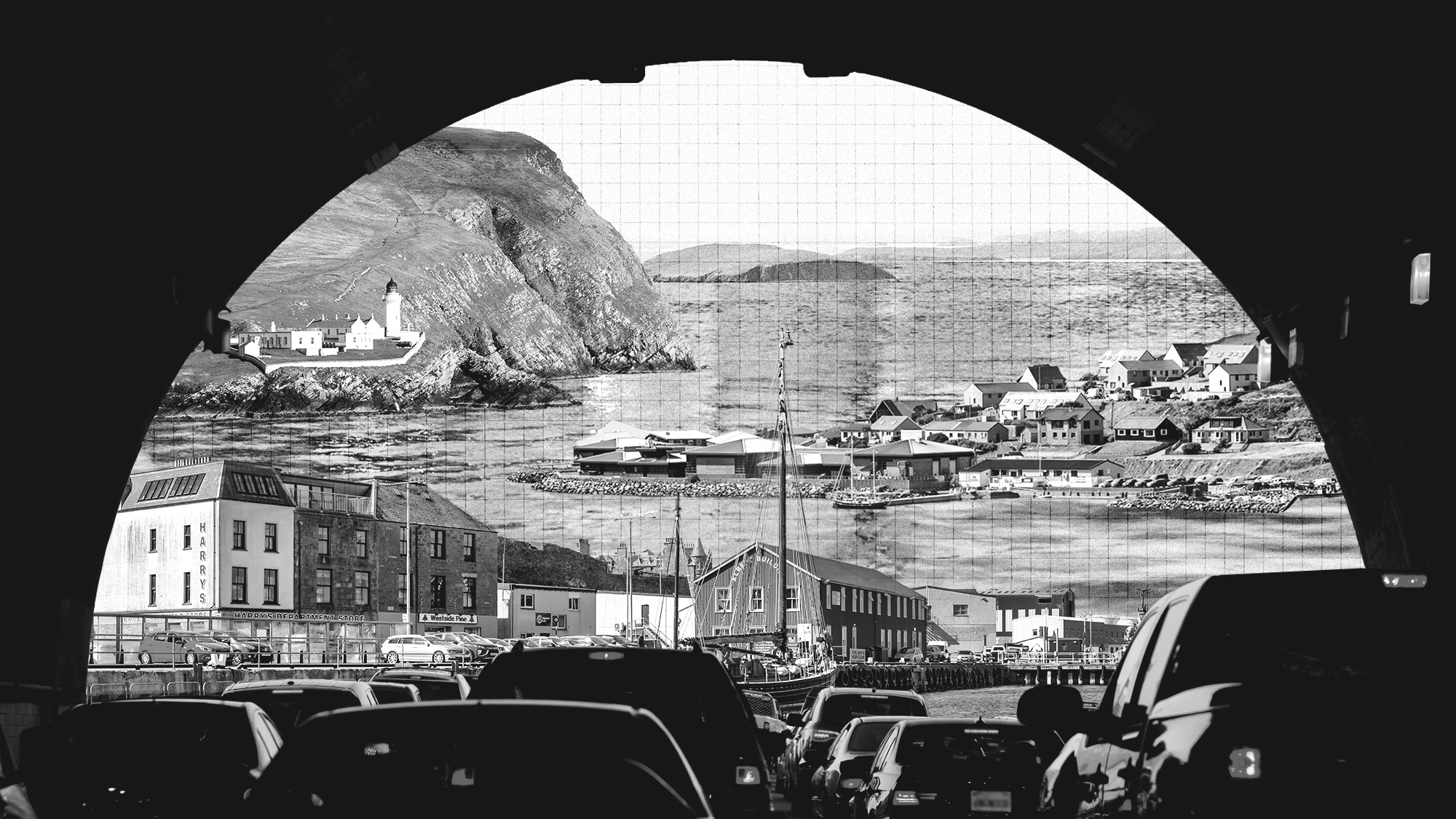
    The Shetland Islands are famed for their remote beauty, but for locals this comes at a cost. Now campaigners are pushing for the island’s ageing ferries to be replaced with undersea tunnels.

    “The ferry service has served our islands very well, but that’s a 20th-century form of transport,” Alice Mathewson, from the North Yell Development Council, told The Guardian. “In the 21st century the answer is dig a hole. Scotland has to drag itself into the 21st century.”

    Shetland is connected by a fleet of 12 ferries that make about 70,000 sailings a year to nine islands carrying roughly 750,000 passengers. The council says many of these vessels are operating beyond their intended working life and that ferries are a significant contributor to local carbon emissions.

    A journey of a few miles can take hours – provided the ferries run at all. The frequent bad weather, common in the North Atlantic, means that sailings are often cancelled.

    The answer to Shetland’s problems may lie 230 miles (370km) to the northwest. Between 2002 and 2022, a £360 million project connected the Faroe Islands through a series of undersea tunnels. Boasting what is thought to be the world’s first submarine roundabout, the road network has cut journey times by up to 80% and been credited with helping to revitalise the territory’s economy, while also contributing to net immigration over the past decade. Funded largely by borrowing, the costs are being recouped by tolls that start at £2 for residents.

    Councillors are expected to consider the next stage of the Shetland Islands project this summer, when preferred options for each of the eight island routes in the programme will be selected.


    on this day

    20 March 1969

    John Lennon wed Yoko Ono at the British consulate in Gibraltar. The couple remained married until Lennon’s death. Last week a new biography of Ono was published – one where the author had promised that Lennon would not be mentioned. The work instead focuses on Ono’s work as a performance artist.


    Today’s newspapers

    ‘Saudi threats’

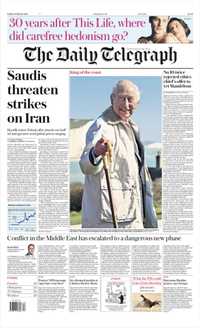
    “Saudis threaten strikes on Iran”, says The Telegraph, after attacks on oil and gas sites across the Gulf caused prices to surge across the globe. But Netanyahu says “we can’t defeat Iran from the air”, reports The Times. “Markets tumble” amid a “protracted oil shock”, says the Financial Times. “Hell’s bills”, says The Sun as “war fallout hits pockets”. Meanwhile, there is “fury at Farage’s call to ban public prayer by Muslims”, says The Guardian. 

    See the newspaper front pages


    tall tale

    Toyshelf life

    Among the toy kangaroos, dingoes and devils for sale in a Tasmanian airport, a passenger stumbled upon an unexpected discovery: a real-life possum. The animal had joined the plush toy section of the Lagardère AWPL gift shop in Hobart – to the delight of customers. A passenger reported it to a staff member who “couldn’t quite believe what she was hearing”, said Liam Bloomfield, the retail manager. The marsupial was escorted out of the terminal, but it won’t soon be forgotten. “We’ll have a little shrine to the possum,” said Bloomfield. “There will be a nice little photo; once it gets a name, we will put a post in front of the store to make sure it’s remembered.”


    Morning Report was written and edited by Arion McNicoll, Harriet Marsden, Evie Nicholson, Ross Couzens and Chas Newkey-Burden, with illustrations by Julia Wytrazek.

    Image credits, from top: Morteza Nikoubazl / NurPhoto / Getty Images; Muath Hamed / Anadolu / Getty Images; Neil Hall / Pool / AFP / Getty Images; Illustration by Julia Wytrazek / Getty Images.

    Morning Report and Evening Review were named Newsletter of the Year at the Publisher Newsletter Awards 2025
     

    Recent editions

    • Evening Review

      How the Iran crisis will impact cost of living

    • Morning Report

      Iranian strike hits major Qatar gas hub

    • Evening Review

      Should the King rethink his US visit?

    VIEW ALL
    TheWeek
    • About Us
    • Contact Future's experts
    • Terms and Conditions
    • Privacy Policy
    • Cookie Policy
    • Advertise With Us
    • FAQ
    Add as a preferred source on Google Add as a preferred source on Google

    The Week UK is part of Future plc, an international media group and leading digital publisher. Visit our corporate site.

    © Future Publishing Limited Quay House, The Ambury, Bath BA1 1UA. All rights reserved. England and Wales company registration number 2008885.