The Week The Week
flag of US
US
flag of UK
UK
https://cdn.mos.cms.futurecdn.net/flexiimages/jzblygzdxr1769609154.gif

SUBSCRIBE

Try 6 weeks free

Sign in
  • View Profile
  • Sign out
  • The Explainer
  • Talking Points
  • The Week Recommends
  • Podcasts
  • Newsletters
  • From the Magazine
  • The Week Junior
  • More
    • Politics
    • World News
    • Business
    • Health
    • Science
    • Food & Drink
    • Travel
    • Culture
    • History
    • Personal Finance
    • Puzzles
    • Photos
    • The Blend
    • All Categories
  • Newsletter sign up Newsletter
  • Saturday Wrap, from The Week
    ‘Dwindling’ missile stocks, homeschooling concern, and ‘hollowed out’ Armed Forces

     
    controversy of the week

    The arms race: who will run out first?

    The outcome of the war in Iran may come down to one brutal question, said Samer Al-Atrush in The Times: “will the US and its allies run out of air defence ammunition first, or will Iran first deplete its arsenal of missiles and drones?” Before the war, Iran was thought to have had more than 2,000 ballistic missiles. Now, Western intelligence suggests that it is down to half that number. Iran’s “missile fire rate” has collapsed, said The Jerusalem Post, from 480 launches on 28 February to just 40 on 9 March. Drone launches have followed a similar curve, down 92% from 720 to 60. Tehran is “reliant on a dwindling number” of mobile missile launchers, hidden underground in “missile cities” until they are needed, said the Financial Times. Israel claims to have destroyed 300. Analysts think there may be only 100 to 200 left. 

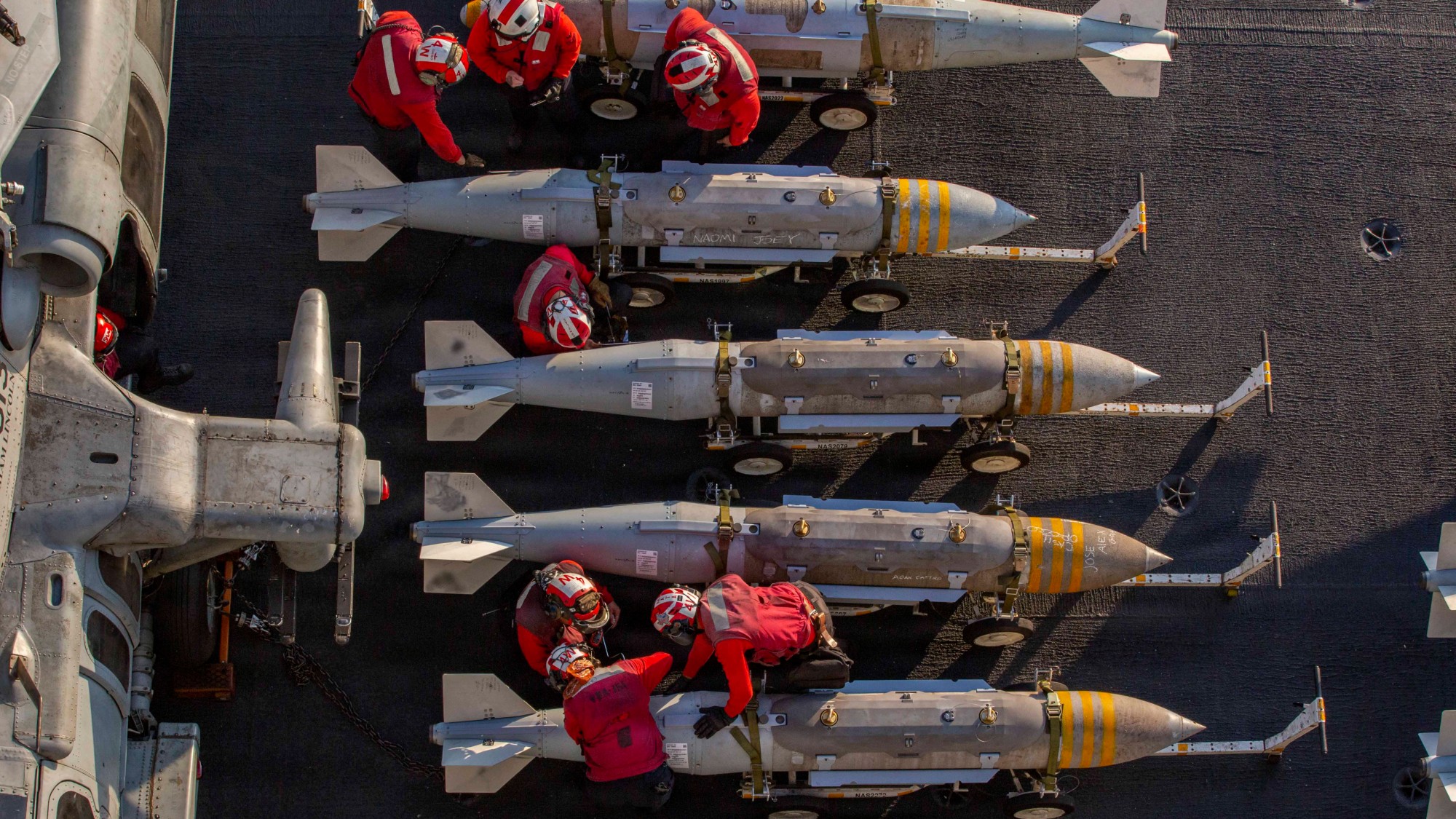
    President Trump boasts that the US has a “virtually unlimited supply” of munitions, said Michael Evans in The Times. The evidence suggests otherwise. The first 36 hours of the US-Israel campaign consumed more than 3,000 precision-guided munitions and interceptors. Already, the arsenal of key US weapons – such as Tomahawk cruise missiles and Patriot anti-missile interceptors – is significantly reduced. Each costs “multiple millions of dollars”, and can take a year or more to manufacture. Iran still has tens of thousands of drones, which are cheap to make and easy to launch, said Michael C. Horowitz and Lauren A. Kahn in Foreign Policy. Washington’s use of multimillion-dollar missiles to neutralise $35,000 drones is “unsustainable”. 

    The fear for the US is that “it may simply run out of key materiel”, said Wolfgang Munchau on UnHerd. Replacing the weapons already used will take years. And behind that is a potential “supply-chain crisis”. Arms manufacture relies on securing minerals, metals and chemicals, many of which are extracted or processed in China and Russia. “Even the world’s most powerful army cannot assume victory if the war lasts more than a few weeks.”


    Briefing of the week

    The rise of homeschooling

    Record numbers of children are being educated at home. Is this a cause for concern?

    What sort of numbers are involved? 
    Homeschooling – or elective home education (EHE), as it’s officially known in the UK – has been rising steadily since the 1970s. Before universal education, many children were educated at home, which has always been legal. In the 1970s and 1980s, small numbers of parents started rejecting schools as overly rigid or exam-driven. More recently, in the 2010s, the number of EHE children more than doubled and has continued to grow since the Covid pandemic. There were 126,000 children in EHE in England during the 2025 autumn term, according to the Department for Education (DfE) – a rise of nearly 13% on the year before. They’re a tiny fraction of their total cohort (about 1.5%), but critics worry that it’s a sign of a wider crisis in the education system, and that EHE is only very loosely regulated.

    How does it work? 
    Under the Education Act 1996, all children aged 5-16 in England and Wales have to receive a “suitable” full-time education, “either by regular attendance at school or otherwise”. But there’s no legal obligation to enrol a child in school; and all it takes to “deregister” is a letter or email. Local authorities aren’t allowed to carry out inspections or monitor the education parents provide. (Northern Ireland’s authorities have greater oversight powers; in Scotland, parents need the local authority’s consent to deregister; across the UK, parents of children with special educational needs need the school’s consent.) Parents aren’t required to teach the national curriculum, assess progress, or make children sit exams. Local authorities have a legal duty to identify children who aren’t getting an education, but they have little practical ability to do so. 

    What are parents’ reasons for doing this? 
    The modern EHE movement grew out of progressive education theories, and many proponents are interested in “child-centred learning”, “unschooling” and the like, although others take a more structured approach, often provided by specialised organisations. Religion is another motivator, although this is less common than it is in the US. There is, however, a worrying lack of data: the DfE didn’t start collecting figures until 2022. But in a recent study of reasons given by parents, 21% said they homeschooled for “philosophical” or “lifestyle” reasons; 16% said they did it for the sake of their child’s mental health; 15% gave “school dissatisfaction” as their reason, including concerns over bullying and poor special educational needs and disabilities (Send) provision. But all of these were outranked by “other”, “unknown” and “no reason given”, which accounted for 40% of parents.

    Why is that a worry? 
    Primary schools, especially, are a key part of the social safety net: the wellbeing of EHE children is hard to assess. Sara Sharif, murdered by her father and stepmother in Woking in 2023, for example, had been deregistered. Because there are penalties for persistent absence but none for not going to school at all, there’s a parental incentive for deregistering repeat truants. Parents can avoid fines of up to £2,500, and schools – which are assessed on attendance and exclusion numbers – have been known to encourage this covertly (and illegally). It’s likely that many EHE parents do not have the intention or ability to provide an education at home – which makes it particularly alarming that some of the biggest rises have been seen in areas with high levels of deprivation.

    What role does mental health play?
    The Institute for Public Policy Research think tank believes rising EHE numbers are part of a more general “school-engagement crisis”, with similarly rising numbers in absences, suspensions, permanent exclusions and “emotionally-based school avoidance” (also known as “school refusal”). The main reasons, one deputy headteacher told The Guardian, are “Covid, Covid, Covid”. Lockdown gave families a glimpse into the world of home education; as schools reopened, some children found the transition back to the classroom difficult. More than 170,000 children in England missed at least half their school sessions (half days) in 2023/24, which is a record high. 

    How about special needs provision? 
    It’s a big factor. “The system is broken and does not cater for a lot of children,” one EHE parent told the BBC. Send provision is one of the biggest financial burdens on local authorities, costing more than £10 billion a year in England. Even so, it’s widely recognised that schools struggle to make good on their obligations to pupils with special needs, even if those have been officially recognised. 

    How do homeschooled children perform? 
    Professionals agree that EHE can work well if parents have the time, resources and ability – but not all of them do. It’s “like rolling dice”, an EHE officer told The Sunday Times. Reliable studies of educational outcomes are thin on the ground, since they’re mostly produced by advocacy groups. The DfE doesn’t collect data on the attainment of EHE children, and so hasn’t produced an assessment. However, it notes that a 2009 inquiry found that 22% of home-educated 16- to 18-year-olds in England weren’t in education, employment or training, compared with a national average of some 5%. 

    What is the government doing? 
    Successive inquiries have called for an official register of EHE children (none currently exists). The inquiry into the Sharif case called for safeguarding checks on the homes of deregistered children. Both these measures are included in the education bill that’s currently going through Parliament, along with a requirement that parents of children already deemed “at risk” will need the local authority’s consent to switch to EHE. However, EHE advocates are lobbying intensively for the bill to be watered down, arguing that it infringes their rights as parents.

    Homeschooling around the world
    Homeschooling is illegal in China, North Korea and Cuba, but also in less authoritarian countries such as Sweden and Germany. France has historically allowed it only in highly exceptional circumstances, and the rules were tightened still further in 2021 with legislation designed to combat “Islamist separatism”. In most countries it’s a tiny minority interest that the state either regulates or turns a blind eye to. 

    The main outliers are the US, Canada, New Zealand, Australia and the UK, which recognise homeschooling as a parental right, and where social movements advocate it. The US is the world leader: 3.4% of children – around four million – are homeschooled. Religion plays an important part: 53% of parents cite the need for religious instruction (typically in evangelical Protestantism) as a key motivation, and the main advocacy group, the Home School Legal Defense Association, has close ties to the Christian right. Right-wing scepticism about “government schools” also plays a part, but so do worries about school shootings and racial inequality. US homeschoolers are still overwhelmingly white, though there was a marked increase of its incidence in Black, Latino and Asian-American households during the Covid pandemic.


    Spirit of the age

    If parents worry about their children being addicted to social media, it could be because they have a problem with it themselves. According to a poll of parents in the US and the UK, 21% admit to being hooked on platforms including Instagram, Facebook and LinkedIn; 15% say they often feel sad or depressed because of the time they spend on them.


    VIEWPOINT

    Dreaming big

    “Cornwall’s Eden Project, celebrating its silver jubilee, has welcomed over 25 million visitors, and boosted the area’s economy by £7 billion. Fiascos such as HS2 have soured our confidence, but Britain needs more such dream-big ventures. The Millennium Dome, initially deemed a white elephant, is now thriving as The O2 arena. The London Eye, once derided, is one of the UK’s most popular paid-for tourist attractions. Landmark projects do not, however, have to make a profit to be worthwhile. Sometimes the simple elevation of the human spirit is reason enough. ‘The Angel of The North’, Antony Gormley’s sculpture in Gateshead, has become the focus of north-eastern pride.” 

    Editorial in The Times


    talking point

    Britain’s Armed Forces: dangerously depleted

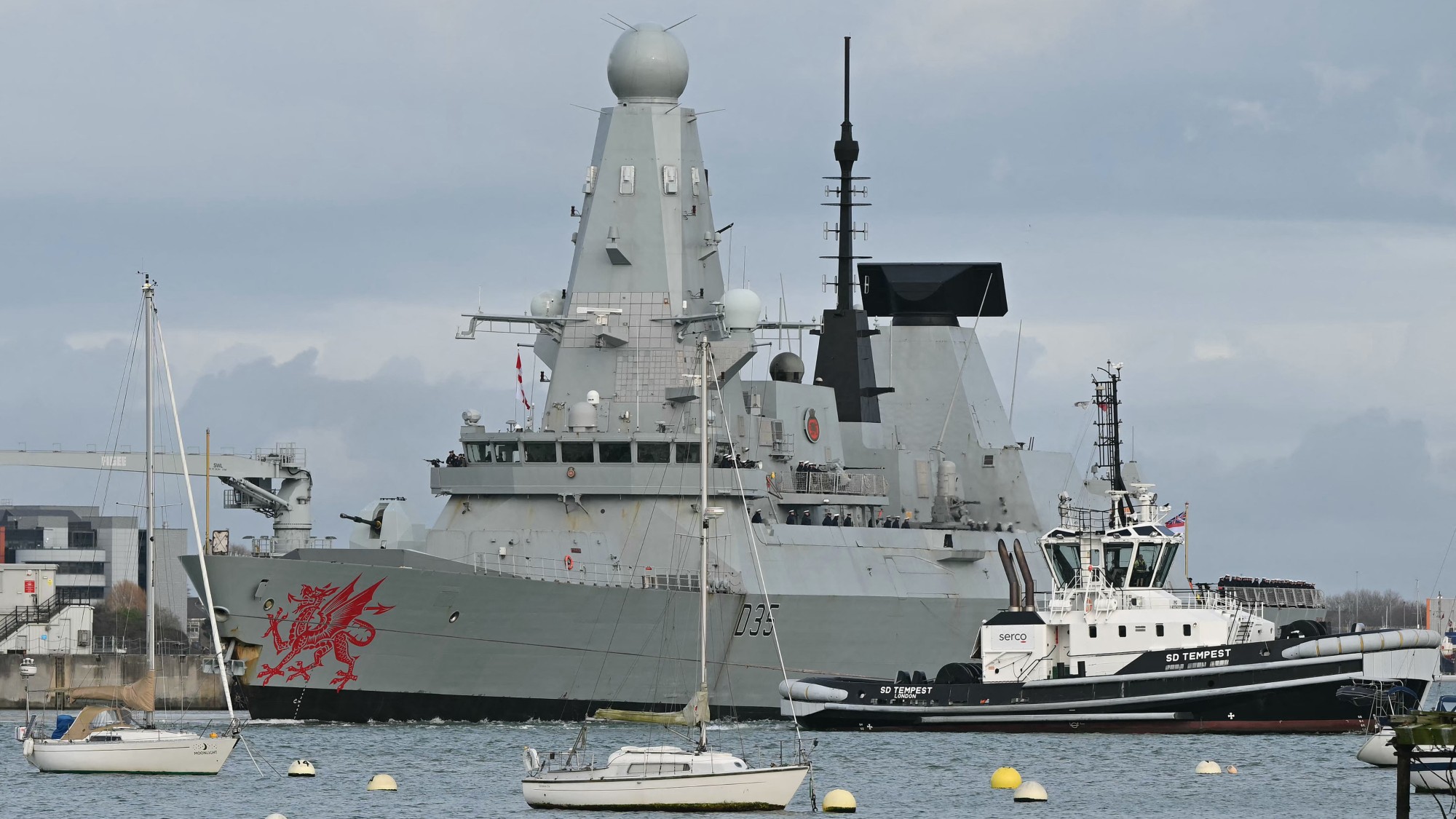
    “Every now and then, world events take a turn that exposes Britain’s decades of self-deception” on the subject of defence, said Fraser Nelson in The Times. On 1 March, the RAF’s main base in Cyprus was hit by a drone apparently launched by Hezbollah from Lebanon. It caused only minor damage; what was shocking was that the UK seemed unprepared for such an event, though Lebanon is just “a short drone-hop away”, and an attack like this had been anticipated for years. Our response was to dust down HMS Dragon, a Type 45 destroyer then undergoing maintenance at Portsmouth. (With a fair wind she’ll arrive next week.) In a panic, Cyprus turned to Greece and France, “asking to be protected from the risk Britain’s bases had exposed them to”. Greek frigates and F-16s were on the scene within hours. A French warship and air defences followed. “Quite the humiliation” for Britain. And proof that “our commitments far outpace our resources. Holes are showing, in shocking places.” 

    The blocking of the Strait of Hormuz, the attacks on the Gulf states, where around 300,000 British citizens live – this is exactly the kind of emergency that “would once have found the Royal Navy in its element”, said David Blair in The Telegraph. But for the first time in centuries, Britain does not have a single warship in the Persian Gulf or the eastern Mediterranean. Three of its six destroyers and both its aircraft carriers were out of action, undergoing repairs or refits. After years of slow decline, the Navy has “reached its point of maximum weakness” at a moment when a crisis is exploding in the Middle East “and Russia threatens the whole of Europe”. Both Bahrain and the UAE have reportedly expressed concern about the UK response; Cyprus voiced its disappointment publicly. Britain could also only send a few extra fighter jets to the region, because the RAF, too, has been “cut to the bone”, said Stephen Glover in the Daily Mail. It has 130 active jets, down from 850 in 1989. The Army is “in no better shape”, with just 70,000 active personnel, a third of the number it had in 1990. 

    Our current malaise “is the result of politicians from all parties trying to outrun” the same question for decades, said Matt Oliver in The Telegraph. How can Britain be “a great military power” if it won’t pay for it? At the start of the 1990s, Britain’s health and defence budgets both hovered at 4% of GDP. Today, health accounts for 8% and defence just over 2%. New Labour was often accused of failing to invest in the forces. But the “squeeze” was harder during the coalition years: the budget fell by 22% in real terms from 2010 to 2016. Yet even today, the Ministry of Defence has one of the largest military budgets in the world, at £66 billion per year. So taxpayers may wonder what has gone wrong. The answer lies in part in “a string of procurement disasters”, for which civil servants and top brass must share blame. We have expensive platforms – aircraft carriers, F-35 jets, nuclear subs – but insufficient manpower, weapons stockpiles and all-round resilience. As ex-defence secretary Ben Wallace recently put it, our forces have been “hollowed out”. 

    The challenge is formidable, said Larisa Brown in The Times. Al Carns, the Armed Forces minister, has said that by 2029 “Europe could be at war with Russia”. Former senior military chiefs warned in a letter to the prime minister this month that Britain “is facing its 1936 moment”. Assuming that funding can be found, the UK and Europe’s defence industries will have to not only ramp up production, but also cope with the transformation of the modern battlefield already seen in Ukraine – by drone technology, robotics, cyberwarfare and, increasingly, autonomous weapons. Add to that the likelihood that Donald Trump’s America would not “fight for us”, said Edward Lucas in the same newspaper – or certainly cannot be relied upon to do so. “Europeans may loathe Trump, but they’re not ready to fill the gaps… They lack the hi-tech weapons, high-end intelligence, logistics expertise and ‘mass’ (quantity) that the Americans have provided since D-Day.” Filling these will be costly and difficult, “if we manage at all”. 

    Yet politically, defence remains a hard sell, said The Independent. Among voters, there is no clamour to build “new cyber-defence units in the way there is demand for, say, cutting NHS waiting lists”. Keir Starmer and his cabinet know that the era of the “peace dividend” is over, said George Eaton in The New Statesman – that Britain and Europe “need to go faster on defence”, as the PM put it last month. But nothing much is happening. Labour may or may not increase defence spending from 2.4% of GDP to 3%, as the MoD wants, by 2029 – the year that Carns thinks we could be at war with Russia. The government shows no willingness to confront voters with the fiscal trade-offs that come with higher spending. Britain remains “in denial on defence”.


    It wasn’t all bad

    A prostate cancer patient in Gibraltar has been operated on remotely by a surgeon more than 1,000 miles away, in London. Prof Prokar Dasgupta said the time lag between him moving a tool and the robot carrying out the prostatectomy was just 0.06 seconds. It was, he said, “almost as if I was there”. Gibraltar has only one hospital, and residents with complex needs often have to travel for treatments. The patient, Paul Buxton, had expected to have to go to England, until he was asked if he’d like be a “guinea pig” for the remote procedure.


    People

    Lauren Weisberger

    When Lauren Weisberger wrote “The Devil Wears Prada” in 2003, she based the novel closely on her recent experience, says Megan Agnew in The Sunday Times. Four years earlier, she had arrived in New York with dreams of working at a literary magazine. While sleeping on a friend’s sofa, she applied for work, and was invited to attend an interview at Condé Nast. She didn’t know what job they were considering her for, but eventually a woman in HR told her the position was at Vogue, the high-fashion bible edited by the formidable Anna Wintour. “I was like, ‘Well, that’s nice, but maybe not what I’m looking for.’ And she was like, ‘We’re not really interested in what you’re looking for. Proceed!’” 

    Two interviews later, she was told she was going to meet “Anna”. “I remember having no thoughts about that, which in hindsight is crazy,” she says. She got the job and, soon after she started, she was sent to the hairdresser: “Anna was like, ‘Fix it. Immediately.’” As in the hit film, everyone in the office was “tall, extremely thin and attractive”, and her boss was tough: “It was a year of being yelled at.” 

    If Wintour bears a grudge about the way she was depicted, she is not showing it. Belatedly giving her verdict on the film last year, she called it “very funny”, and “a fair shot”. So would Weisberger, who last saw her ex-boss when she left Vogue 25 years ago, like to see her again? “Nope!” she says, clipped and cheerful. “I’m good! Just fine!”


    Image credits, from top: U.S. Navy / Getty Images; Max Mumby / Indigo / Getty Images; Justin Tallis / AFP / Getty Images; Jeff Spicer / Getty Images
     

    Recent editions

    • Evening Review

      Mandelson files: more questions than answers

    • Morning Report

      Putin ‘secretly helping to guide’ Iran’s drone attacks

    • Evening Review

      Where does Iran conflict leave Ukraine?

    VIEW ALL
    TheWeek
    • About Us
    • Contact Future's experts
    • Terms and Conditions
    • Privacy Policy
    • Cookie Policy
    • Advertise With Us
    • FAQ
    Add as a preferred source on Google Add as a preferred source on Google

    The Week UK is part of Future plc, an international media group and leading digital publisher. Visit our corporate site.

    © Future Publishing Limited Quay House, The Ambury, Bath BA1 1UA. All rights reserved. England and Wales company registration number 2008885.