The Week The Week
flag of US
US
flag of UK
UK
https://cdn.mos.cms.futurecdn.net/flexiimages/jzblygzdxr1769609154.gif

SUBSCRIBE

Try 6 weeks free

Sign in
  • View Profile
  • Sign out
  • The Explainer
  • Talking Points
  • The Week Recommends
  • Podcasts
  • Newsletters
  • From the Magazine
  • The Week Junior
  • More
    • Politics
    • World News
    • Business
    • Health
    • Science
    • Food & Drink
    • Travel
    • Culture
    • History
    • Personal Finance
    • Puzzles
    • Photos
    • The Blend
    • All Categories
  • Newsletter sign up Newsletter
  • Saturday Wrap, from The Week
    ‘No Kings’ rallies, pig-butchering scams, and ‘systemic’ shoplifting

     
    controversy of the week

    Down with Trump: the largest protest in American history

    “The president thinks his rule is absolute. But in America, we don’t have kings – and we won’t back down against chaos, corruption and cruelty.” That was the clarion call on the protest website that brought eight million Americans on to the streets last month, not just in the major cities, but in small towns and rural areas across the US, said David Rothkopf on The Daily Beast. The third of the nationwide “No Kings” rallies organised to protest against Trump’s second term – the first was held last year on Trump’s birthday, 14 June – it was “the largest public protest in American history”. This was a show of political force that “could reverberate in the 2026 midterms and beyond”, said Susan Page in USA Today. Since these record-setting protests began, Republicans have suffered a string of stunning electoral defeats, fuelling the Democrats’ optimism that they’ll be able to take control of the House and perhaps even the Senate in the November midterm elections. 

    Sounds like wishful thinking, said Jonathan Alpert in The Wall Street Journal. These rallies may provide “validation, solidarity and emotional release” for progressives who hate Trump, but achieve little more beyond making them feel good. The White House wasn’t far wrong in dismissing them as “Trump derangement therapy sessions”. Actually the rallies didn’t just involve activists, said Zeeshan Aleem on MS Now: they included lots of people who’d “never protested before in their lives”. That alone isn’t enough to make such protest effective, though. If the No Kings organisers want to see real change, they need to copy the civil rights campaigners of the 1960s or the Minneapolis activists who took on Ice’s brutal immigration crackdown, and display a defiant refusal to bow to unjust policy. Economic boycotts, for example, would be a far more effective way of showing business and political leaders that Americans emphatically reject Trumpism. 

    What the naysayers fail to understand, said Will Bunch in The Philadelphia Inquirer, is the real “psychological” value of the No Kings protests. They function as a “hope-building exercise”, reminding us that most Americans still want to live in a democracy. “All these people coming out, it gives you hope,” as one protester in Philadelphia put it. “Seeing such loud, tangible proof of Trump’s unpopularity makes a very real difference; ‘dictatorship’ only succeeds with a demoralised public.”


    Briefing of the week

    Pig-butchering: Southeast Asia’s scam hubs 

    To feed the online fraud trade, Chinese crime syndicates have set up ‘factories’ using forced labour across Southeast Asia

    What sort of scams are involved?  
    In 2022, Shan Hanes, the chief executive of the Heartland Tri-State Bank in Kansas, met a friendly investment adviser from Australia on WhatsApp. The adviser persuaded Hanes to invest a few thousand dollars in an online cryptocurrency-trading platform, which generated impressive returns. Hanes ended up investing all his own money, $60,000 from his daughter’s college fund, $40,000 from his local church and $47 million from the bank he ran. The “adviser” was, it transpired, not in Australia but most likely in Asia; the “trading platform” was fake; and Hanes had become the highest-profile US victim of a practice known in Chinese as sha zhu pan, a “pig-butchering scam”. Some money was recovered, but investors lost $9 million, the bank collapsed, and Hanes was sentenced to 24 years in prison. 

    How do the scams work?  
    “Long cons” have been around for ever, but these – in which the scammers invest a lot of time in building a relationship with the victim, a process they liken to fattening a pig for slaughter – have distinctive features. Scammers actively seek out victims on social media: pig-butchering originated on regional Chinese dating sites around 10 years ago, but it has since spread to platforms such as Telegram, WhatsApp and LinkedIn. They create trusting relationships with their victims, sometimes of a romantic nature; one former scammer told The Economist she’d been trained to target people who were “rich but not good-looking”. They rely heavily on crypto, which is easy to launder and difficult to recover. These and other online scams are increasingly run out of Chinese-linked “scam hubs” or “fraud factories” in Southeast Asia. 

    How did such operations develop? 
    Gambling – illegal on mainland China – is one of the main revenue streams for domestic and foreign-based Chinese mafias. Casinos and online gambling hubs for Chinese-speakers, based in Cambodia and Myanmar, were one of their main enterprises until 2019, when Cambodia tightened its regulations; Covid lockdowns then emptied the casinos. The criminal syndicates refitted their properties as centres where teams of workers – often trafficked and coerced – run online scams at scale. Chinese citizens were their original targets, followed by Chinese communities around the world. But they soon expanded to other nationalities, which also meant expanding their trafficking activities. In the four years from January 2020, at least $75 billion was taken in crypto scams; estimates suggest the industry generates over $500 billion a year, comparable to the global drugs trade. 

    Why do they traffic people? 
    Many of the gangs’ voluntary workers went home during Covid; not enough locals had the necessary language and computer skills, and recruiting people into cybercrime isn’t always easy. The scammers’ solution was to lure people – typically young graduates from developing countries – to cities such as Bangkok with fake offers of legitimate employment, then drive them to compounds in Myanmar, Cambodia or Laos, and put them to work under threats of torture, organ harvesting and sexual slavery. A UN report this February found that there is a workforce of at least 300,000 people from 66 countries, about 75% of them in the Mekong River region of Southeast Asia. Many live in vast compounds, like self-contained towns – some over 500 acres in size, heavily fortified, with armed guards. It’s unlikely that all the workers are coerced, but many of them certainly are; some families have had to pay ransoms in cryptocurrency to get them out. 

    What is being done about it? 
    Weak local governance, along with easy access to China, is the reason the gangs set up shop in the Mekong region in the first place. Myanmar’s military junta doesn’t control the whole territory; much of it is controlled by insurgent groups and warlords; while Cambodian politics has been dominated by one family since the 1980s. Transparency International ranks both governments among the most corrupt in the world. Analysts calculate that Cambodia’s scam hubs generate earnings worth about 60% of the nation’s GDP. According to the US Treasury Department, the Huione Group, a financial conglomerate with ties to Cambodia’s ruling Hun family, has provided the gangs with financial and practical services. Like Latin American “narco-states” before them, these countries are well on the way to becoming “scam states”. 

    Is there international pressure to close them down? 
    Influenced partly by stories like the kidnapping of the actor Wang Xing, and even a popular film about scam hubs, “No More Bets”, China has launched an aggressive crackdown. There have been heavily publicised rescues of coerced workers in the Mekong countries; under Chinese pressure, local law enforcement has dismantled notorious scam hubs like the KK Park complex in Myawaddy, Myanmar, thought to have been run by Macau-based triads. Thai forces shelled several other hubs during a border conflict with Cambodia last year. China has arrested hundreds of thousands of people over scams, and in January it executed 11 members of the “Ming family” crime group, who had been extradited from Myanmar. 

    Is the situation improving? 
    Experts worry that police raids on compounds in Cambodia and Myanmar are largely for show: the bosses are often tipped off in advance. In any case, they have globalised their operations, popping up as far afield as Peru and the Philippines. Police even closed down an operation targeting Chinese citizens on the Isle of Man in 2024. But developments in AI may mean that the scammers are getting less reliant on human trafficking for language skills. One report on AI-assisted scams found that they rose by 450% in 2024/25 compared with 2023/24. The scammers now often use “deepfakes” of increasingly good quality to groom their victims.

    The kidnapping of Wang Xing 
    In December 2024, a young actor from Shanghai named Wang Xing, who’d had bit parts in some big Chinese films, joined an industry chat group. Someone claiming to work for a Thai media company asked him for an audition tape, then offered him a movie part. A month later, Wang flew to Bangkok, where a car picked him up, ostensibly to take him to an opening ceremony.

    About seven hours later, his phone fell off the network at the Thai-Myanmar border; he had been communicating en route and sharing location details with his girlfriend, Jia Jia. Luckily for Wang, she didn’t take no for an answer when Shanghai’s police and China’s embassy in Bangkok were unhelpful. She took to Weibo, the Chinese version of Twitter, where several film stars got involved and the story went viral. Chinese diplomats went into action and, four days after disappearing, Wang was handed over to the Thai police with his head shaved, having been held at a scam hub run by a Chinese syndicate in Myanmar. He had been forced to undergo training in telecoms fraud. At the Thai authorities’ request, Wang underlined that “Thailand is very safe” at a press conference, but the Thai budget airline Lion Air said that about a fifth of its flights from China were cancelled in the aftermath.




    Spirit of the age

    According to a survey by Ofcom, only 49% of British social media users post, share or comment on the sites, down from 61% in 2024. It is thought that Britons are less likely to post now in part because of fears that such actions could come back to bite them in the future. However, another reason may be the growing popularity of video apps such as TikTok, which users tend to consume passively.


    VIEWPOINT

    The Moon? No thanks

    “Last week, YouGov surveyed the public about their attitudes to lunar exploration. Would they want to go to the Moon if their safe return could be guaranteed? The response was very British. Many were entirely unimpressed. 49% of Britons would refuse an opportunity to go to the Moon. Of those, 6% cited as their justification ‘nothing to do once there’, which when you think about it is not completely unreasonable. 5% said there were ‘places on Earth they would like to visit first’ (where, one wonders, Bicester Village? The Blackpool Illuminations?); and 4% don’t aspire to go to any other planet, giving the reason: ‘Happy on Earth.’”

    James Marriott in The Times


    talking point

    Mass shoplifting: going viral?

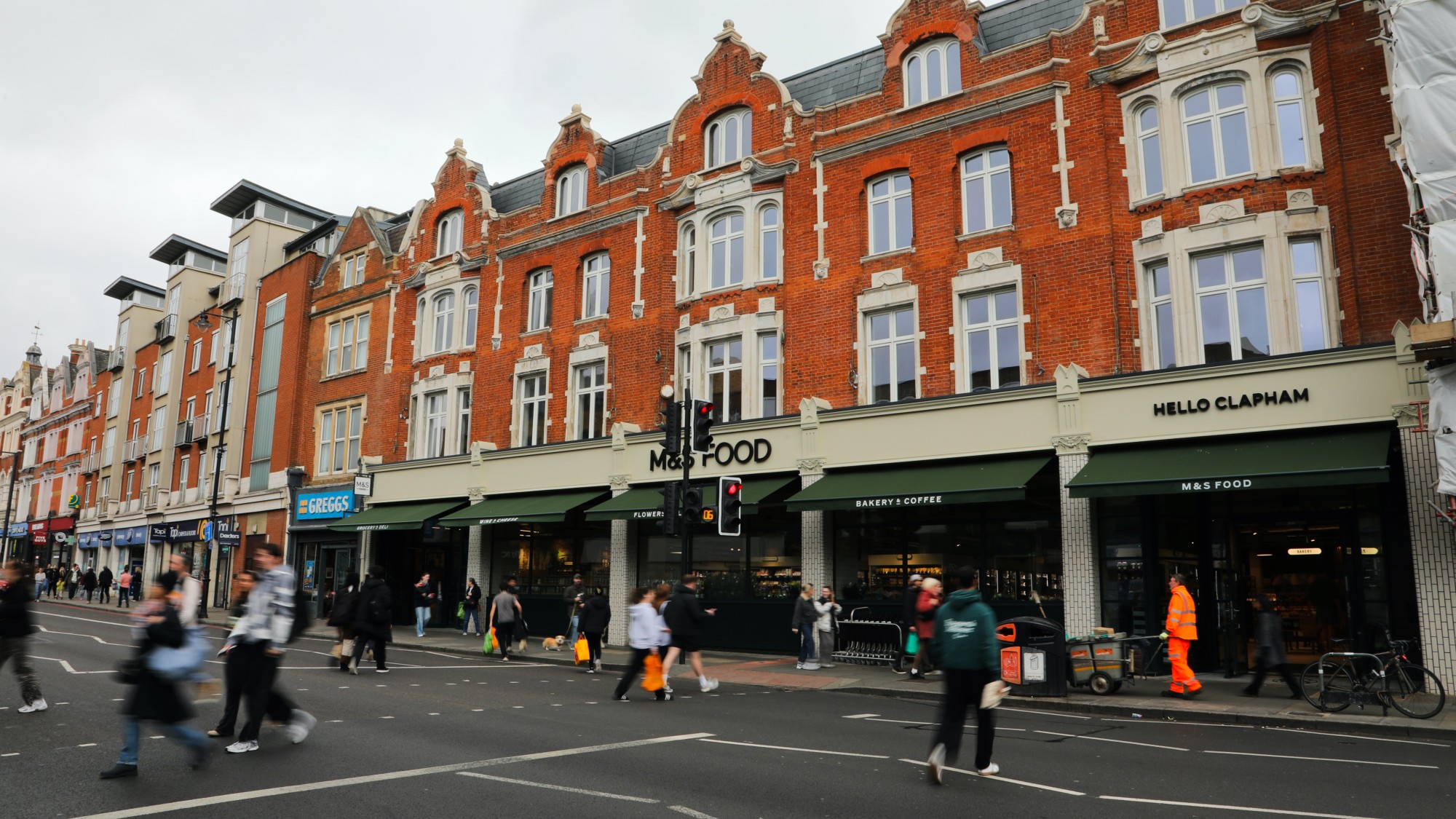
    The recent disturbance in Clapham, south London, “had a nasty, feral and violent edge”, said The Times. Some 100 rampaging teenagers, who had met up for an event promoted on TikTok and Snapchat, swarmed into high street shops, stealing and knocking items off shelves – while filming it all for social media. Five people, including four police officers, were assaulted. About 100 officers arrived to quell the chaos, but so as to keep the situation calm, made few arrests. For Marks & Spencer, one of the stores targeted, it was the final straw. The company’s retail director, Thinus Keeve, warned that shoplifting and violence towards staff were “systemic” and “getting worse”, and that attacks on high street shops were becoming “more brazen, more organised and more aggressive”. Keeve called on police and the authorities to do far more to tackle them. 

    What happened was very different to earlier London riots, such as those in 2011, said London Centric. Most thefts seem to have been of small food items rather than anything valuable, such as electrical goods or trainers. Instead, “there seemed to be a new purpose – filming yourself engaging in a public display of disorder, to be uploaded to the internet in real time. The footage is no longer just the record of the behaviour, but the point of it.” Such viral videos have heightened “awareness of what people can get away with in the face of security guards trained not to confront teenagers”. Sadly, the phenomenon appears to be spreading, said James Price in The Critic. It was the second such incident in a week in Clapham; a few days earlier, teenagers had “swarmed” Birmingham city centre. 

    Young people setting up events online is not new, said Sammy Gecsoyler in The Guardian. What’s different is the “speed and scale”. Sociologists suggest that the lack of places for teenagers to “hang out in person” is a factor, because many youth clubs have been closed and there are few affordable public venues; “digital spaces” are often “the only way for many young people to organise real-life encounters”. Seriously, asked Michael Deacon in The Telegraph. It was because they had nowhere to play table tennis? Not because they’re “selfish, amoral, pea-brained thugs whose feckless parents failed to teach them the difference between right and wrong”? Shoplifting has for too long been seen as a victimless crime, said The Sunday Times, and high street crime is getting out of hand. “We are not a lawless country, but we are on the slippery slope to becoming one.”


    It wasn’t all bad

    A puppet from the TV show “The Clangers” has been put back on public display more than 50 years after it was stolen. Michael O’Connor, from Ireland, was 15 when he took the puppet of Mother Clanger from a London exhibition. Since then, it has resided in his attic; but just before his death, he confessed his crime to his son, who contacted council officials in Canterbury, where the rest of the Clanger family is on public display. “It’s taken quite a long time,” said Emily Firmin, daughter of one of the show’s creators, Peter Firmin. “I’m just glad that she’s reunited with the rest of her family.”


    People

    Mel B

    As a member of the Spice Girls, Melanie Brown spent years travelling the world. Now, though, she is living quietly back in England, says Julia Llewellyn Smith in The Times – not in London, but in her native Leeds, or at least in the countryside just outside it. 

    After the Spice Girls broke up, she had settled in Los Angeles. But following the breakdown of her “horrible” second marriage, to film producer Stephen Belafonte, and a trip home to see her dying father, her children had asked why they lived so far from her family. “I’m like, ‘OK, good point. But you’re all California kids, do you really want to move to London with all the different weather?’” she recalls. “They were like, ‘Yeah! But not London – Leeds!’” 

    Now, they live “half an hour from my mum’s, 10 minutes from my aunties and cousins” in a farmhouse she shares with her third husband, hairdresser Rory McPhee. A family friend she knew before she was famous, he is not like the men she dated before. “All my aunties and uncles were like” – she puts on an incredulous tone – “‘Quiet, safe Rory?!’ He keeps to himself. But he’s a very sweet guy, he’s from the same village I’m from, we’ve got the same humour, the same accent. Heidi [Klum, the supermodel] told me, ‘I’m getting married again,’ and I was like, ‘Oh my God, what?’ But she’d met a guy from her village, they speak the same German [dialect]. I get it, it works.”


    Image credits, from top: Apu Gomes / Getty Images; Seksan Mongkhonkhamsao / Getty Images; Alishia Abodunde / Getty Images; Amanda Edwards / Getty Images
     

    Recent editions

    • Evening Review

      Irish fuel protests spark chaos

    • Morning Report

      Israel agrees Lebanon talks but continues strikes

    • Evening Review

      Has China won the war in Iran?

    VIEW ALL
    TheWeek
    • About Us
    • Contact Future's experts
    • Terms and Conditions
    • Privacy Policy
    • Cookie Policy
    • Advertise With Us
    • FAQ
    Add as a preferred source on Google Add as a preferred source on Google

    The Week UK is part of Future plc, an international media group and leading digital publisher. Visit our corporate site.

    © Future Publishing Limited Quay House, The Ambury, Bath BA1 1UA. All rights reserved. England and Wales company registration number 2008885.