The Week The Week
flag of US
US
flag of UK
UK
https://cdn.mos.cms.futurecdn.net/flexiimages/jzblygzdxr1769609154.gif

SUBSCRIBE

Try 6 weeks free

Sign in
  • View Profile
  • Sign out
  • The Explainer
  • Talking Points
  • The Week Recommends
  • Podcasts
  • Newsletters
  • From the Magazine
  • The Week Junior
  • More
    • Politics
    • World News
    • Business
    • Health
    • Science
    • Food & Drink
    • Travel
    • Culture
    • History
    • Personal Finance
    • Puzzles
    • Photos
    • The Blend
    • All Categories
  • Newsletter sign up Newsletter
  • The Week Evening Review
    Ireland’s fuel protests, Hungary’s pivotal election, and a new home for the super-rich

     
    TODAY’S BIG QUESTION

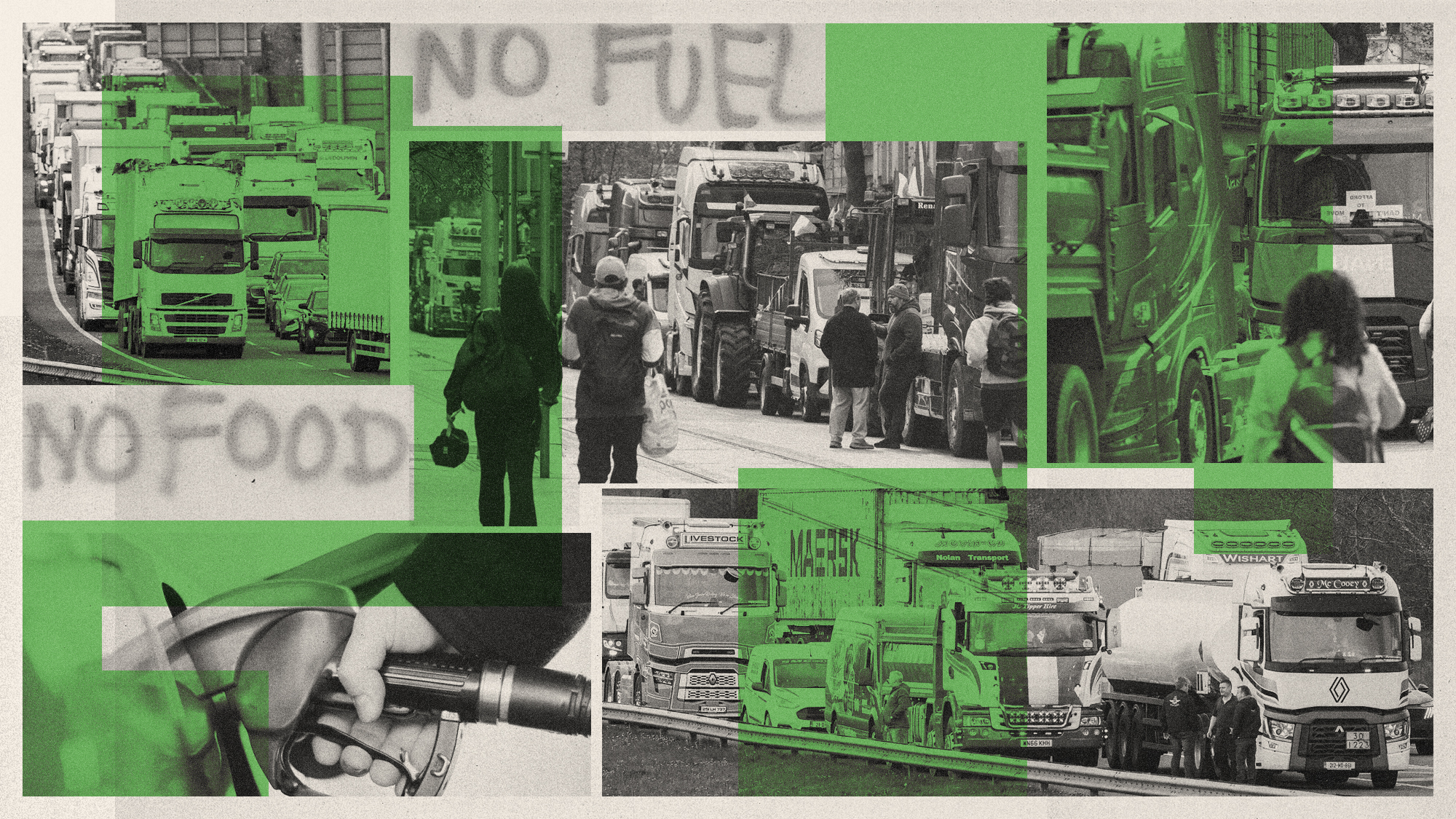
    Are Irish fuel protests a sign of things to come?

    As nationwide fuel protests in Ireland stretch into a fourth day, the government has put defence forces on standby to help police clear vehicles blockading roads and fuel depots. The protestors are causing “significant disruption” that threatens “critical supplies”, said The Independent. Most are farmers, hauliers and others who drive for a living and who are demanding “immediate government intervention” to tackle the sharp rise in fuel prices triggered by the Middle East conflict.

    What did the commentators say?
    The Irish government is “locked in a highly polarised debate”, said Johnny Fallon in The Journal. The protestors have a “straightforward” view of the issue: they can’t afford fuel, and any “lack of political will” to cut costs means the government is “corrupt” or “misallocating funds”. The wider public, “though sceptical of the protests”, is also growing “impatient” for “meaningful government action”. But the government needs “sustainable, fact-based, long-term solutions rather than short-term fixes”.

    With the International Monetary Fund warning that countries worldwide will experience diesel and jet fuel shortages “for some time”, unrest is spreading beyond Ireland’s borders.  In Britain, the markets are “already reacting as if shortages are coming”, said Hannah Barnes in The New Statesman. “If they do materialise, they are likely to spread through the economy in ways that go far beyond queues at petrol stations.” And “the longer the disruption continues”, the bigger the impact on food prices. 

    Protests about fuel shortages and rising prices for diesel have already spread to France, said Radio France Internationale. Landscaping firms have blockaded ring roads around Nantes, and fishermen in Corsica have been blocking the island’s six main ports.

    What next?
    “A situation that not long ago was described as difficult is now being openly called an existential crisis by many business owners,” said Agnieszka Kulikowska on Trans.INFO. “The protests that are just beginning may only be the start of a broader movement.” If governments and industry regulators don’t ease pressures on businesses, the next steps could be “far more radical”.

    “One thing is certain: road transport – the lifeblood of the European economy – has reached a critical point.”


    THE EXPLAINER

    Why Hungary’s elections matter to the global right

    Viktor Orbán’s Hungary has been a “source of inspiration” for Donald Trump in leading a worldwide lurch towards right-wing politics, said Al Jazeera. But as Hungarians prepare to vote in parliamentary elections on Sunday, polls suggest Orbán and his Fidesz party may be heading for defeat.

    Trump’s ‘vision for Europe’
    “Pro-Kremlin, anti-EU strongman” Orbán has spent nearly two decades “building a template for Christian nationalist rule”, said Axios, and Hungary is now the “cornerstone of President Trump’s vision for Europe”. Under Orbán, the country has “firmly” aligned itself with “far-right parties and immigration restrictionists” in nations including France and Germany, said Al Jazeera. While this has “mired relationships in Europe”, Hungary has been the “centre of the Trump administration’s shifting policy” towards the continent.

    “Whatever Hungary decides will resonate throughout Europe,” said Argentina’s President Javier Milei during a speech at last month’s Conservative Political Action Conference in Budapest. Orbán is a “beacon” for those who “refuse to accept that the West’s destiny is one of managed decline”.

    ‘Blueprint for reshaping Western democracy’
    Should Orbán’s government fall, the “dreams” of his authoritarian admirers in Trump’s Maga movement “might be shattered”, said Vox. As a “close Russian ally,” Orbán’s defeat would also be a “considerable boon to the Ukrainian war effort”. So Hungary’s elections could end up as “one of the most significant elections of the entire year”.
     
    An Orbán loss would prompt authoritarian allies to ask “what it could mean for them”, said Salon. His departure would “reverberate well beyond Hungary”, said Reuters, and call into question the “durability of a political system” that is “touted as a blueprint for reshaping Western democracy” by many conservatives.

    “I admire what you are fighting for,” J.D. Vance said at a pro-Orbán rally in Budapest this week. The US vice president’s visit is unlikely to change the electoral calculus in Hungary, where “domestic issues such as the ⁠cost of living dominate the election”, said Reuters. But no matter what happens in Hungary’s immediate future, Orbán’s global footprint will surely be felt for years to come.


    Poll watch

    More than half (54%) of Britons believe pornography negatively impacts real-life relationships, according to an Ipsos poll of 2,485 adults. The research, for Joe Media, found that men aged 18 to 34 are most likely to believe porn causes problems between men and women.


    Statistic of the day

    695,081 miles: How far the Orion spacecraft will have travelled when Nasa’s Artemis II mission concludes tonight. The journey will end with a “13-minute rollercoaster ride from space” before the astronauts splash down off the coast of San Diego at 8.07pm EDT, said The Times.


    In the Spotlight

    Why the super-rich are swapping Dubai for Milan

    As the tensions and violence in the Gulf region spark an exodus from Dubai, many of the city’s wealthy former residents are heading to Milan.

    Obsession with reinvention
    Italy’s flat-tax regime means that foreign residents pay €300,000 (£259,620) a year on all overseas income, which is “small change for the world’s wealthiest”, said The Guardian. Interest in living in Italy was taking off even before the Iran war, after Britain scrapped its non-dom status and Portugal tightened similar rules.

    But “tax policy alone does not explain the surge”, said the Economic Times. Italy’s “strong legal framework, EU membership, and relatively stable economy” also make it a “compelling choice” for the privileged. As wealthy families move to “safer European bases”, Milan, in particular, is enjoying “historic spikes” in luxury real-estate sales, with property prices in the city rising by 38% over five years.

    “Unlike more poetic cities like Rome or Venice”, said The Times, Milan “actually works” and doesn’t have an issue with “overtourism”. Its “strategic location” offers “easy access to the lakes, mountains and coast”, and there’s an “obsession” with “reinvention”, so there’s “always something new to see or do”. Hotels, restaurants, bars and private members’ clubs are “cranking up the standards of hospitality” in Milan, which is also home to the Borsa Italiana stock exchange, leading banks and global fashion houses. And the “tap-in tap-out” metro means commuters and visitors can “whizz around the city quicker than ever”, while a new “superfast” railway links the city centre and Linate airport. 

    Tax dumping
    Whether Milan can permanently dethrone Dubai in the affections of the super-rich “remains to be seen”, said The Guardian. There are “still questions” about “how far Italy can push its advantage”, and France’s former prime minister François Bayrou has accused Italy of “tax dumping”, an allegation that Italian leader Giorgia Meloni dismissed as “utterly baseless”.

    Milan may not be the new Dubai, said Eastern Eye, but it has become a “strategic second home for global elites”, as a “compelling alternative for those prioritising European stability”.


    Good day📺

    … for nostalgia, as a “Malcolm in the Middle” reboot hits screens, 20 years after the last episode of the hit US sitcom aired. Frankie Muniz reunites with other original cast members including Bryan Cranston in Hulu’s four-part revival, which sees 40-year-old Malcolm returning home for his parents’ wedding anniversary.


    Bad day 📚

    … for longtime e-book users, as Amazon prepares to pull the plug on support for older Kindles. Owners of models released in or before 2012 are  “outraged” by the decision to stop sending them updates needed to download new titles, which will render up to two million devices “obsolete” from 20 May, said the BBC.


    picture of the day

    Photo finish

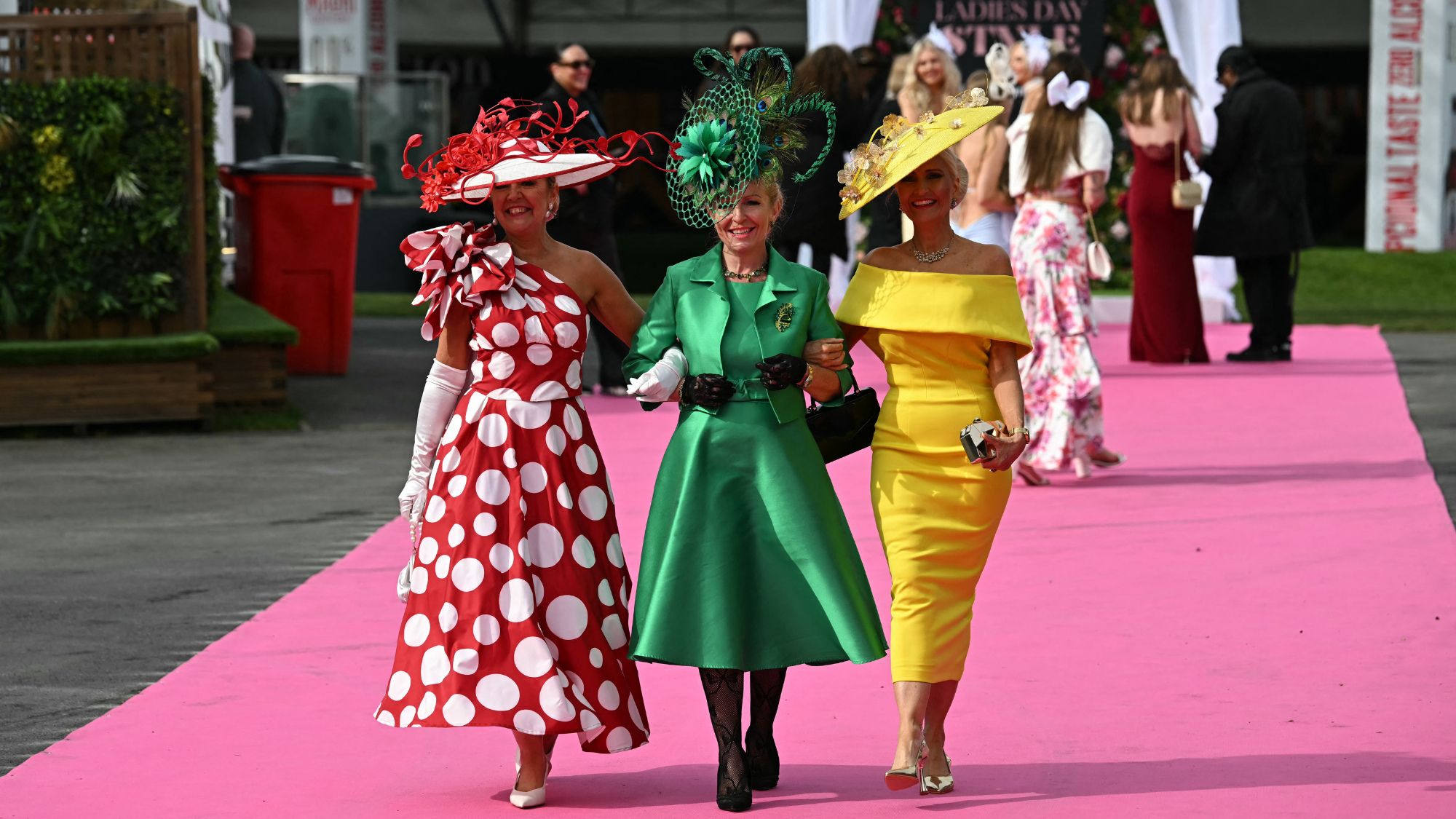
    Racegoers walk the pink carpet as Ladies Day returns to Aintree Racecourse. An estimated 50,000 punters donned their glad rags for the second day of this year’s Randox Grand National Festival in Merseyside.

    Paul Ellis / AFP / Getty Images


    PUZZLES AND QUIZZES

    Quiz of The Week

    Have you been paying attention to The Week’s news? Try our weekly quiz, part of our puzzles section, which also includes sudoku and crosswords 

    Play here


    THE WEEK RECOMMENDS

    Properties of the week: rural retreats 

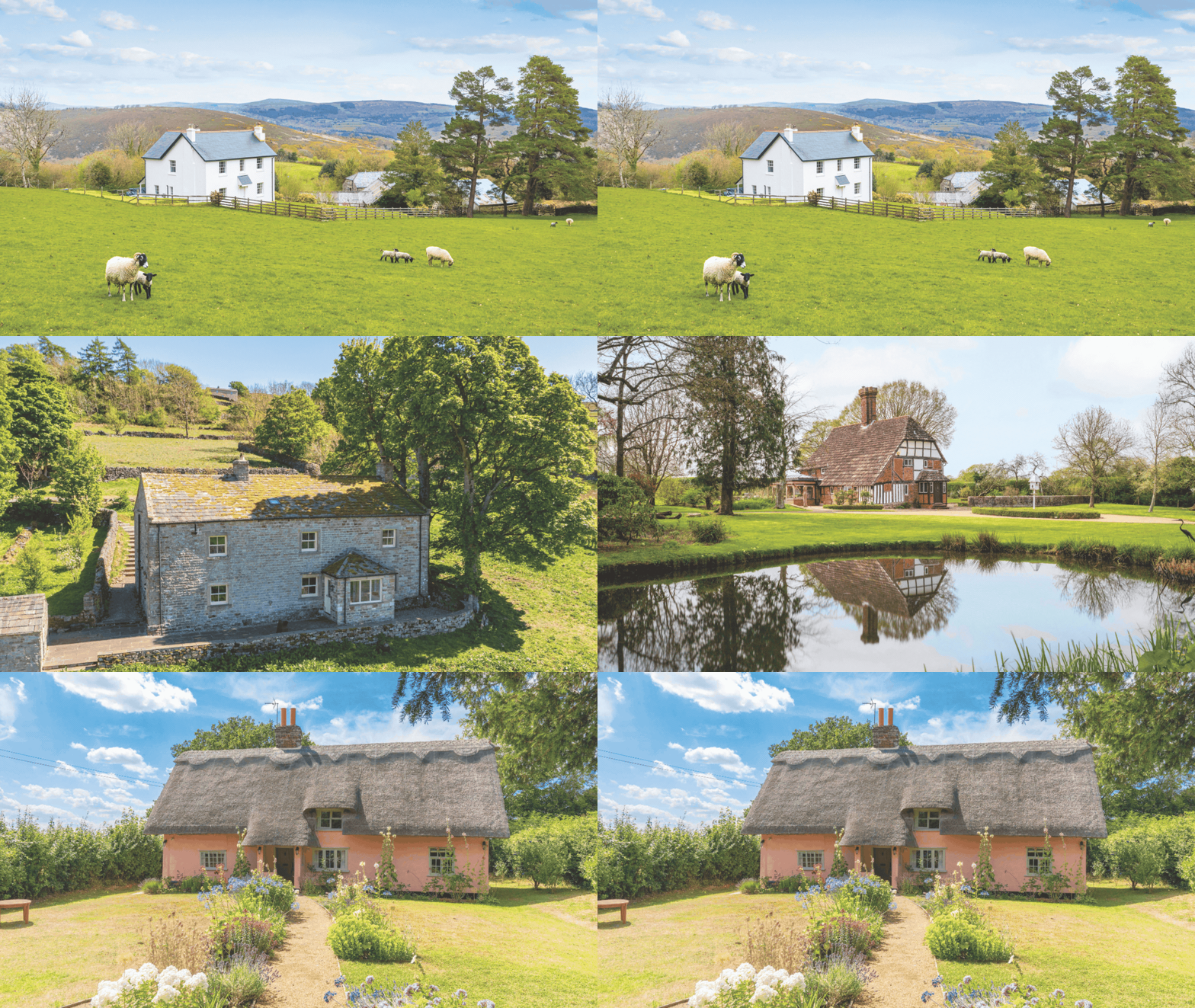
    Devon: Middle Stoke House, Holne, Newton Abbot
    A Victorian family house set in just over four acres within the Dartmoor National Park, with wonderful views over the River Dart. 5 beds, family bath, shower room, kitchen/breakfast room, 3 receps, gardens, paddocks, parking. £1.25 million; Knight Frank

    North Yorkshire: Hollins Farm, Richmond
    Superb 18th century house with grounds of approx. 1 acre. 3 suites, 2 further beds, family bath, kitchen/dining room, 2 receps, study, garden, outbuilding. OIEO £695,000; GSC Grays.

    West Sussex: Slipe, Twineham Lane, Haywards Heath
    Fine Grade II* 15th century house. 4 beds, 3 baths, kitchen, 4 receps, study, gardens; 1.5 acres. £1.85 million; John D. Wood & Co.

    Suffolk: The Sparrows Nest, Ousden
    This charming Grade II cottage, believed to date back to the late 17th century, has a garden that wraps around the house overlooking the neighbouring field. 3 beds, family bath, kitchen, 2 receps. £550,000; Bedfords. 

    Cornwall: Hustyn Gate, St Breock
    Picturesque country residence, set within approx. 2.3 acres of beautifully landscaped gardens and grounds. Main suite, 4 further beds, 3 baths, kitchen/diner, 3 receps, utility, 2-bed detached annexe; 2.3 acres. £1.3 million; Rohrs and Rowe.

    See more


    QUOTE OF THE DAY

    “They’re worried, they’re not sleeping, they don’t know where they’re going to find the money.”

    National Union of Students president Amira Campbell points to the human impact of mis-sold maintenance loans. Some 22,000 part-time university and college students are “devastated” after being ordered to repay grants for which they weren’t actually eligible, she told the BBC. 


    instant opinion

    Today’s best commentary

    Grumbling about long airport queues now? Leave it out
    Martin Samuel in The Times
    I’m enjoying the “polemics” of columnists “who campaigned for Brexit and now complain bitterly about being stuck” in “slow-moving queues” at EU airports as new border controls kick in, writes Martin Samuel. According to the Brexiteers, the blame lies with “those dastardly Europeans”, for “not walking behind us” and “clearing up our mess”. But it’s “not their problem” that “we’re out” of the Schengen zone. Own “the choices you made” and “get to the back of the queue”.

    Keir Starmer deserves our thanks… but he won’t get it

    John Rentoul in The Independent
    “You really feel for” Keir Starmer sometimes, writes John Rentoul. The “mood of the British public” and press is “one of unceasing negativity”. But he was “bang on the money” about the Iran conflict, “remained calm” when insulted by the “hoodlum in the White House”, and “convened a coalition of countries” to “work to protect the Strait of Hormuz”. Our PM has “done the right things”, yet when living standards “are hit again”, he’ll “take the blame”.

    I baulked at the idea of ‘friction-maxxing’. But there’s more to it than meets the eye
    Gaby Hinsliff in The Guardian
    Friction-maxxing is about doing things in more “analogue ways”, writes Gaby Hinsliff. “Using road signs” rather than satnav, “trying to remember” stuff rather than “falling back on Google” – it sounds like an “irritating” rebrand “of what used to be considered merely living”. But “that’s the point”. By not “outsourcing” everyday tasks to AI tools, we “slow down” and rub up “against the outside world”. It’s “how you know you are alive”, and we should all “be maxxing out on that”.


    word of the day

    Trichomonosis

    A contagious, parasitic disease that has caused a “worrying decline” in greenfinch populations, according to the RSPB. The charity is urging bird lovers to take down their nut and seed feeders this summer to curb the spread of trichomonosis, which peaks when birds cluster together in warm conditions. 


     Evening Review was written and edited by Irenie Forshaw, Jamie Timson, Rebecca Messina, Chas Newkey-Burden, Rafi Schwartz, Will Barker; Adrienne Wyper, David Edwards, Helen Brown and Kari Wilkin.

    Image credits, from top: illustration by Stephen P. Kelly / Getty  / Alamy; illustration by Stephen P. Kelly / Getty; illustration by Julia Wytrazek / Getty; Knight Frank; GSC Grays; John D. Wood & Co; Bedfords; Paul Ellis / Getty

    Morning Report and Evening Review were named Newsletter of the Year at the Publisher Newsletter Awards 2025
     

    Recent editions

    • Morning Report

      Israel agrees Lebanon talks but continues strikes

    • Evening Review

      Has China won the war in Iran?

    • Morning Report

      Iran closes Strait amid Israeli strikes on Lebanon

    VIEW ALL
    TheWeek
    • About Us
    • Contact Future's experts
    • Terms and Conditions
    • Privacy Policy
    • Cookie Policy
    • Advertise With Us
    • FAQ
    Add as a preferred source on Google Add as a preferred source on Google

    The Week UK is part of Future plc, an international media group and leading digital publisher. Visit our corporate site.

    © Future Publishing Limited Quay House, The Ambury, Bath BA1 1UA. All rights reserved. England and Wales company registration number 2008885.