The Week The Week
flag of US
US
flag of UK
UK
https://cdn.mos.cms.futurecdn.net/flexiimages/jzblygzdxr1769609154.gif

SUBSCRIBE

Try 6 weeks free

Sign in
  • View Profile
  • Sign out
  • The Explainer
  • Talking Points
  • The Week Recommends
  • Podcasts
  • Newsletters
  • From the Magazine
  • The Week Junior
  • More
    • Politics
    • World News
    • Business
    • Health
    • Science
    • Food & Drink
    • Travel
    • Culture
    • History
    • Personal Finance
    • Puzzles
    • Photos
    • The Blend
    • All Categories
  • Newsletter sign up Newsletter
  • Saturday Wrap, from The Week
    Trump’s slush fund, Labour’s future, and Ricky Gervais’ key to comedy

     
    CONTROVERSRY OF THE WEEK

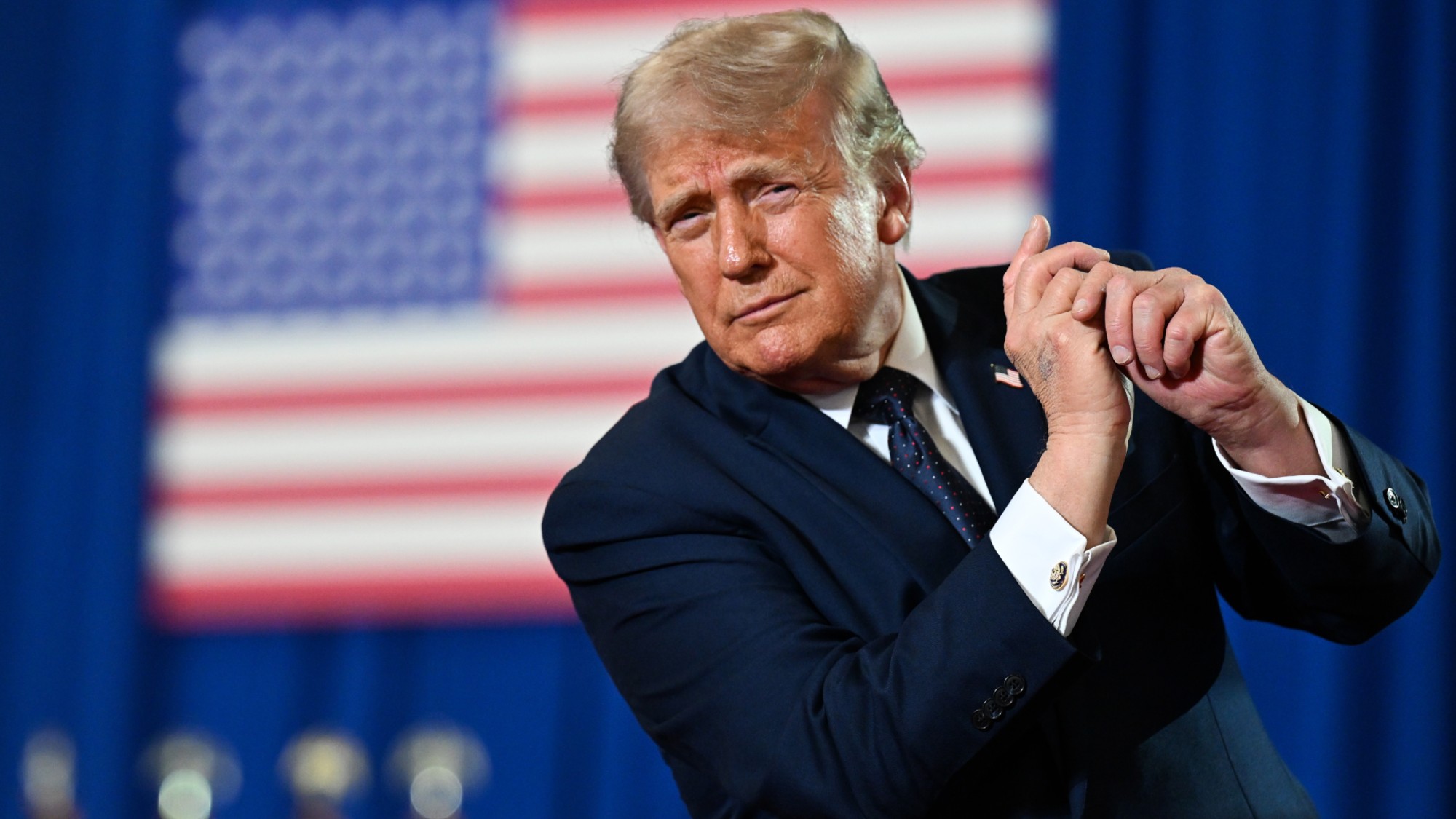
    Trump’s $1.8bn slush fund: has the Don gone too far?

    Donald Trump has been much preoccupied by his place in history of late, said Noah Shachtman in The New York Times. It’s one of the reasons he’s ignoring his terrible approval ratings and focusing on his architectural legacy instead. The way things are going, though, he won’t be remembered for his triumphal arch in Washington, or for his Maga philosophy – but for his “greed”. The extent to which he and his family have enriched themselves since he returned to office is shocking enough: his wealth has more than doubled in 18 months, to about $6.1 billion, largely due to crypto deals. Now, he has crossed a new line by misappropriating money directly from US taxpayers.

    Last week, his administration set up a fund of $1.776 billion (a nod to the year of America’s founding) to compensate supposed victims of Biden-era “lawfare”. The money is expected to be doled out to Trump’s allies – and officials have refused to rule out payments to the rioters convicted of assaulting police in the 6 January attacks on the US Capitol: Enrique Tarrio, former head of the Proud Boys, says he is going to ask for $2 million to $5 million from the fund. A legal watchdog has rightly called this fund deal “one of the single most corrupt acts in American history”.

    The creation of this “slush-fund boondoggle” stems from a $10 billion lawsuit that Trump brought against the Internal Revenue Service in January over the leak of his tax returns during his first presidency, said National Review. That leak did violate Trump’s rights (the culprit, a former IRS contractor, was jailed), but there was something deeply wrong about a case in which Trump (as head of an agency – the IRS – that ultimately reports to him) was effectively both plaintiff and defendant. But as the presiding judge seemed poised to throw out the case over this conflict of interest, the administration announced that Trump’s lawyers and the Department of Justice had agreed an out-of-court settlement. This involved an apology for Trump, and the establishment of the vast “anti-weaponisation” fund – which expires in December 2028, so all the money in it will be handed out by the current administration.

    It's frankly “obscene”, said Andrew Egger on The Bulwark. Decisions about who receives money from the fund will be made by a five-member panel largely appointed by the acting attorney general, Todd Blanche, Trump’s former personal lawyer. The president will retain the power to remove its members at will. And there’ll be no transparency: the panel isn’t obliged to disclose “how they’re making disbursement decisions”, or even “who’s getting paid”.

    But all this is only one half of the scandal, said Matt Ford in The New Republic. As part of the settlement, the US government is now permanently precluded from examining the past tax arrangements of Trump, his sons and his Trump Organization. So the IRS will have to drop all its many live and pending investigations into the Trump family’s affairs. Such “brazen corruption” makes the Watergate scandal look “almost quaint”. Even some Republicans have expressed anger about this deal, said Politico, and some of the police officers attacked on 6 June have filed a lawsuit to stop the fund.

    This marks a new low in the corrupt practices of Trump’s “pecuniary presidency”, said Jamelle Bouie in The New York Times. It’s stealing from the Treasury, and using your authority, with the support of your allies in the judiciary, to make yourself unaccountable. It goes way beyond Tammany Hall-style graft. “It’s government as protection racket and the president as mob boss” – a role that Trump has now clearly embraced.


    Briefing of the week

    The future of Labour

    Andy Burnham faces an ‘impossible triple task’: win a by-election in a Brexit-voting area, woo progressive Labour members, and prepare for government

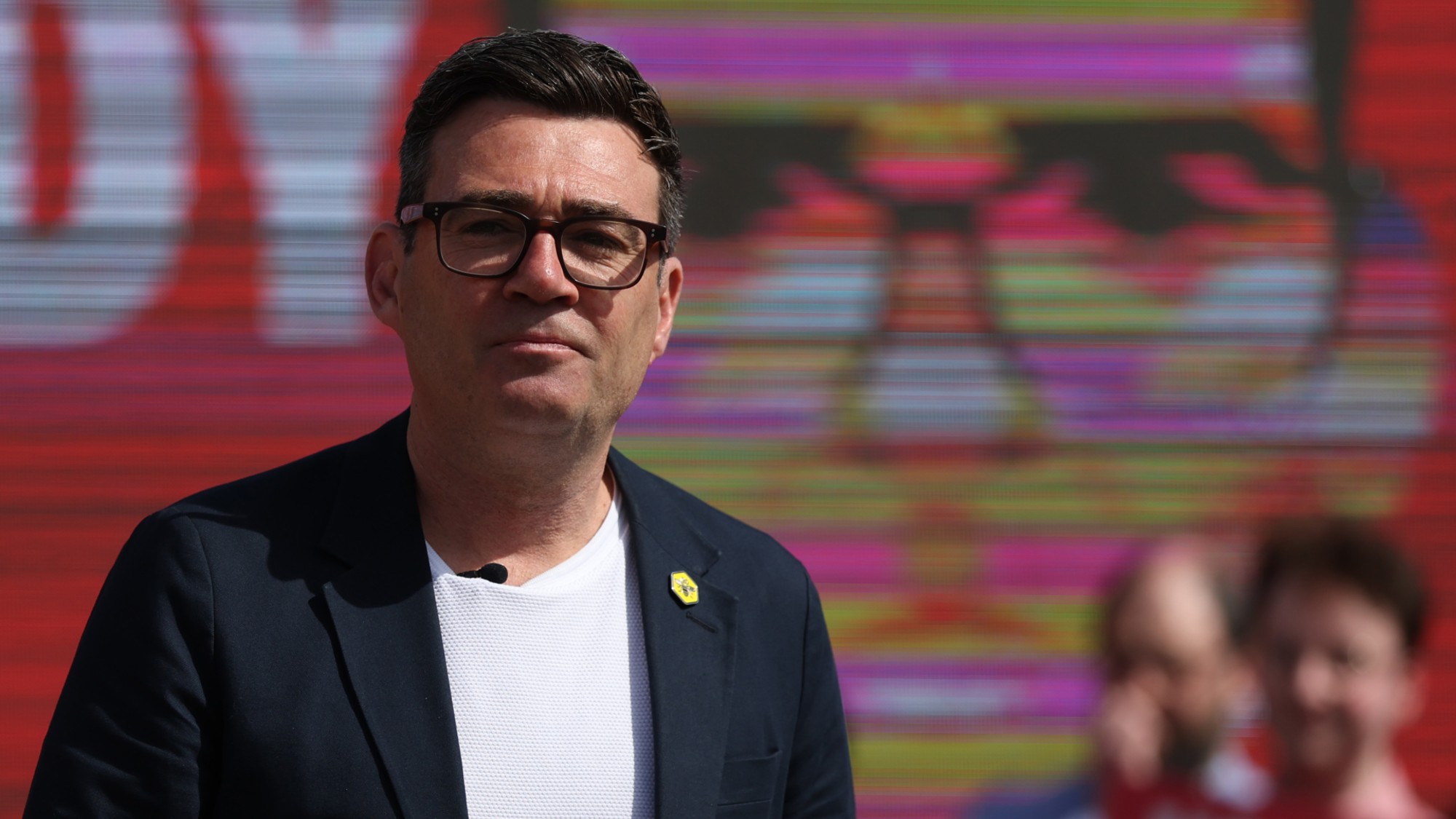
    Andy Burnham launched his Makerfield by-election campaign last week, telling supporters that British politics was “tired” and needed “a new script”. The mayor of Greater Manchester will challenge Keir Starmer for the Labour leadership if he wins the 18 June vote. A spokesman said Burnham wouldn’t discuss a “national manifesto” during the campaign, but Burnham has set out his position on a few issues. He has, inter alia: confirmed his interest in replacing inheritance tax with a social care levy; said he thinks “land is undertaxed”; backed the immigration reforms of Home Secretary Shabana Mahmood; and voiced support for the government’s guidance on single-sex spaces.

    Labour’s former health secretary, Wes Streeting, a rival leadership contender, said he would raise the rate of capital gains tax to align with income tax. Nigel Farage, the Reform UK leader who has pledged to “throw everything” at Makerfield, promised to end income tax on overtime pay. In a lengthy critique, Tony Blair accused Labour of lacking a “coherent plan” and warned that it was a “delusion” that voters want the party to shift further to the left.

    How might the contest play out?
    When Streeting resigned as health secretary a fortnight ago, triggering this leadership contest, he called for “a battle of ideas” within Labour, said The Telegraph. The few substantive ideas that have emerged since then – rejoining the EU, a wealth tax, a new care levy on estates at death – are all stale, failed concepts. There’s something to be said for Burnham’s proposal to overhaul the crazy council tax system, “under which London mansions pay less than two-beds in crumbling towns”, said The Economist. But fresh ideas are in short supply. Labour candidates are also ignoring difficult issues such as welfare reform.

    Blair is right to argue that Labour has focused too much on personality and too little on its plan for office, said The Independent. As he put it: “Whether there is a leadership change or not is irrelevant if it doesn’t start with a policy debate”. The right also needs to look beyond petty considerations, said the Daily Mail. A poll put Labour three percentage points ahead of Reform in Makerfield, but also showed Restore Britain – the splinter party started by Rupert Lowe after he fell out with Farage – gaining 7% of the vote. Both Lowe and the Tories should withdraw from the contest, or they’ll risk handing the election to Burnham.

    Burnham faces an “impossible triple task”, said John Rentoul in The Independent. He needs to win a by-election in a Brexit-voting area, while at the same time wooing progressive Labour members and preparing for government. His strategy so far has been to make lots of vague promises of “change” and take refuge behind his “man-of-the-people persona”. Whether an easy manner, a northern accent and a “vacuous” slogan – “I’m for us” – is enough to win him this by-election, he’ll need “an awful lot more” to be a successful prime minister.

    Is Burnham the answer to Labour’s woes?
    There are two narratives about Burnham, said Joshi Herrmann on The Mill. He’s either the visionary mayor who knows just how to rescue both Labour and the country, or a “cynical chameleon” with no substance. Having covered him up close for six years, I think both these analyses rather miss the mark. Burnham’s real skill is not devising plans like the Bee bus network, but selling them. He has “a wonderful sense of how to take hold of a moment” and enthuse people, and has a great gift for listening. “This is not a con trick or a gimmick”: it’s something voters need and value. His weakness is that “he wants to be liked and he’s not particularly ruthless”. These traits may be more of a liability in a PM than a metro mayor.

    Burnham might prove a poor PM, said Daniel Finkelstein in The Times, but his popularity could last long enough to win the next election for Labour. He’s a good public performer and his “Manchesterism” agenda would at least provide his government with a direction. Burnham’s plans don’t have to be coherent and effective to be politically successful. They just need to look as if they’re working for a while. His most valuable contribution to Labour would be to end the factionalism of the Starmer era and instil a sense of collective purpose, said Tom Clark in Prospect. This, more than “any miraculous new policy programme”, would help arrest the government’s decline. And in today’s fractured political landscape, parties no longer need to be polling at 40% to be sure of winning. If Labour could even match the 28% share of Michael Foot’s 1983 defeat, it might be in with a chance.

    What next?
    Left-wing MPs unhappy about Burnham’s recent repositioning on the EU, immigration and single-sex spaces are considering fielding a candidate against him in any future leadership contest, reports The Times. This news will likely hasten calls for Burnham to be given a “coronation” if he wins Makerfield. Although Labour’s moderate wing is sure he’d come out on top, it fears a prolonged contest would force him to tack left. Ed Miliband is widely expected to be made chancellor if his close ally Burnham wins power. Were Miliband to choose to stay in the energy department, Pat McFadden, the work and pensions secretary, is tipped to take the job instead.
     

    Spirit of the age

    As householders have cut back on costly home improvements, demand for cleaning services has surged 142% since 2023, according to Checkatrade. Oven-cleaning is one boom area, with enquiries up 56% in the first quarter of 2026. The shift may be driven by younger adults, says The Times: according to PolicyBee, 40% of under-35s employ a cleaner, compared with 17% of households overall. This may be partly due to “cleanfluencers” such as Mrs Hinch, who has almost five million followers on Instagram.

    VIEWPOINT

    The online eccentrics

    “The English eccentric is a dying breed, but one place they can flourish is social media. The algorithms that decide what we see online favour anything out of the ordinary. Luke Nicolson, aka Francis Bourgeois, is surely the first person to have become a celebrity by sharing his love of trainspotting. Henry West has amassed followers by sharing videos of himself playing war-themed video games in period regalia. Steven Moore is an antiques expert who describes himself as the ‘David Attenborough of teacups’. The difference is that once they realise that clicks mean cash, everything becomes a performance. An innocent hobby becomes a business. There’s nothing eccentric about optimising for Meta.”

    Ed Cummings in The Telegraph

     
    talking point

    Strikes on Moscow: a threat to Putin’s rule?

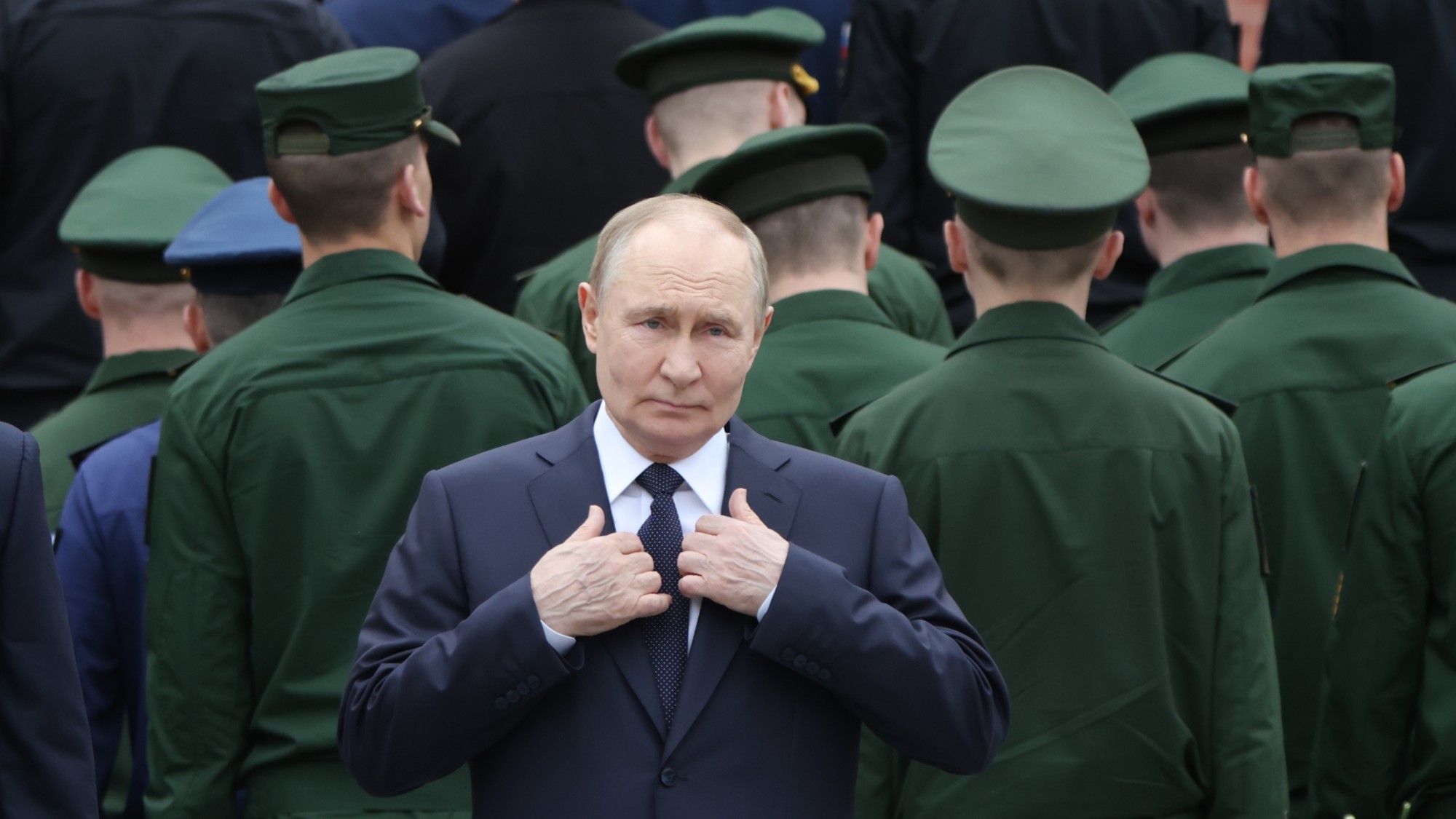
    “Suddenly, say those who live there, the mood in Moscow feels very different,” said Adrian Blomfield in The Telegraph. Ever since Ukraine’s counter-offensive stalled in 2023, Russia’s capital had “exuded confidence. Its residents could either bathe in the patriotic glory of war or ignore it altogether.” But lately, “bombast” has given way to fear, and to a longing for the conflict to end; and this feeling became more acute this month when Moscow and its wider region came under fire from a barrage of Ukrainian drones.

    It was “one of the most sustained aerial attacks of the conflict” so far. Three people were killed; all four of Moscow’s airports had to close; an oil refinery and residential buildings were hit. “Muscovites listening to drones buzz overhead and air defences firing into the night” were given a “glimpse of life in Kyiv – and they did not like it”.

    Events have not been in the Kremlin’s favour lately, said the Financial Times. Ukraine has upped its use of long-range drones to target energy and military facilities deep in Russia. On the front line, Russia is “scratching out meagre territorial gains at a devastating human cost”: US Secretary of State Marco Rubio recently asserted that it is “losing 15,000-20,000 soldiers a month. Not injured. Dead.”

    The Russian economy, meanwhile, is ailing: some analysts reckon that inflation is running well above the official 5.6%; and interest rates are at a punishing 14.5%. Vladimir Putin has tried to bury bad news by tightening state control over the internet, said Phillips Payson O’Brien in The Atlantic. Even so, videos have increasingly been circulating in which Russians express “shock at their capital’s vulnerability”. His long-standing narrative, that the conflict in Ukraine is a “special military operation” that needn’t trouble Russia’s elites or middle classes, is “completely unravelling”.

    Putin’s calculus on the war in Ukraine has not changed, said Pjotr Sauer and Shaun Walker in The Guardian. He remains determined to “press on” in the (surely misguided) belief that Moscow can capture the whole of Ukraine’s eastern Donbas region by the end of the year. Such “bravado”, however, is doing little to ease the disquiet inside Russia; and speculation is growing that Putin’s regime could be toppled from within. There have been reports that Sergei Shoigu, the former defence minister, could emerge as a threat to his former boss’s grip on power. The likelihood of an imminent Kremlin coup may be remote; but there’s no doubt that, at 73, Putin is entering “the most challenging period of his long rule”.


    It wasn’t all bad

    Days before his 99th birthday, a British pensioner has become the oldest man to complete a wing walk on a plane. Harry Heasman spotted the opportunity to fulfil a childhood dream when he heard about a wish programme run by his Essex care home. He prepared for the stunt by working with a physiotherapist to rebuild his strength, balance and confidence; and last Saturday, he took to the skies above the Imperial War Museum in Cambridgeshire for a nine-minute walk on a 1940s biplane – raising £8,000 for a children’s cancer charity. For his next challenge, he hopes to complete the London Marathon.

     
    People

    Ricky Gervais

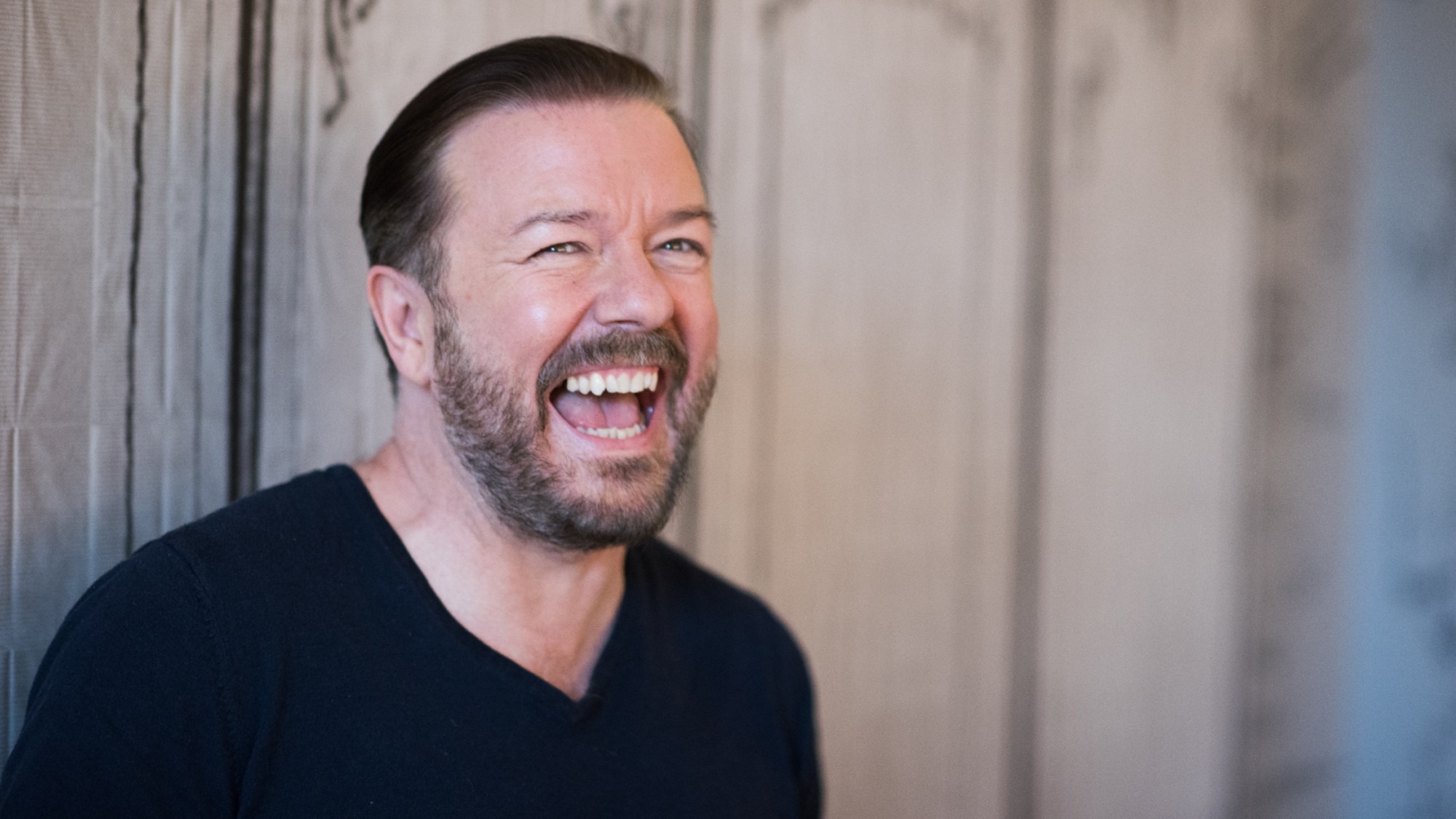
    From Baftas to Golden Globes and Emmys, Ricky Gervais has won almost every gong going – and usually, these have been for shows he wrote, directed and starred in. The key to his success, he told Caroline Frost in Radio Times, is sticking to what he knows. “I worked in an office for 10 years, so I wrote about it. I’d been in entertainment for a couple of years when I wrote ‘Extras’. Derek came out of my family working in care homes.”

    The best TV, he says, is about the everyday: there’s no need for guns or aliens – just people doing things “in a funny way”. After all, “I don’t think most people ask, ‘What’s the point of life?’ They say, ‘Why is Jack such an idiot?’ Most of us are living in a safe sort of society, where your firstborn isn’t dying of dysentery and you’re not being shot at. The worst thing that happens is a waiter being rude to you.”


    Image credits, from top: Roberto Schmidt / Getty Images; Ryan Jenkinson / Getty Images; Contributor / Getty Images; Dave Kotinsky / Getty Images

    Recent editions

    • Evening Review

      Is war with Russia coming?

    • Morning Report

      Israel to seize ‘70% of Gaza Strip’

    • Evening Review

      Is the declining birth rate a crisis?

    VIEW ALL
    TheWeek
    • About Us
    • Contact Future's experts
    • Terms and Conditions
    • Privacy Policy
    • Cookie Policy
    • Advertise With Us
    • FAQ
    Add as a preferred source on Google Add as a preferred source on Google

    The Week UK is part of Future plc, an international media group and leading digital publisher. Visit our corporate site.

    © Future Publishing Limited Quay House, The Ambury, Bath BA1 1UA. All rights reserved. England and Wales company registration number 2008885.