The Week The Week
flag of US
US
flag of UK
UK
https://cdn.mos.cms.futurecdn.net/flexiimages/jzblygzdxr1769609154.gif

SUBSCRIBE

Try 6 weeks free

Sign in
  • View Profile
  • Sign out
  • The Explainer
  • Talking Points
  • The Week Recommends
  • Podcasts
  • Newsletters
  • From the Magazine
  • The Week Junior
  • More
    • Politics
    • World News
    • Business
    • Health
    • Science
    • Food & Drink
    • Travel
    • Culture
    • History
    • Personal Finance
    • Puzzles
    • Photos
    • The Blend
    • All Categories
  • Newsletter sign up Newsletter
  • Saturday Wrap, from The Week
    Sturgeon’s headache, the problems with Prevent, and Turkey’s one-man band

     
    controversy of the week

    Murrell’s ill-gotten gains: what did Sturgeon know?

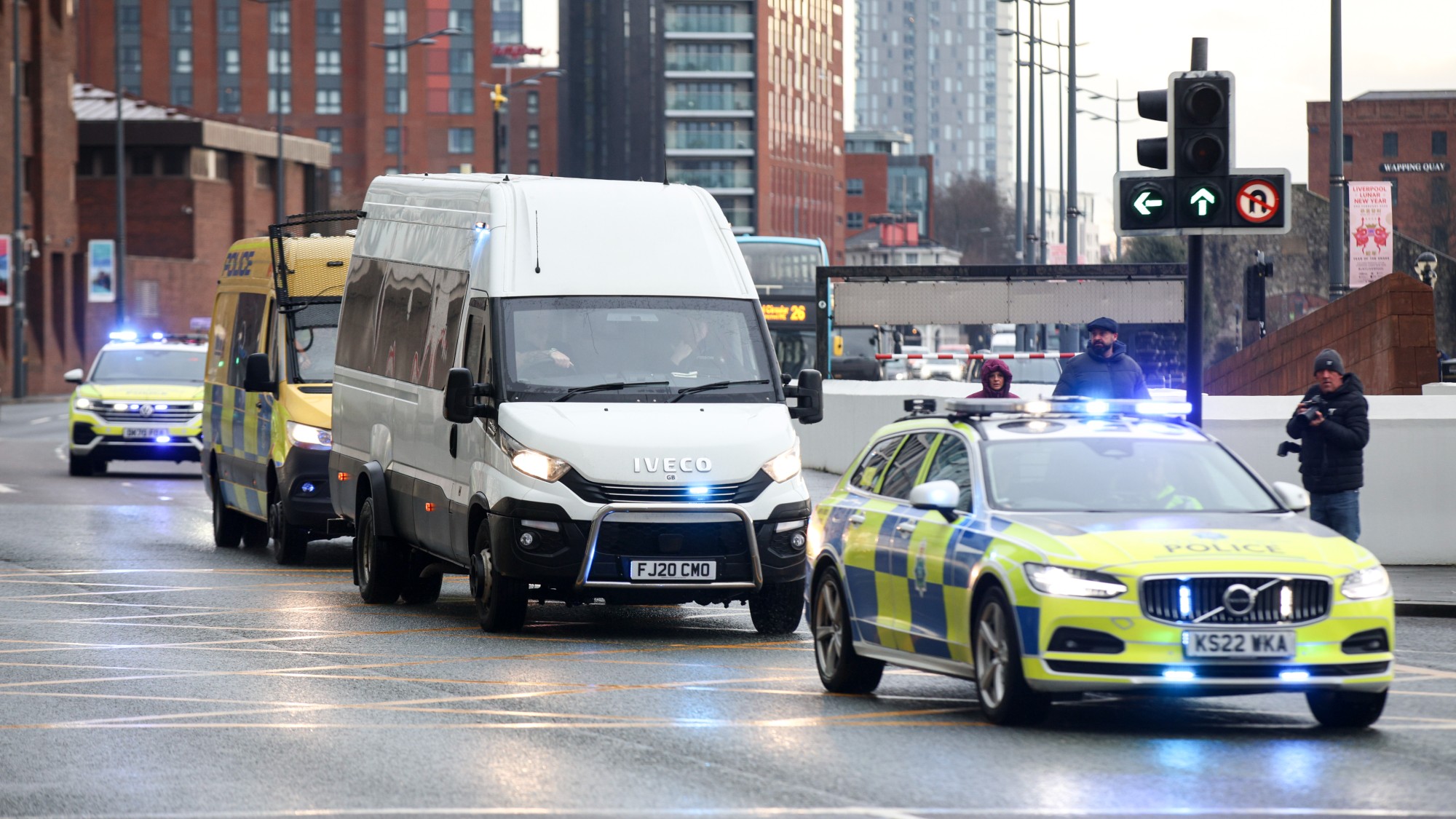
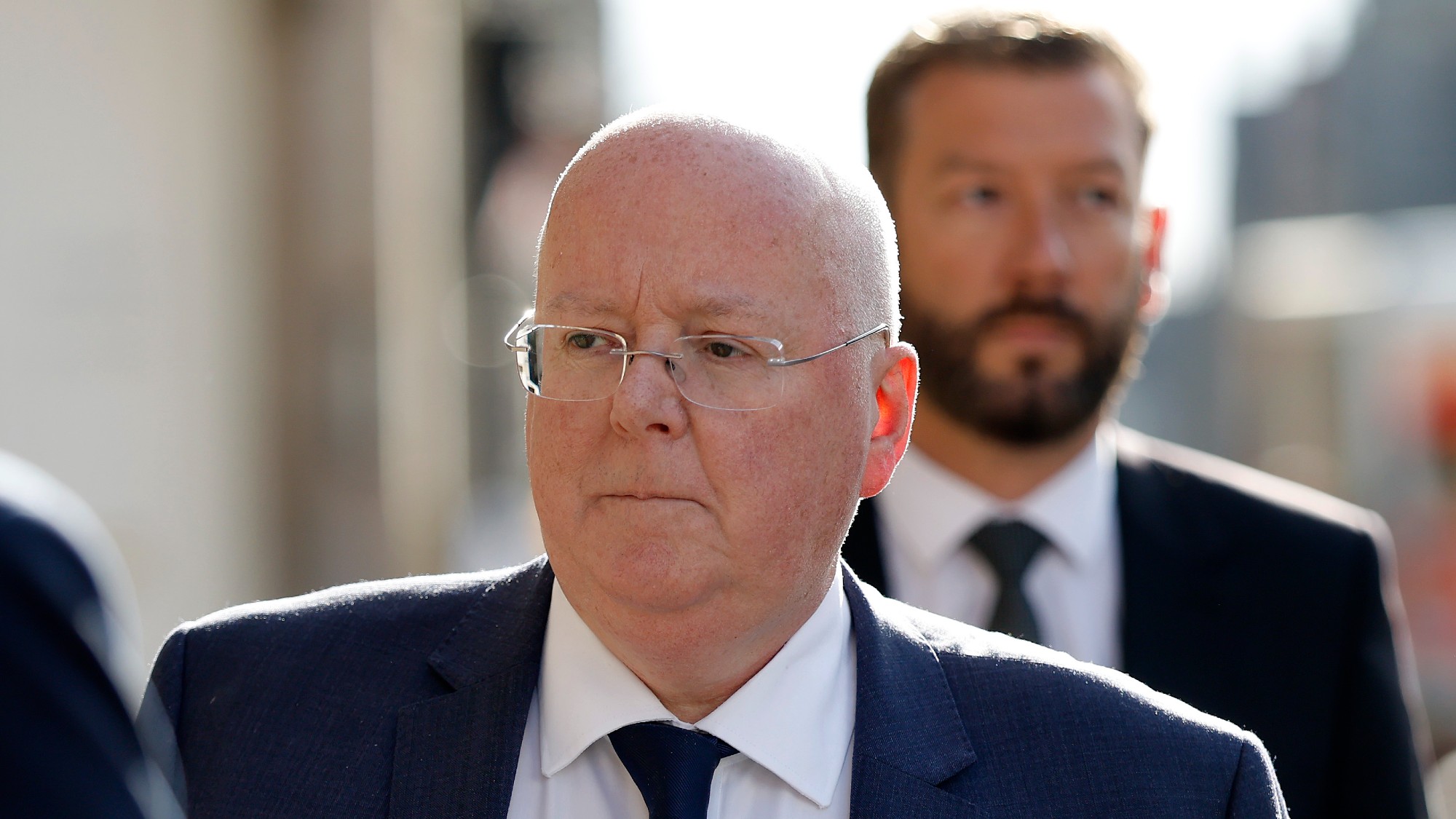
    Peter Murrell, the former chief executive of the SNP, appeared “for 20 excruciating minutes” at the High Court in Edinburgh on Monday, said Tom Peck in The Times. His earlier guilty plea meant there was little prosecuting to be done. “What we saw, instead, was a High Court edition of ‘Supermarket Sweep’,” as the prosecutor detailed how Murrell had embezzled £400,000 from the SNP over 12 years and spent it on 627 items in total, from £3.60 door fixings to the infamous £124,000 motorhome. 

    How did he get away with it? Because “the Great Expenser” was in charge of the process. “He submitted his expenses to himself, then he signed them off himself.” The list “makes for dazzling reading”, said Louis Wise in the Financial Times: not just the Jaguar, the Golf, the luxury watches, the £2,000 salt and pepper shakers – but also “no fewer than seven – seven! – vacuum cleaners”. One luxury goods PR described Murrell’s splurge as “like a regional sales manager’s idea of living large”. But actually it’s stranger than that – from the £75 men’s “slouch pouch” onesie, to the Xbox, the 108 Covid-era loo rolls, and the posh edition of Hannah Arendt’s “The Origins of Totalitarianism”. 

    “She should have known. She must have known. Nobody can get away with it for that long, in secret, in a marriage.” These are some of the accusations levelled at Nicola Sturgeon, said Victoria Richards in The Independent. Except it’s not that simple. As she has pointed out, they were both well-paid, and they had no children. None of these items were unaffordable, except perhaps the motorhome, which Murrell parked at his mother’s house. Countless people find their partner has been living a double life. And, as Sturgeon told the BBC’s Laura Kuenssberg, a lot of women “end up finding themselves blamed for the actions of the men in their lives”. She’s right to reject that sort of misogyny. “This isn’t Sturgeon’s fault.” That’s a “risible” defence, said Oliver Kamm in The i Paper. The accusations are against her as a politician, not as a wife. She is not the “wronged party”. 

    When Sturgeon became SNP leader, Alex Salmond, her predecessor, advised her that having Murrell as chief executive might create conflicts of interest, said Daniel Finkelstein in The Times. She chose to ignore this. She allowed three members of the party’s finance and audit committee, its treasurer and its auditors to resign, “all complaining they were being prevented from doing their jobs properly”. Through all this, Sturgeon defended the arrangements, and fiercely discouraged further inquiries. “This was grotesque behaviour. It produced one of the worst scandals of modern political history.” 

    I still have “a smidgen” of sympathy, said Susan Dalgety in The Scotsman: Sturgeon’s “legacy has been reduced to jokes about motorhomes”. But only a smidgen. “She failed on every count.” Long after we have stopped laughing at Murrell’s purchases, “the stench of government corruption will linger over Scotland”.


    Briefing of the week

    Prevent and the changing landscape of extremism

    The UK’s counter-terrorism scheme has been blighted by well-publicised failures and accusations of prejudice. Is it fit for purpose?

    What is Prevent meant to do? 
    Developed after 9/11 and during the Iraq War, Prevent is the first of four pillars of the government’s counter-terrorism strategy for England, Scotland and Wales (together, they make up the “four Ps”: Prevent, Pursue, Protect, Prepare). It has three main objectives: tackling the ideological causes of terrorism, intervening early to stop people becoming radicalised, and enabling those who have engaged with terrorism to “disengage and rehabilitate”. Prevent is, in theory, not about getting people “into trouble”, but about helping those “susceptible to radicalisation” with early intervention.

    Even so, the programme has faced repeated criticisms, from a range of perspectives: both that it stigmatises Muslims, and is too soft on them; that it chills free speech; and that, ultimately, it fails to prevent terrorism. 

    How has it failed to prevent terrorism?
    It has failed to stop a series of high-profile terror incidents. Ahmed Hassan detonated a bomb in Parsons Green in 2017 after Prevent officials had discussed his case for more than a year, and almost closed it days before the attack. Usman Khan, responsible for the 2019 Fishmongers’ Hall attack, was monitored by Prevent officials, while Ali Harbi Ali, who murdered David Amess MP in 2021, was later found to have manipulated Prevent through “disguised compliance”. Axel Rudakubana, the Southport killer, had been referred to Prevent three times, but his case was closed each time. The suspect in the Golders Green stabbings in April was referred to Prevent in 2020, but his case was shelved that year.

    At the same time, there have been notorious cases of “false positives”, such as a 10-year-old Muslim boy referred in 2015 after writing at school that he lived in a “terrorist house”; he meant “terraced house”. 

    How does Prevent work?
    Anyone can make a Prevent referral, to police or a local authority. In 2024/25, there were 8,778 referrals, an all-time high; in the past the figure has been closer to 6,000. The median age of a referral was 16; 36% were aged 11 to 15.

    Until 2011, Prevent was aimed specifically at Islamist extremism. Today, there are 15 other categories of concern, the most common being extreme right-wing ideology (20% of 2024/25 referrals), compared to 9% in the Islamist category; but also including left-wing, environmental and incel extremism (“involuntary celibates” driven by misogyny).

    Once a referral is received, police evaluate whether the individual is at real risk of radicalisation. If so, their case goes before a multi-agency panel (called a Channel), chaired by the local authority and attended by social services, education and mental-health professionals, who agree on a support package. In 2024/25, only 17% were adopted as a Channel case. Taking part is voluntary – those referred, or their parents, must give their consent. 

    Why is it so controversial?
    By definition, it involves keeping tabs on people, mostly young people, who haven’t committed crimes: gathering detailed and often personal intelligence on them, sharing it with different agencies and retaining it for years or even decades. Campaigners argue Prevent violates the principle of “innocent until proven guilty”; it operates in what is designated, in rather Orwellian terms, as a “pre-criminal space”.

    Controversy often centres on the so-called Prevent duty. Since 2015, schools, hospitals, prisons and police have had a statutory duty to identify and refer those showing signs of potential radicalisation. The National Union of Teachers voted against it in 2016, arguing it created “suspicion in the classroom”. That Prevent has been largely focused on one religious minority makes the issues more acute. 

    Is that criticism justified?
    For many years, particularly during the peak of Islamic State influence, the great majority of Prevent referrals targeted Muslims: in 2015/16, for instance, 65% related to concerns about Islamist extremism. In 2015, the former senior Met officer Dal Babu said that many Muslims were suspicious of the scheme and saw it as a tool for spying on them; that it had become a “toxic brand”. The Muslim Council of Great Britain said that year that some parents were “training their children” not to discuss their beliefs at school. However, in recent years, referrals for extreme right-wing terrorism have frequently equalled or surpassed those for Islamist extremism. This itself, however, has proved controversial.

    Why is that controversial?
    The 2023 independent review of Prevent, conducted by William Shawcross, concluded that it suffered from a “culture of timidity”, due to fear of upsetting Muslims, and neglected Islamist extremism relative to the threat level it posed to the UK: 80% of police counter-terrorism investigations focused on Islamist terror, but such cases accounted for only 22% of Prevent referrals.

    What do Prevent’s defenders say?
    In counter-terrorism, successes – attacks prevented – are inherently hard to prove. However, the Channel programme gives bespoke support to about 500 people every year, and officials claim that it has successfully helped more than 6,400 people to disengage from extremism since 2015. Prevent’s budget is limited: £38.7 million in 2025/26, barely 3% of the national £3 billion counter-terrorism spend; and down to a reported £25 million this year.

    With regards to Muslim “mistrust”, last year’s Prevent review by David Anderson KC found that 80% of British Muslims supported Prevent, and that many of its practitioners are Muslim. However, Anderson found that it was facing a structural problem. It was set up to deal with people driven by ideologies. Yet more than half of those referred to Prevent in the past year were found not to have one. The Home Affairs Committee said last month that the programme was becoming “saturated” with such cases.

    The changing landscape of extremism
    When Prevent was set up in 2006, the threat it was built to address was relatively contained: young men drawn towards al-Qa’eda-inspired Islamism via mosques, prisons and radical preachers. While Islamist and extreme right-wing threats haven’t gone away, new forms of extremism have emerged, nurtured by social media, gaming platforms and online forums, and communicated via influencers, memes, coded messaging and AI-generated content.

    These new forms of extremism are a murky blend of conspiracy theories, nihilism, identity-based narratives and a fascination with violence. Of the 2024/25 Prevent referrals, 56% (4,917) were for individuals with “no identified ideology” – the largest single category; 5% (469) were due to concerns regarding “fascination with extreme violence or mass casualty attacks”, not accompanied by an ideology. That “fascination with extreme violence” category was created in response to cases such as Axel Rudakubana’s: his lack of a clear ideology had led to Prevent dismissing his case three times. Mental health and neurodiversity also seem to be a factor: a third of Prevent referrals had mental health conditions, and 14% had been diagnosed with autism, compared to 1% of the UK population.



    Spirit of the age

    A security expert who used an AI avatar to apply for a job in tech beat 261 humans to the role. Jake Moore used widely available tools to transform himself into an Asian woman. He then applied in her made-up name – Jackie Morris – for the role of a “customer acquisition and engagement specialist”, on £30,000pa. During an initial AI screening, his AI spoke to the firm’s AI avatar; that went so well, he was invited to an online interview, where he used software that manipulated his voice as he read answers to questions that AI was giving him. The interviewers, he said, were “really, really impressed”, and before even checking Jackie’s fake references, they offered her the job. Moore says his experiment shows how vulnerable firms are to AI fraud.


    VIEWPOINT

    Speaking baseball

    “The odd thing is that although no one in the UK is remotely interested in baseball, our language is littered with references to it. The word ‘ballpark’, for a start, though most Britons haven’t been to one. If you’re a cautious type, you may well be in the habit of covering all bases. Then there’s the idea of touching base. Not to mention the disappointment of failing to progress a project even as far as first base. Then again, the project might have been a bit too left-field for the client’s liking. Perhaps you were unable to deal with the odd curveball? Or did they play hardball? Go on, just step up to the plate and have a swing at it. See? Home run!” 

    Adrian Chiles in The Guardian


    talking point

    Erdogan’s Turkey: descending into one-man rule?

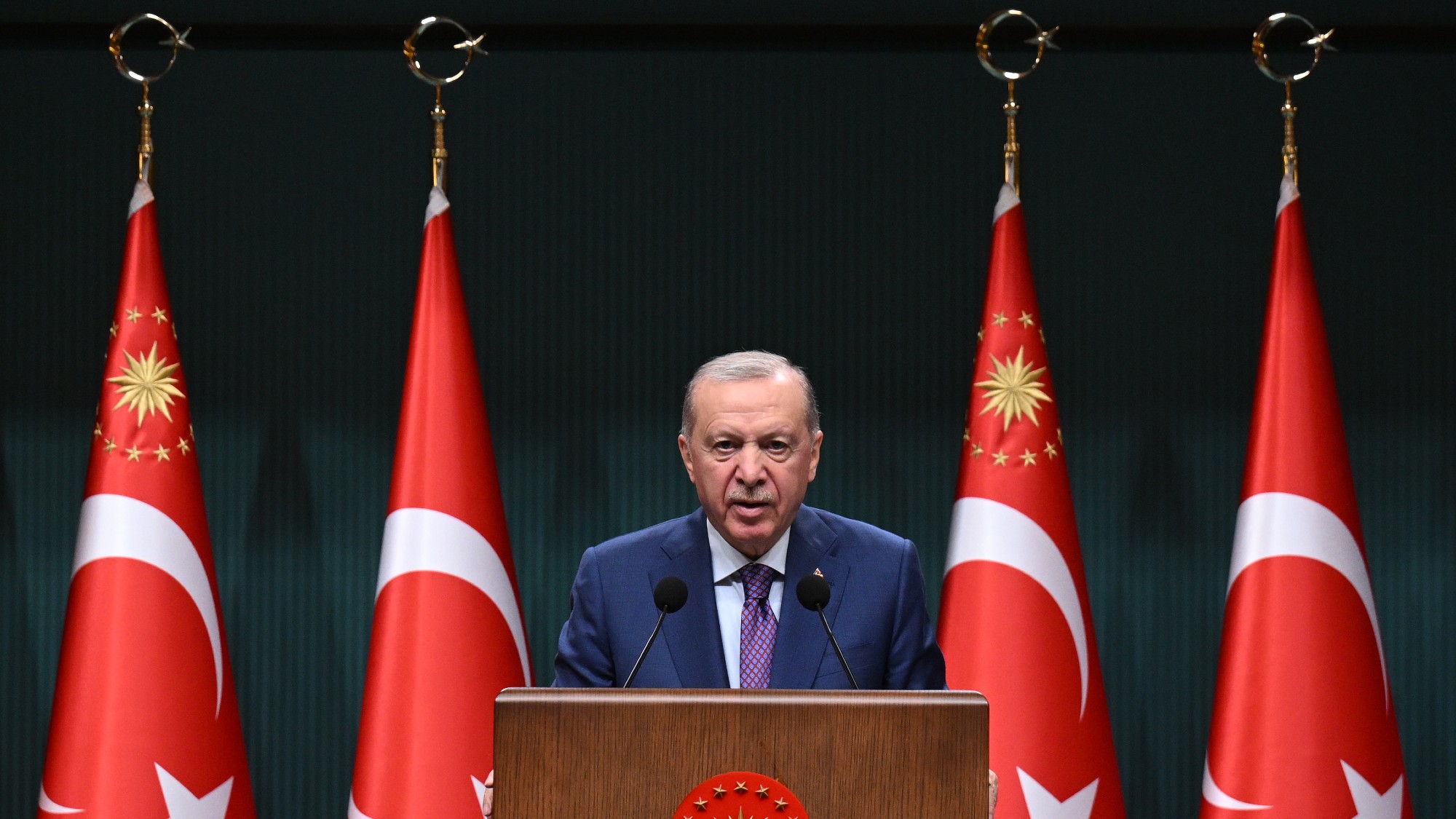
    How Kemal Atatürk – founder of modern Turkey, the man who transformed the decrepit Ottoman monarchy into a modern secular republic – must be “turning in his grave”, said Jonas Roth in Neue Zürcher Zeitung (Zurich). Last week, Turkish riot police stormed the headquarters of the CHP, the social democratic party Atatürk set up in 1923, to flush out the party’s current leader, Özgür Özel. For three days, Özel and a group of party officials had barricaded themselves inside the building in protest at a highly controversial court ruling that had just ordered Özel to stand down, claiming there had been voting irregularities at the CHP party congress that elected him leader in 2023. Using batons, tear gas and rubber bullets, the police rushed in to evict him; Özel emerged to address the cheering crowd outside and then led a march to the parliament building. 

    It isn’t hard to detect the hand of President Recep Tayyip Erdogan behind all this. For 13 years, from 2010 to 2023, the CHP under its former leader, Kemal Kılıçdaroglu, had proved an ineffectual opposition, losing every single election, local and national, to Erdogan’s Justice and Development Party (AKP). But under Özel, the CHP has been transformed into a political force capable of ending Erdogan’s 23-year rule. So the fact that the judiciary, which Erdogan has made his tool, should now have ordered Özel to be replaced by the perennial loser Kılıçdaroglu, speaks for itself.

    The crackdown on the CHP began in earnest after it inflicted a “historic defeat” on the AKP in local elections in 2024, said Ecehan Balta in Xekinima (Athens). Holding Erdogan responsible for the economic crisis that had seen inflation rise above 80%, voters turned en masse to Özel’s party, which won 35 provinces to the AKP’s 24. This was a huge blow to the president, a sign that his political machine, for all its grip on state institutions and the media, was “no longer unbeatable”. And, since then, hundreds of CHP officials have been arrested, notably Ekrem Imamoglu, the popular mayor of Istanbul, who was detained last March on the same day that he was chosen as his party’s next presidential candidate. 

    What happened to Imamoglu was a travesty, said Raphael Geiger in Süddeutsche Zeitung (Munich): he faces up to 2,352 years in jail, if convicted of corruption and espionage. But the dethroning of Özel is even worse. It “eliminates everything that remains of Turkish democracy”, effectively snuffing out “the faint hope” of a different government being elected. Indeed Turkey, now lacking a genuine opposition, is closer than ever to “one-man rule”, said The Economist. Özel could try to found a new party, but without the “powerful brand” of the CHP behind him, he is unlikely to succeed. In any case, Erdogan is expected to call a snap election before the next scheduled vote in May 2028. In doing so, he would be exploiting a loophole that allows him to stand again if he doesn’t fully complete his current presidential term, which the constitution mandates should otherwise be his last. 

    All hope is not lost, though, said Dogan Ertugrul on Turkish Minute. Imprisoning your main challenger and sowing chaos in the ranks of their party is a sign not of strength, but of insecurity. And these risky political steps could well backfire. Look at the Gen Z-led protests that have erupted across the country since Imamoglu’s arrest. They are still going strong and have Erdogan worried, said Giorgio Brizio in La Repubblica (Rome). On the same day police raided the CHP’s offices in Ankara, thousands of students and staff staged a demonstration at Bilgi University in Istanbul, a bastion of liberal thought that the president had just closed down. In scenes “unthinkable” until a few years ago, police burst on to the campus, targeting protesters with batons and pepper spray. Many of the students were arrested; but they stood firm, and soon after Erdogan issued a decree to reopen the university. The students’ victory is clear proof that Erdogan is not invincible.


    It wasn’t all bad

    A new cancer drug that can shrink tumours in patients who have run out of other options was described as a cause for “genuine optimism” at the American Society of Clinical Oncology’s annual meeting in Chicago this week. In trials, the drug, taken in the form of a pill, has reduced the size of tumours by at least 30% in patients with six types of cancer, including of the liver, cervix and bladder. Developed by scientists at Oxford, it works by targeting an enzyme that – in many patients – makes tumours invisible to immunotherapy drugs.


    People

    Anne-Marie Duff

    Anne-Marie Duff remembers the moment her brother Eddie began acting strangely, says Claire Cohen in The Times. He was 40, and had started getting on the wrong bus, or forgetting how to complete simple tasks. Before long, he’d lost his job at a polling company; then, he started having panic attacks. “I was just thinking, ‘God, he’s making a mess of his life,’” says the actor. She put it down to stress or anxiety. 

    But in 2017, Eddie was diagnosed with early-onset Alzheimer’s. He was in his 40s, but already “so far into the illness that he couldn’t compute it. He was saying things like, ‘Yes, but once this comes to fruition and I’m better.’ And the specialist was trying to say, ‘I’m very sorry to tell you…’” The diagnosis was devastating for them all; but it did at least provide an explanation, and a clearer idea of what to do next. Eddie moved in with Duff, then into sheltered housing. Later, as his condition deteriorated, she had to fight a major battle to get him into a specialist unit. Owing to his age, many care homes refused him. 

    Earlier this year, he died, aged 57. On one of her last visits, Duff recalls saying: “‘Eddie, say everything you want to tell me before you go, pal.’ For half an hour he looked me dead in the eye and just talked.” Not all of it made sense; but “I feel extraordinarily blessed to have had such a profound moment with my sibling. I knew I was saying goodbye.”


    Image credits, from top: Jeff J. Mitchell / Getty Images; Ryan Jenkinson / Getty Images;  Mehmet Ali Ozcan / Anadolu / Getty Images; Jeff Spicer / BAFTA / Getty Images
     

    Recent editions

    • Evening Review

      Can we slow the AI race?

    • Morning Report

      Andrew rented out cottages on Windsor estate

    • Evening Review

      How the Ukraine war took to the skies

    VIEW ALL
    TheWeek
    • About Us
    • Contact Future's experts
    • Terms and Conditions
    • Privacy Policy
    • Cookie Policy
    • Advertise With Us
    • FAQ
    Add as a preferred source on Google Add as a preferred source on Google

    The Week UK is part of Future plc, an international media group and leading digital publisher. Visit our corporate site.

    © Future Publishing Limited Quay House, The Ambury, Bath BA1 1UA. All rights reserved. England and Wales company registration number 2008885.