The Week The Week
flag of US
US
flag of UK
UK
https://cdn.mos.cms.futurecdn.net/flexiimages/jzblygzdxr1769609154.gif

SUBSCRIBE

Try 6 weeks free

Sign in
  • View Profile
  • Sign out
  • The Explainer
  • Talking Points
  • The Week Recommends
  • Podcasts
  • Newsletters
  • From the Magazine
  • The Week Junior
  • More
    • Politics
    • World News
    • Business
    • Health
    • Science
    • Food & Drink
    • Travel
    • Culture
    • History
    • Personal Finance
    • Puzzles
    • Photos
    • The Blend
    • All Categories
  • Newsletter sign up Newsletter
  • Saturday Wrap, from The Week
    The stench of corruption, the Declaration of Independence, and Trump’s pool politics

     
    controversy of the week

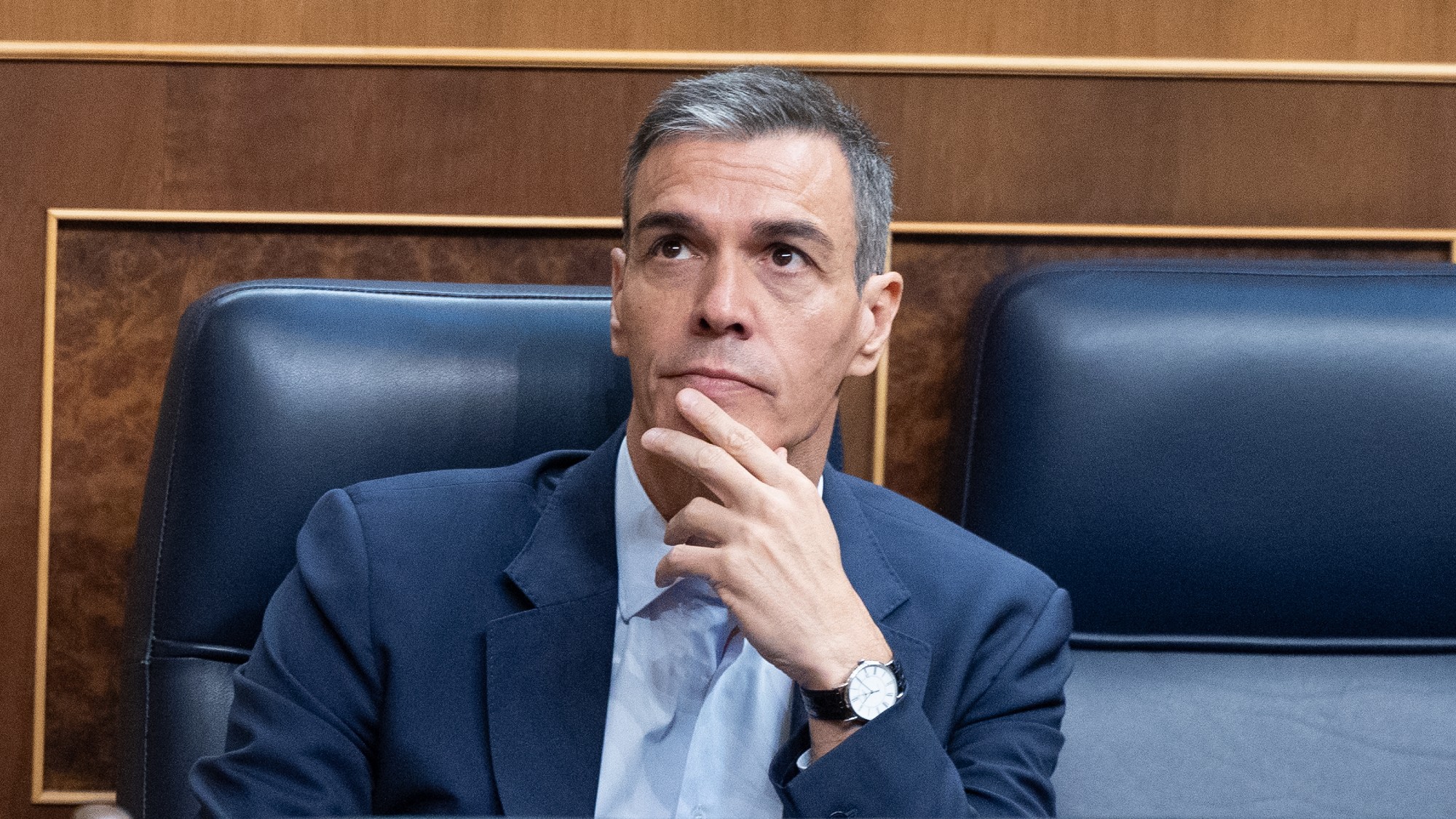
    Spain’s embattled PM: the stench of corruption

    Spain’s socialist prime minister is “clinging to a punctured life raft”, said Josep Ramoneda in Ara. Pedro Sánchez’s reputation had already taken a battering from the corruption cases brought against his wife and brother. Now the jailing of his former right-hand man for embezzlement and bribery leaves him more “compromised” than ever. José Luis Ábalos, who was Spain’s transport minister between 2018 and 2021, was last week given a 24-year sentence for rigging public contracts for face masks and other medical supplies during the Covid-19 pandemic. His reward for doing so was €10,000 (£8,500) a month, a flat for his mistress and various other kickbacks.

    The PM has not himself been implicated in the Ábalos case – or in any of the others for that matter – but it all leaves a bad smell and there’s growing pressure on him to resign. Yet Sánchez stubbornly insists he will remain in post until next year’s elections. 

    Sánchez’s claim he had no idea what Ábalos was up to is downright outrageous, said Neus Tomàs in El Diario. Ábalos and his aide Koldo García, who has also been jailed for his role in the scandal, used to sit at the heart of Sánchez’s Spanish Socialist Workers’ Party (PSOE). So the PM’s excuse that they were just rogue actors won’t wash: he bears responsibility for crimes committed under his watch. And don’t forget, Sánchez came to power in 2018 by condemning the then PM, Mariano Rajoy, for the corruption exposed in the ranks of Rajoy’s People’s Party (PP), and winning a vote of no-confidence against him, said La Razón. So he clearly has to resign.

    The greatest irony is that the man who delivered the most scathing speech ahead of the vote on the conservative People Party’s corrupt ways was Ábalos himself, said Bruno Pardo Porto on ABC. That he has now received the longest jail sentence ever given to a modern Spanish minister shows just what a sham the PSOE’s pledge to clean up Spanish democracy actually has been.

    There’s still a slim chance Sánchez could survive, said Jason Horowitz in The New York Times. He has an uncanny ability to outrun scandals – hence his nickname: “the greyhound”. And he was offered an unlikely lifeline last month when a judge ordered his wife, Begoña Gómez, to hand in her passport and stand trial for influence-peddling linked to her job at a university in Madrid. In his 84-page ruling, the judge likened the government to an “absolutist regime”, opining that the last similar case of such magnitude was in the early 19th century during the reign of Ferdinand VII. This has made it easy for Sánchez’s supporters to dismiss the trial as a “deeply flawed hit job by an obsessed judge”.

    And that it was the right-wing group Manos Limpias (Clean Hands) that filed the cases against his wife and his brother David (who allegedly leveraged his connections to land a job in a city council) adds support to that narrative. Sánchez is no stranger to epic comebacks, said Irene Lozano in El País, so don’t write him off yet. His PSOE rivals removed him as leader in 2016: two years later he had become PM. The fact that he has presided over one of the EU’s faster-growing economies may come to his rescue this time. 

    I’m not so sure, said Guy Hedgecoe on Politico. His party is already languishing behind the PP in the polls, and there’s another scandal brewing that could well see him off. It involves his mentor and “ideological soul mate”, the former socialist PM José Luis Rodríguez Zapatero, who is accused of influence-peddling in connection with the €53 million (£45 million) bailout of the airline Plus Ultra. Prosecutors say he received up to €2 million for pushing the package through. Sánchez still maintains Zapatero is innocent, but has yet to explain why the bailout of a firm that only has four planes should have been so generous, said The Economist. This kind of behaviour is the reason anti-democratic sentiment is on the rise, and the situation is worsening. “The sooner the country holds an election, the better.”


    Briefing of the week

    The Declaration of Independence

    On 4 July, 250 years ago, America declared itself free from British colonial rule

    Why was the declaration drafted? 
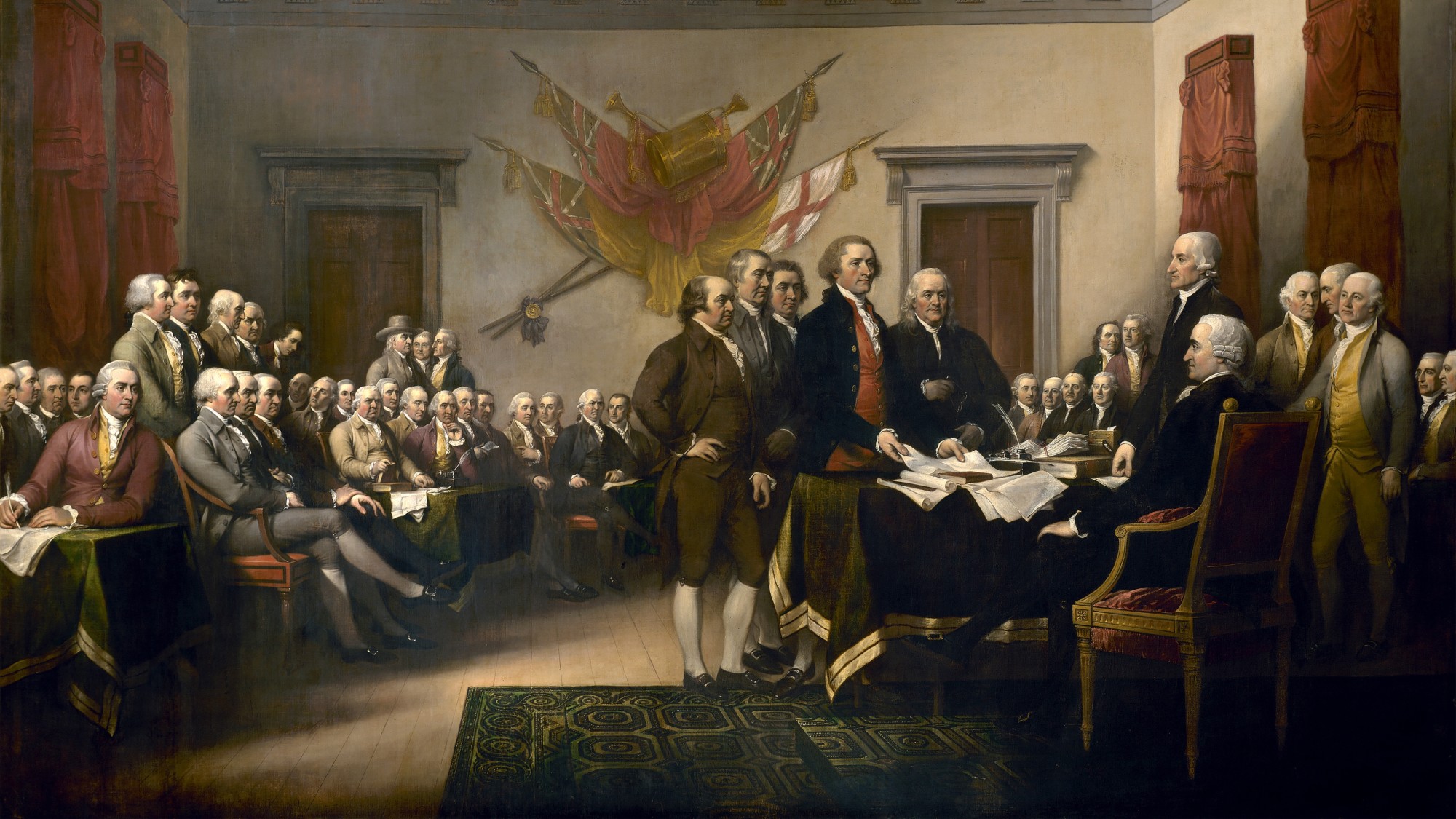
    By July 1776, Great Britain and its 13 colonies on North America’s eastern seaboard had been at war for more than a year; they would remain so until 1783. Although long revered as an “American scripture”, the Declaration of Independence actually “began its life as a press release”, with a limited, pragmatic purpose, writes the historian Michael D. Hattem. The Second Continental Congress, a committee of delegates from 13 of the colonies convened in Philadelphia, wanted a formal document to justify their rebellion to the world and to secure foreign military alliances.

    At the time, some thought it less important than Congress’ decision on 2 July to vote for independence. John Adams, later the second US president, wrote to his wife that 2 July, not 4 July, should be celebrated as a great anniversary, “solemnised with pomp and parade, with shows, games, sports, guns, bells, bonfires and illuminations from one end of this continent to the other from this time forward forever more”.  

    What does the document say? 
    That the 13 colonies declare themselves free from British colonial rule, to administer themselves as the “united States of America” (a phrase coined earlier that year). The declaration’s famous preamble asserts: “We hold these truths to be self-evident, that all men are created equal, that they are endowed by their Creator with certain unalienable Rights, that among these are Life, Liberty and the pursuit of Happiness.” It then outlines Americans’ grievances against Britain and King George III. Complaining that the states have informed “our British brethren” of these grievances, to no avail, it proclaims that the 13 states therefore have no choice but to sever “all political connection” with Britain. 

    How had the two sides come to be at war? 
    Relations had deteriorated sharply since Britain’s victory over France in the Seven Years’ War in 1763. Defending the American frontier from France and its Native American allies had brought Britain to near-bankruptcy. The colonies, with a fast-growing population of some two million, paid virtually no taxes to the home country, while heavily taxed Britain paid for their defence. King George III and his ministers looked to raise revenues; Parliament passed a series of taxes, including the Stamp Act (1765) and Townshend Acts (1767). They believed Parliament had full authority to do so.

    The colonists thought such laws had no legitimacy because they lacked representation in Parliament, and fiercely resisted, launching boycotts and protests. Tensions built, and exploded during the Boston Massacre (1770) and the Boston Tea Party (1773). In response, Britain imposed the punitive Coercive Acts (1774), closing Boston Harbour and stripping Massachusetts of self-governance.

    Violence escalated, and in April 1775 war broke out, with the Battles of Lexington and Concord – dubbed by Ralph Waldo Emerson “the shot heard round the world”.  

    Was independence inevitable? 
    At the start of the war, most on the American side envisaged it not as a war of independence, but as a temporary defence of what they saw as their legal rights as British citizens. In July 1775, Congress sent the Olive Branch Petition, a direct plea to King George III, which explicitly denied wanting independence. The king refused to look at it, and issued the Proclamation of Rebellion, declaring the colonists traitors and hiring 30,000 German mercenaries to help crush them.

    In January 1776 in Philadelphia, the English radical Thomas Paine published “Common Sense”, a pamphlet arguing that America should demand outright independence. It sold in large numbers, and proved very influential. George Washington, the commander of the Continental Army, declared it “unanswerable”. The colonists also realised that they needed help from foreign powers, notably France, and wouldn’t get it if they remained loyal British subjects.  

    How was the Declaration of Independence written? 
    After the independence resolution was proposed, in June 1776, Congress appointed the Committee of Five (John Adams, Benjamin Franklin, Thomas Jefferson, Robert Livingston and Roger Sherman) to draft the declaration. It was first written by Jefferson, largely by candlelight, over a period of 17 days. The other four made minor changes; it was then edited by Congress. The revised text was approved on 4 July, and most of the 56 Founding Fathers who signed it did so on 2 August. 

    What role did the declaration play at the time? 
    In Philadelphia, it was printed by John Dunlap (today, 26 of these “Dunlap Broadsides” are believed to exist); and on 6 July, it was reproduced in the Pennsylvania Evening Post. This triggered an extraordinary public response: public readings were accompanied by cheering and cannon fire, as well as the destruction of royal symbols such as the King’s coats of arms; in New York, it was read to troops serving in Washington’s army, who tore down a lead statue of George III on horseback and melted it into musket balls. The first anniversary celebrations took place in 1777. Massachusetts was the first state to make 4 July an official day of celebration, in 1781. 

    What is its legacy? 
    The Declaration of Independence is one of the most important documents in human history. It inspired the French Revolution’s Declaration of the Rights of Man, which Jefferson helped draft. Dozens of independence declarations from Venezuela (1811) to Vietnam (1945) echo or directly copy its language. Abraham Lincoln thought it expressed the true principles of the United States, and referred in his 1863 Gettysburg Address to “a nation conceived in Liberty, and dedicated to the proposition that all men are created equal”. Martin Luther King Jr, in his “I Have a Dream” speech, called it a “promissory note” – and demanded that Americans “cash this cheque”.

    Thomas Jefferson: tainted hero 
    John Adams said of the Declaration of Independence that there was “not an idea in it but what had been hackneyed in Congress for two years before”. Jefferson himself said it did not aim at “originality of principle or sentiment”; rather, it was “an expression of the American mind”. Although the exact influences remain a subject for scholarly discussion, the most obvious sources for it included Paine’s “Common Sense”, George Mason’s draft of the Virginia Declaration of Rights, and England’s 1689 Bill of Rights. Jefferson also adapted John Locke’s argument that individuals have inalienable rights to “life, liberty, and property” – substituting “the pursuit of happiness” – and Locke’s notion that government is based on a social contract, which, when broken, authorises rebellion. 

    Jefferson, America’s third president, has long been both a national hero and a contested figure, because he was a scion of Virginia’s planter class who owned more than 610 slaves and fathered children with one of them, Sally Hemings. (“How is it that we hear the loudest yelps for liberty among the drivers of negroes?” asked Dr Johnson in his pamphlet “Taxation no Tyranny”.) The declaration also complains of British alliances with “the merciless Indian Savages”.


    Spirit of the age

    Since the end of the pandemic, many firms have called their staff back into the office, but it seems the habits formed while WFH have remained in place. According to a new survey, 52% of office workers are more likely to send an instant message to a colleague in the same room than walk over and talk to them. As a result, 17% say they often go an entire day in the office without speaking to anyone face to face; 40% say they feel lonely at work, and a third say they feel more isolated at work than during Covid.


    VIEWPOINT

    The missing protagonists

    “Amid the political chaos, I was struck by a social media comment that this could be the first time the UK has found itself looking for a new PM, a new James Bond and a new Doctor Who, all at the same time. Nobody knows who’s running the country, driving the Aston Martin, or piloting the police box. It seems Britain can no longer agree on who its protagonists are supposed to be. Some have suggested that one person should fill all three roles. Or why not rotate them: Daniel Craig as PM, Ncuti Gatwa as Bond and Keir Starmer as the Doctor? Starmer couldn’t solve our problems in office, but maybe a time machine could give him a fighting chance.” 

    Nadia Khomami in The Guardian


    talking point

    Dead ducks and peeling sealant: Trump’s Reflecting Pool

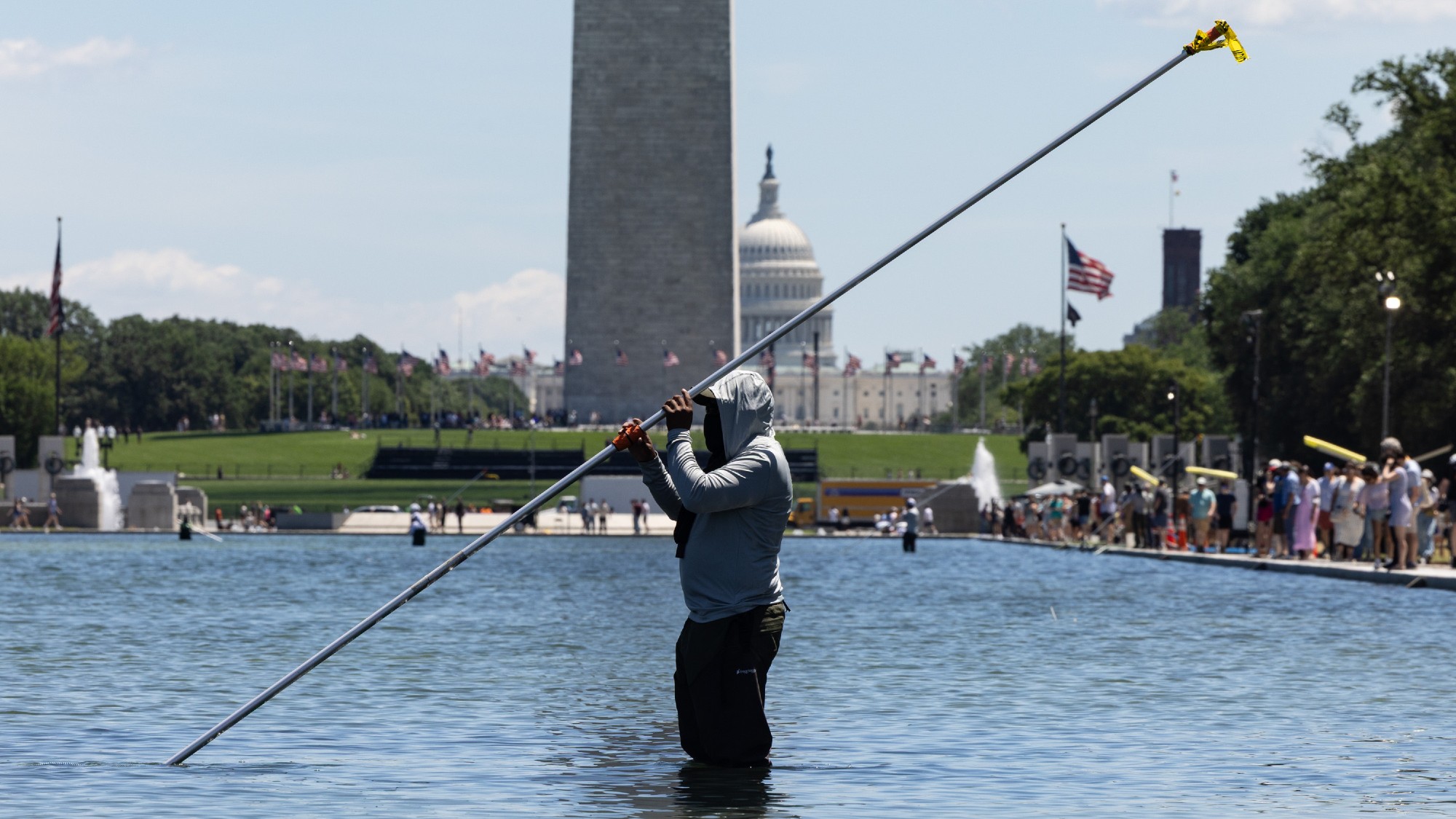
    Some news stories work almost too perfectly as metaphors, said Jonah Goldberg in the Los Angeles Times. One such is the ongoing saga of the Lincoln Memorial Reflecting Pool, which encapsulates just about “everything that vexes people about the second Trump term”. It began in April when the president announced plans to refurbish the 2,000ft-long Washington landmark in time for the nation’s 250th anniversary and to upgrade the pool’s colour to “American Flag Blue”. 

    Ignoring usual protocols, Trump awarded a no-bid contract to the aptly named Greenwater Services, run by a Mar-a-Lago crony and convicted felon called John J. Cafaro, who “looks like a villain from the old Dick Tracy comic strip”. Days after the renovation was completed, the pool began blooming with algae. Interior Department workers sought to kill it with hydrogen peroxide, which led to chunks of sealant peeling off and floating to the surface, where they were later joined by several dead ducks. The costs of the botched refurbishment, which Trump had originally put at $1.8 million (£1.3 million), could now hit nearly 10 times that. 

    Liberals are gleeful about this troubled renovation, said Nicole Russell in USA Today. There are so many other, more important stories out there, such as the Iran ceasefire, yet they’re fixated on this one. I don’t remember Democrats and the mainstream media subjecting President Obama to the same mockery when he spent $34 million trying and failing to clear the pool of algae. 

    Built on swampland in 1923, the Reflecting Pool has always been algae-prone, said Kerry McQuisten on X/Twitter. And because the whole structure is slowly sinking, it has always suffered from cracking. Obama’s renovation actually made things worse because it involved making the pool shallower, and feeding it with “somewhat stagnant” water from the Potomac River, rather than from the mains water supply. Both those changes encouraged more algae. 

    You can’t accuse the liberal media of hyping this story, said Jonathan Chait in The Atlantic. Trump is the one who chose to turn it into a great symbol of his agenda, and who has kept the story in the news with his intemperate reaction to criticism. He endlessly boasted about how “beautiful” and “incredible” his pool would be. The new floor, he said, would last 100 years and would be impenetrable – “If you had a knife, you can’t cut [it]. So strong, so powerful.” As soon as the water turned green, he pivoted to claiming, without evidence, that vandals had cut a 350-foot gash in the lining and polluted the water, even though the pool is “constantly surrounded by witnesses with cameras” and zealously guarded; at least seven people have been arrested. 

    It’s no surprise anyway that lots of people have relished this story. Other Trump debacles, such as his “Liberation Day” tariffs or Iran dealings, have all had significant elements of tragedy. This one is “pure meaningless fun. Meaningless to everybody, that is, except Trump.”


    It wasn’t all bad

    For centuries, young men in rural areas proved their strength, virility and fitness to work by lifting stones. The tradition died out in England in the early 20th century, partly because many of the men who would have kept it alive died in two world wars. But now, Cumbrian farmer Calum Stott is leading a project to rediscover and map the old strength stones. He has found five in England, including the Lonton Egg, a “130kg lump” that was lying outside a former blacksmith’s forge in County Durham. He’s also unearthed evidence that it may not have been an all-male pastime: old maps refer to a trio of strength stones on the north bank of Ennerdale Water in the Lake District, one of which was called the Lady Stone.


    People

    Jodie Foster

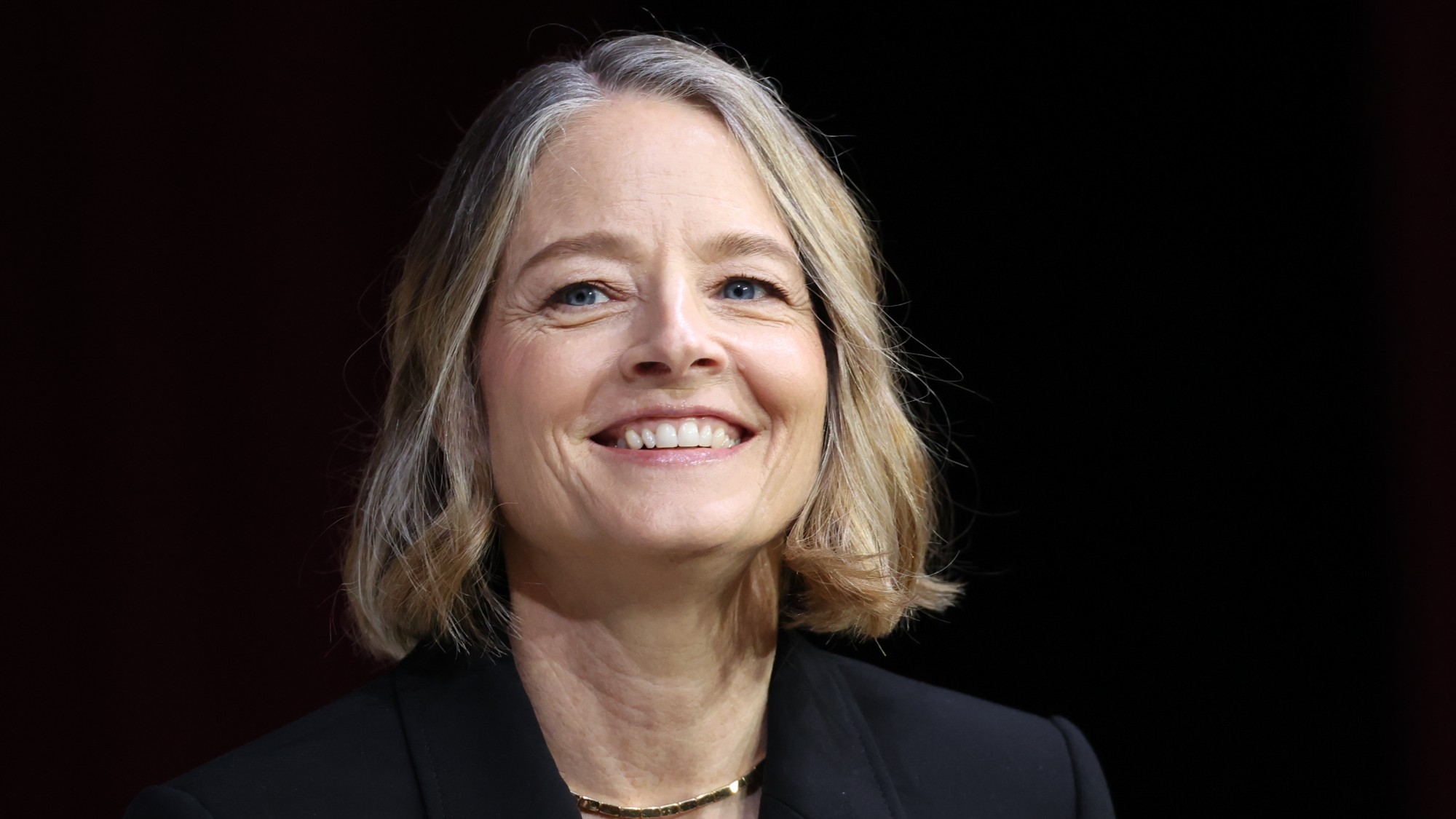
    Jodie Foster is that rare thing, says Jessamy Calkin in The Telegraph – a child star who didn’t go off the rails, and went on to have a successful and diverse career. Her first role came when she was three: her mother Evelyn “Brandy” Foster had taken her along to her older brother’s audition for a suncream advert, and she got the job instead. 

    More followed; but Brandy was always the boss. Jodie was allowed to read the scripts “but I wasn’t choosing them” – that was left up to her mother. “She’d say, ‘This is the next movie you’re doing,’ and I’d read my part.” Her mother chose those parts carefully (“She wanted me to be somebody people took seriously, because that’s what she wanted for herself”); but Foster didn’t love acting. She saw it as a job – one that had been thrust upon her and that simply involved reciting lines that other people had written. 

    All that changed when Martin Scorsese cast her as Iris, the street-smart sex worker that Travis (Robert De Niro) tries to save in “Taxi Driver”. She was only 12 (she had auditioned in her school uniform); but on set, she found a creative community that she wanted to be part of. De Niro, in particular, was a big influence: he took her out to bars, where he’d remain in character, keeping quiet and encouraging her to improvise. He was, Foster reflects, the person who taught her that there was “more to acting than being a puppet”.


    Image credits, from top: Jesus Hellin / Europa Press / Getty Images;  Universal History Archive / Universal Images Group / Getty Images; Anna Rose Layden / Getty Images; Stephane Cardinale / Corbis / Getty Images
     

    Recent editions

    • Evening Review

      Morgan McSweeney’s reckoning

    • Morning Report

      Russia kills more than two dozen in huge attack on Kyiv

    • Evening Review

      Has Starmer left Burnham holding the bag?

    VIEW ALL
    TheWeek
    • About Us
    • Contact Future's experts
    • Terms and Conditions
    • Privacy Policy
    • Cookie Policy
    • Advertise With Us
    • FAQ
    Add as a preferred source on Google Add as a preferred source on Google

    The Week UK is part of Future plc, an international media group and leading digital publisher. Visit our corporate site.

    © Future Publishing Limited Quay House, The Ambury, Bath BA1 1UA. All rights reserved. England and Wales company registration number 2008885.