The Week The Week
flag of US
US
flag of UK
UK
https://cdn.mos.cms.futurecdn.net/skoGBi9qKFoUtnNWkovjJQ.jpg

SUBSCRIBE

Try 6 Free Issues

Sign in
  • View Profile
  • Sign out
  • The Explainer
  • Talking Points
  • The Week Recommends
  • Podcasts
  • Newsletters
  • From the Magazine
  • The Week Junior
  • More
    • Politics
    • World News
    • Business
    • Health
    • Science
    • Food & Drink
    • Travel
    • Culture
    • History
    • Personal Finance
    • Puzzles
    • Photos
    • The Blend
    • All Categories
  • Newsletter sign up Newsletter
  • Sunday Shortlist, from The Week
    ‘Dazzling’ artefacts, and an ‘innovative’ docudrama

     
    EXHIBITION REVIEW

    Hawai‘i: a kingdom crossing oceans 

    The British Museum’s new show gives voice to a ‘fascinating, rarely heard culture’

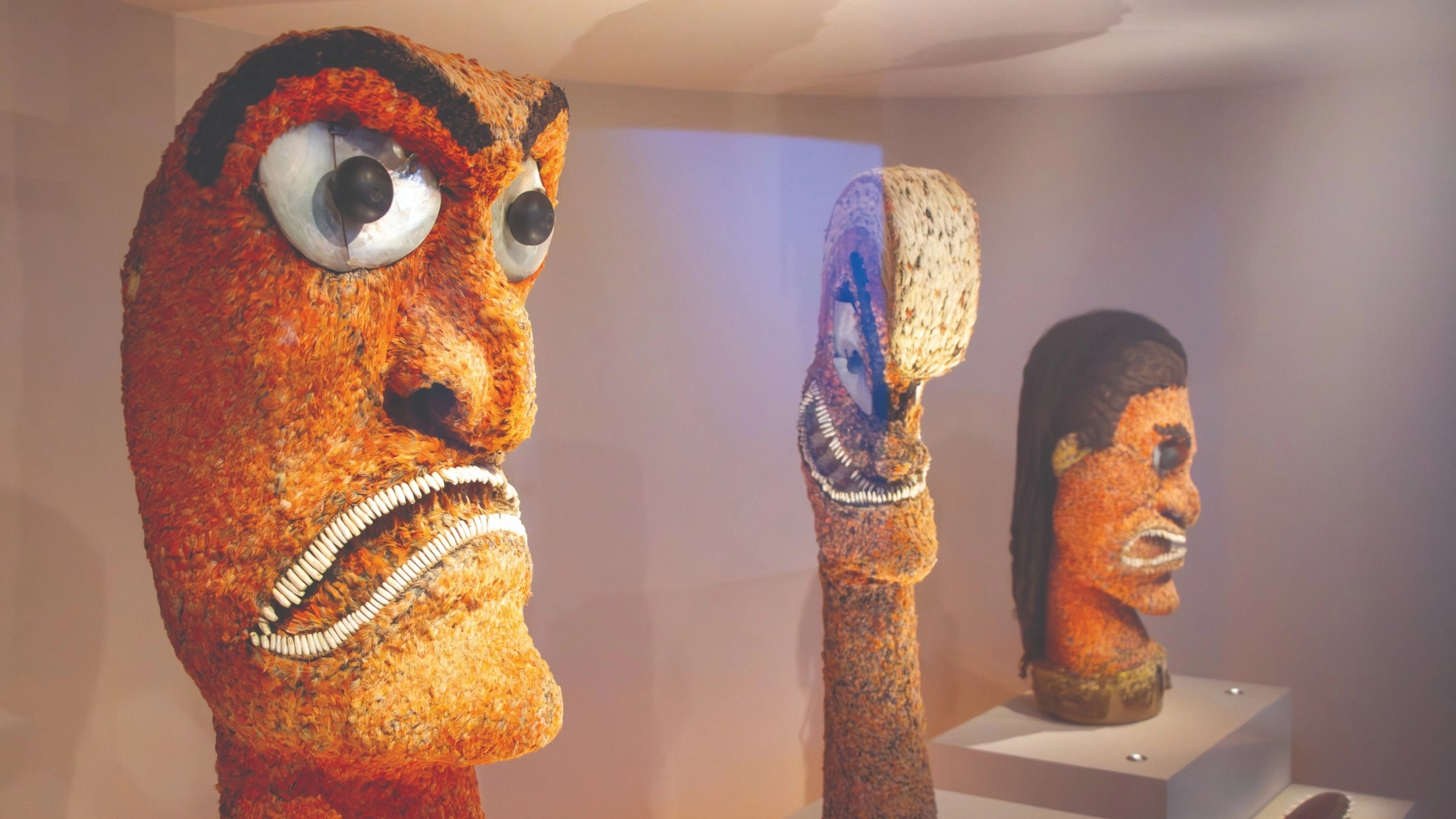
    In 1810, the warrior chief Kamehameha I united the Hawaiian islands into a single kingdom. That same year, said Evgenia Siokos in The Telegraph, he dispatched an extraordinary cargo to the other side of the world, along with a formal appeal to King George III to make Great Britain his own island nation’s “natural ally”. “Should any of the powers which you are at war with molest me,” he wrote, “I shall expect your protection.” The letter was sent with “a gift of astonishing splendour”: a cloak fashioned from “hundreds of thousands of red and yellow bird feathers” – which was worn by only the highest-ranking chief, and which “embodied sacred authority”.

    It has not been on public display since 1900, but now takes “pride of place” in a “thrilling” new show that illustrates both the range of the British Museum’s Hawaiian collections, and the friendly relations between the two kingdoms until Hawaii’s official annexation by the US in 1898. There are a wealth of spectacular exhibits, including a trio of feathered akua (gods), which encapsulate a chieftain’s power and “exude a ferocious energy”. The exhibition “treats artefacts as living objects”, and gives voice to a “fascinating, rarely heard culture”.

    At the heart of this tremendous show is a “desperate tragedy”, said Laura Cumming in The Observer. In 1824, Kamehameha’s son Liholiho and his wife Queen Kamamalu travelled to London, where they were received with full honours, celebrated by society and slotted in for an audience with the profligate George IV – “one of the worst monarchs in British history”. We see a lithograph of the Hawaiians “beaming” through a performance at the Theatre Royal, and Regency portraits of the couple, dressed in the English fashions of the day. But, unused to foreign climes, they both contracted measles and died within a week of each other; they never met George IV, though he did at least pay their hotel bills, and ordered a ship to transport their bodies home.

    The show’s narrative isn’t the easiest to follow, said Laura Freeman in The Times: “I felt somewhat walloped by the history and the who’s who of Hawaiian royal genealogy.” Yet the artefacts it contains are “dazzling”. Highlights include textile panels decorated with “chevrons, stripes, steps and zigzags”; helmets woven from climbing plants; even a “tiny, endearing turtle ornament carved from whale ivory and set with tortoiseshell eyes”. Best of all is a cabinet full of “feathered cloaks, capelets, chokers, tokens, garlands and fans”, many embellished with feathers from the now-extinct o’o bird. It’s a grown-up event that recognises our Georgian ancestors as humans, rather than demons; yet never lets them off “scot-free” for their plundering ways. In short, it’s an exemplary British Museum show – “handsome”, “intelligent” and never less than interesting.

    The British Museum, London WC1. Until 25 May.


    FILM REVIEW

    The Voice of Hind Rajab

    ‘Wrenching’ film about the killing of a five-year-old Palestinian girl in Gaza

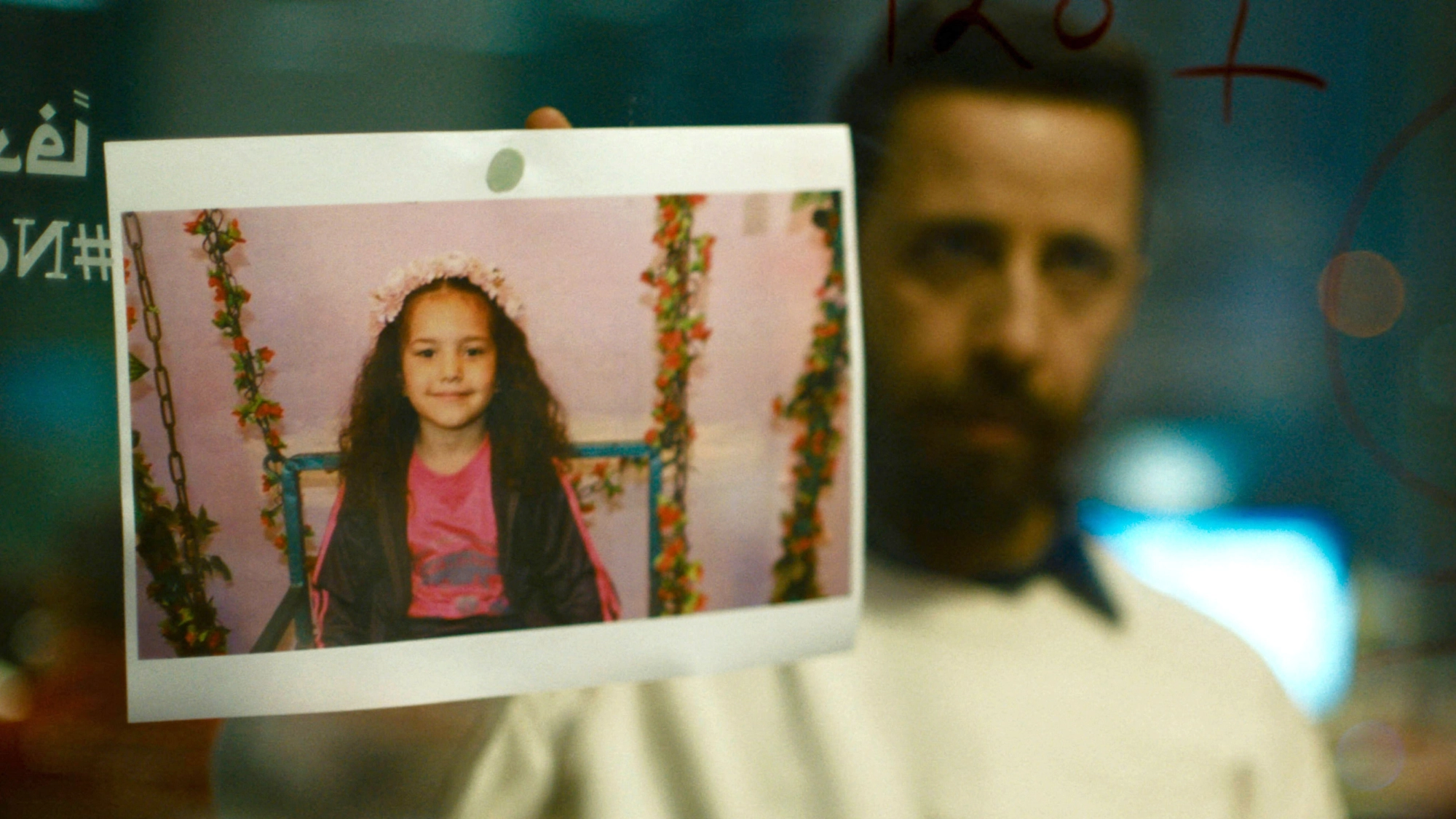
    When Hind Rajab, a five-year-old Palestinian, was found dead in Gaza City in February 2024, “she quickly became one of the most visible victims of Israel’s war against Hamas in Gaza”, said Ben Kenigsberg in The New York Times.

    Twelve days earlier, she had been in a car with six members of her family when it was shelled by the Israeli army. Five of them were killed immediately, leaving just her and her teenage cousin alive. Her cousin rang the Red Crescent, but was killed by gunfire while on the call. In the next few hours, the group did its best to save the stranded child – two paramedics died trying – but in vain. Rather than attempt to “visualise these horrific events from Hind’s perspective”, this “wrenching” film is mostly set in an emergency call centre in Ramallah, 50 miles away. The call handlers are played by actors but the “harrowing cries for help” that we hear are Rajab’s own.

    “An innovative hybrid of drama and documentary”, this shattering film is sure to draw tears from many viewers, said Nicholas Barber on BBC Culture. Because we are hearing Hind’s actual voice, “we have the stomach-churning illusion that she can still be saved, even though we know that’s impossible”. What the film conveys particularly powerfully “is the pain of wanting to change a situation which is agonisingly out of your hands”.

    I admit that “I dreaded watching this film”, said Robbie Collin in The Telegraph. I was deeply uneasy about its use of a dead child’s voice; but, in fact, director Kaouther Ben Hania has created an “ardent, sobering chamber piece”, underpinned “by a calm artistic rigour that transcends shock value”.


    BOOK OF THE WEEK

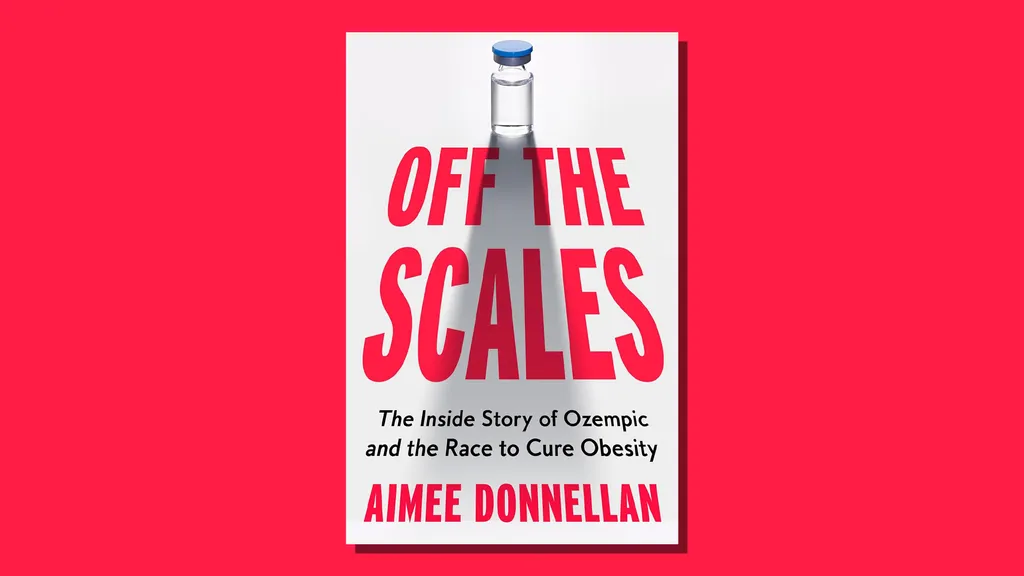
    Off the Scales   

    by Aimee Donnellan

    In 2024, the US Centers for Disease Control and Prevention published “what could well be the most important table in modern public health”, said Tom Whipple in The Times. For decades, American waistlines had been expanding “inexorably”. But the 2024 assessment of “how fat the country was” revealed a change: the “number of fat people was just a little bit lower than it had been”. No one was in any doubt as to why. In 2017, a Danish company, Novo Nordisk, had released a new diabetes medication called Ozempic, which listed “weight loss” among its side effects.

    As Aimee Donnellan makes clear in her “meticulously reported account” of the drug’s emergence, its inventors “always realised that the ‘side effect’ would really be the main effect”. And so it proved. Ozempic and other “GLP-1 agonists” – or “fat drugs” – are starting to bring down obesity in many places. As it becomes possible to take them as pills rather than injections, and (perhaps more significantly still) when they come “off patent”, their impact could be even more dramatic.

    “Like all great tales of scientific discovery, the weight-loss jabs saga is rich in serendipity, rivalry and obsession,” said Rachel Clarke in The Guardian. Donnellan recounts it all “with relish”. She highlights the role played by Svetlana Mojsov, a Macedonian chemist whose research in the 1970s into glucagon-like peptide-1 (GLP-1) paved the way for Ozempic, which works by mimicking the hormone’s effects; and she details the starring role played by the Gila monster, a type of lizard in whose saliva a useful peptide was found. Donnellan also addresses the “fraught social and cultural context” that has helped make these drugs such a talking point. For every person who takes them as a medical necessity, she notes, there will be others who simply want to “fit into smaller dresses, or obtain the slender aesthetic social media demands of them”.

    Donnellan interviews people whose lives were transformed by Ozempic, said David A. Shaywitz in The Wall Street Journal. A 34-year-old marketer named Sarah says that because she was thinner, she was “included in important meetings” and received a pay rise. Donnellan’s “verdict on GLP-1s” isn’t one of unalloyed positivity. She asks if they’re a case of “treating the symptom”, rather than the cause, and questions what it says about society that a weight-loss jab can be so transformational. Overall, she delivers “a nuanced view” of “these unsettling medical marvels”.


    OBITUARY

    Claudette Colvin  

    Teenage activist who paved the way for Rosa Parks

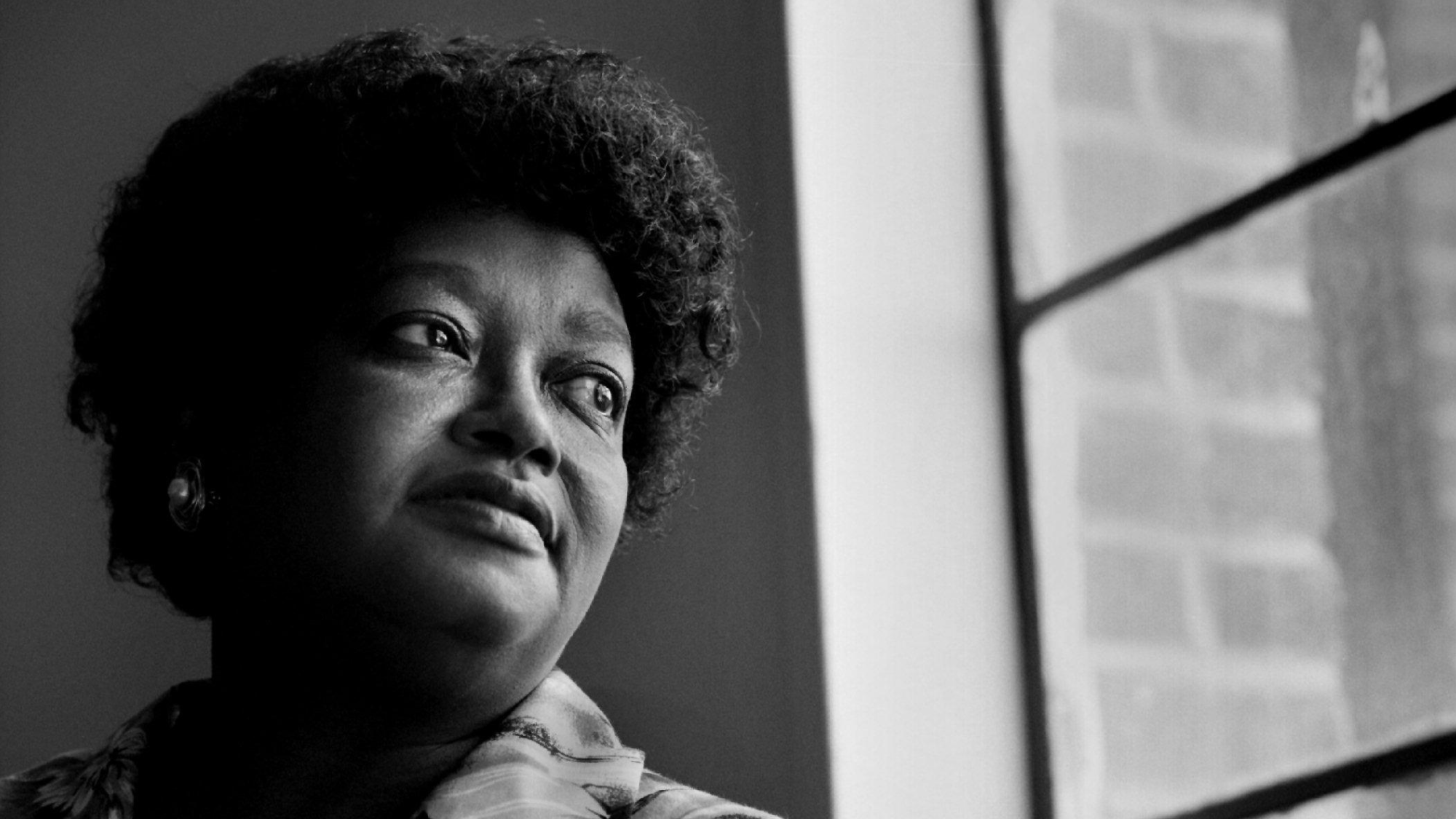
    On 2 March 1955, Claudette Colvin, a 15-year-old African-American high-school student, boarded a segregated bus in Montgomery, Alabama, taking a window seat. “When the driver ordered her to give up her seat so a white woman could be more comfortable, Ms. Colvin – who had been studying black history in class, learning about abolitionists like Harriet Tubman and Sojourner Truth – did not budge,” said The Washington Post. History would record that it was Rosa Parks who helped kickstart the Civil Rights Movement by refusing to give up her seat on a Montgomery bus. Yet Colvin, who has died aged 86, did so nine months before Parks, refusing to move until police dragged her off. The episode galvanised the city’s black community.

    Claudette Austin was born in 1939 and raised in rural Alabama. Her mother, Mary Jane Gadson, abandoned by her husband, was unable to support Claudette and her sister; they were adopted by an aunt and uncle, whose name they took. Claudette attended the all-black Booker T. Washington High School, said The Telegraph. She and many others were politicised by the case of a schoolmate, Jeremiah Reeves, “who in 1952, aged 16, was sentenced to death for raping a white woman, by an all-white jury who deliberated for less than half an hour”. In 1955, as a “slight and bookish” teenager, she took her stand against the Jim Crow bus laws, telling the driver: “It is my constitutional right to sit here.” She was found guilty of assaulting a police officer, disturbing the peace and violating a city race ordinance. The latter was ripe for challenge. But the National Association for the Advancement of Colored People (NAACP) felt Claudette was too immature to become a constitutional test case. “Others believed her dark skin and poverty also played against her.” Matters were further complicated when she became pregnant after her trial. Instead, Rosa Parks, a seamstress and secretary of the local NAACP, was chosen as the “unthreatening, middle-class standard-bearer” for the Montgomery bus boycott that began that year.

    Even so, in 1956, Colvin was chosen as one of four plaintiffs in a federal lawsuit brought by the civil rights lawyer Fred Gray; it established that the city’s bus laws were indeed unconstitutional. “All the attention made life difficult for Ms. Colvin,” said The New York Times. “Whites shunned her, but so did many black residents, who she said considered her a troublemaker.” In 1958, with her young son, she moved north to join her sister in New York’s the Bronx. She worked as a maid and as a nurse, and spoke little about her past until her story was rediscovered in the 1990s. In 2021, Colvin successfully petitioned to have her juvenile arrest record expunged. “I guess you can say that now I am no longer a juvenile delinquent,” she said.


    Image credits, from top:  MKH / British Museum; BFA / Venice Film Festival / Alamy; Fourth Estate; Dudley M. Brooks / The Washington Post / Getty
     

    Recent editions

    • Saturday Wrap

      Should Ice be abolished?

    • Evening Review

      The trilateral summit for peace

    • Morning Report

      Starmer allies to bar Burnham’s return

    VIEW ALL
    TheWeek
    • About Us
    • Contact Future's experts
    • Terms and Conditions
    • Privacy Policy
    • Cookie Policy
    • Advertise With Us
    • FAQ
    Add as a preferred source on Google

    The Week UK is part of Future plc, an international media group and leading digital publisher. Visit our corporate site.

    © Future Publishing Limited Quay House, The Ambury, Bath BA1 1UA. All rights reserved. England and Wales company registration number 2008885.