The “saxophone colossus” of the bebop generation
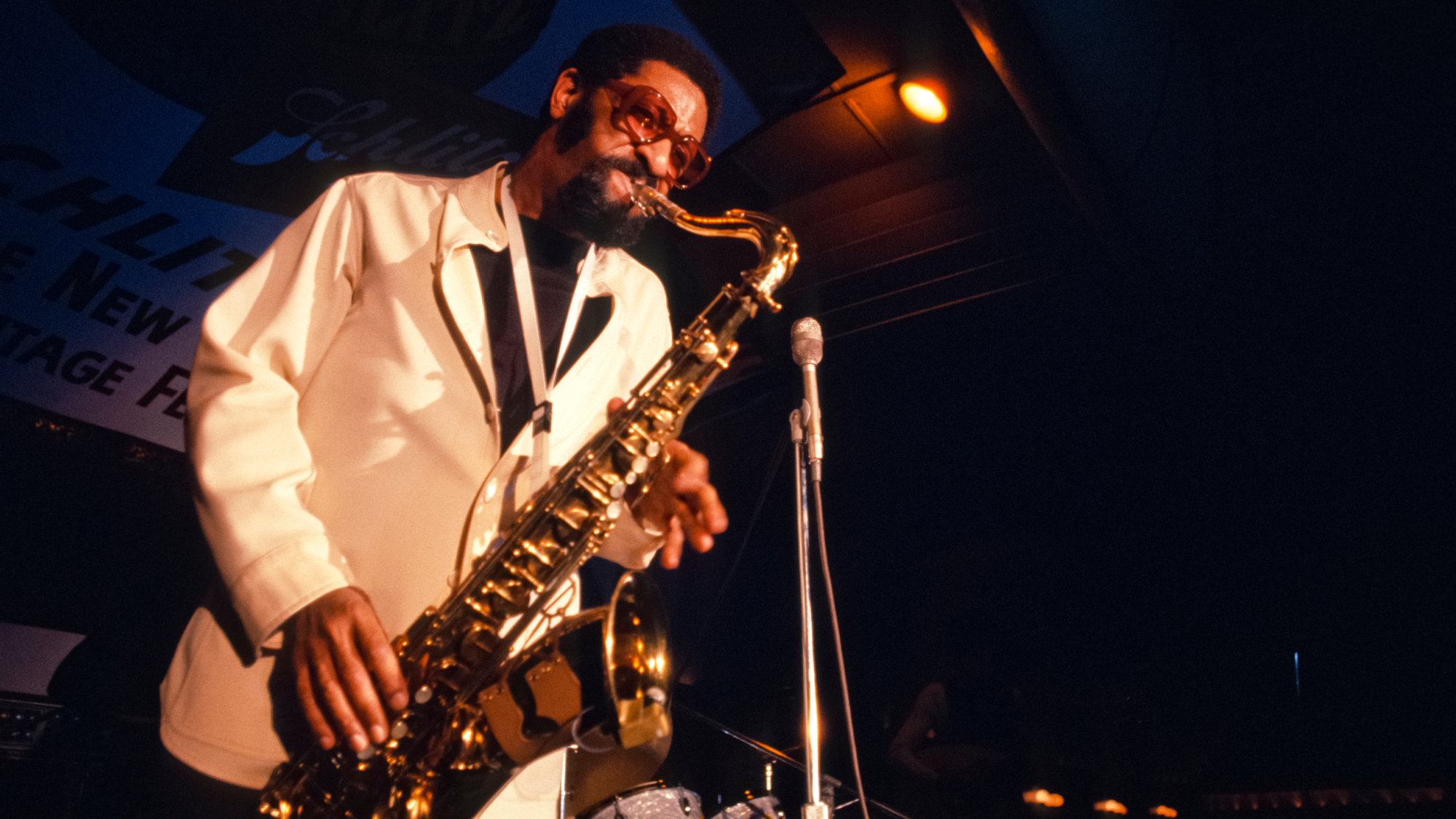
Sonny Rollins, who has died aged 95, was regarded as among the greatest jazz saxophonists of all time, said The Guardian. One of the last of the bebop generation, who “took jazz from a predominantly dance or ballad form into startlingly expressive new territory”, he was a living link to the world of Thelonious Monk, Charlie Parker, John Coltrane and Miles Davis.
He described himself as “a primitive… I’m going with my feelings more than my brain.” This intuitive approach facilitated a level of improvisation that was hugely influential. Yet he played as much for himself as for an audience, said The Times. For him, jazz became a spiritual pursuit. He described improvisation as a form of meditation, in which the mind goes blank and the performer becomes a vessel for the music.
In 1959, three years after he recorded “Saxophone Colossus”, the landmark album that gave him his nickname, he walked away from the music business. For the next two years, he practised alone, for hours each day, on the Williamsburg Bridge in New York, where his already “muscular tenor” had to compete with the screeching roar of the subway, the honking of the tugboats and the wind.
Over his long career, Rollins “flirted” with a range of styles, said The New York Times, including jazz-rock fusion, but “with his ferocious energy, his penchant for playing the unexpected note at the unexpected moment, and his unusual sound”, sometimes bleak, sometimes lush, his playing could not be classified. “The music I play is too big to be put into any one style,” he said. “Every time I pick up the horn, I want to hear something fresh.”
Walter Theodore Rollins (nicknamed Sonny by his grandmother) was born in Harlem, New York, the youngest of three children of Valborg and Walter Rollins, who had emigrated from the Virgin Islands. (One of his most famous compositions, “St. Thomas”, draws heavily on Caribbean musical traditions.) His father was a chief petty officer in the US navy, the highest rank attainable for an African-American at that time. The family was musical, and Sonny took up the sax when he was seven. He could, he reflected, hardly avoid jazz in their Sugar Hill district: Duke Ellington lived on their block; Coleman Hawkins on the corner. To his parents’ dismay, he started playing jazz in clubs when he was still in his teens, and was soon working with Parker, Monk, Davis and others. Drugs were rife in that milieu, said The Daily Telegraph, and he became addicted to heroin. Aged 19, he took part in an armed robbery to fund the habit, and spent time in jail. He was in rehab when he learnt that Parker had died aged 34. After that, he determined to clean up his act; later, he’d refer to his character back then as “despicable”.
By 1959, he was being hailed as one of jazz’s hottest talents. But he found the pressure overwhelming, and felt he needed to be better. So he walked away. He marked his come-back with an album called “The Bridge” (1962). After that, he toured widely. While in London for a residency at Ronnie Scott’s, he composed and performed the score for the film “Alfie” (1966). In 1969, he took another long career break to pursue a spiritual quest that took him to India and Japan. Some of his later albums were less well-received; but his live performances dazzled. The intense concentration, and sheer length of his improvisations, left audiences “exhausted and exhilarated”.
When not performing, he lived quietly on a smallholding in Upstate New York with Lucille, his second wife and manager, whom he had married in 1965. She died in 2004. They also had an apartment in lower Manhattan. In the chaotic aftermath of the 9/11 attacks on the nearby World Trade Centre, he was seen in news footage being led out of the building by rescue workers, his saxophone case in his hand.