The Week The Week
flag of US
US
flag of UK
UK
https://cdn.mos.cms.futurecdn.net/flexiimages/jzblygzdxr1769609154.gif

SUBSCRIBE

Try 6 weeks free

Sign in
  • View Profile
  • Sign out
  • The Explainer
  • Talking Points
  • The Week Recommends
  • Podcasts
  • Newsletters
  • From the Magazine
  • The Week Junior
  • More
    • Politics
    • World News
    • Business
    • Health
    • Science
    • Food & Drink
    • Travel
    • Culture
    • History
    • Personal Finance
    • Puzzles
    • Photos
    • The Blend
    • All Categories
  • Newsletter sign up Newsletter
  • Sunday Shortlist, from The Week
    ‘Fabulously fibbing’ performers and a star-studded history lesson

     
    THEATRE REVIEW

    The Truth 

    Florian Zeller's ‘double helix’ of marital deceit

    The French playwright Florian Zeller is best known for 2012’s “The Father”, the elliptical dementia drama that – in its film adaptation – won Anthony Hopkins his second Oscar, said Clive Davis in The Times. But he has written more than a dozen plays in all, one of which, “The Forest”, had its world premiere in London in 2022. That play was a misfire – a “pretentious study of bourgeois adultery”.

    “The Truth” covers similar territory but is a very different beast. A comedy that “breezes along”, it is like an “old-fashioned English sex farce” with a Gallic twist – and Lindsay Posner’s production is well worth seeing.

    “The Truth” takes the physical comedy of French farce, and adds a “metaphysical dimension about whether accuracy and veracity are possible or even sensible”, said Mark Lawson in The Guardian. “Across seven scenes, each featuring two characters, alibis overlap and contradict. Lies may be a tactic to expose truth and vice versa until the plot twists into a double helix of deceit.”

    Zeller nods to his debt to Pinter’s “Betrayal”, the “guvnor of adultery dramas”, and as in that play, the two men here “are more faithful to their friendship” than to their wives. “The Truth” is one of seven Zellers translated into English by Christopher Hampton (of “Les Liaisons Dangereuses” fame), and it is “made seat-shakingly funny by four fabulously fibbing performers”.

    The play opens with a classic farce set-up, said Caroline McGinn on Time Out: a bed from which the rumpled head of Stephen Mangan’s Michel “emerges, looking roguishly pleased” with himself, next to the less satisfied head of Alice, who we discover is the wife of Paul, his best friend. What follows is 90 minutes of tightly plotted light entertainment, and Mangan fans will not be disappointed: he is terrific as the charmer who thinks he is managing to deceive everyone around him.

    The other actors – Janie Dee, Sarah Hadland and Ardal O’Hanlon – also expertly navigate the “gathering reliance on contrivance”, and some tricky tonal shifts, said Matt Wolf in The Standard. This is not a profound piece, but it is fun, in a staging that has been “polished to a glistening sheen”.

    Apollo Theatre, London W1. Until 12 September


    TV REVIEW

    The American Experiment 

    Five-part documentary features over 60 talking heads 

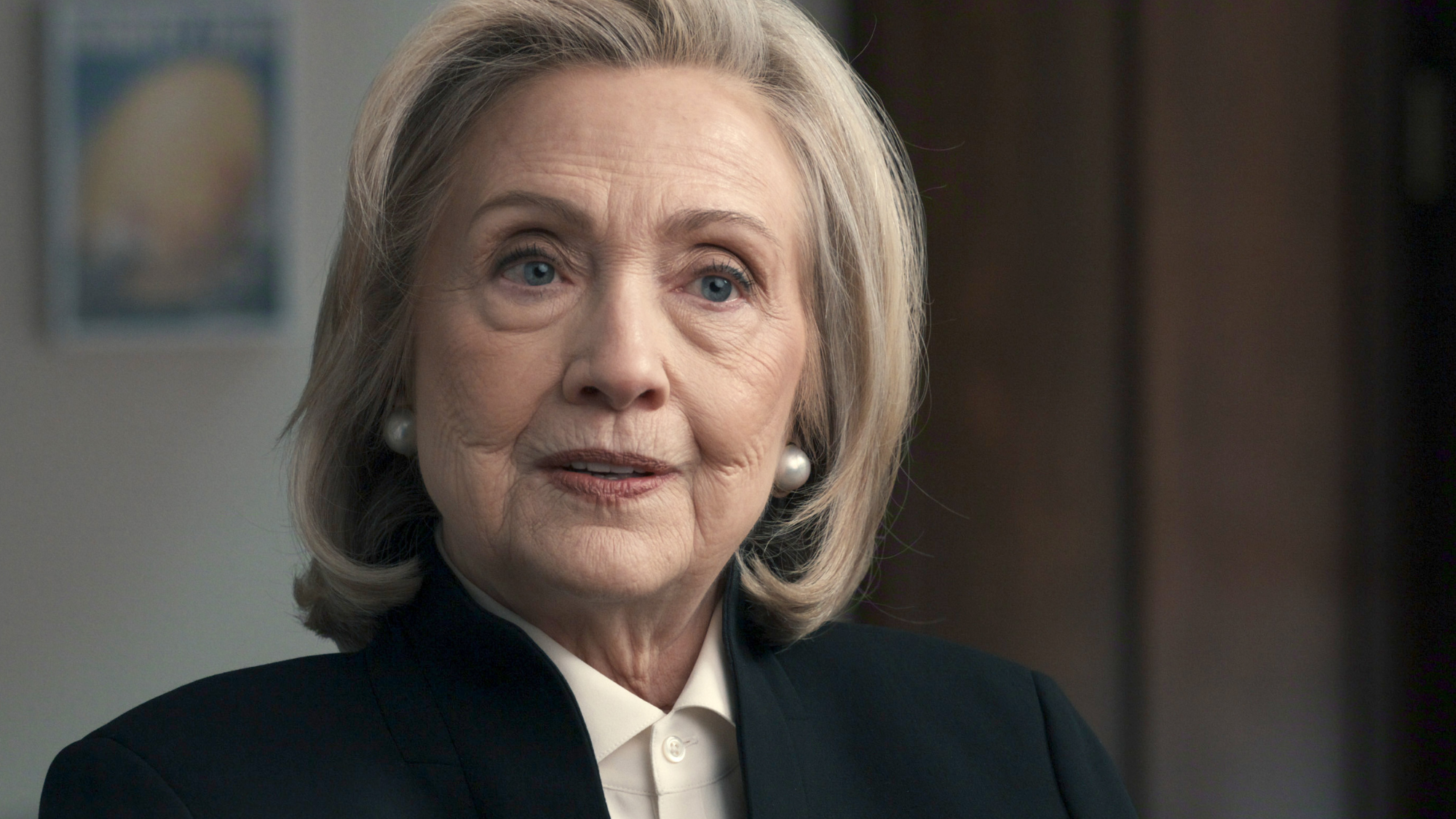
    Across five “pacy” episodes, “The American Experiment” (Netflix) “draws you into the grand story of how a British backwater became the most powerful nation in the annals of humanity”, said Ed Power in The Irish Times.

    The series, directed by Brian Knappenberger and produced by Tom Hanks, offers a bird’s-eye view of America since the 16th century, and features more than 60 talking heads (including Mike Pence, Ted Cruz, Hillary Clinton and Al Gore), who weigh in on the US’ origins and its “enduring fabulosity”. Yet the series is not entirely “self-congratulatory”; as it gets into the weeds of US politics, it makes it clear that all is not entirely well at the centre of Pax Americana.

    The series makes use of an “awful lot” of voices, said Carol Midgley in The Times, but they are “woven tapestry-like to present a compelling, clear narrative that is detail-dense and immersive”. Dramatised re-enactments provide welcome breaks from the expert commentary, and the battle scenes are brilliant. It is a “punchy, spiky but cerebral few hours” that convey that the experiment is evolving – and fragile.

    The commentary on American ideals is compelling, said Lucy Mangan in The Guardian, but there is an awful lot to take in. You might start to feel numbed and exhausted by the detail. The series lacks the flair of Ken Burns’ recent series “The American Revolution” (on the BBC), and it is all so carefully balanced that, at times, it starts to feel like “the televisual equivalent of consuming a kale smoothie on a wellness retreat”.


    ALBUM REVIEW

    Graham Coxon: Castle Park 

    When working on “A+E” in 2011, Graham Coxon recorded 10 tracks that didn’t seem to fit on that spiky collection, so he put them to one side for a separate album, said Lisa Wright in The Observer. Now, 15 years on, he has finally released that album, “Castle Park”, and it serves as a reminder that the Blur star can “write melodies that are as classic and direct as they come”. With jangly mod vibes (on “Billy Says”), and even a “little soul” (”Forget Today”), this is a “far more accessible record than ‘A+E’”. It would have been a terrible shame if the album had “stayed lost and gathering fluff down the back of the sofa”, said Andrew Trendell on NME. “Castle Park” is a treasure that “belongs on the mantelpiece” with the best of Coxon’s solo work (all of which is currently being reissued). From the “breezy” “Alright”, to the “choppy garage-rock earworm” “When You Find Out” and the “groovy wandering basslines and surf guitar” of “There’s a Little House”, his pure pop sensibilities – and love of 1960s music – shine through in these “direct ditties of love and romantic mishaps”.


    BOOK OF THE WEEK

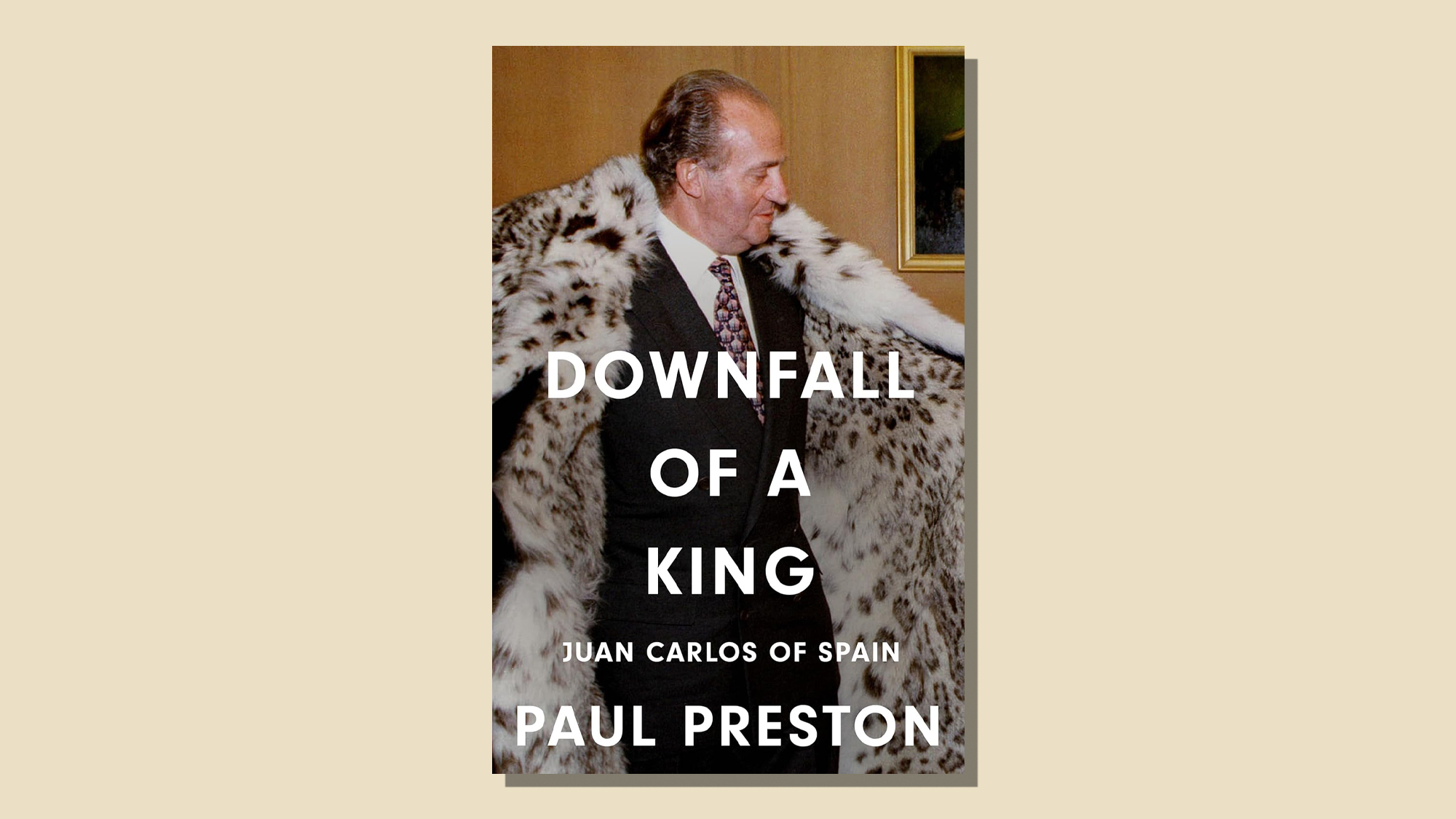
    Downfall of a King 

    by Paul Preston

    The life of Juan Carlos I, Spain’s 88-year-old former king, has been one of “richly deserved triumph followed by richly deserved disgrace”, said Jim Lawley in The Spectator. And it’s a life that is superbly charted by Paul Preston in this “magisterial” biography.

    Born in Rome in 1938, Juan Carlos was the son of Don Juan de Borbon, the exiled heir to the Spanish throne. Aged 10, he was sent back to Spain by his father, to be indoctrinated in the “political tenets” of Spain’s fascist leader, General Franco – who’d intimated that this could pave the way for a “restoration of an authoritarian monarchy”. Taking a close interest in the prince’s education, Franco would regularly lecture his charge “on the mistakes made by previous Spanish monarchs”.

    It was a “very lonely” childhood, but Juan Carlos emerged as Franco’s chosen successor, and was proclaimed king after Franco’s death in 1975. Contrary to the dictator’s wishes, he then set about initiating democratic reform. In 1981, his “supreme test came” when he faced down a military coup. “Grateful Spaniards poured out onto the streets”, to hail the king who’d saved their democracy.

    If the first half of this book “tells the tale of a lonely boy who turns into a noble king”, then the second “tells of his transformation from noble king into corrupt sleazebag”, said Craig Brown in The Times. 

    Having always been “something of a playboy”, Juan Carlos married Princess Sofia of Greece in 1962. But that didn’t staunch his appetite for what Preston calls “industrial-scale adulteries”. Although estimates vary, according to the highest figure mentioned he has slept with 4,786 different women – a voraciousness matched by his talent for procuring mammoth “gifts” from Middle Eastern rulers ($10 million from the Shah of Iran; $100 million from the Saudis), and a taste for “bear hunts and elephant hunts”. In 2014, “beset by political scandal and ill health”, he was “obliged to abdicate in favour of his son, Felipe”. Since 2023, he has lived in Abu Dhabi.

    “Preston’s narrative is perhaps needlessly haunted by the question ‘Why?’,” said Jeremy Treglown in Literary Review. Seeking psychological reasons for Juan Carlos’ self-indulgence, he writes of the “strain of having to please two antagonistic masters” – his father and General Franco – and describes a horrifying accident in his late teens, when he fatally shot his “intellectually more able” younger brother while playing a game with an ornamental pistol. Yet the references to his “damaged psyche” don’t seem altogether convincing. “You don’t need to have read ‘Don Quixote’ or ‘King Lear’ to know that some men just go nuts.”


    OBITUARY

    Clive Davis 

    Music industry titan who signed Whitney Houston

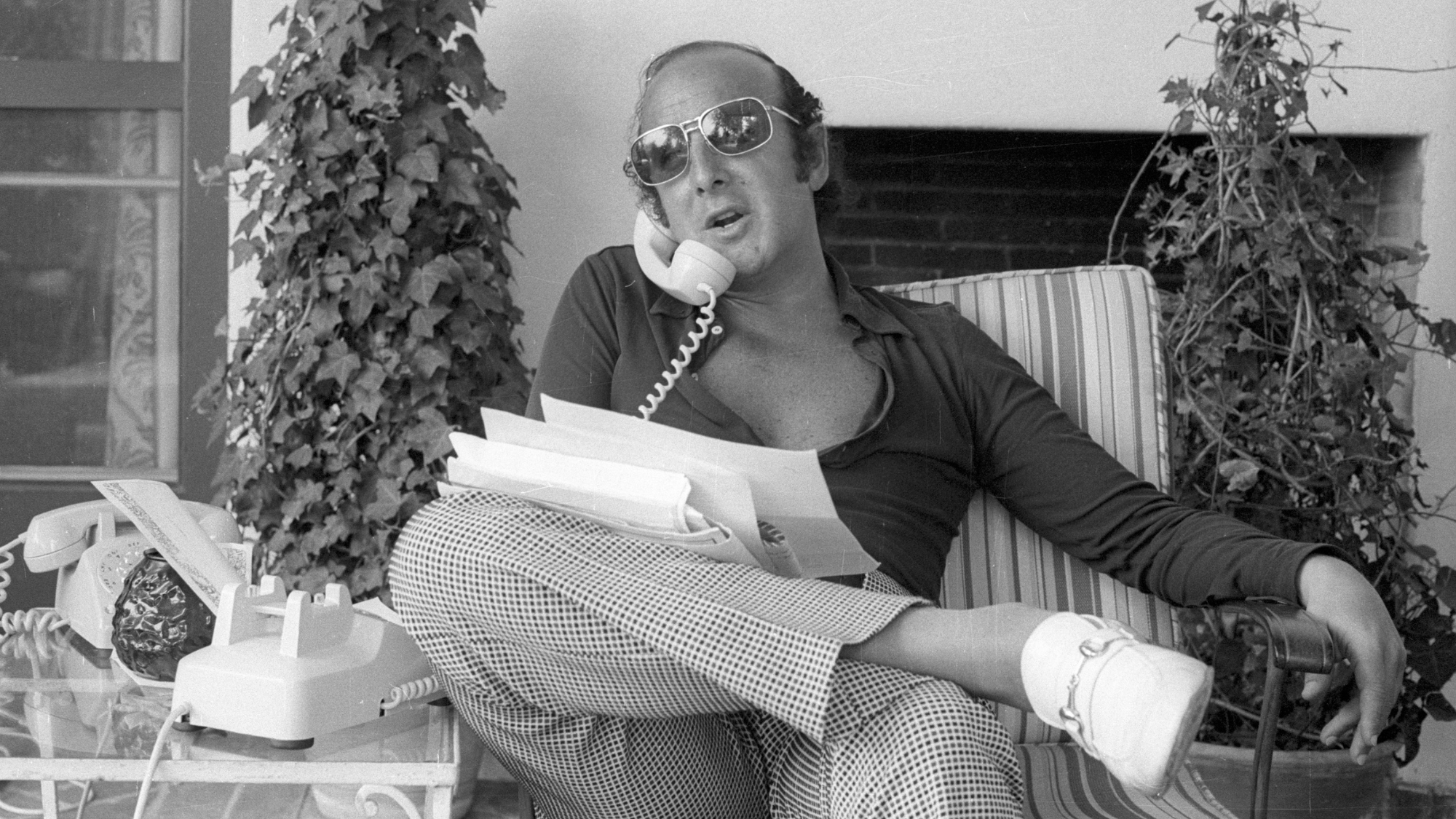
    The son of a salesman from Brooklyn, who rose to become one of the most powerful figures in the American music industry, Clive Davis was once described as the “man with the golden ears”, said The Telegraph. He joined Columbia Records as an in-house lawyer in 1960, and became its president seven years later, when he was just 35. At the time, the label was known for owning the cast-recording rights to “My Fair Lady” and for mainstream hit-makers like Johnny Mathis. All that changed over one weekend in 1967, when Davis travelled to the Monterey Festival in the flower-power epicentre of San Francisco, and watched a set by Janis Joplin – then largely unknown outside the city. She was, he recalled, “mesmerising, like a white tornado”. He signed her immediately. Within a few years, he had also signed or developed Bruce Springsteen, Chicago, Aerosmith, Pink Floyd, Billy Joel and Earth Wind & Fire. Subsequently, at Arista Records, he encouraged Barry Manilow to release “Mandy”, the record that made his name in 1974, and “discovered” Patti Smith.

    But his biggest success had its roots in 1983, when he heard the 19-year-old Whitney Houston singing in a nightclub in Manhattan, and became convinced that she had the makings of a major star. The daughter of the session singer Cissy Houston and a cousin of Dionne Warwick, she was outstandingly talented and photogenic too, and he made her his “personal project”. Over the next two years, he held weekly meetings with his team to plan the launch of her career, selecting songs and music producers in an effort to ensure that Houston – who had started singing in a gospel choir – had maximum crossover appeal. Released in 1985, her first album, “Whitney Houston”, sold 25 million copies, making it the bestselling debut album by a woman in history. She would go on to sell more than 220 million records.

    Clive Jay Davis was born in 1932. His parents named him after Clive Brook, the suave British actor, said The New York Times. In his memoir, he noted that there were not many other Clives in his Crown Heights neighbourhood then; but in other respects he was, he said, a “garden-variety, ambitious, upwardly mobile, hard-working Jewish boy”. He won scholarships to New York University and Harvard Law School. He admitted that he was not really qualified to work in the music industry: he knew nothing about music and had no experience of A&R. But he proved to be a shrewd negotiator, and a ruthless boardroom player – and he understood that a record executive’s most vital relationship is with his or her artists. His first signing was the Scottish singer Donovan, in 1966. The next year, he had what he termed his “epiphany” at Monterey. “I realised that [rock] was going to be the future,” he said.

    His division made tens of millions for CBS, but behind the scenes people were tiring of his egotism, and in 1973 he was accused of misusing corporate funds, and fired. A year or so later, however, he was hired by CBS’ rival Columbia Pictures, to reorganise its record division. That led to the launch of Arista – in which he took a 20% stake. There, he not only discovered new talent, but also masterminded massive comebacks for Carlos Santana, Aretha Franklin and Rod Stewart. And though he didn’t “get” hip hop, he saw its potential, and formed joint ventures to steer the careers of OutKast, The Notorious B.I.G. and others. By the time he left Arista in 2000, it was generating hundreds of millions a year. Soon after, he founded J Records, which had hits with the likes of Alicia Keys and Busta Rhymes. In 2008, aged 76, he was made chief creative officer of Sony Music – which had acquired Columbia, bringing him full circle. He was twice divorced; then in 2013, aged 80, he revealed that he was bisexual. His partner, Greg Schriefer, survives him, as do his four children.

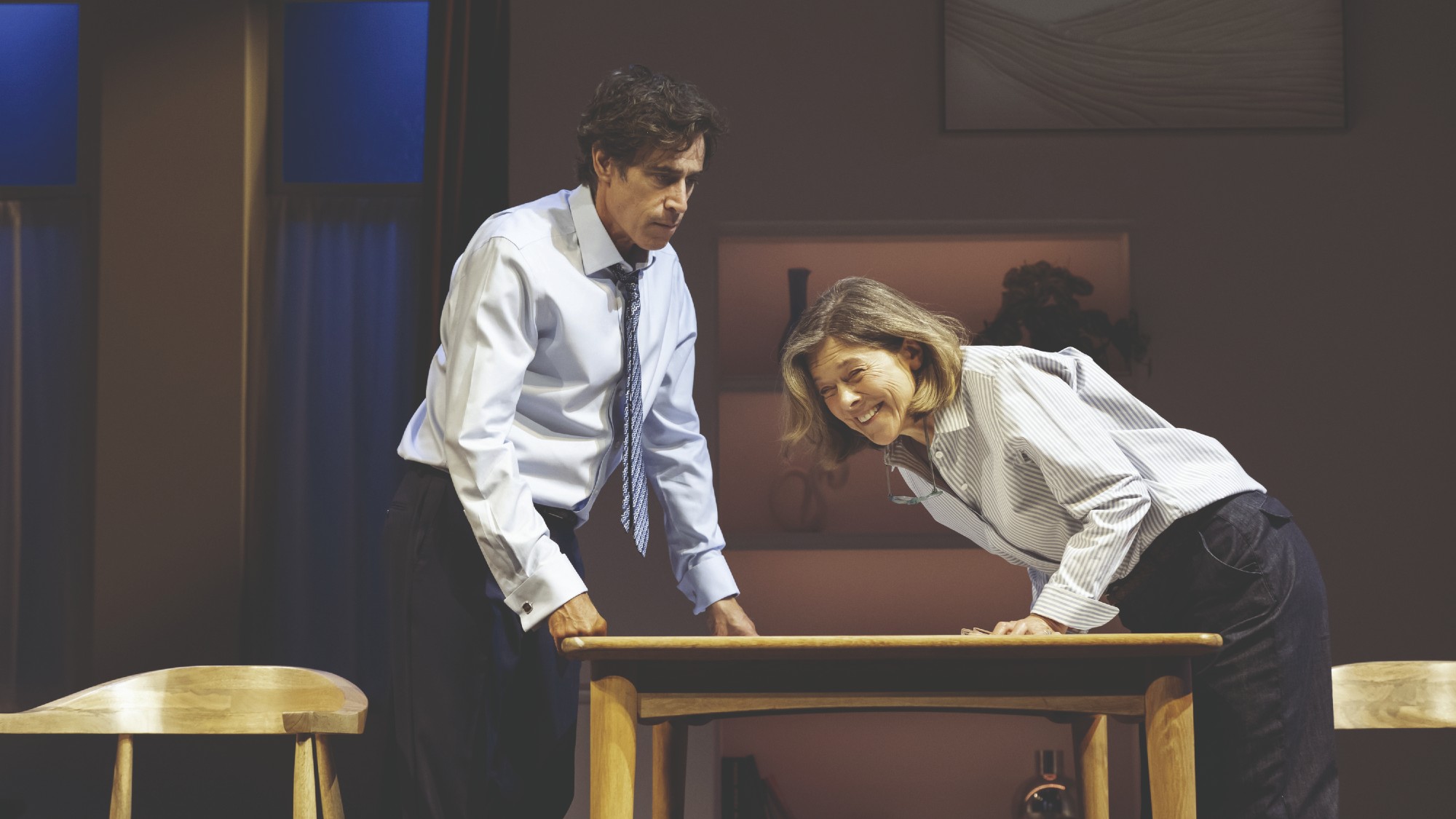


    Image credits, from top: Johan Persson; Netflix; William Collins; Michael Ochs / Getty Images
     

    Recent editions

    • Saturday Wrap

      Can Spain’s ‘greyhound’ PM outrun scandal?

    • Evening Review

      Morgan McSweeney’s reckoning

    • Morning Report

      Russia kills more than two dozen in huge attack on Kyiv

    VIEW ALL
    TheWeek
    • About Us
    • Contact Future's experts
    • Terms and Conditions
    • Privacy Policy
    • Cookie Policy
    • Advertise With Us
    • FAQ
    Add as a preferred source on Google Add as a preferred source on Google

    The Week UK is part of Future plc, an international media group and leading digital publisher. Visit our corporate site.

    © Future Publishing Limited Quay House, The Ambury, Bath BA1 1UA. All rights reserved. England and Wales company registration number 2008885.