Football star who became known as ‘King Kev’
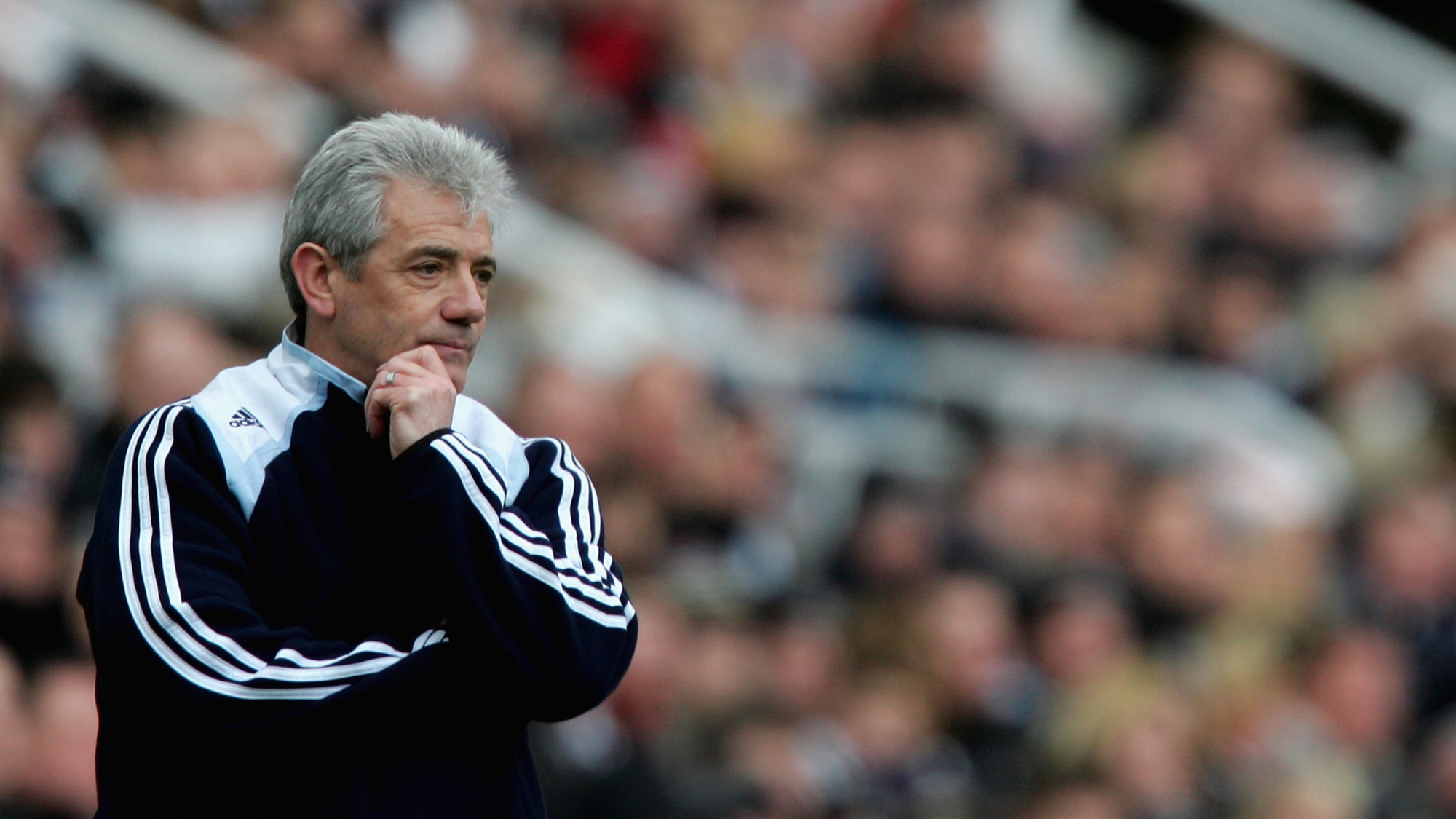
Kevin Keegan was “not indulging in false modesty” when he wrote in his memoir that “I was the mongrel who made it to Crufts, and that was fine by me”. He was a brilliant player, said The Guardian – a 5ft 8in-tall “bundle of energy” with speed, stamina and a “predator’s opportunism” – but he was not as naturally gifted as some. It was drive and hard work that propelled the diminutive miner’s son from Doncaster to the forefront of English football in the 1970s. Keegan, who has died aged 75, emerged as a star player at Liverpool, scoring 100 goals in 323 appearances, and helping the club to win three First Division titles, the Uefa Cup twice, the FA Cup and the European Cup. At Hamburg, from 1977, he became the only English player to win the Ballon d’Or twice, and helped the side win the Bundesliga. Yet Keegan would become most beloved at Newcastle United. Having dropped down a division to join the Magpies from Southampton in 1982, he was received as a “visiting deity”, said The Telegraph – and, within two seasons, he had helped Newcastle back to the First Division. For the Toon Army, Keegan was “King Kev”.
One of the more extraordinary moments of his career came when he retired in 1984. Following a testimonial match against his old team Liverpool, Keegan was carried away from the pitch in a helicopter to the cheers of more than 36,000 fans. Another came in 1996, by which time he was Newcastle manager. During a tense premiership race, Manchester United boss Alex Ferguson had claimed that other teams did not try as hard against Newcastle as they did against his side. Keegan, who was prone to emotional outbursts, took the bait. In a live post-match interview, the exhausted manager snapped. Ranting that Ferguson had disrespected his players and gone down in his estimation, he finished with words that would follow him around for years: “I will love it if we beat them! Love it!” If Ferguson had been playing mind games, they worked: Newcastle faltered, and Manchester United won the 1995/96 league by four points.
Joseph Kevin Keegan was born in Doncaster in 1951, and brought up in a house with no electricity or inside lavatory. His father – a Geordie and a passionate Newcastle fan – bought Kevin his first football boots with the proceeds of a win at the races. At primary school, Keegan played football in a team run by the headteacher, Sister Mary Oliver, whom he cited as a crucial early influence. He said that a line she wrote in his school report – “Kevin’s football must be encouraged” – had imbued him with vital self-belief; and that he had learnt something from her humility too. “She showed me there is no ‘us’ and ‘them’, and that if there is a job to be done you should do it,” he recalled.
Having left school at 15, he was working at a brass foundry and playing for local teams when he was spotted by a scout, which led to him being signed as an apprentice by fourth division Scunthorpe in 1968. He made his league debut aged 17. Before long, “bigger clubs came knocking”. In 1971, Liverpool signed him for £33,000, on £50 a week. Unusually, Keegan had insisted on negotiating his own terms. At Liverpool, he came under the influence of the great Bill Shankly, and developed an on-pitch partnership with fellow striker John Toshack so intuitive that Granada TV sent a team to explore whether they were telepathic. Keegan made his England debut in 1972, in a World Cup qualifier; in the 1972/73 season, Liverpool won the First Division title, said The Times – their first trophy since 1965/66.
Later highlights of his six years at Liverpool included the two goals he contributed to the team’s 3-0 victory over Newcastle in the 1974 FA Cup final. A low point came a few months later, when he was targeted by Leeds players (notoriously aggressive at the time), and ended up trading punches with Billy Bremner. Both were sent off and received 11-match bans. During that enforced break, Keegan married his girlfriend Jean, whom he had met on the waltzer at a fair in Doncaster four years earlier, when they were both teenagers; she survives him, along with their two daughters.
In 1976, he was made England captain; Liverpool won the First Division and he became yet more widely known owing to a celebrated appearance on the TV show “Superstars”. By then, he had decided to leave Liverpool, and the next year he signed for Hamburg, for £500,000 on a reported salary of £122,000 – “six times what he’d been earning at Liverpool”. Before heading to Germany, Keegan went to a hairdresser and emerged with a bubble perm. Jean burst out laughing when she saw it, but his curls kicked off a regrettable trend in 1970s football, and helped make him famous well beyond the world of sport. He struggled at first in Germany, but it was there that his surprising strength and power won him the nickname “Mighty Mouse”. In 1980, he moved to Southampton, where he won the Golden Boot. In November 1981, England qualified for the World Cup – España 82 – for the first time in 12 years. But, “heartbreakingly for Keegan”, said The Times, he suffered a back injury before the tournament. He made just one appearance, as a late substitute in a match against Spain, only to miss a clear chance on goal – “the sort of header I’d scored all my life”. England were eliminated; Keegan’s international career was over.
Having grown up on tales of Newcastle’s past glories, he said that signing for the Toon in the early 1980s “felt like coming home”. He retired two years later, aged 33. But after seven years in Spain, playing golf and hardly even watching football, he returned to Newcastle as manager. He paid with his own money for the training ground to be renovated, then set about creating an exciting attacking side, deploying techniques he had learnt from Shankly to motivate his players. After Newcastle were promoted in 1993, he used his new leverage to demand the funds to buy star players, including, for a record £15 million, Alan Shearer – who, aged 13, had been a ball boy at St James’ Park for Keegan’s last match as a player. Fans were shocked when he quit in 1997; it turned out that he’d grown disillusioned by boardroom politics. He worked next at Fulham, and on the back of his success there he was made England manager, after the sacking of Glenn Hoddle in 1999. It didn’t go well: he resigned in the dressing room toilets at Wembley Stadium following England’s 1-0 loss to Germany in a World Cup qualifier. In 2008, he made an emotional return to Newcastle, only to leave again a few months later, after a bitter falling out with owner Mike Ashley. Football, he reflected in his autobiography, had given him everything – “except a happy ending”.