The Week The Week
flag of US
US
flag of UK
UK
https://cdn.mos.cms.futurecdn.net/skoGBi9qKFoUtnNWkovjJQ.jpg

SUBSCRIBE

Try 6 Free Issues

Sign in
  • View Profile
  • Sign out
  • The Explainer
  • Talking Points
  • The Week Recommends
  • Podcasts
  • Newsletters
  • From the Magazine
  • The Week Junior
  • More
    • Politics
    • World News
    • Business
    • Health
    • Science
    • Food & Drink
    • Travel
    • Culture
    • History
    • Personal Finance
    • Puzzles
    • Photos
    • The Blend
    • All Categories
  • Newsletter sign up Newsletter
  • The Week Evening Review
    A jurisdiction battle, an expiring nuclear treaty, and a housing affordability proposal

     
    TODAY’S BIG QUESTION

    Why are authorities feuding over an ICE probe?

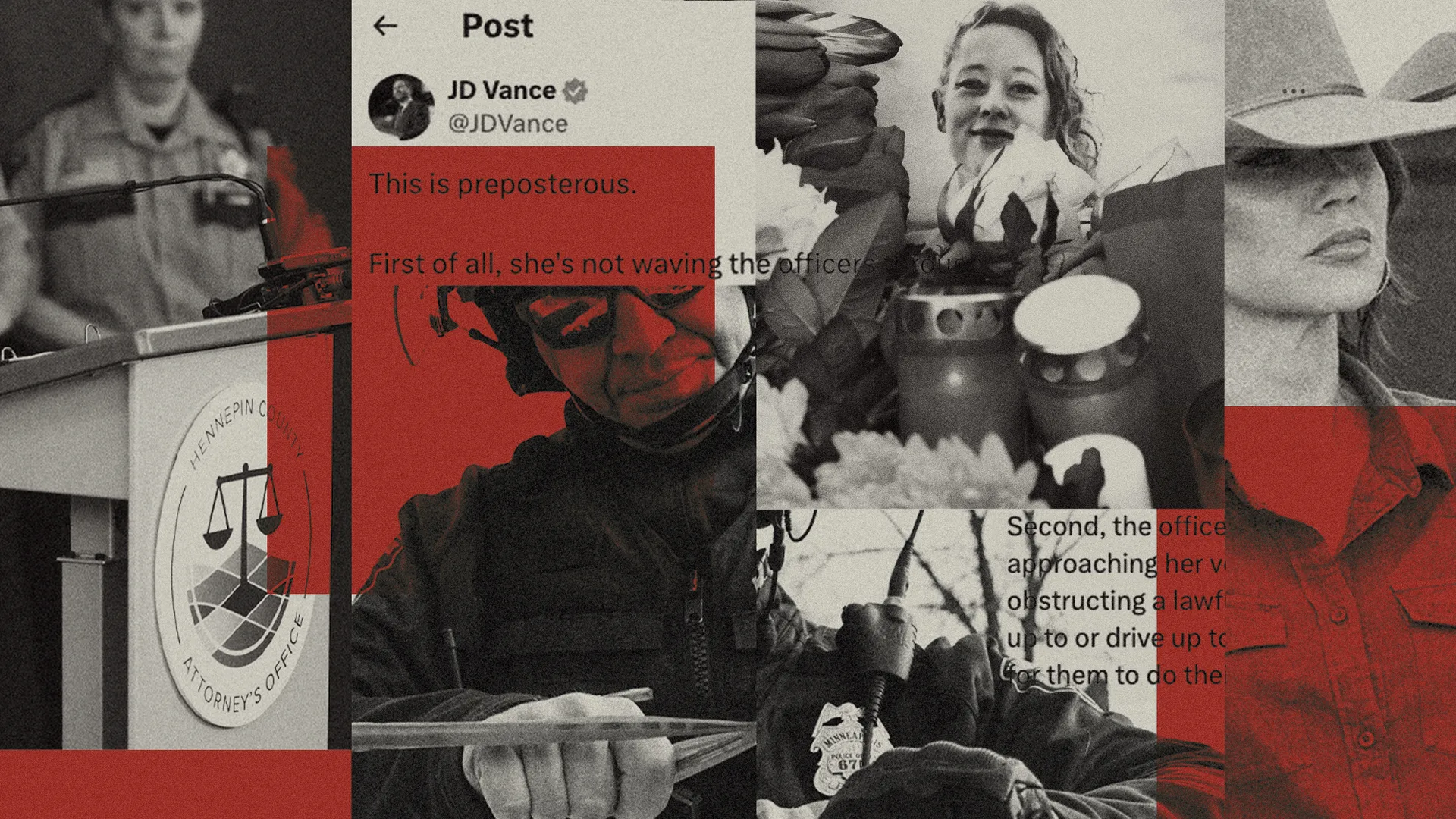
    The shooting death of 37-year-old Renee Nicole Good in Minneapolis last week has thrust Minnesota into the national spotlight as the Trump administration and local officials spar over who has the authority to investigate. Minnesota law enforcement authorities “don’t have any jurisdiction in this investigation,” said Homeland Security Secretary Kristi Noem, and the officer who shot Good enjoys “absolute immunity,” insisted Vice President J.D. Vance. That officer, identified by multiple outlets as Jonathan Ross, “does not have complete immunity here,” countered Hennepin County Attorney Mary Moriarty as she announced plans for a locally led investigation.

    What did the commentators say?
    The Justice Department’s decision to abruptly end what had initially been presented as a partnership between the FBI and local Bureau of Criminal Apprehension investigators is “highly unusual,” having “hardly any precedent” outside of “specific investigations against a state itself,” said Courthouse News Service. Pointedly, the lack of cooperation is a “jarring reversal of the joint investigation model” conducted after the police murder of George Floyd in Minneapolis five years prior.

    Federal agents are “typically immune” from local prosecution when the behavior in question is “directly tied to their official duties,” said Fox 9. Minnesota authorities must prove that Ross “clearly broke the law or acted outside the scope of his duties.” That is a much “harder” burden to meet “if the FBI won’t share evidence.”

    While it is “common” for federal and local law enforcement to “pool resources to investigate crimes that could fall under all their jurisdictions,” Homeland Security officials, including Noem, have stressed that the Trump administration “did not view the shooting as one of those cases,” Fox News said.

    What next?
    Although some elected officials in Minnesota, including Gov. Tim Walz (D), have "slammed the Trump administration" for painting Good “as an agitator” and Ross “as a hero,” local prosecutors have been more circumspect, said Bring Me The News. Moriarty’s statement that an independent investigation is “not an attack on the FBI” is, in part, an attempt to “placate federal officials.” 

    For now, Minnesota officials are encouraging the public to submit any footage of Good’s death or other evidence to a secure online portal. The evidence will then be evaluated by the Bureau of Criminal Apprehension.


    QUOTE OF THE DAY

    ‘Our light does not need permission to shine. We belong in every room we walk into, our voices matter, and our dreams deserve space.’

    Actor Teyana Taylor to “my brown sisters and little brown girls watching tonight” after winning a Golden Globe for Best Supporting Actress for “One Battle After Another” last night. It was her first Golden Globe.


    THE EXPLAINER

    New START: the US-Russia nuclear treaty about to expire

    President Donald Trump may allow the United States’ last remaining nuclear arms control treaty with Russia to lapse. The New START agreement runs out on Feb. 5, but “if it expires, it expires,” Trump said to The New York Times. If the agreement, signed in 2010, is not renewed or replaced, it would leave the world’s two biggest nuclear powers “free to expand their arsenals without limit, for the first time in half a century.” The two nations have about 87% of the world’s nuclear warheads. 

    What is New START? 
    The Strategic Arms Reduction Treaty is a series of bilateral nuclear arms control treaties between the U.S. and Russia, which began with START I in 1991. It aims to limit and reduce the number of nuclear weapons held by both countries. 

    Will it be replaced? 
    Moscow and Washington haven’t “held any talks on a successor treaty,” said Reuters, although there have been some informal statements. In September, Russian President Vladimir Putin proposed that both parties adhere to the limits for an additional 12 months. He also argued that the nuclear stockpiles of Britain and France should be up for negotiation. 

    France and Britain rejected that suggestion, and Western experts are “divided” on it, said Reuters. Although it would send a “political signal that both sides want to preserve a vestige of arms control,” it would also allow Russia to keep developing weapons systems outside the scope of the treaty. 

    Then there’s China. One U.S. analyst said agreeing to Putin’s proposal would “send a message” to Beijing that Washington would not “build up its strategic nuclear forces in response to China’s fast-growing nuclear arsenal,” per Reuters. 

    What does it mean for the world? 
    Trump has previously said he would like to pursue “denuclearization” with Russia and China to reduce the “tremendous amounts of money” each nation spends on nuclear weapons. But Beijing’s accelerating nuclear program may push the U.S. to increase its stockpile, said Pavel Podvig, a senior researcher at the U.N. Institute for Disarmament Research, to Radio Free Europe / Radio Liberty. This could lead to a “Cold War-like arms race.”


    Statistic of the day

    70%: The percentage of Sudan’s population in need of humanitarian assistance, according to Sky News. Sudan’s civil war has passed its thousandth day, deepening nationwide humanitarian issues like famine, displacement and the collapse of basic services. At least 30 million Sudanese people are currently relying on aid.


    TALKING POINTS

    Trump’s plan for affordable housing: block Wall Street

    America’s housing affordability crisis is mostly a supply-and-demand problem: Not enough houses, too many people needing a place to live. President Donald Trump has an unexpected solution. He wants to take on Wall Street.

    Trump last week said he would “ban Wall Street firms from buying up single-family homes” to ease affordability issues, said Reuters. Big institutions like Blackstone, American Homes 4 Rent and Progress Residential have “bought thousands of single-family homes” since the Great Recession, and now own about 3% of all single-family rental homes. The threatened move to ban big investors would align Trump with Democrats who have long “criticized corporate homebuying, claiming it has helped stoke housing costs.”

    Defending the American dream?
    “It’s about time,” said Brian Hamilton at The Hill. Institutional investors own more than 15% of rental housing in cities like Atlanta, Jacksonville, Tampa and Charlotte — a fact that is probably connected to the 55% rise in real estate prices over the last half-decade. The big investors “buy up supply and basically corner the market” in some cities, driving up prices or turning potential homeowners into renters. Wall Street “must be thwarted to preserve and defend the American Dream.”

    Big institutional landlords are “not the cause of the nation’s housing crisis,” said Binyamin Appelbaum at The New York Times. The best way to make housing more affordable is to “build more housing,” and that is unlikely to be helped by using private investors as a scapegoat with policy that “reduces investment in housing.” Trump has so far failed to “put forward any meaningful plans to increase housing construction.” 

    “Scapegoating investment bankers is always politically popular,” said The Washington Post editorial board. But there is “no correlation” between housing shortages in any given state and its “share of homes owned by large investors.” Democrats have frequently criticized institutional investors, but Trump coming to a similar conclusion may give them space to acknowledge that the blame is “populist claptrap.”

    Mom-and-pops still welcome
    Trump’s proposed ban has “raised alarms across the real estate investment industry,” said Business Insider. But White House officials say the proposal is “forward-looking” and will not result in a “forced sale of current holdings,” said Bloomberg. The final proposal will be designed to exclude institutional investors while keeping “mom-and-pop” landlords in the market.


    Good day 🎙️

    … for friendly podcasts. Amy Poehler won the inaugural Golden Globes podcast award for her show “Good Hang,” which features her “freestyle riffs with fellow comedians, friends and celebs,” said Variety. Her podcast attempts to make a “very rough and unkind world filled with a little bit more love and laughter, and laughing with people, not at them,” Poehler said.


    Bad day 💔

    … for saying “AI do.” A Dutch couple has learned their marriage is invalid because the registrar used ChatGPT to write part of the wedding ceremony. The couple promised to “keep teasing each other” but failed to make the required legal declaration, a district court in the Netherlands’ Overijssel ruled.


    Picture of the day

    On the up

    Power station staff check solar panels above a lake where local farmers raise fish, in a hybrid project in Tianchang, east China. The East Asian nation is the world leader in renewables and holds more than half of the total installed solar capacity.
    AFP / Getty Images


    Puzzles

    Guess the number

    Try The Week’s new daily number challenge in our puzzles and quizzes section

    Play here


    The Week recommends

    The fresh and veggie-based tastes of Kismet

    The cooking of Sara Kramer and Sarah Hymanson at their Los Angeles restaurants, Kismet and various locations of Kismet Rotisserie, is zippy, homey and satisfying. The duo’s 2024 debut cookbook, “Kismet: Bright, Fresh, Vegetable-Loving Recipes,” shows home cooks how to achieve the same effect at home.

    Schmear and dip and repeat
    Kramer and Hymanson are sauce-and-dip obsessed, which tracks, knowing the pair’s fondness for food of the Levant and Middle East. So the book devotes an entire chapter to the topic.

    Tahini sauce is mounded with honeyed kumquats. Or the sesame seed puree is blitzed with Tuscan kale and completed with tangy pomegranate molasses. Or it’s finished with chunks of Castelvetrano olives and Calabrian chiles. On the dip front, there is a smoked trout dip, the fish luxuriating in a base of yogurt and sour cream, and garnished with fresh tarragon and Aleppo pepper. At Kismet, everything is fair game in the name of flavor.

    Simple tricks, big results
    The book is also filled with plenty of stripped-down recipes that reveal the liberating power of good cooking technique. Kramer makes a case for throwing out the flour and eggs when making latkes and serving them year-round with everything from pickled chiles to loads of dill and basil, and, of course, labneh. 

    Even garlic gets the Kismet rethinking. The pair notes that a finishing touch of raw garlic grated on a Microplane grater provides "pleasant sharpness and earthy funk.” A fine truth — and an apt alternate subtitle for the book.

    Read more


    Poll watch

    Over three in five Americans (61%) have used a bank’s mobile app in the past year, according to a YouGov survey, making it the most common banking method in the U.S. Using an ATM is the second-most common method at 54%, followed by online banking at 53%. 


    INSTANT OPINION

    Today's best commentary

    ‘Citizens are finally getting it: No one’s safe from Trump’s deportation ambitions’
    Gustavo Arellano at the Los Angeles Times
    Trump is “not just going after all undocumented immigrants and limiting legal migration” but has the “goal of remigration — the idea that immigrants of any status should return to their home countries,” says Gustavo Arellano. Now, U.S. citizens Keith Porter, Jr. and Renee Nicole Good, “whose shooting sparked large protests in Minneapolis, are dead.” If this proves to “American citizens and permanent residents once and for all that they’re not safe from ICE, then their deaths weren’t in vain.”

    ‘AI can’t do soul-searching. Here’s why we need philosophy.’
    Kenneth Seeskin at the Chicago Tribune
    For “all its strengths — from offering travel tips to investment advice to writing term papers and poetry — AI content is also a double-edged sword, littered with bogus references and conclusions based on biased studies or incomplete information,” says Kenneth Seeskin. At its “best, AI reflects the current thinking on a particular issue,” but “what if the current thinking is wrong?” Unless there are “people willing to challenge the current thinking, the price we pay is intellectual stagnation.”

    ‘Prepare to be fleeced in online prediction markets’
    Abdallah Fayyad at The Boston Globe
    Insider trading is “blatantly illegal in traditional financial exchanges like the stock market,” but “insider trading in prediction markets is legally murkier,” says Abdallah Fayyad. That “leaves online platforms with room to create their own rules on insider trading,” and the “federal government seems uninterested in the potential dangers of insider trading in prediction markets.” It “isn’t whether one individual broke the rules; it’s how prevalent anonymity is in prediction markets and how hard it can be to detect insider trading.”


    WORD OF THE DAY

    Jessica

    The latest iteration of “Karen,” according to Gen Z TikTok users. The name, which is popular among younger Gen X and older Millennial women, is an evolution of the moniker used online to refer to older women who insert themselves into situations they’re not involved in, said The Hill.


    Evening Review was written and edited by Theara Coleman, Nadia Croes, Scott Hocker, Anya Jaremko-Greenwold, Justin Klawans, Joel Mathis, Summer Meza, Chas Newkey-Burden, and Rafi Schwartz, with illustrations by Stephen Kelly and Julia Wytrazek.

    Image credits, from top: Illustration by Stephen Kelly / Shutterstock / Getty Images / AP; Illustration by Stephen Kelly / Shutterstock / Getty Images; Bob Sacha / Getty Images; Penguin Random House
     

    Recent editions

    • Morning Report

      Iran warns US as protest death toll mounts

    • Sunday Shortlist

      Sydney Sweeney’s enjoyably ‘pulpy’ thriller

    • Saturday Wrap

      Has Trump created a new world order?

    VIEW ALL
    TheWeek
    • About Us
    • Contact Future's experts
    • Terms and Conditions
    • Privacy Policy
    • Cookie Policy
    • Advertise With Us
    • FAQ
    Add as a preferred source on Google

    The Week UK is part of Future plc, an international media group and leading digital publisher. Visit our corporate site.

    © Future Publishing Limited Quay House, The Ambury, Bath BA1 1UA. All rights reserved. England and Wales company registration number 2008885.