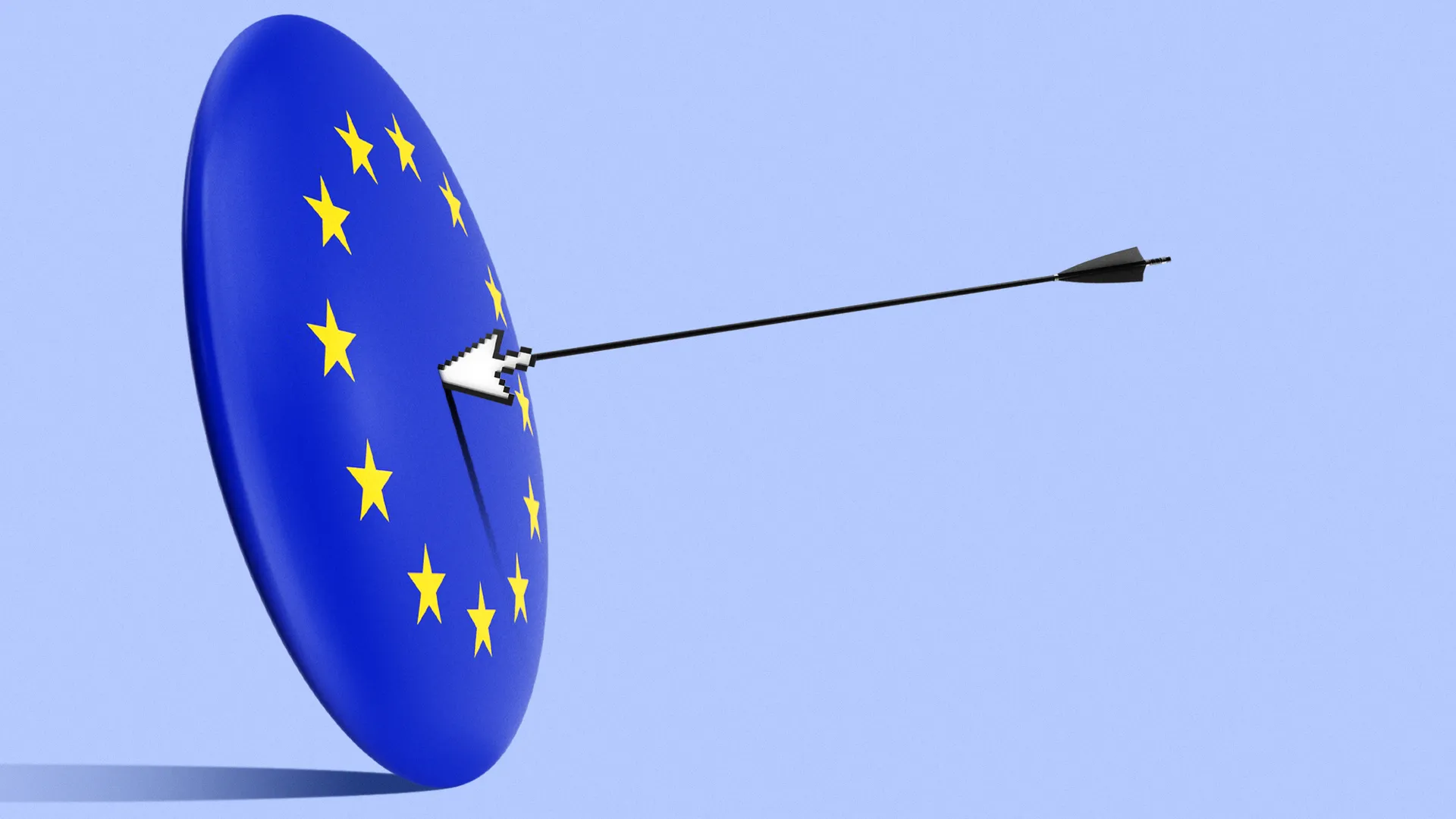
European nations are racing to lessen their reliance on U.S. technology in the face of an increasingly hostile Trump administration that commands the loyalty of most of Silicon Valley. At the World Economic Forum in Davos, European Commission President Ursula von der Leyen stressed the “structural imperative” for Europe to “build a new form of independence.” But with a handful of U.S.-headquartered companies controlling most of the world’s cloud computing infrastructure, critics question whether digital sovereignty is a realistic goal.
What did the commentators say?
Talk of “technological ‘decoupling’ from the U.S. is hardly new,” said Sébastian Seibt at France 24, but President Donald Trump’s “aggressive rhetoric” toward his European allies and “open threats” to seize Greenland have created a “sudden sense of urgency.” If he asked Amazon, Google and Meta to “completely cut off European access to their services, our societies and economies would be completely disrupted,” Christophe Grosbost, of the Innovation Makers Alliance, said to the outlet.
France wants to “guarantee the security and confidentiality of electronic communications by relying on a powerful and sovereign tool,” said David Amiel, a French junior minister for the civil service and state reform. So it’s preparing to phase out Zoom, Teams and other American video-conferencing platforms and will begin using its own open-source alternative, Visio, in 2027.
France’s shift to Visio is largely “symbolic” but is still a “big step,” said internet governance expert Francesca Musiani to France 24. “At the very least, it signals a desire to reduce exposure to the American ecosystem as soon as a European alternative, however imperfect, becomes available.”
Europe’s “digital sovereignty paranoia” is now “feeding directly into procurement decisions,” said Steven Vaughan-Nichols at The Register. IT spending is being hiked, with a “big chunk” going into “sovereign cloud” options. This isn’t “just compliance theater; it’s a straight‑up national economic security play.”
What next?
We should prepare in case the U.S. pulls the plug on us, said Johan Linaker, a computer science professor at Sweden’s Lund University, at The Conversation. The scale and capabilities of Europe’s cloud-computing providers lag far behind those of their American rivals. For the continent to “meaningfully address the risks,” digital infrastructure “needs to be treated with the same seriousness as physical infrastructure” such as roads and power grids. |