The Week The Week
flag of US
US
flag of UK
UK
https://cdn.mos.cms.futurecdn.net/flexiimages/jzblygzdxr1769609154.gif

SUBSCRIBE

Try 6 weeks free

Sign in
  • View Profile
  • Sign out
  • The Explainer
  • Talking Points
  • The Week Recommends
  • Podcasts
  • Newsletters
  • From the Magazine
  • The Week Junior
  • More
    • Politics
    • World News
    • Business
    • Health
    • Science
    • Food & Drink
    • Travel
    • Culture
    • History
    • Personal Finance
    • Puzzles
    • Photos
    • The Blend
    • All Categories
  • Newsletter sign up Newsletter
  • The Week Evening Review
    Talarico’s religious play, Patel’s catch-22 and Russia’s nuclear weapons in space

     
    TODAY’S BIG QUESTION

    Is Talarico’s Texas win a sign of a rising religious left?

    When State Rep. James Talarico delivered his victory speech after winning Texas’ Democratic Senate primary this week, he noted that his Republican rivals would likely call him a “radical leftist” and “fake Christian.” Indeed, Talarico’s faith has become a major feature of the 36-year-old’s political work. And with him narrowly defeating Rep. Jasmine Crockett for the party’s nomination to unseat Sen. John Cornyn in November, his religion-first brand may be the start of a new electoral movement for Democrats.

    What did the commentators say?
    Among Talarico’s many “powerful qualities,” his “unapologetic embrace” of Christianity not only “sets him apart from other rising Democratic stars” but could “even help reshape American politics,” said MS Now. Talarico has gained a national reputation for “rooting his opposition to Christian nationalism in his own Christian faith” and defending religious freedoms “without casting religion as the enemy.”

    Delivering his campaign stump speech with a “more-than-occasional mention of Scripture,” Talarico is betting that his “religious foundation opens a door to that broader coalition of voters,” said The Texas Tribune. At the same time, His progressive religiosity has elicited a “backlash” from Christian conservatives who see his faith as “incongruous with their own, despite a shared vocabulary.” Conservative Christian Texans are already “familiar with the kinds of teachings” one might hear at Talarico’s Austin-area church, said Mother Jones. But according to research, many of them would “rather dance with the Devil than a church-going Democrat.” 

    Talarico’s message of “compassionate” Christianity” that’s “wedded to a populist economic message” has attracted attention, said Vox. But while there may be a “resurgence of the religious left” taking place, it’s happening as the party’s coalition and its voters “get less religious overall.” 

    What next?
    Republicans have begun “previewing the attacks they will wage” against the Senate nominee, said the Tribune. This may entail “highlighting comments he has made,” including that God is nonbinary, the Bible “sanctions abortion,” and Christianity “merely points to the truth along with other religions.” If elected, Talarico would join sitting Sen. Rev. Raphael Warnock and divinity school graduate Sen. Chris Coons, both of whom have “urged Democrats to take religious engagement more seriously.”


    QUOTE OF THE DAY

    ‘President Trump has been anointed by Jesus to light the signal fire in Iran to cause Armageddon and mark his return to Earth.’

    The message a military commander reportedly encouraged an unnamed officer to pass on to his troops. The Military Religious Freedom Foundation, which published a complaint, received more than 200 reports of “similar disturbing pronouncements” since Saturday, said the nonprofit.


    TALKING POINTS

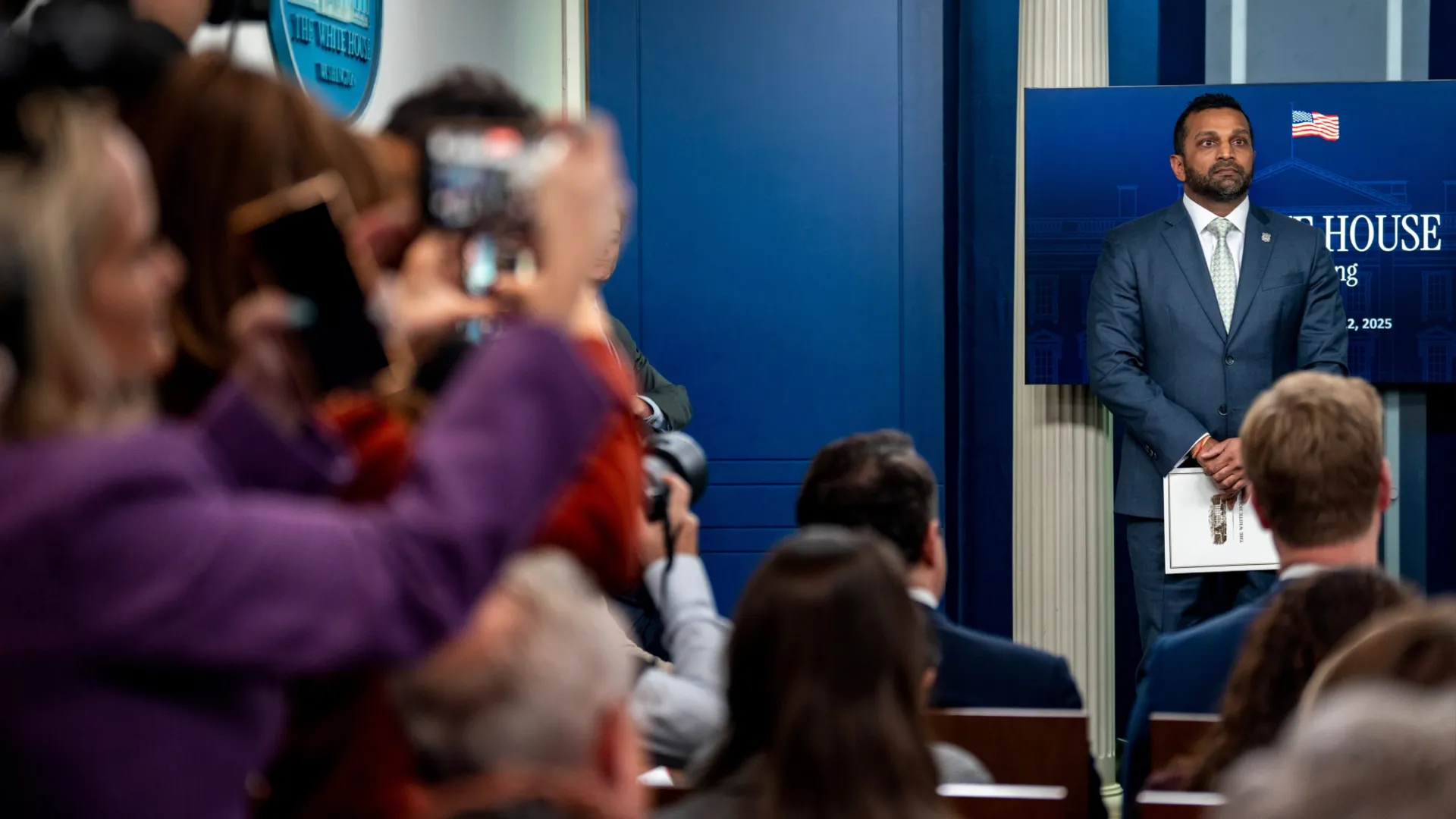
    Patel’s Iran agent firings are a catch-22 for the FBI director

    Given President Donald Trump’s public opprobrium after the FBI uncovered troves of highly classified government documents on his Mar-a-Lago property, it’s hardly surprising that the White House’s purge of bureau figures has come for those agents involved in the 2022 raid. More surprising, however, are reports that among those fired by Director Kash Patel this week were multiple agents involved in extensive counterintelligence investigations, including ones concerning Iran, with whom the government is essentially at war. While the bureau has defended the firings as a routine non-issue, critics say the dismissals are a sign of partisan chaos at the FBI during a fraught moment of heightened national security.

    ‘Unflattering media coverage’
    Patel’s firing of more than a dozen FBI employees, including agents, analysts and support staff, comes after the director “lashed out” upon learning that Department of Justice Special Counsel Jack Smith had sought his phone records as part of his investigations into Trump, said CBS News. Most of those fired worked in some capacity on Smith’s investigation, including many who worked on cases involving Iran. Some also believe these firings are Patel’s way of distracting from “unflattering media coverage” following his Olympics escapades, said The New York Sun.

    ‘Weaponizing’ the DOJ
    While Patel hasn’t commented on the specific agents dismissed or their involvement in Iran-related operations, he has made clear that the firings come as part of the White House’s broader federal purge of “weaponized” holdovers from previous administrations. Smith’s subpoenaing of his phone records was “outrageous and deeply alarming,” said Patel to Fox News. 

    Administrative justification for turmoil at federal agencies has been ongoing, but it’s not “weaponizing” the Department of Justice to “demand accountability for those who weaponized” the Department of Justice, said White House Press Secretary Karoline Leavitt in the fall. This recent round of dismissals is merely the “latest example” of expunging agents who worked on Trump investigations, a process that has been underway “since the start” of the current Trump administration, said The Washington Post. Broadly, Patel’s instinct to fire staff amid scandals “appears designed to ingratiate him” with Trump, said MS Now.


    Statistic of the day

    5,923,870: The number of Ukrainian refugees worldwide. Four years after Russia’s invasion of Ukraine began, “support from European neighbors along its border is weakening,” said RFI. As of today, Ukrainians’ special refugee status in Poland ends, so many will now face stricter rules for work or receiving support.


    IN THE SPOTLIGHT

    Russia’s nuclear weapons in space

    Satellite warfare has been a threat for some years, and the latest “devastating” development is the “possibility of Russia detonating a nuclear weapon in space,” said the Daily Mail. Russia’s plans to deploy them there could be “catastrophic,” said a Canadian military leader on Ukrainian news site Ukrinform. 

    Frying electronics 
    Simulated blast tests by nuclear experts at the Pentagon suggest that a nuclear attack from space would destroy thousands of Western satellites. And these satellite networks are “critical to everything from banks synchronizing their transactions to navigation tasks that ranged from guiding planes and ships to ensuring a pizza delivery driver finds the right address,” said the Daily Mail. 

    An anti-satellite nuke would “combine a physical attack that would ripple outwards, destroying more satellites,” with the nuclear component being “used to fry their electronics,” said The Associated Press. It could “render low-Earth orbit unusable for satellites for as long as a year,” and the effects would be “devastating,” said Rep. Mike Turner (R-Ohio) to the AP. The U.S. and its allies could be “vulnerable to economic upheaval” and “even a nuclear attack.” The scenario is the “Cuban Missile Crisis in space.” 

    Satellite killers 
    If Russia were to deploy such a “satellite-killing weapon,” it would violate the Outer Space Treaty of 1967, said The New York Times. This kind of space weaponization from Russia and China is “one of the primary reasons” the U.S. Space Force was established, said the AP.  It was launched in 2019 to protect U.S. interests in space and defend its satellites from attacks by enemies. It’s “far smaller” than the Army, Navy or Air Force, but it’s growing. 

    Now, other countries are “scrambling to create their own rocket and space programs to exploit commercial prospects and ensure they aren’t dependent on foreign satellites,” said Fortune. Canada, for example, currently cannot disable a potential Russian nuclear bomb in space. So “my only advice as a military officer is to put pressure” on Moscow so that they don’t follow through with the plan, said Brigadier General Christopher Horner, the commander of the Royal Canadian Air Force, because that would be an “incredibly terrible thing.” 


    Good day 💉

    … for weight-loss drugs. Semaglutide, the GLP-1 drug known as Ozempic, Rybelsus and Wegovy, may reverse debilitating tissue damage caused by osteoarthritis, the world’s most common form of arthritis, according to a study published in the journal Cell Metabolism. The drug appears to protect joints in mice by reprogramming the metabolism of cells that synthesize and maintain healthy cartilage.


    Bad day 🎟️

    … for concert giants. The long-awaited federal antitrust trial against Live Nation began this week. The Ticketmaster owner is accused of using a monopoly to “stifle competition, dominate the ticketing market and extract money from fans through high ticket prices and surcharges,” said The New York Times.


    Picture of the day

    Fully illuminated

    Moonlight brightens the skies above the High Tatras Mountains in Slovakia. This month’s full moon is known as the Worm Moon, named after the earthworms that start to emerge in spring.
    Grzegorz Momot / EPA / Shutterstock


    Puzzles

    Daily sudoku

    Challenge yourself with The Week’s daily sudoku, part of our puzzles section, which also includes guess the number

    Play here


    The Week recommends

    A book intro to cooking Vietnamese food at home

    Andrea Nguyen’s 2006 debut, “Into the Vietnamese Kitchen: Treasured Foodways, Modern Flavors,” is an intermixture of the personal and the practical. She opens the book with the following scene: “We heard the plane coming in low, and I was scared. Mom grabbed me, pulling me underneath the staircase as a bomb exploded nearby. I shrieked, believing the end was near.”

    The rare turned common
    That opener took place in Saigon in April 1975, when Nguyen was 6 years old. Two weeks later, her family was loaded on a plane that landed in Southern California. Life, and with it, the family’s cooking, was upended.

    One makes do, and new traditions are born. Western noodles, like fresh fettuccine, and butter were luxury items in Saigon. Thus, noodles with butter went from a rare novelty to a kitchen staple. Nguyen shows the reader how to dress just-boiled noodles with umami-laden Maggi sauce, then warm garlic in melted butter, adding the noodles and tossing. Cabbage also receives special status in the family’s new home, because “cool-season crops such as cabbage and cauliflower are difficult to grow” in Vietnam.

    Icons dissected
    This is not only a Nguyen tale. Classics from the diasporic Vietnamese repertoire are included too, like an exemplary version of bo kho (beef stew). Salmon, shrimp, catfish and chicken are braised in recipes using the bittersweet burnt-caramel sauce known as nuoc mau. Pho is here; bun (rice noodles) are as well, alongside grilled pork and punchy herbs, and in comforting soups with crab or beef. In Nguyen’s text, you will be guided by sure hands.


    Poll watch

    Exactly half of Americans somewhat or strongly support abolishing ICE, according to an Economist/YouGov survey of 1,515 people. While 39% still oppose abolishing the agency, this figure is at an “all-time low,” with support for abolishment “steadily growing since January,” said YouGov.


    INSTANT OPINION

    Today’s best commentary

    ‘The idea that Trump was anti-war was always delusional’
    Michelle Goldberg at The Seattle Times
    The “ludicrous idea of Trump as a promoter of peace — a notion his 2024 campaign leaned into — rests on a deep, willful misunderstanding of Trump’s record and character,” says Michelle Goldberg. It’s “true that he broke with key elements of neoconservative ideology, particularly when it comes to nation-building and promoting democracy.” But what Trump has “always hated isn’t conflict but sacrifice — the notion that American power should ever be constrained by a veneer of idealism.”

    ‘Kamala Harris might run for president again in 2028. Please, no.’
    Arwa Mahdawi at The Guardian
    Kamala Harris “hasn’t ruled out running for president again,” and it “would be very satisfying to see Trump’s misogynistic reign end with a woman in the White House,” says Arwa Mahdawi. But “unless she fundamentally changes as a politician, that woman is never going to be Harris.” The “sooner Harris realizes that and abandons her presidential ambitions, the better for all of us. We can’t afford to have the run-up to 2028 be a battle of Democratic egos.”

    ‘The economics of night-time work’
    Soumaya Keynes at the Financial Times
    In the U.S., it “seems, night owls are becoming less common,” says Soumaya Keynes. The “most obvious explanation for the shift is that our economic requirements have evolved in favor of daytime pencil pushers.” Maybe people “do still need some night-time workers to taxi us to early flights or tend to our wounds in the wee hours.” But “perhaps demands elsewhere, and for employees competent enough to do their work in the allotted time, have been stronger.”


    WORD OF THE DAY

    Australopithecus

    A genus of early hominins. The face of a 3.67-million-year-old Australopithecus fossil known as Little Foot has been digitally reconstructed by French scientists for a study published in the journal Comptes Rendus Palevol. The face is “strikingly complete,” despite the skull being “crushed and deformed after eons encased in heavy concrete-like rock,” said Science Alert.


    Evening Review was written and edited by Theara Coleman, Nadia Croes, David Faris, Scott Hocker, Justin Klawans, Joel Mathis, Summer Meza and Chas Newkey-Burden, with illustrations by Stephen Kelly and Julia Wytrazek.

    Image credits, from top: Illustration by Stephen Kelly / Getty Images / Shutterstock; Bonnie Cash / UPI / Bloomberg / Getty Images; Mikhail Svetlov / Getty Images; Penguin Random House
     

    Recent editions

    • Morning Report

      Kurdish fighters ‘preparing to enter Iran’

    • Evening Review

      After the ayatollahs

    • Morning Report

      Trump says US Navy could escort Hormuz tankers

    VIEW ALL
    TheWeek
    • About Us
    • Contact Future's experts
    • Terms and Conditions
    • Privacy Policy
    • Cookie Policy
    • Advertise With Us
    • FAQ
    Add as a preferred source on Google Add as a preferred source on Google

    The Week UK is part of Future plc, an international media group and leading digital publisher. Visit our corporate site.

    © Future Publishing Limited Quay House, The Ambury, Bath BA1 1UA. All rights reserved. England and Wales company registration number 2008885.