The Week The Week
flag of US
US
flag of UK
UK
https://cdn.mos.cms.futurecdn.net/flexiimages/jzblygzdxr1769609154.gif

SUBSCRIBE

Try 6 weeks free

Sign in
  • View Profile
  • Sign out
  • The Explainer
  • Talking Points
  • The Week Recommends
  • Podcasts
  • Newsletters
  • From the Magazine
  • The Week Junior
  • More
    • Politics
    • World News
    • Business
    • Health
    • Science
    • Food & Drink
    • Travel
    • Culture
    • History
    • Personal Finance
    • Puzzles
    • Photos
    • The Blend
    • All Categories
  • Newsletter sign up Newsletter
  • The Week Evening Review
    Tehran’s foresight, the Unification Church’s dissolution, and HALO trading

     
    TODAY’S BIG QUESTION

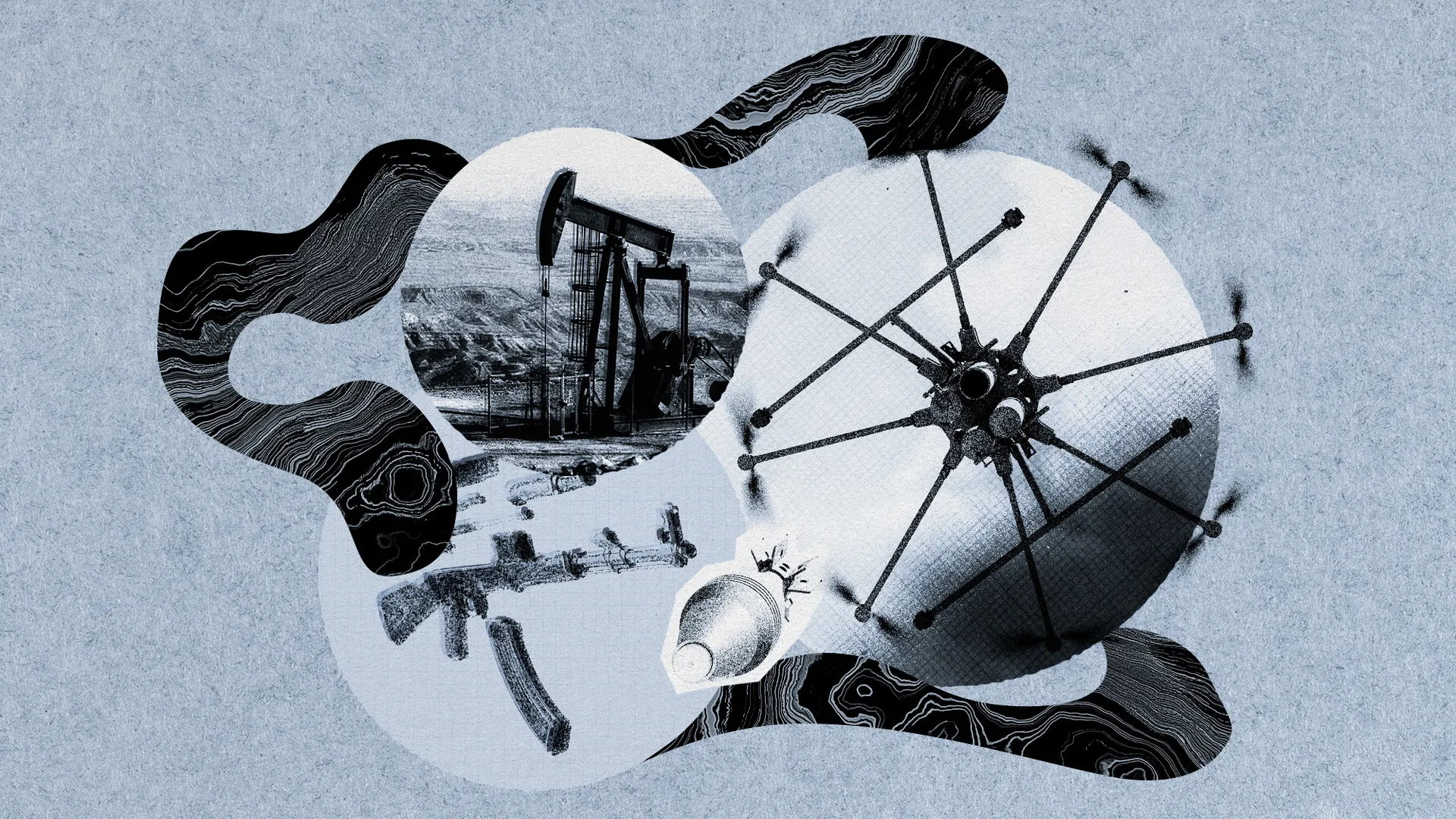
    How has Iran been preparing for war?

    As the Iran war enters its second week, violence from the U.S. and Israel’s combined assault and counterstrikes by Iranian forces and their allies threatens the broader Middle East. While American and Israeli forces have struggled with unclear and potentially conflicting orders, Iranian forces have long been preparing for an attack of this sort.

    What did the commentators say?
    With violence expanding across multiple fronts, Iran’s strategy is meant to address both military maneuvers and prevent the “broader objective” many officials believe animates this war, said the Middle East Monitor: regime change. Iran is “fighting for survival on its own terms,” with the nation’s leaders “preparing for this moment for years,” said the BBC. Although it would be “naive” to expect Iran to hope for a “straightforward battlefield victory,” the evidence suggests they have “built a strategy around deterrence and endurance.” Theirs is a calculus that “rests partly on the economics of war,” in which “prolonged conflict” forces the U.S. and Israeli militaries to expend “high-value assets” like missile defense systems to intercept “comparatively low-cost threats” like kamikaze drones.

    Since the Israel-Iran war of 2025, Tehran has seemingly “revised its military strategy to a more aggressive one focused” on national survival, said Al Jazeera. Updates include repairing facilities damaged by previous air assaults and “fortifying” several nuclear facilities, said CNN. Past conflicts have also highlighted “weaknesses in Iran’s command structures under pressure,” leading a “new authority, the Defense Council, to govern in times of war.”

    What next?
    Iran’s military says it has amassed “enough supplies to continue their aerial drone and missile war” against American and allied positions across the Middle East “for up to six months,” said the National Post. President Donald Trump’s refusal to rule out a ground invasion has also pushed Iranian officials to address the prospect of foreign troops on Iranian soil. “We are waiting for them,” said Iranian Foreign Minister Abbas Araghchi to NBC’s “Meet The Press” last week. Ultimately, Iran’s actions rest on the belief that it can “absorb punishment longer than its adversaries are willing to sustain pain and costs,” said the BBC. 


    QUOTE OF THE DAY

    ‘No matter how beautiful it sounds or how horrific it may sound, it’s still just art. It’s an interpretation of the human spirit. It’s not an admission of guilt.’

    Performer and political activist Killer Mike on rap lyrics, to The New York Times. He and other figures in hip-hop filed a joint brief protesting the death penalty for James Broadnax, who was found guilty of two 2008 murders. A Texas jury asked to see his lyrics twice before imposing death instead of life without parole. 


    IN THE SPOTLIGHT

    The dissolution of Japan’s ‘cult’ Unification Church

    The Tokyo High Court’s decision to dissolve the Unification Church last week marks the final chapter of a controversial religious organization that has “exerted significant influence in Japan since the 1960s,” said The New Yorker. Its end was sealed not long after Japanese Navy veteran Tetsuya Yamagami, who assassinated former Japanese Prime Minister Shinzo Abe in 2022 because of Abe’s affiliation with the church, was given a life sentence in January.

    Founded in South Korea by Sun Myung Moon, the church and its followers, called Moonies, has promoted a “theological mix of Christian Messianism, Cold War anti-Communism, pro-natalism and self-adulation,” said The New Yorker. Around the same time that the church was founded, Moon “befriended” Abe’s grandfather, Nobusuke Kishi, a “war criminal who later served as prime minister” and head of the Liberal Democrats, Abe’s future party. 

    Forced compensation 
    The church has used “coercive tactics to solicit large donations” from its members, said The Japan Times. And a lower court ruled last year that it had “committed acts in violation of laws and regulations that can be recognized as significantly harming the public welfare.” There has been “intense societal focus on the rulings” due to the “scope of harm” the organization has caused across the country. Under the Religious Corporations Act, the church will be forced to compensate about 1,500 people with “damage fees totalling approximately ¥20.4 billion” ($130 million). 

    The church will also lose its title as a religious organization and can continue only as a “voluntary organization,” so it will lose tax benefits. Even if it appeals the decision to the Supreme Court, the liquidation process can proceed immediately. 

    ‘Exploiting fears’ 
    The Unification Church has faced global scrutiny since the “shock assassination” of Abe, said the BBC. Yamagami, who has appealed his sentence for the killing, “held a grudge” against the prime minister over his links to the organization because it “bankrupted his family.” 

    Investigators revealed “close ties with many conservative lawmakers” and found that the church “coerced” followers into “buying expensive items” by “exploiting fears about their spiritual well-being.” To combat the “universal threat” of cults like the Unification Church, Japan should “draw on foreign legal frameworks like France’s anti-cult laws,” said Nippon.com. This is an “ongoing human rights crisis that can no longer be ignored.”


    Statistic of the day

    $145: The retail price of a pair of Florsheim leather Oxfords, which are quickly becoming the “hottest and most exclusive MAGA status symbol,” said The Wall Street Journal. Trump has been gifting them to his favorite agency heads, lawmakers, White House advisers and VIPs. “It’s hysterical because everybody’s afraid not to wear them,” said a White House official.


    the explainer

    AI fears are giving rise to ‘HALO trading’

    Artificial intelligence is losing its stock. More investors are opting to put their money into industries that are less likely to be affected by the technology and selling off shares of companies that are more likely to be impacted by AI. While this may not become a long-term investment choice, it points to skepticism about whether artificial intelligence truly benefits the economy.

    What’s HALO trading?
    “HALO” stands for “heavy assets, low obsolescence.” This means investing in businesses “less vulnerable to being supplanted by AI,” including companies operating “pipelines, utilities, transportation infrastructure, factories and ports,” said Bloomberg. These are companies that “you cannot type something in a prompt and disrupt,” Josh Brown, the chief executive at Ritholtz Wealth Management who coined the term, said to The Wall Street Journal.

    HALO trading also goes hand-in-hand with AI scare trading, defined as selling “all things AI-linked,” said Bloomberg. AI scare trading has “been on a bender this year, steamrolling entire industries based on the flimsiest of evidence that the technology is coming for them,” said Axios. HALO trading, on the other hand, is a more recent occurrence and is “why many real-world sectors are outperforming this year, even as the overall market and especially tech stocks have floundered,” said CNBC. 

    What’s the future of investing?
    HALO trading may be a temporary trend or “another iteration of the jitters that have periodically rippled through markets since the AI investing boom began,” said the Journal. Still, there are some recent signs that it has been decreasing. Tech shares have already “regained some ground this past week, with the Nasdaq besting the Dow industrials,” and stock values went up “after the news that the U.S. Supreme Court had struck down” President Donald Trump’s global tariffs.

    “We are in a new chapter, and I think that chapter is going to be defined by companies proving” their longevity, Jed Ellerbroek, a portfolio manager at Argent Capital Management, said to the Journal. “Hype isn’t cutting it anymore.”


    Good day 🐕

    …  for dog loving. While cats will watch you struggle, dogs behave like helpful toddlers when we need help, even without a reward, according to a study published in the journal Animal Behavior. Dogs spontaneously helped find a hidden sponge, while cats registered their humans’ difficulty locating it “without feeling any obligation to remedy it,” said The Times.


    Bad day 🌊

    …  for coastal living. As many as 132 million more people than previously believed may be in the path of rising seas, according to a study published in the journal Nature. The discrepancy stems from the starting point for current sea levels, as older studies used ocean heights about 10 inches lower than they are today.


    Picture of the day

    Balancing act

    Christoph Gloetzner of Germany competes in the men’s alpine skiing combined standing super-G event at the 2026 Winter Paralympics in Cortina d'Ampezzo, Italy. China leads in the medal count with 23, while the U.S., Germany and Ukraine are tied for second with 10.  
    Evgeniy Maloletka / AP


    Puzzles

    Daily sudoku

    Challenge yourself with The Week’s daily sudoku, part of our puzzles section, which also includes guess the number

    Play here


    The Week recommends

    How to make friends as an adult

    In a world that’s more connected than ever, loneliness persists and is on the rise. It’s easier to make friends as a child, teen or young adult in college, due to shared activities and forced proximity. But making new friends as a grown-up can be daunting if you are unsure where to start. These steps will assist you on your journey to building lasting connections in adulthood.

    Invest in weak ties
    When looking for new friends, “don’t expect big relationships to start immediately,” said Psychology Today. Start by building relationships with people you already know who you “might want to spend a little more time with.” Investing in these “weak ties” can lead to “big improvements in social health and well-being,” said Gillian M. Sandstrom and Elizabeth W. Dunn in a 2014 paper.

    Optimize your calendar
    As adults, we become busier than ever. “Despite your best intentions,” if you don’t schedule it, you “likely won’t do anything about making more friends,” said Verywell Mind. Instead, “set aside time to call the person from your book club that you really connect with.” 

    Be vulnerable
    It can be difficult to share personal information with virtual strangers, but doing so could be the key to building lasting relationships. When you talk about the things that are “actually on your mind, everyone can relate,” Dorothy Li, the CEO and co-founder of RealRoots, a startup aimed at making people less lonely, said to The Washington Post. “Vulnerability invites vulnerability,” said the Post. 

    Read more


    WORD OF THE DAY

    housefishing

    Digitally enhancing images of houses in real estate listings with AI that makes them drastically different from what the homes look like in person. Housefishing has blurred the line between “helping someone imagine a home’s potential and deceiving them before they open the door,” said Business Insider.


    INSTANT OPINION

    Today’s best commentary

    ‘Latinos are turning away from Trump’s GOP. That doesn’t mean Democrats are entitled to their votes.’
    Luis F. Carrasco at The Philadelphia Inquirer
    In 2024, Trump could “rightfully point with pride to how he performed with Hispanic voters in Texas,” but last week, Latinos “turned out in massive numbers for the Democrats,” says Luis F. Carrasco. This is “good news for Democrats, but here’s the caveat: They cannot draw the lesson that this is Hispanic voters coming home.” Instead, both parties must “understand they cannot take Latinos for granted.” Some Latinos have a “sense that Democrats are not properly focused.”

    ‘The return-to-the-office trend backfires’
    Gleb Tsipursky at The Hill
    Many business leaders think that a “stricter return-to-office policy will cause a surge in productivity. But in reality, the data tells a different story,” says Gleb Tsipursky. Companies that “commit to highly flexible models, including remote-first, report strong output, healthier engagement and faster growth than mandate-driven peers.” These are “not isolated anecdotes; they are economy-wide patterns.” If “flexibility supports performance and expands talent, what do return-to-office mandates do? A growing body of research answers bluntly: not what its champions promise.”

    ‘From medals to the Capitol: When women are elected, everyone wins’
    Lauri Hennessey and Kiana Scott at The Seattle Times
    Many of the “barriers that kept women, especially women of color, from full participation in elected leadership are still in place today and are present in and beyond politics,” say Lauri Hennessey and Kiana Scott. While men “share the weight of family care more than they once did, the scales are still deeply unbalanced, forcing many women and families to make choices.” Women are “still fighting, in many ways, for equality. That’s part of why electing women matters.”


    Poll watch

    More than four in five 12- to 25-year-olds (82%) have engaged in some form of community service in their lifetime, according to a survey of 3,000 U.S. youths by Gallup and The Allstate Foundation. More than half of those who have volunteered (52%) say service activities had a positive impact on feeling prepared for a future career.


    Evening Review was written and edited by Will Barker, Theara Coleman, Nadia Croes, Scott Hocker, Anya Jaremko-Greenwold, Justin Klawans, Devika Rao and Rafi Schwartz, with illustrations by Julia Wytrazek.

    Image credits, from top: Illustration by Julia Wytrazek / Getty Images; Illustration by Julia Wytrazek / Getty Images; kaedeezign / Getty Images; jacoblund / Getty Images
     

    Recent editions

    • Morning Report

      Markets steady as Trump says war is ‘very complete’

    • Evening Review

      How will the Iran war end?

    • Morning Report

      Ali Khamenei’s son Mojtaba becomes Iran’s new leader

    VIEW ALL
    TheWeek
    • About Us
    • Contact Future's experts
    • Terms and Conditions
    • Privacy Policy
    • Cookie Policy
    • Advertise With Us
    • FAQ
    Add as a preferred source on Google Add as a preferred source on Google

    The Week UK is part of Future plc, an international media group and leading digital publisher. Visit our corporate site.

    © Future Publishing Limited Quay House, The Ambury, Bath BA1 1UA. All rights reserved. England and Wales company registration number 2008885.