The Week The Week
flag of US
US
flag of UK
UK
https://cdn.mos.cms.futurecdn.net/flexiimages/jzblygzdxr1769609154.gif

SUBSCRIBE

Try 6 weeks free

Sign in
  • View Profile
  • Sign out
  • The Explainer
  • Talking Points
  • The Week Recommends
  • Podcasts
  • Newsletters
  • From the Magazine
  • The Week Junior
  • More
    • Politics
    • World News
    • Business
    • Health
    • Science
    • Food & Drink
    • Travel
    • Culture
    • History
    • Personal Finance
    • Puzzles
    • Photos
    • The Blend
    • All Categories
  • Newsletter sign up Newsletter
  • The Week Evening Review
    A pied-à-terre tax, Bulgaria’s new prime minister, and the femosphere

     
    TODAY’S BIG QUESTION

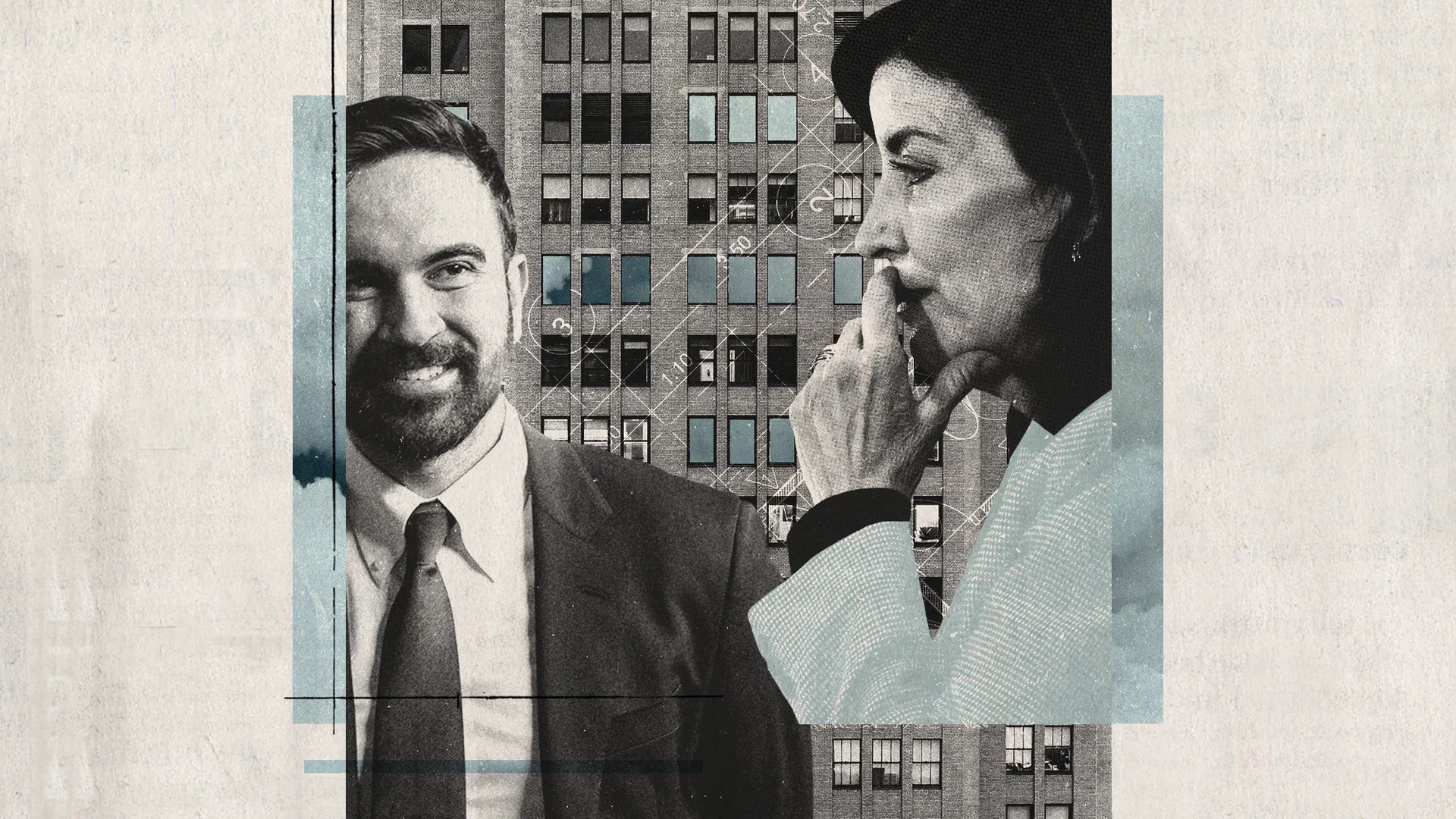
    Has New York found how to tax the rich?

    New York City Mayor Zohran Mamdani (D) ran for office promising to raise taxes on the rich to pay for new social welfare programs. And now he’s backing Gov. Kathy Hochul’s proposal to levy a new tax on expensive second homes.

    Manhattan may have “more billionaire residents per square foot” than just about anywhere in the world, said New York’s ABC 7. But many of the “luxury multimillion-dollar apartments” in the city are second homes. Hochul’s proposed “pied-à-terre” tax would apply to more than 13,000 such residences worth more than $5 million. Those locations are owned by the “super wealthy” to “store their wealth to benefit from New York City’s real estate market,” said Mamdani in a statement. 

    The proposal comes as blue states are looking to raise taxes on wealthy residents. Golden State voters are contemplating a “one-time 5% ‘wealth’ tax on roughly 200 California billionaires,” said USA Today. And the Maine legislature this month passed a “millionaire” tax on the Pine Tree State’s wealthiest residents, said the Maine Morning Star.

    What did the commentators say?
    New York’s business community believed that the moderate Hochul would “surely stand in the way” of Mamdani’s tax-the-rich ideas, said Crain’s New York Business. And Hochul is “adamantly opposed to the broader tax hikes Mamdani continues to champion” to close the city’s budget gap. But her backing of the second-home tax “moved the needle significantly to the left.” 

    A similar proposal in 2019 failed after getting “scorched-earth opposition” from New York’s real estate sector, said the outlet. But if the concern is that taxing the rich will drive out wealthy New Yorkers, the second-home tax “threads that needle by targeting people who are, by definition, not full-time New Yorkers,” said The New York Daily News. 

    What next?
    One notable second-home owner is loudly criticizing the proposed tax, said The Hill. Mamdani is “destroying New York!” said President Donald Trump, a Florida resident who owns a home in Manhattan’s Trump Tower, on Truth Social. Mamdani and Trump had previously found “common ground on the issue of affordability.” But that ground may be lost. 


    QUOTE OF THE DAY

    ‘This is about the issues of protecting our privacy, our law enforcement agencies abiding by the Constitution and protecting our civil liberties.’

    Former Thomson Reuters employee Billie Little to NPR on being a whistleblower. She was fired after reporting that ICE agents illegally used the data broker’s investigative tools. Little is calling for greater transparency into contracts with the Department of Homeland Security and ICE.


    IN THE SPOTLIGHT

    Rumen Radev: Bulgaria’s new Kremlin-friendly PM

    Former Bulgarian President Rumen Radev won his country’s parliamentary elections on Sunday and will become its next prime minister. But while the victory of Radev’s newly created Progressive Bulgaria Party could represent a fresh beginning for a nation fraught with political strife, some people are concerned about his ties to Russia.

    From military to presidency
    Radev, 62, was born in Dimitrovgrad, Bulgaria. His early career was dedicated to military service. He was a fighter pilot and commander in the Bulgarian Air Force. 

    Upon winning the ceremonial role of the presidency in 2017, Radev cultivated the “persona of a fearless patriot uncorrupted by party politics,” said Politico. In January, after anti-corruption protests toppled the government, he became the first Bulgarian head of state to step down from the presidency and announced his candidacy for prime minister. During his campaign, Radev “cast himself as an opponent of the country’s entrenched mafia and its ties to high-ranking politicians,” said The Associated Press.

    ‘More pro-Russian stance’
    Radev has “positioned himself as the populist standard-bearer for anti-corruption protests,” said The Washington Post. His win may indeed give Bulgaria its “best chance in recent history to do away with the stranglehold of corruption” that has “plagued it for decades,” said The New York Times. 

    But many in Europe are concerned about his potential friendliness with the Kremlin. During his campaign, Radev made it clear his government will take a “more pro-Russian stance, consistently opposing aid to Ukraine and saying he wanted to restore relations with Moscow,” said the Post. 

    The new prime minister has also criticized the European Union and “called for a new security architecture in Europe.” If tensions were to continue rising between Bulgaria’s new government and the EU, it could cause financial strain, as “Bulgaria’s economy is heavily dependent on EU funding.” 

    Other analysts believe that Radev’s Russian coziness is more of a political tactic. He will be “unlikely to seek to be disruptive in relations within the European Union,” said Vessela Tcherneva, the deputy director of the European Council on Foreign Relations, to the Times. In the “coming economic crisis, he would not risk the freezing of EU funds.” 


    Statistic of the day

    $166 billion: The amount in refunds plus interest that impacted businesses are owed by the Trump administration after the Supreme Court struck down the president’s global tariffs in February. The U.S. tariff refund portal launched yesterday. Over 3,000 businesses, including FedEx and Costco, had already sued to secure their payments.


    THE EXPLAINER

    The philosophy of the femosphere

    More than a quarter of women under age 25 hold a negative view of men, according to a recent poll from The New Statesman. This “new radicalism” challenges the “prevailing narrative” that the so-called gender war is being driven by radicalized young men, said the outlet. A “growing army” of women influencers broadly referred to as the femosphere is “urging” women to adopt a more cynical mindset toward the opposite sex, said The Times, and encouraging them to “ditch their romantic delusions” and “be more aggressive in the dating game.” 

    What is it? 
    The term comes from the concept of the manosphere — a loose online-based community promoting a view of “traditional masculinity,” with men in a dominant position while women are subservient, said the outlet. The femosphere flips manosphere terminology on its head. Instead of “taking the red pill” (embracing the belief that society does not value men), the “pink-pill philosophy” encourages women to break with the egalitarian conventions of liberal feminism and see men as the “problem sex.” 

    What does it mean in practice? 
    Femosphere philosophy urges women to avoid casual relationships with men and take on a “more emotionally distant, calculated approach” to dating, said NBC News. Mirroring the “pickup artists” of the manosphere, the femosphere has its own “female dating strategists,” said The Guardian. They include “dark feminine” influencers who “encourage women to find men to support them financially.” 

    The appeal is understandable, said feminist theorist Sophie Lewis to the outlet. The promise of liberal feminism that women could “have it all” has left many “saddled with both productive and reproductive labor.” The femosphere offers liberation from the “double shift.” 

    What’s the impact? 
    The movement risks “turning dating into a transactional or manipulative experience” in which “authenticity” takes a “back seat to strategy, according to critics, said NBC News. But femosphere influencers insist it’s centered on the “empowerment” of women rather than hatred of men. It’s about “pushing back against dating norms that have historically disadvantaged women” by adopting a mentality that “encourages self-worth, boundaries and higher standards in relationships.”


    Good day 🚕

    … for better wages. A London Uber driver and two friends have launched Ride Nuff, a rideshare service that lets drivers keep more money from tips. Rides cost a flat rate, with no dynamic pricing, benefitting customers, and no dynamic commission, only a weekly subscription fee for drivers. The company now has about 8,000 drivers on board.


    Bad day 👤

    … for phone security. Premium cellphones, including top-of-the-range devices from Motorola and Samsung, can be unlocked by tricking the facial recognition feature with a 2D photograph of the owner, according to research by consumer group Which. Out of 208 phones, 133 (64%) were accessed. All were Android devices; Apple’s Face ID remained secure.


    Picture of the day

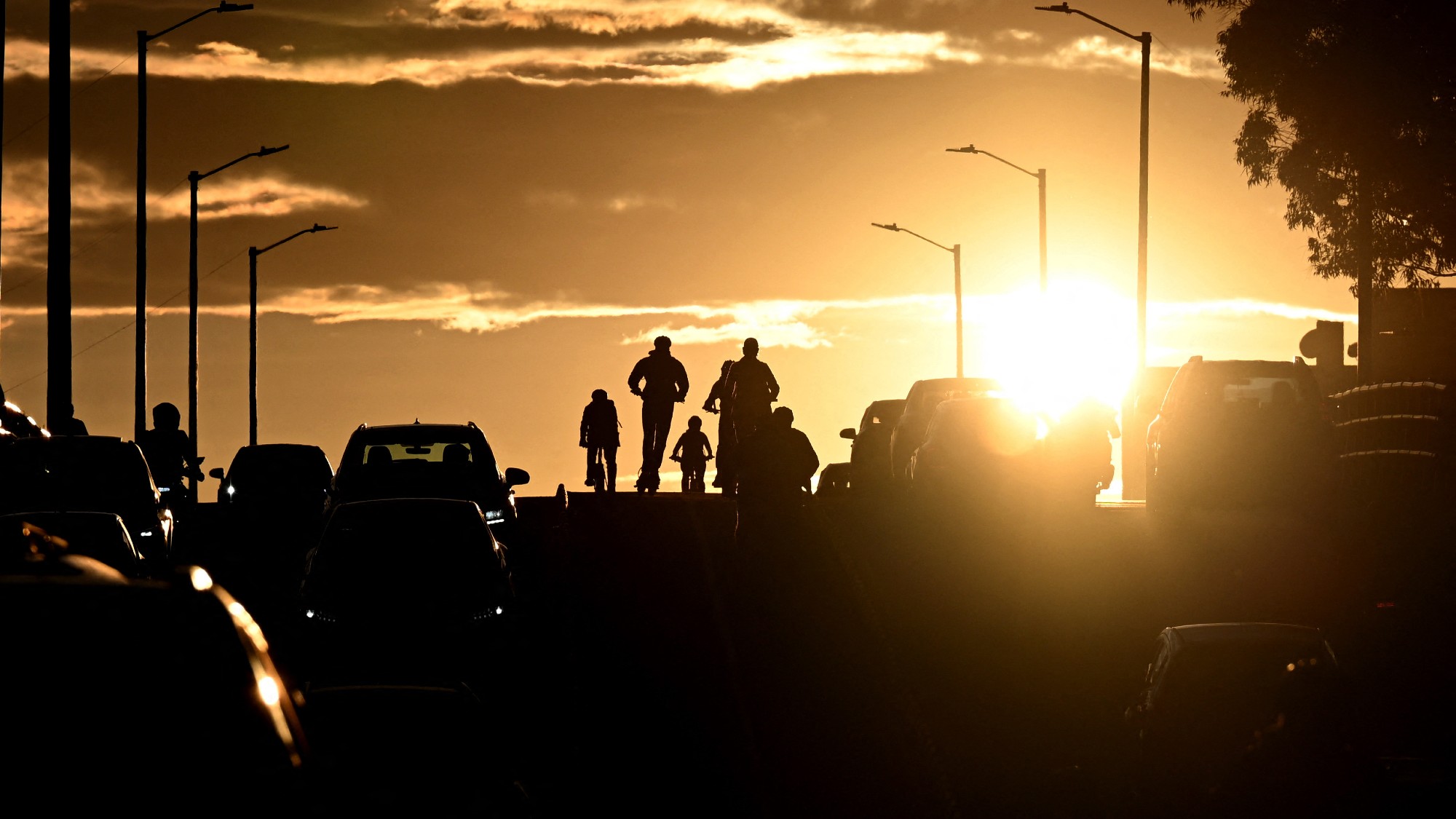
    Right of way

    Bicycles and scooters roll through a traffic jam in Bogotá, Colombia. In the first quarter of the year, 162 people died in traffic accidents in the capital — a 13% increase from last year, said Colombia One. This is an “alarming and painful surge for citizens.”
    Pablo Vera / AFP / Getty Images


    Puzzles

    Daily sudoku

    Challenge yourself with The Week’s daily sudoku, part of our puzzles section, which also includes guess the number

    Play here


    The Week recommends

    Where to experience some of the real history of the US

    With the United States celebrating the 250th anniversary of the signing of the Declaration of Independence this year, Americans are reflecting on how historical highs and lows shaped the country into the nation it is today. Instead of shying from uncomfortable parts of the country’s past, you can better understand American history by visiting these important places.

    Manzanar National Historic Site, Inyo County, California
    Two months after the attack on Pearl Harbor, President Franklin D. Roosevelt signed Executive Order 9066, which resulted in the U.S. government incarcerating more than 110,000 Japanese Americans and Japanese immigrants in 10 camps, which operated until the end of World War II. The most well-known camp, California’s Manzanar War Relocation Center, held more than 10,000 people and is now a historic site.

    Trail of Tears National Historic Trail, various states
    The Trail of Tears passes through nine states and covers 2,200 miles of land and water. It ends in Tahlequah, Oklahoma, the capital of the Cherokee Nation, and the nearby Cherokee Heritage Center “holds archives, oral histories and a reconstructed 17th-century village,” putting the tribe’s “removal into the longer sweep of Cherokee civilization.”

    Whitney Plantation, Wallace, Louisiana
    The reality of slavery hits visitors at this former plantation (pictured above) as soon as they arrive. There’s no whitewashing here. Whitney rejects the rosy antebellum view, focusing instead on slavery’s horrors. Guided tours are available, and the museum describes its docents as “historical interpreters who share the full, unvarnished truth of the site’s history.” 

    Read more


    Poll watch

    Almost one in five U.S. workers (18%) think it’s “very” or “somewhat” likely that their job will be eliminated within the next five years because of new technology, automation, robots or AI — up from 15% in 2025, according to a Gallup survey of 23,717 employees. 


    INSTANT OPINION

    Today’s best commentary

    ‘Will social media addiction go the way of cigarettes?’
    Sarah O’Connor at the Financial Times
    It’s “easy to see why social media’s critics would hope for a tipping point akin to what happened with smoking,” says Sarah O’Connor. But the “story of smoking’s decline had a sting in the tail: Many of society’s poorest stayed hooked. Might the same be true for social media consumption?” Breaking “powerfully addictive habits, or not developing them in the first place, is harder if you have less access to education, supportive peers and health care.”

    ‘Republicans want to ban drag. It could land women in jail.’
    Dan Kobil at USA Today
    Ohio politicians are “attempting to enact a vague and ill-conceived law prohibiting public drag shows and regulating women’s clothing in an unprecedented manner,” says Dan Kobil. Drag shows are “forms of artistic expression that are squarely protected by the U.S. Constitution,” and it’s a “basic precept of constitutional law that the government cannot dictate what viewpoints Americans are allowed to express surrounding gender.” It’s “not just drag shows that are placed at risk by these politicians.”

    ‘Powerful states are trying to sabotage decarbonization of shipping’
    Ralph Regenvanu at Al Jazeera
    The “fallout of the closure of the Strait of Hormuz may create the impression that the world cannot function without fossil fuels,” but “nothing could be further from the truth,” says Ralph Regenvanu. Every “single industry can and must decarbonize.” For “global shipping, this process would be relatively easy because technological solutions exist and a single United Nations agency can set legally binding rules for all ships.” But poorer countries “need more action and more ambition in the framework.”


    WORD OF THE DAY

    pointelle

    A lightweight chevron-knit fabric with decorative pinhole patterns inspired by lace. In a resurgence in popularity, pointelle is part of the “big grandmafication of fashion” and “one of the first big material moments” of 2026, said Glamour. The knitwear trend “nods to a desire for comfort and the simplicity of girlhood.”


    Evening Review was written and edited by Theara Coleman, Nadia Croes, Scott Hocker, Anya Jaremko-Greenwold, Justin Klawans, Joel Mathis and Chas Newkey-Burden, with illustrations by Stephen Kelly and Julia Wytrazek.

    Image credits, from top:  Illustration by Julia Wytrazek / Getty Images; Dimitar Kyosemarliev / AFP / Getty Images; Illustration by Stephen P. Kelly / Getty Images / Shutterstock; Elsa Hahne
     

    Recent editions

    • Morning Report

      Trump says ceasefire extension is ‘unlikely’

    • Evening Review

      Mandelson vetting: who knew what?

    • Morning Report

      Starmer faces Commons grilling over Mandelson row

    VIEW ALL
    TheWeek
    • About Us
    • Contact Future's experts
    • Terms and Conditions
    • Privacy Policy
    • Cookie Policy
    • Advertise With Us
    • FAQ
    Add as a preferred source on Google Add as a preferred source on Google

    The Week UK is part of Future plc, an international media group and leading digital publisher. Visit our corporate site.

    © Future Publishing Limited Quay House, The Ambury, Bath BA1 1UA. All rights reserved. England and Wales company registration number 2008885.