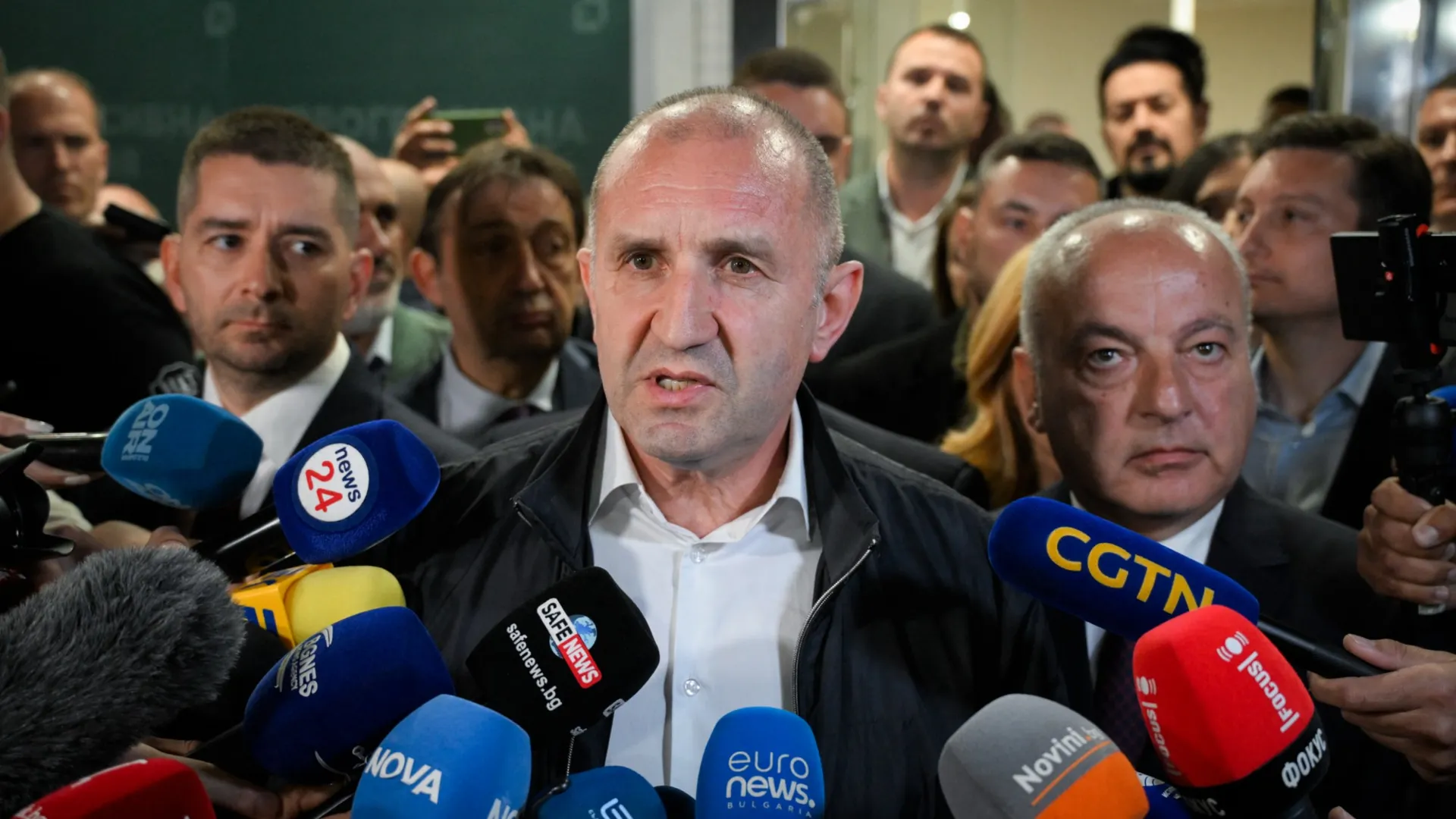
Former Bulgarian President Rumen Radev will soon have a new title, and with it a whole lot of new power. Radev won Bulgaria’s parliamentary elections on Sunday and will become the country’s next prime minister. But while the election victory by Radev’s newly created Progressive Bulgaria party could represent a fresh beginning for a nation fraught with political strife, some people are concerned about Radev’s ties to Russia.
Radev’s beginnings
Radev, 62, was born in Dimitrovgrad, Bulgaria, and his early career was dedicated to military service. He is an ex-fighter pilot and former commander in the Bulgarian Air Force, and received several military merits before turning his attention to politics. Radev has often used his “daredevil flying skills to build his political brand,” said Politico. When he first ran for president in 2016, the Bulgarian Air Force “heavily promoted his loop-the-loops in a high-profile air show.”
Upon winning the ceremonial role of the presidency in 2017, Radev “quickly made up for his lack of political experience, capitalizing on his military background to cultivate the persona of a fearless patriot uncorrupted by party politics,” said Politico. In January 2026, after anti-corruption protests toppled the government, he became the first Bulgarian head of state to step down from the presidency and announced his candidacy for prime minister. During his campaign, Radev “cast himself as an opponent of the country’s entrenched mafia and its ties to high-ranking politicians,” said The Associated Press.
The Week
Escape your echo chamber. Get the facts behind the news, plus analysis from multiple perspectives.
SUBSCRIBE & SAVE
Sign up for The Week's Free Newsletters
Join more than 350,000 subscribers and keep yourself informed with a selection of The Week’s most interesting, enlightening and entertaining stories - plus daily puzzles.
Join more than 350,000 subscribers and keep yourself informed with a selection of The Week’s most interesting, enlightening and entertaining stories - plus daily puzzles.
Latest Videos FromThe Week US
‘A more pro-Russian stance’
Radev has largely “positioned himself as the populist standard-bearer for anti-corruption protests that brought down the government in December,” said The Washington Post. But many in Europe are concerned about his potential friendliness with the Kremlin. During his campaign, Radev made it clear his government will take a “more pro-Russian stance, consistently opposing aid to Ukraine and saying he wanted to restore relations with Moscow.”
The new prime minister has also criticized the European Union and “called for a new security architecture in Europe, echoing a key Kremlin drive,” said the Post. If tensions were to continue rising between Bulgaria’s new government and the EU, it could cause financial strain in the country, as “Bulgaria’s economy is heavily dependent on EU funding.” Radev’s easy victory in the election could also “strengthen his hand in opposing a proposed EU ban on imported Russian energy supplies.”
Other analysts believe that Radev’s Russian coziness is more of a political tactic. Radev will probably be “unlikely to seek to be disruptive in relations within the European Union,” Vessela Tcherneva, the deputy director of the European Council on Foreign Relations, said to The New York Times. In the “coming economic crisis, he would not risk the freezing of EU funds.” Radev’s EU criticism, particularly “regarding financial and military support for Ukraine or sanctions against Russia,” will be “aimed primarily at the domestic audience” and may not translate into action, Maria Simeonova of the European Council on Foreign Relations told the Times.
Some pro-democracy activists feel that Radev’s win could give Bulgaria its “best chance in recent history to do away with the stranglehold of corruption and the weak, unstable governments that have plagued it for decades,” said the Times. Radev’s 44% margin of victory may allow him to create a strong coalition, which could “enact structural and constitutional reforms to tackle the corruption that has stymied Bulgaria’s institutions.”



 talking pointsAfter Pike disaster, is it time to rethink death penalty?
 QUOTE OF THE DAY‘What it actually means in the American context is you want to replace American workers with foreign workers and you want boys to play in girls’ sports.’
 the explainerJustice Dept. launches largest-ever effort to strip citizenship