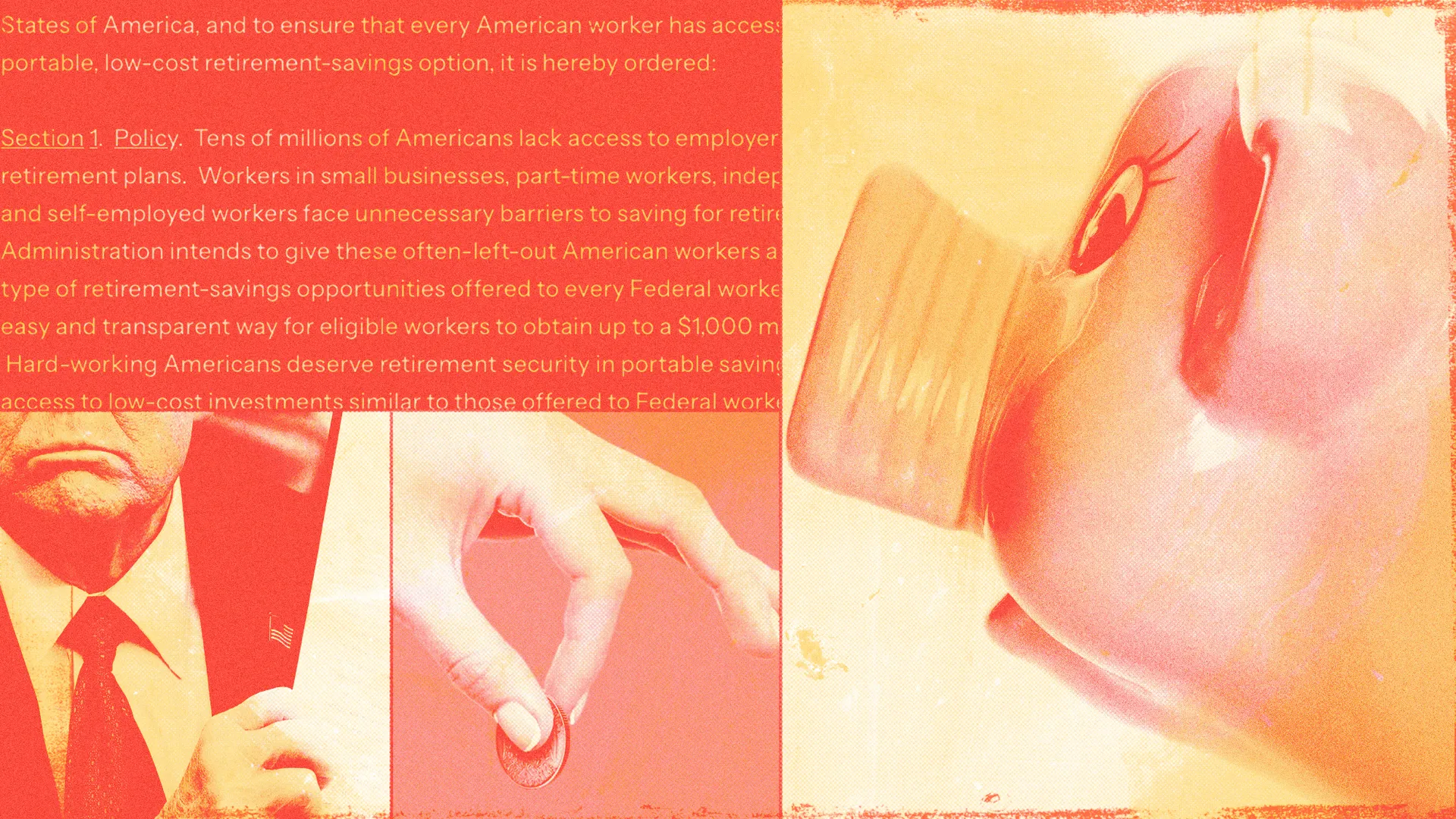
President Donald Trump signed an executive order last week creating a new pathway for working-class Americans to save for retirement. But what will the “Trump IRAs” actually accomplish?
About 56 million Americans “lack access to an employer-sponsored retirement plan at work,” said CNBC. The president’s order in 2027 will create a new website, TrumpIRA.gov, where those workers can “research, compare and enroll in private-sector individual retirement accounts” on their own.
What did the commentators say?
Trump’s new retirement plan “carries big political risks,” said The Wall Street Journal in an editorial. There’s “nothing to stop” Americans from setting up and contributing to their own IRA accounts without the government acting as a “broker and quasi-sponsor.”
But IRAs that come with a “government imprimatur” might “squeeze out other private savings options,” said the outlet. And helping Americans save for their senior years is a goal better achieved by “easing fiduciary regulations” for employer-sponsored plans while “bringing down inflation and growing real wages.”
The president’s proposal requires Congress’ backing to “have teeth,” said Elizabeth O’Brien at Barron’s. Legislation is needed to expand income eligibility for the matching contribution and to “make participation in Trump IRAs automatic.” Without new laws to back Trump’s plan, this executive order will end up a “well-intentioned effort.” Workers can already open their own IRAs but often do not “due to lack of knowledge, time to navigate the process, or money to contribute.”
This plan does “little to solve” the broader issue of Social Security’s “deteriorating finances,” said Romina Boccia, of the Cato Institute, at The Washington Post. If the president and Congress really want to help Americans have a secure retirement, they could “instead focus on fixing” Social Security and help the seniors who “rely on the program as their primary source of retirement income.”
What next?
Workers making less than $35,000 a year will be eligible for a $1,000 matching contribution from the federal government, said NBC News. The Trump administration will work with Congress to “significantly expand this program,” said Kevin Hassett, the director of the White House’s National Economic Council, at the executive order signing, and is “looking forward to legislation this year.” |