The Week The Week
flag of US
US
flag of UK
UK
https://cdn.mos.cms.futurecdn.net/flexiimages/jzblygzdxr1769609154.gif

SUBSCRIBE

Try 6 weeks free

Sign in
  • View Profile
  • Sign out
  • The Explainer
  • Talking Points
  • The Week Recommends
  • Podcasts
  • Newsletters
  • From the Magazine
  • The Week Junior
  • More
    • Politics
    • World News
    • Business
    • Health
    • Science
    • Food & Drink
    • Travel
    • Culture
    • History
    • Personal Finance
    • Puzzles
    • Photos
    • The Blend
    • All Categories
  • Newsletter sign up Newsletter
  • The Week Evening Review
    A Russian coup, Antarctic tourism, and teen takeovers

     
    TODAY’S BIG QUESTION

    Is Putin’s chokehold on Russia slipping? 

    For nearly a quarter of a century, Vladimir Putin has led the Russian Federation as one of the most successful authoritarians on Earth. But more than four years after launching an all-out invasion of Ukraine, the Russian president finds himself in unfamiliar territory. With months to go before parliamentary elections, Russia is roiled by rumors of organized unrest, while Putin faces isolation and a weakening grip on power.

    What did the commentators say?
    There’s a sense of “mounting unease” in the Kremlin as it grapples with domestic and economic problems plus “increasing signs of dissent and setbacks on the battlefield” in Ukraine, said CNN, citing a report from a European intelligence agency. The Kremlin has “dramatically increased” Putin’s security, even installing surveillance systems in the “homes of close staffers” in measures “prompted by a wave of assassinations of top Russian military figures and fears of a coup.” 

    Putin’s slipping power is “not only about falling approval ratings,” said The Economist. Russia’s future is “no longer discussed” in terms of what Putin will “decide” but as something that will “unfold independently of him.” This waning authority comes from a confluence of factors, including rising wartime costs, shifting geopolitical winds, and the collapse of Russia’s previous “social contract,” in which the state “stayed out of people’s private lives while citizens stayed out of politics.”

    This isn’t to say that “revolution is imminent,” said The Wall Street Journal. Nevertheless, the “change in mood is remarkable” compared to “last December,” when Russia was “buoyed by hopes” of a Trump-negotiated ceasefire with Ukraine.

    The “sudden spate” of coup-oriented reporting stemming from the “conveniently anonymous ‘European intelligence agency’” looks “suspiciously more like a psyop meant to generate paranoia in the Russian elite than a serious assessment,” said The Spectator. Europe has a “desperate appetite” for a “deus ex machina” to end the Ukraine war, and a coup to oust Putin “fits the bill.” 

    What next?
    For the time being, Moscow “understands that there could be serious discontent ahead” and has accordingly “decided to allow low-level discontent to manifest itself,” said former Putin adviser Marat Gelman at the Journal. As of now, Putin has “enough resources to crush any civil revolt.”


    QUOTE OF THE DAY

    ‘I love a good road trip, but this is brutally out of touch.’

    Former Transportation Secretary Pete Buttigieg, in an X post, on his successor Sean Duffy’s planned road-trip reality series for the country’s 250th anniversary. The program seems tone deaf while families “can’t afford road trips anymore” because the war put gas prices “through the roof,” he added.


    IN THE SPOTLIGHT

    The problem with Antarctic tourism

    The experience of visiting Antarctica is “unique and not replicable anywhere else on the planet,” said Claire Christian, of the environmental group Antarctic and Southern Ocean Coalition, to The Associated Press. It makes a “huge impression on people.” But the deadly hantavirus outbreak aboard the MV Hondius cruise ship has highlighted the perils of tourism in Antarctica. 

    Three decades ago, only 8,000 people a year set foot on the icy continent. Last year, that rose to 80,000, with another 36,000 seeing it from ships docked in bays. This “unchecked tourism growth” risks “undermining the very environment that draws visitors,” said two academics from the University of Tasmania at The Conversation.

    Irreversible melting
    When the first tourists set foot on Antarctica in January 1966, their mission was to “inspire people to become stewards for the planet, by exposing them to one of its most awe-inspiring places,” said The Independent. But some think the trip, with 57 guests, was a “mistake.”

    Now, tourism to the “bottom of the world is soaring,” partly driven by fears that the frozen landscapes may be “irreversibly melting away because of climate change,” said the AP. Between 2002 and 2020, nearly 165 billion tons of ice disappeared each year, according to NASA.

    Visitor numbers are “still small” but “growing so fast that scientists and environmentalists are sounding alarms.” The number could triple or quadruple by 2033, according to estimates by the University of Tasmania academics.

    ‘Loved to death’
    Experts warn that more visitors will increase the risk of contamination and damage to the continent. Tourists threaten ecosystems by compacting soils, squashing fragile vegetation and introducing non-native microbes and plant species. And they can also disturb breeding colonies of birds and seals.

    Visitors are currently advised to avoid touching the ground with anything but their feet. Some crews and passengers use vacuums, disinfectants and brushes to keep shoes and equipment free of bugs, seeds and microbe-carrying dirt.

    The answer to Antarctica avoiding being “loved to death” may “lie in economics,” said the AP. Some suggest a rule requiring visitors to pay a tourism tax or a “cap-and-trade” system to limit the number of visitor permits for a fixed period.


    Statistic of the day

    1.6 million: The number of years that humans have been concerned about the best cuts of meat, according to a study of animal bones published in the journal Proceedings of the National Academy of Sciences. Evidence of meticulous, repetitive cuts suggests our ancestors developed a system for efficiently and consistently carving out the good meat every time.


    THE EXPLAINER

    Teen takeovers cause chaos nationwide

    Restless and armed with social media, unauthorized groups of teenagers across the country have been gathering for so-called teen takeovers. These loud parties can devolve into violence, exasperating community leaders and the police. And while adults worry about how to keep the chaos at bay, teens say the simple solution is to give them more to occupy their time.

    What are teen takeovers?
    In major cities, large gatherings of teens have “popped up in downtowns, parks and leafy neighborhoods,” said The New York Times. These teen takeovers, typically organized on social media and through word of mouth, can be “noisy, boisterous and, at times, violent.”

    Their impact is often “amplified on television,” especially in “conservative media outfits like Fox News,” said the Times. Some of the panic over teen takeovers echoes “worries over ‘wilding’ in the late 1980s and ‘superpredators’ in the 1990s.” And there’s a lot of “dog whistling” about these being “Black kids who are gathering together in these large groups,” said Laurence Steinberg, a psychology professor studying adolescent development, to the Times.

    Many youth are going to takeovers because they “want a space to meet other people their age and have a good time on the weekends,” said The Washington Post. The takeovers “satisfy a craving for connection in real life, not through screens.”

    How are some states responding?
    The popularity of impromptu teen takeovers has “brought back a fierce debate over curfews in Detroit, Chicago and elsewhere,” said the Times. In Detroit, Mayor Mary Sheffield invited the organizers of two teen takeovers to her office. Together, they “hashed out ideas like late-night basketball at city recreational centers, new public space developments, and a new youth advisory board,” said Sheffield to the Times. 

    In the nation’s capital, the D.C. Council recently voted 8 to 5 to extend the police chief’s power to declare special 8 p.m. youth curfew zones through 2028 while “adding guardrails to how police can enforce the measure,” said the Post. Mayor Muriel Bowser promised more youth programming, “responding to calls from lawmakers and community members who say teens don’t have enough to do at night.”


    Good day 🦑

    … for deep-sea life. For the first time in 25 years, evidence of the giant squid (Architeuthis dux), the largest creature on Earth, has surfaced in Western Australian waters, according to a study published in Environmental DNA. Scientists analyzing environmental genetic material found traces of giant squids across six separate samples drawn from two deep submarine canyons off the coast.


    Bad day 🇲🇽

    … for Mexico City life. The capital and most populated city in Mexico is “sinking at such an alarming rate that it’s visible from space,” said CNN. NASA radar system images are showing subsidence rates of over half an inch per month, making the city one of the “planet’s fastest-sinking capitals.” The degradation has been “exacerbated by relentless urban development.”


    Picture of the day

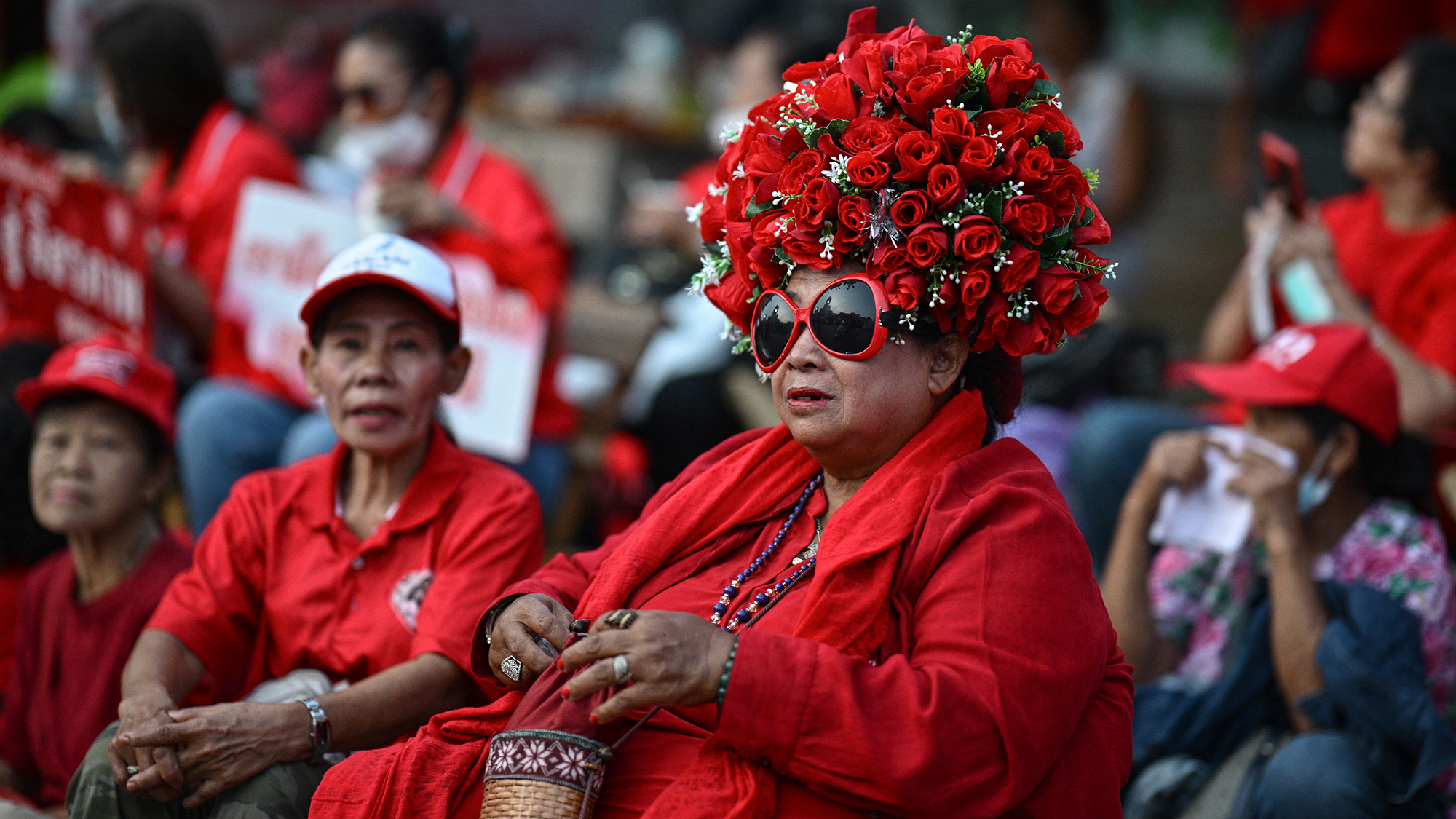
    Lady in red

    Supporters of Thailand’s former Prime Minister Thaksin Shinawatra wait ahead of his expected release at Klong Prem Central Prison in Bangkok. Shinawatra was set to be released early from prison on parole following a corruption-related charge, raising the prospect of a return to the political spotlight.
    Anthony Wallace / AFP / Getty Images


    Puzzles

    Daily sudoku

    Challenge yourself with The Week’s daily sudoku, part of our puzzles section, which also includes guess the number

    Play here


    The Week recommends

    A huge cookbook about Indian food that does it all

    In 2008, the author and cooking teacher Raghavan Iyer published his magnum opus, “660 Curries.” To “us Indians, a curry is a sauce-based dish,” he said, meaning “curry” as employed in Western instances like all-purpose “curry powder” is a term so general as to lose all significance. Here, curry is both a saucy dish across the subcontinent and a hyper-regional way of preparing said dishes.

    Name your cooking weapon
    Pick a base, and you are nearly guaranteed at least one recipe for it in this book. And more often, you will be bombarded with an array of options.

    Lesser-known regional specialties are everywhere. Toovar dal (split yellow pigeon peas) is softened in a bath of unripe green mango, green bell pepper and coconut milk in a dish from the southwestern state of Kerala. Stressing the influence of the Portuguese colonizers, chorizo cooks with red kidney beans and black-eyed peas in a spunky chile-vinegar tomato sauce in a Goan adaptation of Brazilian feijoada. Here and in the book’s other chapters on vegetables, seafood, poultry and eggs, meat, and paneer, curry is no catch-all. It slips, shifts and adapts.

    To the curry-sphere and beyond
    Iyer cheated a touch with the book’s title because some chapters exist outside the sauce world. The final chapter, Curry Cohorts, dabbles in a touch of everything: rice preparations, including a Maharashtrian-style fried rice with peanuts and curry leaves; all manner of breads, such as poori, roti and naan; and even a mango cheesecake and saffron-licked green tea. 

    “660 Curries” is an imposing endeavor. And, oh, how the book’s recipes work.


    Poll watch

    Swiss voters are evenly split on whether to support a proposal to restrict Switzerland’s permanent resident population to 10 million before 2050, with 47% in favor and 47% against, in a survey of 19,728 by polling firm GfS Bern for public broadcaster SRG. 


    INSTANT OPINION

    Today’s best commentary

    ‘We are thinking about mental health diagnoses all wrong’
    Awais Aftab at The New York Times
    For “decades, the public conversation about mental health has been routed through the categories in the Diagnostic and Statistical Manual of Mental Disorders, or DSM,” says Awais Aftab. These have been “convenient for professional communication, insurance billing and conducting clinical trials, but they have given the false impression that each mental disorder is a relatively distinct problem with clear boundaries.” They can “capture something useful and inform treatment options, but none of them do justice” to the “nature of mental illness.”

    ‘What Jews can learn from the pope’
    Kenneth Seeskin at the Chicago Tribune
    Pope Leo XIV is a “distinguished proponent of peace, human dignity and concern for disadvantaged people,” says Kenneth Seeskin. While there’s “no one in Judaism who speaks with the authority of a pope, as people of God, Jews also face the question of how to make sense of an ancient and not always consistent tradition.” The Jewish community is “deeply divided over Israel’s actions in Gaza,” and Jews “must ask the same questions of their religion.”

    ‘Rethinking transitional justice in Bosnia’
    Jared O. Bell at Foreign Policy
    The U.S. and EU have “treated constitutional reform and war crimes accountability as the primary metrics of progress in Bosnia and Herzegovina,” says Jared O. Bell. If Bosnia has “not unified its narratives of the past or produced visibly contrite leaders, Western logic goes, then it has ‘failed.’” But Bosnia’s “most consequential peace process” is “unfolding in factories, logistics hubs, municipal utilities and cross-entity supply chains in the daily economic life that keeps the country running.”


    WORD OF THE DAY

    Familiar

    The name of a line of plush robot pets that the robot vacuum company Roomba is developing. Roomba has revealed a prototype that’s the “size of a bulldog with doe-like eyes and bear cub ears and paws,” said The Associated Press. The Familiar doesn’t talk but has audio input ears and an AI system that can learn from what you say to it.


    Evening Review was written and edited by Theara Coleman, Nadia Croes, Scott Hocker, Anya Jaremko-Greenwold, Justin Klawans, Chas Newkey-Burden and Rafi Schwartz, with illustrations by Stephen Kelly and Julia Wytrazek.

    Image credits, from top: Illustration by Julia Wytrazek / Getty Images; Illustration by Stephen P. Kelly / Getty Images; Doug Menuez / Getty Images; Workman Publishing Company
     

    Recent editions

    • Morning Report

      Rayner warns Starmer to move left or face revolt

    • Sunday Shortlist

      Meryl Streep’s ‘magnetic’ performance

    • Saturday Wrap

      Is Netanyahu’s time finally up?

    VIEW ALL
    TheWeek
    • About Us
    • Contact Future's experts
    • Terms and Conditions
    • Privacy Policy
    • Cookie Policy
    • Advertise With Us
    • FAQ
    Add as a preferred source on Google Add as a preferred source on Google

    The Week UK is part of Future plc, an international media group and leading digital publisher. Visit our corporate site.

    © Future Publishing Limited Quay House, The Ambury, Bath BA1 1UA. All rights reserved. England and Wales company registration number 2008885.