The Week The Week
flag of US
US
flag of UK
UK
https://cdn.mos.cms.futurecdn.net/flexiimages/jzblygzdxr1769609154.gif

SUBSCRIBE

Try 6 weeks free

Sign in
  • View Profile
  • Sign out
  • The Explainer
  • Talking Points
  • The Week Recommends
  • Podcasts
  • Newsletters
  • From the Magazine
  • The Week Junior
  • More
    • Politics
    • World News
    • Business
    • Health
    • Science
    • Food & Drink
    • Travel
    • Culture
    • History
    • Personal Finance
    • Puzzles
    • Photos
    • The Blend
    • All Categories
  • Newsletter sign up Newsletter
  • The Week Evening Review
    Russia’s hybrid threats, Montana’s political spending ban, and education data cuts

     
    in the spotlight

    Russian hybrid attacks risk catching Europe flat-footed

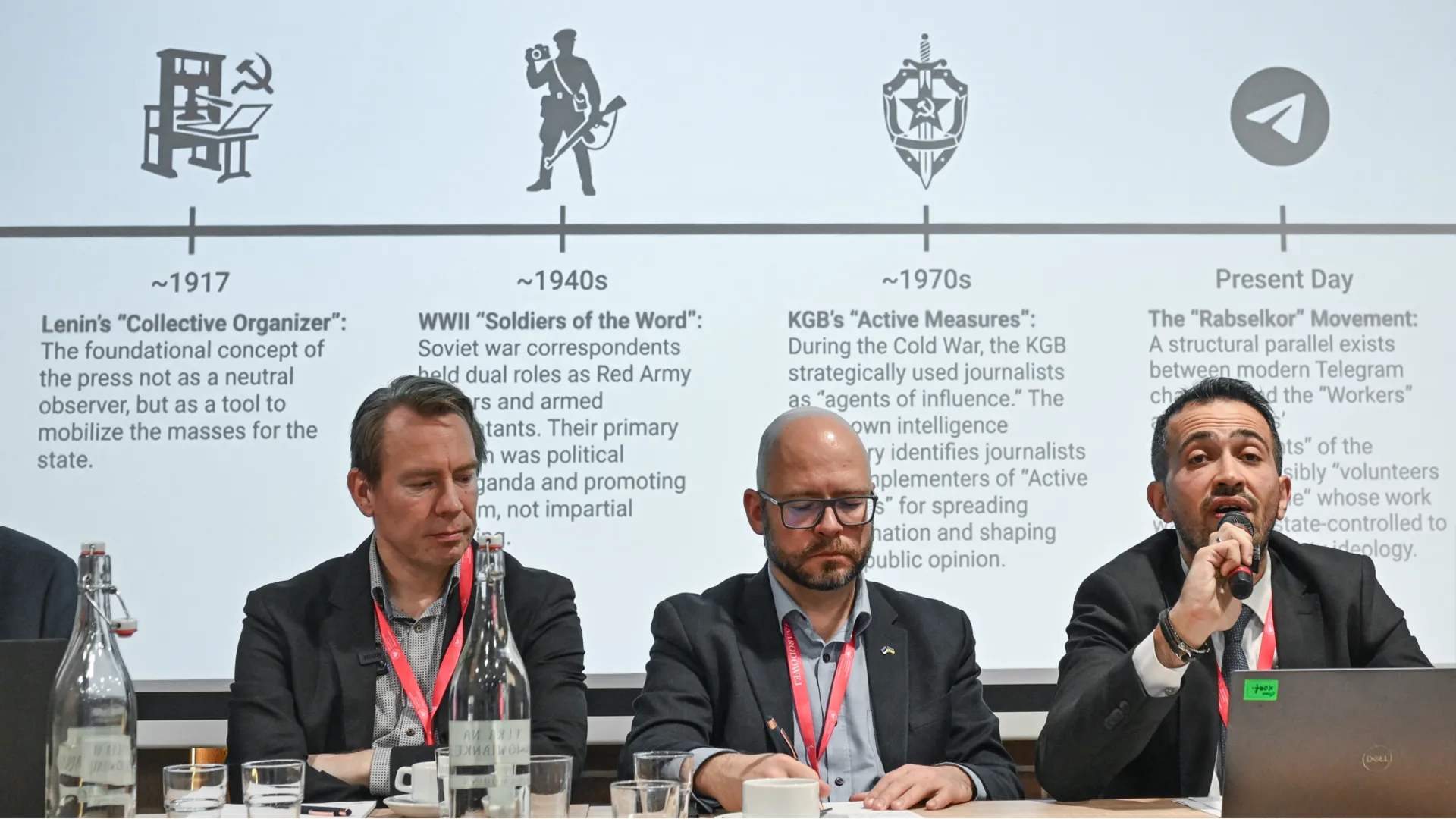
    As Russia’s full-scale invasion attempt against neighboring Ukraine approaches its fifth year of region-disrupting violence, a new wave of intelligence reports has raised a frightening prospect: a widening theater of violence, in which Russian hybrid warfare strikes deep European Union territory. With alarm bells ringing over potential Russian offensives — both digital and kinetic — in the coming months, vulnerable European nations must figure out if and how to respond.

    ‘Undermining’ NATO
    NATO Secretary General Mark Rutte has framed the “rising number” of hybrid incidents in NATO countries as a sign that Russia is “losing the war in Ukraine,” said The Associated Press. But recent incidents, including an “explosive-laden drone at a German airport” and a “strike on a passenger train near the Polish border,” have presaged a “rush of warnings about more chaos to come” across Europe, said The New York Times. “The question is how Europe responds.”

    Unlike the “classic thing you think of with NATO” warfare, in which one country’s army “attacks, tries to invade” and “tries to take things,” Russia’s hybrid model is “aimed at undermining our NATO allies without a full-scale invasion,” said Kurt Volker, a former U.S. ambassador to NATO, on NPR’s “All Things Considered.” The goal is to “sow doubt” and “cause NATO countries to back off of support for Ukraine” for fear there “might be a bigger escalation with Russia that we don’t want.”

    ‘Hardened’ Western rhetoric
    Russia’s “shadow war” with Europe “grows bolder by the day,” said the Kyiv Independent. “No one can say how far the Kremlin is ready to go.” Although “rhetoric in Western capitals has hardened,” material responses so far have “ranged from symbolic ones” targeting Russian “cultural and diplomatic centers” to “fresh sanctions and arms packages for Ukraine,” which Moscow has already “weathered for years.”

    Europeans should guard against “overreacting to any sort of hybrid activity,” said current U.S. Ambassador to NATO Matthew Whitaker at a recent event in Iowa, per the AP. Russian hybrid attacks aren’t at a “volume that would mean that it’s the beginning” of broader violence. “We haven’t reached that threshold.”


    QUOTE OF THE DAY

    ‘We have the best, I guess you could say, poverty. We have the best poverty numbers ever in the history of our country.’

    Trump to reporters at the White House on the U.S.’s current poverty rate. While the rate dropped to 10.2% last year, according to the Census Bureau, this doesn’t include the federal cuts by the White House that will go into effect this year and likely increase poverty.


    today’s big question

    Can Montana ban ‘dark money’ in elections?

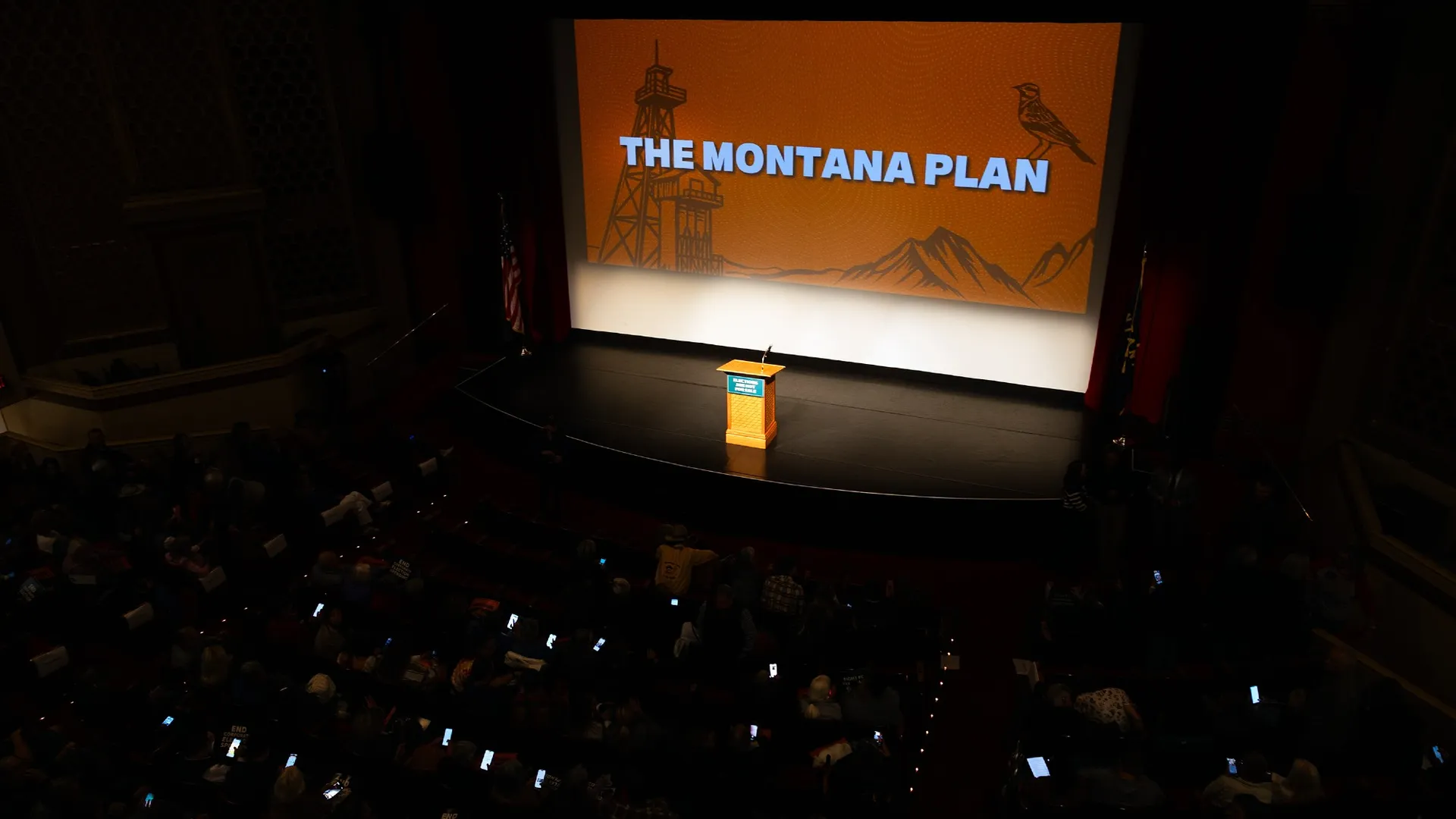
    Political campaigns are awash in cash, thanks in part to U.S. Supreme Court decisions declaring that campaign contributions are a form of free speech. But Montana voters are poised to push back with a proposed ban on corporate political spending.

    What did the commentators say?
    The November ballot measure is an attempt at “threading the needle” of the Supreme Court’s precedents, said The New York Times. Corporations that violate the proposed ban would have their state corporate registration revoked.

    States, backers argue, have the right to “define corporations as ‘artificial persons’” that lack First Amendment rights, said the Times. Montana is not “necessarily associated with anticorporate sentiment.” But advocates say there’s “widespread frustration” over the “influence of special interests” in Big Sky politics.

    “There’s just one catch” to the Montana plan, said Jessica Levinson at MS NOW. The Supreme Court has found that corporations “should be treated the same way as individuals” when it comes to the First Amendment rights associated with political contributions. Montana is “attempting a clever solution” to the problem of money in politics, but even if voters approve the measure, it’s “doomed to fail in court.”

    Money “will always play a role in politics,” said John Westenberg at the Missoula Current. The Montana plan, however, would be a “huge step” to keep that money “honest” and stop political spending by “artificial persons” like corporations, nonprofits and trade unions to feed the “dark money machines.” The aim is to “take dark money out of Montana politics.”

    What next?
    Nearly three-quarters of U.S. citizens believe “money in politics is a problem,” said Bloomberg. As such, other states are joining in the effort to limit corporate political spending. Hawaii has already passed a Montana-style law, which is being challenged in court. And “reformers” in Oregon are pushing for a similar ballot measure, said Oregon Public Broadcasting. Such efforts have “national momentum right now,” Jason Kafoury of Honest Elections Oregon said to the outlet. Expect the Supreme Court to offer the last word.


    Statistic of the day

    23,100: The number of alcohol-related cancer deaths in 2023, according to The Lancet. This is more than double the estimated 11,400 in 1990. Many of the 2023 deaths are attributable to cancers not normally associated with alcohol abuse, including “colorectal, esophageal, breast, pancreatic and prostate cancer,” said study author Chinmay Jani.


    THE EXPLAINER

    White House guts education stats agency amid a schooling crisis

    When the Department of Government Efficiency began cutting up government entities in 2025, among the most severely affected was the Education Department’s little-known National Center for Education Statistics (NCES). Now, more than a year later, experts say the gutting of this center has made it very hard to keep track of the nation’s education goals.

    What does NCES do?
    The federal body is “responsible for collecting, analyzing and reporting data on the condition of U.S. education, from early childhood to adult education, to help improve student outcomes,” said the agency’s website. It produces reports via “direct student assessments, longitudinal studies, international surveys, postsecondary institutions, adult surveys and synthesizing data from federal sources.”

    The Trump administration's federal cuts have significantly hampered the agency. As part of nearly $900 million in cuts to the Department of Education last year, NCES’ work was “abruptly terminated and its headcount dropped” massively, said The Guardian. Prior to the funding slashes, NCES had about 100 staffers; it now has just 12, according to a government directory. This has “hamstrung the historically under-resourced agency’s ability to collect and report on a range of data on K-12 and college students,” said The Guardian.

    What will NCES do now?
    The American Statistical Association has put together a report on how the situation at NCES could be improved. More streamlined data collection would allow NCES to “much more readily modernize how it meets its responsibility to report on the condition and progress of education,” said the report. NCES should also be “ensuring that data is handled safely and ethically and is more useful to state and local practitioners,” said Education Week.

    It would be beneficial for NCES to “become a more modern data-centric partner to states” instead of returning to the “structure it had before it was largely dismantled” and relying on the methods it used before being gutted, said StateScoop. “What’s lacking is national comparability,” said Shelly Martinez, an independent statistical consultant who worked on the report, to the outlet. “There’s an interest and an understanding that there’s federal data that could really enhance those analyses, and that evidence is building.”


    Good day 🪐

    … for understanding distant planets. Astronomers have detected radio signals from outside our solar system for the first time, according to a joint study from Harvard University and the University of Oregon. The signals, picked up from the distant exoplanet Beta Pictoris b, offer a “new way to study distant worlds,” said Gizmodo.


    Bad day 🥾

    … for taking a hike. France has enacted new rules designed to limit the trails of Mont Blanc to serious hikers only. And visitors are prohibited from the Tour du Mont Blanc trail, one of Europe’s major trailways, unless they have a hotel reservation.


    Picture of the day

    Headfirst

    China’s Lin Shan, who won silver at the Hangzhou Asian Games in 2023, competes in the women’s 1m springboard final diving event during the Asian Games at the Tokyo Aquatics Center before taking gold. 
    Andrew Caballero-Reynolds / AFP / Getty Images


    Puzzles

    Daily sudoku

    Challenge yourself with The Week’s daily sudoku, part of our puzzles section, which also includes guess the number

    Play here


    The Week recommends

    Upcoming albums to stream in the fall air

    With summer at its end, many people are thrilled with the arrival of cooler weather, warm-beverage season and changing leaves. But you can also ring in the fall with a collection of new albums from big-name artists.

    Mykki Blanco, ‘Cafe Paradiso’
    Unlike his prior albums, “Cafe Paradiso” follows Blanco as he “emerges completely reborn, trading the persona-driven theatrics of previous releases for something more interior, sensual and exacting,” said Transgressive Records. The LP also pulls large amounts of symbolism from Blanco’s life on the road, having lived in Chicago, New York City, Portugal, Switzerland and more. (out now)

    Leon Bridges, ‘Happiness Anytime’
    The artist’s new album will combine the “sonic warmth of his beloved 2015 debut, ‘Coming Home,’ with the adventurous groove of his Khruangbin collaborations,” said DIY Magazine. There’s a “feeling that we have to fix the problems of the world; you feel inadequate, or it can be debilitating. My role is to be light,” said Bridges in a release. The LP’s eponymous single is out now. (out now)

    Ane Brun, ‘I Thought We Were the Same’
    The Norwegian musician is back with a vengeance with “I Thought We Were the Same,” her 11th studio album. The LP is “promised as Brun’s most personal work yet,” said The Needle Drop. With her latest release, Brun “wanted to experiment with how far I could take my music into a clearer and more pop sound with distinct choruses and hooks without the music losing its nerve,” she said in a release. (Nov. 6)

    Read more


    Poll watch

    About half (45%-50%) of those surveyed in Canada, France, Germany, Spain, the U.K. and the U.S. want to pause AI development to prevent further risks, according to a Politico poll of 2,000 adults in each country. Between 18% and 24% also think there’s a “significant risk” AI could destroy humanity.


    INSTANT OPINION

    Today’s best commentary

    ‘A hospital death can be a good death’
    Daniela Lamas at The New York Times
    We tend to imagine a “good death” as one that takes place far from the “sounds and smells and lines and tubes” of an intensive care unit, says Daniela Lamas. Dying at home can be the “right thing for a patient,” but it’s not “inherently better.” We treat “ICU care at the end of life as a failure,” yet home is “not always the easiest place to manage the complexities of dying,” especially for patients with “severe or rapidly changing symptoms.”

    ‘Trump can’t resist a temptation known since the fall of man’
    Matthew Gwyther at The Washington Post
    The Trump administration might be “writing its own chapter in the history of toadyism,” but the “perils of sycophancy” have been “made clear since the Garden of Eden,” says Matthew Gwyther. The more “cocooned in sycophancy Trump is,” the more vindictive he is toward those “not inclined toward Uriah Heepishness.” Now that chatbots are “well-versed in the attractions of sycophancy,” the challenge for humans “especially in leadership roles” is to “resist the temptation.” 

    ‘United in debt: America has become a nation of fake rich people’
    John Mac Ghlionn at The Hill
    The math is “simple, brutal and undeniable,” says John Mac Ghlionn. Millions of “broke people” spend “borrowed money” to convince “other broke people they live like oil barons.” The “digital self” lives in a “perpetual golden age of high design, fine dining, endless leisure and oceans of delusion.” Meanwhile, the physical self “eats sodium-rich packaged ramen over a sink in a studio apartment, wiping away their tears while receiving text alerts about a low bank balance.”


    WORD OF THE DAY

    aufguss

    German for “infusion” or “pouring over” to describe a competitive sport and theatrical sauna performance, with participants called aufgussmeisters tipping water on hot stones and circulating steam with towels. The audience is treated to an “immersive experience of music, scent, movement and steam,” said Vanity Fair. More competitions are spreading around the world, with judges scrutinizing “towel choreography, heat distribution and storytelling.”


    Evening Review was written and edited by Theara Coleman, Nadia Croes, Scott Hocker, Anya Jaremko-Greenwold, Justin Klawans, Joel Mathis and Rafi Schwartz.

    Image credits, from top: Artur Widak / NurPhoto / Getty Images; Janie Osborne / Getty Images; Kevin Carter / Getty Images; BMG / Transgressive Records / Columbia Records
     

    Recent editions

    • Morning Report

      Five arrested over suspected RAF base bomb plot

    • Sunday Shortlist

      Sharon Horgan’s ‘sandwich generation’ comedy

    • Saturday Wrap

      A mess of Ed Sheeran’s own making

    VIEW ALL
    TheWeek
    • About Us
    • Contact Future's experts
    • Terms and Conditions
    • Privacy Policy
    • Cookie Policy
    • Advertise With Us
    • FAQ
    Add as a preferred source on Google Add as a preferred source on Google

    The Week UK is part of Future plc, an international media group and leading digital publisher. Visit our corporate site.

    © Future Publishing Limited Quay House, The Ambury, Bath BA1 1UA. All rights reserved. England and Wales company registration number 2008885.