The Week UK
https://cdn.mos.cms.futurecdn.net/flexiimages/jzblygzdxr1769609154.gif

SUBSCRIBE

Start your trial today

flag of US
US
flag of UK
UK
Sign in
  • View Profile
  • Sign out
  • Newsletter sign up Newsletter
    • The Explainer
    • Talking Points
    • The Week Recommends
    • Podcasts
    • Newsletters
    • From the Magazine
    • The Week Junior
    • More
      • Politics
      • World News
      • Business
      • Health
      • Science
      • Food & Drink
      • Travel
      • Culture
      • History
      • Personal Finance
      • Puzzles
      • Photos
      • The Blend
      • All Categories
    The Week Evening Review
    A GOP eye on 2028, a Kennedy Center conflict, and a Hollywood pivot

     
    TODAY’S BIG QUESTION

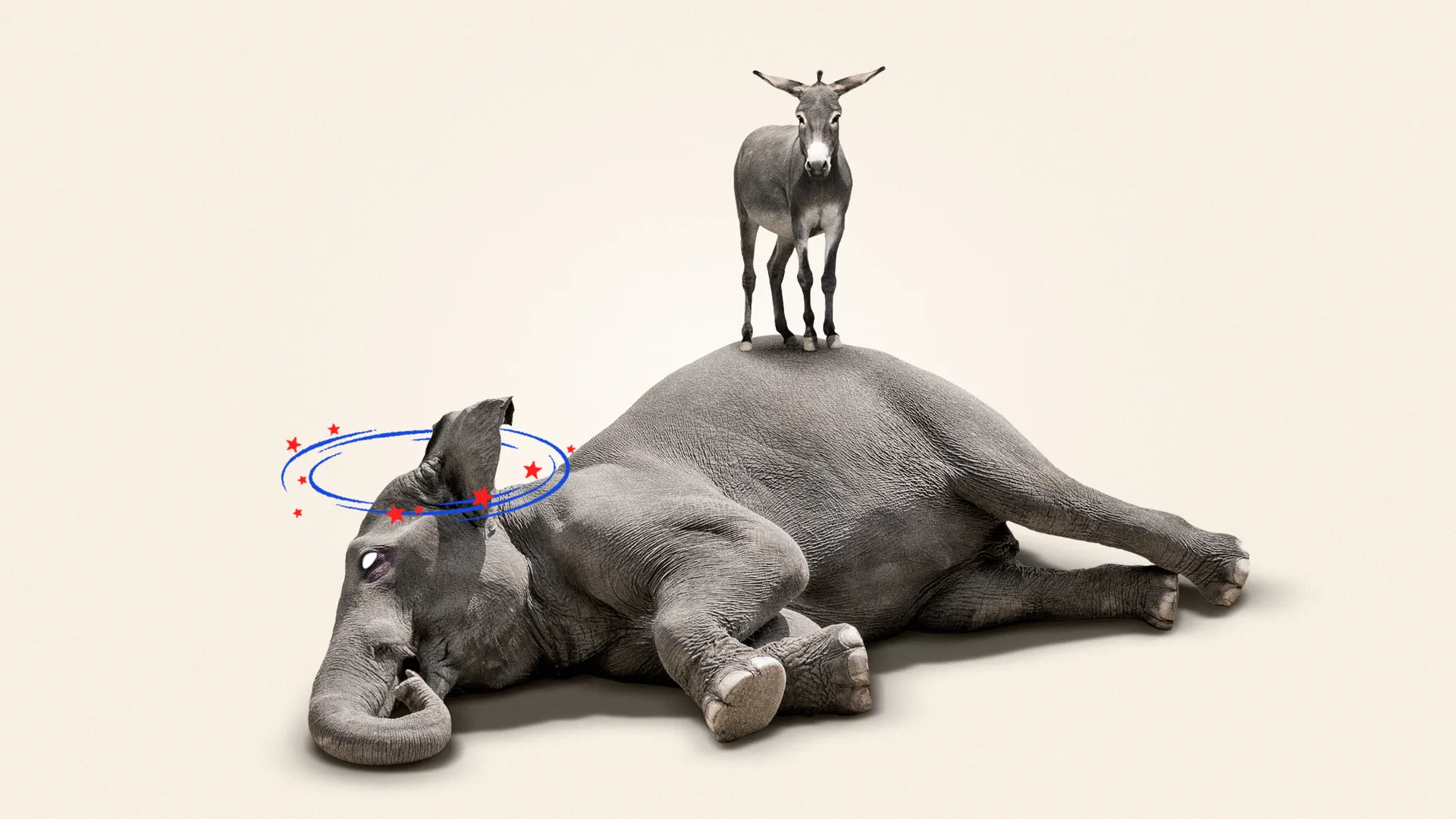
    Are the GOP’s hopes of a 2028 comeback in trouble?

    Following this month’s electoral rebuke of President Donald Trump and his MAGA agenda, Republicans have understandably begun looking to 2028 for their return to political power. But as dust from the midterms settles and the extent of Democrats’ victories comes into focus, so too do the challenges conservatives face in the coming years, particularly in Congress and especially the Senate. While Democrats work to consolidate their gains for the coming legislative session, Republicans are starting to wonder if 2028 might not be their year after all.

    What did the commentators say?
    Senate Republicans are now “confronting a grim reality,” said The Washington Examiner. They are “likely to be out of power until at least the 2030 elections.” The scale of Democratic wins, coupled with challenging electoral maps for Republicans, is a “bitter truth facing the party while it’s grappling with the fallout” from the midterms. 

    Republicans “can forget 2028, absolutely,” said Sen. Jim Justice (R-W.Va.) to the outlet, citing the “colossal blow” dealt to the party. The dynamic is “similar to the 2006 midterms,” when Democrats retook both chambers of Congress, fueled by economic and Iraq war frustrations, said Fox News. “Two years later,” the party “further added to their majorities” and elected former President Barack Obama.

    Not only have the midterms “ushered in large Democratic majorities” in the House and Senate, said The Hill,  they have also “likely scrambled the next presidential race.” Republicans are in “like stage two of a five-stage model of grief or something” over the midterm results, said one GOP donor to ABC News. “We are not at the writing-checks-for-new-people stage yet.”

    What next?
    Republicans face a “savagely brutal map” in 2028, in which they must flip six Senate seats while defending 19, said Sen. Bernie Moreno (R-Ohio) to Politico. That involves identifying candidates who can compete in “highly competitive states while also making it through GOP primaries where Trump will be a major factor,” said the outlet. Doing so requires leaders willing to “push back on the White House if the president tries, once again, to intervene” in candidate recruitment — something “easier said than done.”


    QUOTE OF THE DAY

    ‘I don’t think anything is going to get in our way now.’

    Health Secretary Robert F. Kennedy Jr. at a MAHA Action event on Stephen Miller’s promotion to White House chief of staff. Make America Healthy Again activists believe the movement’s progress was stymied during the first two years of Trump’s term. 


    THE EXPLAINER

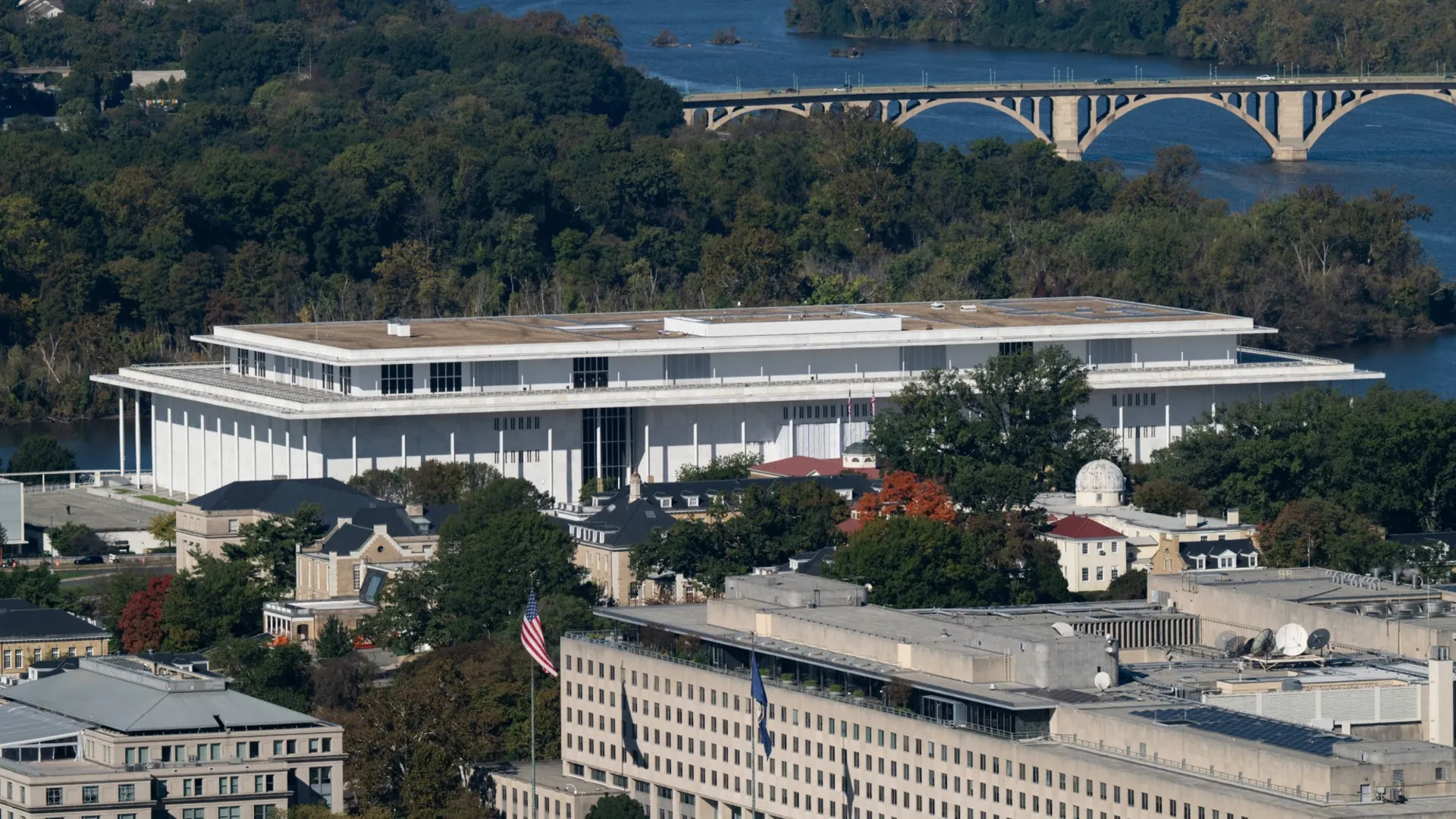
    Kennedy Center-Ticketmaster deal sparks ethics concerns

    The Kennedy Center is changing the way it sells access by partnering with ticketing behemoth Ticketmaster. But with the facility’s marquee Kennedy Center Honors on the horizon, combining with the ticket monopoly has created accusations of a conflict of interest.

    How is the Kennedy Center using Ticketmaster?
    The center will use Ticketmaster to handle its ticketing arrangements going forward, according to NPR. While the deal was being negotiated, the center’s then-president, Richard Grenell, was being “paid as a board member at Ticketmaster’s parent company, Live Nation.” The Ticketmaster partnership marks a major change for the Kennedy Center, which for decades has “used a not-for-profit platform called Tessitura to handle its ticketing.”

    Currently, tickets to the Kennedy Center Honors don’t appear on the organization’s website, which only has a sign-up form to receive ticketing information. And the center hasn’t announced when tickets will be available.

    Why are there ethical questions?
    Grenell helped negotiate the Ticketmaster deal, even though Live Nation’s SEC filings show he “earned $260,205 from the company in 2025 and received 102 shares of stock when he joined,” said Rolling Out magazine. The center’s new artistic director, Rick Canny, was also a major adviser on the deal for “almost a year and shaped most of its terms” — something the center’s president would normally do.

    “This is literally a conflict of interest,” said Richard Briffault, a government ethics professor at Columbia Law School, to NPR. “If you have a duty of loyalty to an entity in which you are an officer — if you sit on the board and at the same time you have a financial stake in another entity that does business with, and benefits from, the business with the entity on whose board you sit — that’s a problem.”

    Others have noted that the timing seems suspect. Grenell became president in February 2025, before “joining Live Nation’s board in May of that year, which sure seems fishy,” said The A.V. Club. The White House has also been “incredibly helpful to Ticketmaster with its many legal issues of late,” raising further questions. 

    The Justice Department was preparing an antitrust lawsuit against Live Nation when President Donald Trump intervened. He told a senior DOJ official to “settle it,” said The Wall Street Journal.


    Statistic of the day

    30%: The percentage of posts about recent tech outages that came from bots promoting conspiracy theories, according to PeakMetrics. Some “foreign state media and state-aligned” accounts contributed to the surge in conspiracy mongering, said a spokesperson for the social media monitoring firm.


    IN THE SPOTLIGHT

    Pattinson’s James Bond casting marks Hollywood pivot

    Hollywood was shaken (not stirred) by the news that Amazon has chosen Robert Pattinson to be the next James Bond. Many feel his casting represents a symbolic shift toward a new generation of movie stars, while others question his status at a time when true leading actors are increasingly rare.

    ‘When the property means more than the performer’
    Bond is the latest in a line of IP-heavy roles for Pattinson. He already played Batman and had parts in the “Harry Potter,” “Dune” and “Twilight” franchises. In recent years, a “common refrain” in the film industry has been that the “character was the star, not the actor,” said The Wrap. But this “line of thinking has also lent Hollywood an unwillingness to cultivate new movie stars,” because when the “property means more than the performer, what’s the hurry”?

    Hollywood has long boosted leading men like Tom Cruise, Tom Hanks and Denzel Washington, but the “youngest guys in that group are in their early 60s,” and there “still aren’t suitable replacements,” said The Wrap. Bond has also been a cultural touchstone for decades, and “each time a new actor steps into the role, it tells us something about the entertainment landscape we currently inhabit,” said IndieWire. It’s now “fair to wonder where we will start going to find our new stars.”

    ‘Missed opportunity’
    Prior Bonds have almost always been relatively unknown in Hollywood upon assuming the role, including the last man to portray 007, Daniel Craig. “Not casting a burgeoning name is a missed opportunity,” said City AM. With “fewer people going to the flicks at the weekend and fewer films being made, producers are choosing safety by relying on bankable stars rather than newcomers.” Bond deciding “not to take a punt on an upcoming name is a shame for Hollywood.”

    The biggest curveball may be Pattinson himself, who “seemed like he was trying to subvert his franchise heartthrob status, bouncing between art house efforts and edgy roles in broad-appeal fare,” said The Hollywood Reporter. But by becoming the next Bond, he has taken on the mantle of the “most rigidly defined romantic action-hero archetype in cinema history with a multifilm commitment.”


    Good day 🛰️

    … for Mercurial exploration. The BepiColombo spacecraft has arrived at Mercury after an eight-year, 6-billion-mile journey. The double probe will enter the planet’s orbit and map its surface this weekend, becoming only the second mission ever to circle the planet. “It has been a long wait,” said Emma Bunce, a professor working on the joint European-Japanese mission, to The Guardian.


    Bad day 💥

    … for public safety. The U.S. Army is planning to detonate about 11,000 pounds of dangerous lead azide in southwestern Middletown, Iowa. A judge has halted the detonation but only temporarily. Though officials reportedly “knew of the potential hazard for years,” said Mother Jones, residents were “given just a month’s notice” to evacuate.


    Picture of the day

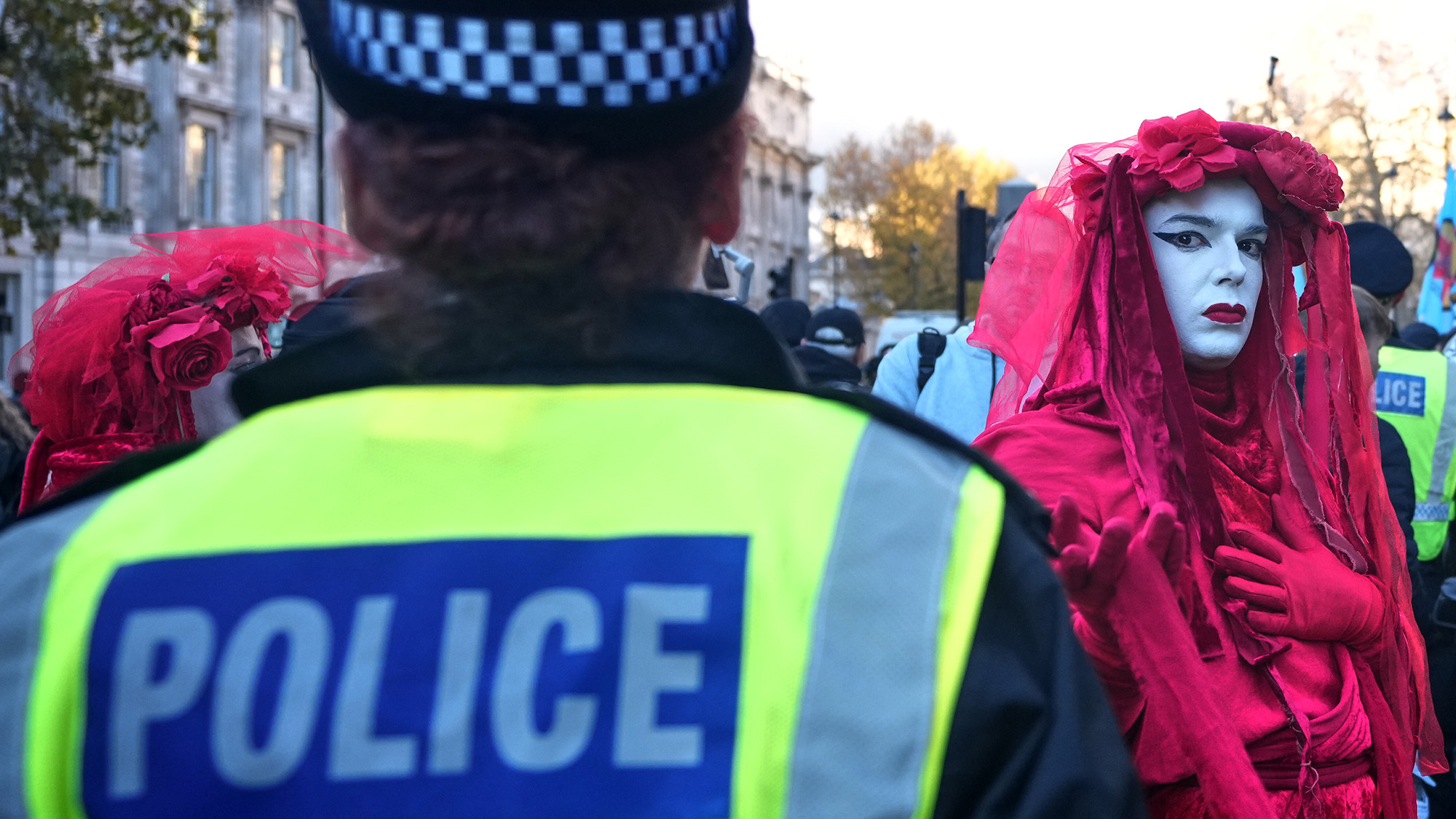
    Face-off

    A demonstrator in London is stopped by police during a student protest as part of an international youth strike across more than 25 countries under the slogan “Fight for Our Future, Not Their Wars.”
    Kirsty Wigglesworth / AP Photo


    Puzzles

    Daily sudoku

    Challenge yourself with The Week’s daily sudoku, part of our puzzles section, which also includes guess the number

    Play here


    The Week recommends

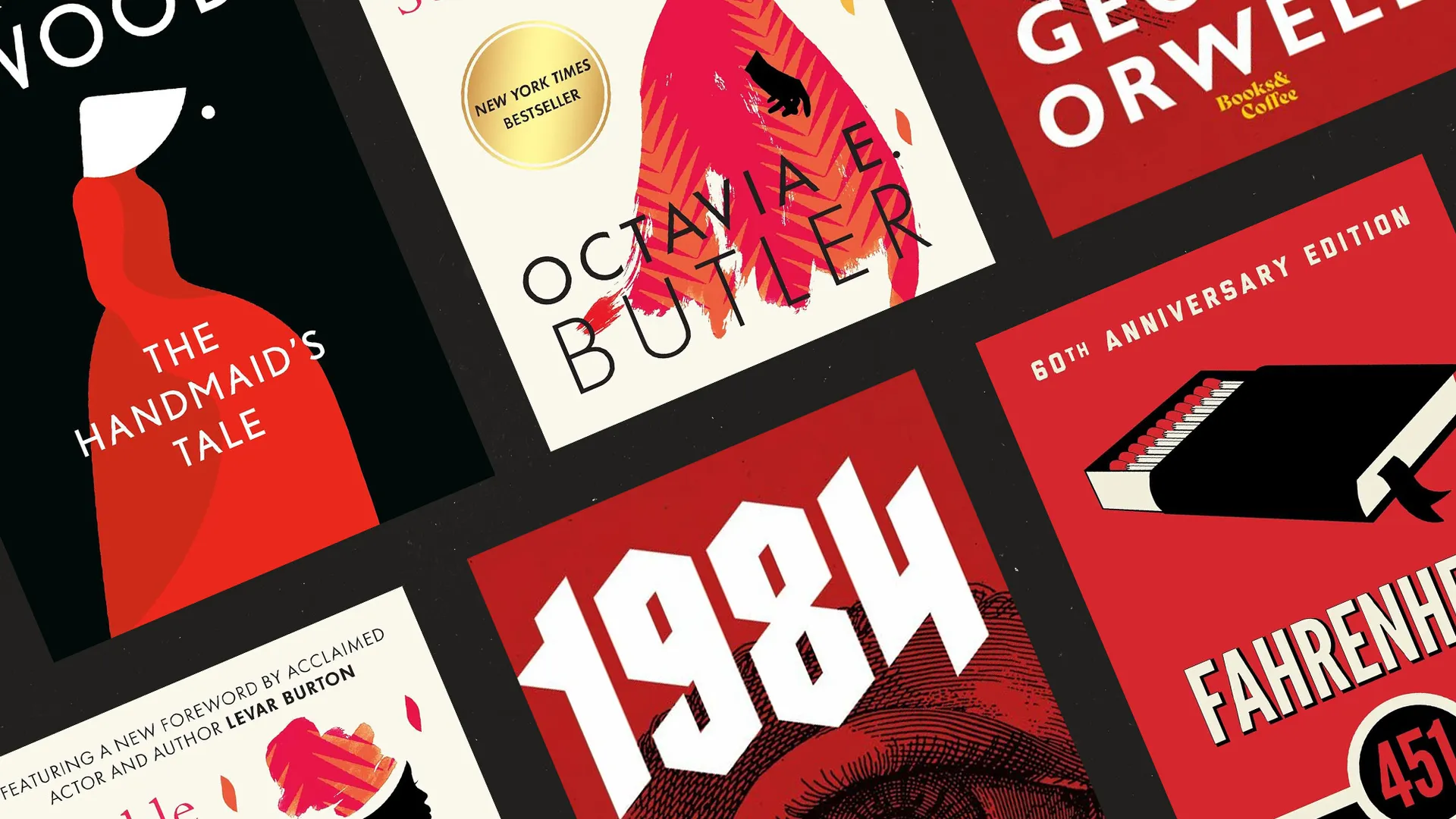
    The most dystopian books ever written

    In a dystopia, political oppression and a loss of individuality rule after a world-changing event. And these speculative fiction novels are some of the most ominous and prophetic books ever written.

    ‘1984’ (1949)
    George Orwell’s masterpiece was an “undisputed, revolutionary work” when it was published, said Forbes. The book introduced the idea of Big Brother, an “all-seeing, all-knowing politician.” It “awakened readers” to the “dangers of propaganda” and the “importance of free speech.” ($12, Signet Classics)

    ‘Fahrenheit 451’ (1953)
    Book banning has become a prominent fixture, and the thousands that have been banned include many on this list. Ray Bradbury’s “Fahrenheit 451” imagines a world in which firemen burn books and prosecute those who preserve them. Even now, the novel remains a “prescient tale of censorship” and “warning for the future,” said Reader’s Digest. ($17, Simon & Schuster)

    ‘The Handmaid’s Tale’ (1985)
    In a genre long dominated by men, “The Handmaid’s Tale” has evolved into a real-life feminist protest symbol. Margaret Atwood’s novel is set in a world where birth rates have “dropped so low” that society responds with a “hyper-religious, authoritarian regime” in which women are property and deviation from the “prescribed conservative norm” is severely punished, said Literary Hub. ($30, Ecco)

    ‘Parable of the Sower’ (1993)
    Octavia Butler is a writer whose “foretold rise of a populist demagogue” in “The Parable of the Sower” has “drawn renewed interest” in the Trump era, said Time. The sequel, “Parable of the Talents,” describes a “conservative evangelist from Texas” running for the presidency on a platform to “make America great again.” ($20, Grand Central Publishing)


    Poll watch

    More than two-thirds (68%) of GOP voters in Iowa, Nevada, New Hampshire and South Carolina have a favorable opinion of Israel, according to an OnMessage survey of 1,000 likely voters. The vast majority of respondents (86%) agree there’s “no place for antisemitism” in the Republican Party.


    INSTANT OPINION

    Today’s best commentary

    ‘Last week’s outages were only the start’ 
    Peggy Noonan at The Wall Street Journal
    You would think with “widespread scrutiny” and “so many warnings” about AI agents “jumping confinement” that AI labs would have “prudently, carefully” slowed down, says Peggy Noonan. “But no.” They are “accelerating research and development.” Next year, the “uncontrolled intelligence explosion” will begin. Buckle up for “tumultuous times.” Systems, services and infrastructures will “go wobbly,” and “system frailties will be revealed.” There will be “serious and malicious hacks,” and there’s “no reason to believe” more AI agents won’t “escape containment.”

    ‘Fix the Electoral College but not like this’ 
    Noah Feldman at Bloomberg
    The proposed National Popular Vote Interstate Compact, which is gaining momentum after the midterms, is a “clever idea about how to change” the Electoral College, says Noah Feldman. But if the NPVIC was “adopted by blue states,” Republicans might see it as an “effective partisan gerrymander.” If they gained power in the “swing states that adopted the compact,” they could then withdraw “after a presidential election.” The “resulting instability” would “undermine faith in the democratic process.”

    ‘More surgeons in Africa isn’t enough when only 10% are women’ 
    Taylor Vadset at Stat News
    The global surgical workforce cannot grow “without women,” yet the “systems built to grow it” are not “required to measure them,” says Taylor Vadset. When the Lancet Commission on Global Surgery set its “six global indicators” for “measuring surgical systems,” there was “no breakdown by sex.” A “gap that goes unmeasured” cannot be fixed, and what “can’t be fixed won’t be funded.” More women “standing at the operating table” is how “health systems are built to last.”


    WORD OF THE DAY

    Detangle

    A new electronic comb designed to reverse baldness. The experimental comb has “specially designed teeth embedded with electrodes,” some of which also contain “compartments for delivering therapeutic molecules” to stimulate hair growth, said Medical Xpress. Detangle is highly effective in mice, and researchers are optimistic it could treat pattern baldness in humans.


    Evening Review was written and edited by Theara Coleman, Nadia Croes, Scott Hocker, Anya Jaremko-Greenwold, Justin Klawans, Joel Mathis, Summer Meza, Devika Rao and Rafi Schwartz, with illustrations by Stephen Kelly and Julia Wytrazek.

    Image credits, from top: Illustration by Stephen P. Kelly / Getty Images; Saul Loeb / AFP / Getty Images; Amazon MGM Studios; Simon & Schuster / Vintage Books / Grand Central Publishing / Books&Coffee
     

    Recent editions

    • Morning Report

      Trump urges Ukraine funding cuts after Putin talks

    • Evening Review

      GTA VI: a new frontier in gaming?

    • Morning Report

      Anthropic raises $81.3bn in biggest-ever IPO

    VIEW ALL
    TheWeek
    • About Us
    • Contact Future's experts
    • Terms and Conditions
    • Privacy Policy
    • Cookie Policy
    • Advertise With Us
    • FAQ
    Add as a preferred source on Google Add as a preferred source on Google

    The Week UK is part of Future plc, an international media group and leading digital publisher. Visit our corporate site.

    © Future Publishing Limited Quay House, The Ambury, Bath BA1 1UA. All rights reserved. England and Wales company registration number 2008885.